Does it work?
Thyme for Acne & Breakouts
The wild, sun-warmed scent of the Mediterranean garrigue, made for fresh scalp rinses and foot care.
The short answer: Strong in-vitro antimicrobial data and one randomized trial of a blend including thyme for alopecia areata; no trials of thyme alone for acne or dandruff.
Our Acne & Breakouts guide does not rank Thyme for this use yet, so this is the overall grade for Thyme.
What Thyme can do for Acne & Breakouts
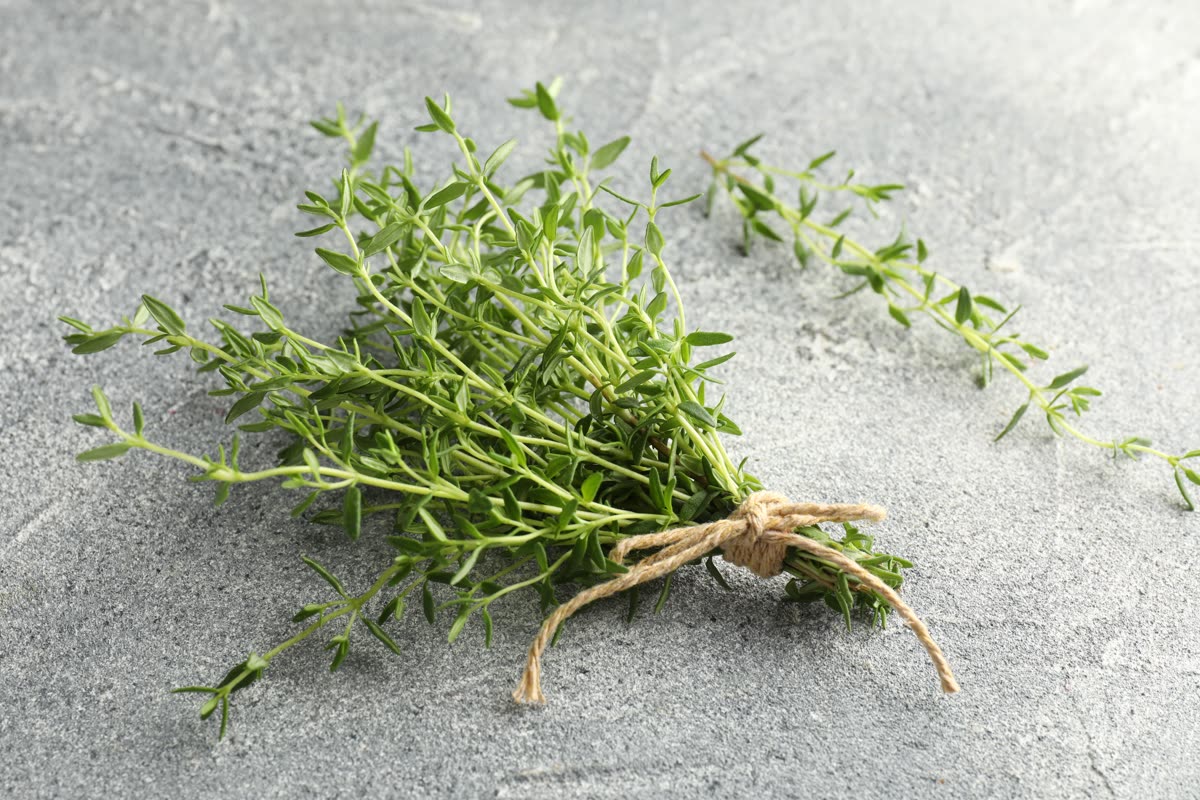
Thyme is one of the most aromatic plants of the Mediterranean garrigue, and a single species can yield very different essential oils — fiery thymol and carvacrol types, or soft linalool types — depending on where it grows. Thymol is a genuine, well-characterized antimicrobial used in mouthwashes and medicines. On skin, though, phenol-rich thyme oil is an irritant and an occasional sensitizer, and claims that it outperforms acne treatments rest on lab data, not trials.
Why people reach for it
- Potent antimicrobial (in the lab). Thymol and carvacrol disrupt bacterial and fungal membranes, including acne bacteria and yeasts, at low concentrations in vitro — the basis for thyme in clarifying and scalp products.
- Part of a trial-tested scalp blend. Thyme was one of four essential oils in a randomized trial in alopecia areata that found more regrowth than carrier oil alone; its individual role is unknown. See Thinning Hair & Hair Loss.
- Clean, herbal freshness. In rinse-off products, deodorants and foot care, thyme gives a crisp, medicinal-herbal scent with genuine antimicrobial backing.
- Proven in oral care. Thymol is one of the active essential-oil components of well-studied antiseptic mouthwashes — evidence for thymol in a specific formula, not for thyme oil on skin.
How to use it
Try it today
A Mediterranean thyme scalp rinse
- Steep 1–2 tablespoons of dried thyme in 250 ml of just-boiled water, then let it cool completely.
- After shampooing, pour it slowly over your scalp, keeping it away from your eyes. Patch test first if rosemary or sage bother you.
- Use it the same day and pour away any leftovers; brew a fresh batch next time.
| Form | Typical use | Notes |
|---|---|---|
| Linalool-type essential oil in leave-on products | ≤ 0.5% on the face, up to 1–2% on the body | The gentlest thyme oil; buy fresh and store cold. Use the Essential Oil Dilution Calculator. |
| Thymol or carvacrol type in rinse-off and scalp products | 0.25–1%, never neat | Keep off the face, eyes and broken skin. Best in shampoos, foot soaks and scalp blends. See Essential Oil Safety: The Complete Guide. |
| Scalp massage oil (in the style of the Hay trial) | About 2% total essential oils in a carrier such as jojoba | The trial blend combined thyme with rosemary, lavender and Atlas cedar. Massage in for 2–3 minutes at night. Sudden patchy hair loss needs a dermatologist’s diagnosis first. |
| Infusion or hydrosol | 1–2 tablespoons dried herb per 250 ml just-boiled water; hydrosol neat | Use infusions the same day as a toner or scalp rinse; buy hydrosols preserved and refrigerate after opening. |
Use it safely
- Thymol- and carvacrol-rich oils are skin and mucous-membrane irritants: never apply neat, keep away from the face and eyes, and use only in well-diluted or rinse-off products.
- Contact allergy to thyme is uncommon but documented, and oxidized oils sensitize more easily; patch test, especially if you react to rosemary, sage or other Lamiaceae.
- Do not use phenolic thyme oils on babies or young children; keep all essential oils out of their reach.
- Do not swallow thyme essential oil outside professional advice.
Pregnancy and breastfeeding: Culinary thyme and rinse-off products are fine. Avoid thymol- and carvacrol-type essential oils in pregnancy and breastfeeding; if you use thyme oil at all, choose the linalool type at ≤ 1%.
New to an ingredient? Patch test first.
When to see a doctor
- Deep, painful nodules or cysts, or any acne that is leaving scars (pitted, rolling or raised) — early treatment prevents permanent scarring.
- No meaningful improvement after 2–3 months of consistent over-the-counter treatment.
- Acne with irregular periods, excess facial or body hair, scalp hair thinning or rapid weight gain, which can point to polycystic ovary syndrome or another hormonal cause.
- Sudden, severe, ulcerating acne with fever, joint pain or feeling unwell (acne fulminans) — seek prompt care.
- Acne that started after a new medicine or supplement (e.g. corticosteroids, anabolic steroids, some anticonvulsants).
- Acne affecting your mood, sleep or confidence — this is a valid reason to seek treatment.
Other plants for Acne & Breakouts
| Ingredient | Grade | What the evidence shows |
|---|---|---|
| Tea Tree | B | Several small randomized trials of 5% tea tree oil gel show fewer inflammatory and total lesions than placebo, with slower onset but better tolerability than 5% benzoyl peroxide. |
| Green Tea | B | Small randomized trials of 2–3% green tea extract lotions reduced lesion counts and sebum in mild to moderate acne; effects are modest. |
| Aloe Vera | C | In one randomized trial, aloe gel combined with tretinoin improved results and tolerability versus tretinoin alone — useful as a soothing partner to retinoids. |
| Bakuchiol | C | Small, mostly open-label studies suggest benefit in mild acne, often in combination products; plausible anti-inflammatory and anti-sebum effects. |
| Willow Bark | C | Contains salicin and other salicylates that may gently exfoliate and calm, but it is far weaker than salicylic acid and human data are limited. |
| Honey | C | Antimicrobial in the lab, but a randomized trial of medical-grade kanuka honey added to routine cleansing found no significant extra benefit. |
| Witch Hazel | D | Tannins are astringent and anti-inflammatory in vitro; there are no meaningful acne trials, and alcohol-based distillates can irritate. |
| Rhassoul Clay | D | Absorbs surface oil temporarily for a matte finish; no evidence it treats acne lesions. |