Does it work?
Thyme for Dandruff & Itchy Scalp
What the research says about thyme for dandruff & itchy scalp, how to use it at home and how to stay safe.
The short answer: Strong in-vitro antimicrobial data and one randomized trial of a blend including thyme for alopecia areata; no trials of thyme alone for acne or dandruff.
Our Dandruff & Itchy Scalp guide does not rank Thyme for this use yet, so this is the overall grade for Thyme.
What it does
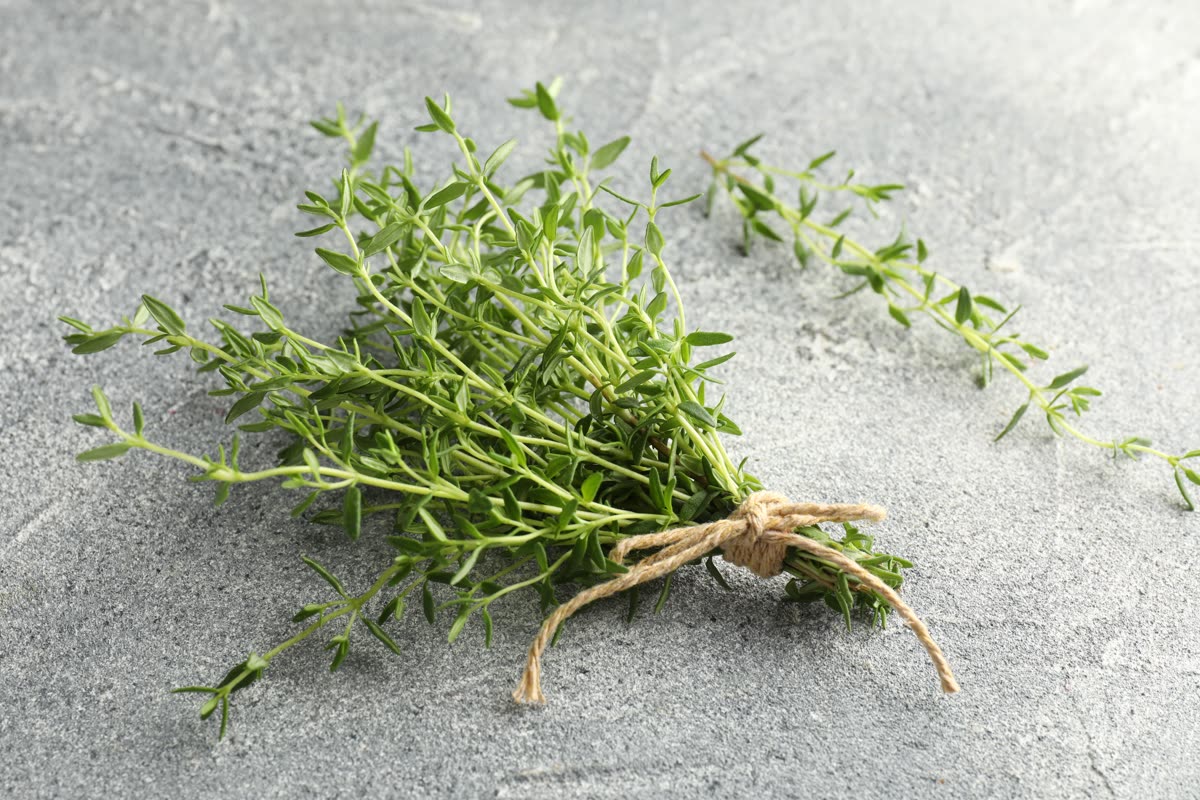
Thyme is one of the most aromatic plants of the Mediterranean garrigue, and a single species can yield very different essential oils — fiery thymol and carvacrol types, or soft linalool types — depending on where it grows. Thymol is a genuine, well-characterized antimicrobial used in mouthwashes and medicines. On skin, though, phenol-rich thyme oil is an irritant and an occasional sensitizer, and claims that it outperforms acne treatments rest on lab data, not trials.
Why people reach for it
- Potent antimicrobial (in the lab). Thymol and carvacrol disrupt bacterial and fungal membranes, including acne bacteria and yeasts, at low concentrations in vitro — the basis for thyme in clarifying and scalp products.
- Part of a trial-tested scalp blend. Thyme was one of four essential oils in a randomized trial in alopecia areata that found more regrowth than carrier oil alone; its individual role is unknown. See Thinning Hair & Hair Loss.
- Clean, herbal freshness. In rinse-off products, deodorants and foot care, thyme gives a crisp, medicinal-herbal scent with genuine antimicrobial backing.
- Proven in oral care. Thymol is one of the active essential-oil components of well-studied antiseptic mouthwashes — evidence for thymol in a specific formula, not for thyme oil on skin.
How to use it
| Form | Typical use | Notes |
|---|---|---|
| Linalool-type essential oil in leave-on products | ≤ 0.5% on the face, up to 1–2% on the body | The gentlest thyme oil; buy fresh and store cold. Use the Essential Oil Dilution Calculator. |
| Thymol or carvacrol type in rinse-off and scalp products | 0.25–1%, never neat | Keep off the face, eyes and broken skin. Best in shampoos, foot soaks and scalp blends. See Essential Oil Safety: The Complete Guide. |
| Scalp massage oil (in the style of the Hay trial) | About 2% total essential oils in a carrier such as jojoba | The trial blend combined thyme with rosemary, lavender and Atlas cedar. Massage in for 2–3 minutes at night. Sudden patchy hair loss needs a dermatologist’s diagnosis first. |
| Infusion or hydrosol | 1–2 tablespoons dried herb per 250 ml just-boiled water; hydrosol neat | Use infusions the same day as a toner or scalp rinse; buy hydrosols preserved and refrigerate after opening. |
Use it safely
- Thymol- and carvacrol-rich oils are skin and mucous-membrane irritants: never apply neat, keep away from the face and eyes, and use only in well-diluted or rinse-off products.
- Contact allergy to thyme is uncommon but documented, and oxidized oils sensitize more easily; patch test, especially if you react to rosemary, sage or other Lamiaceae.
- Do not use phenolic thyme oils on babies or young children; keep all essential oils out of their reach.
- Do not swallow thyme essential oil outside professional advice.
Pregnancy and breastfeeding: Culinary thyme and rinse-off products are fine. Avoid thymol- and carvacrol-type essential oils in pregnancy and breastfeeding; if you use thyme oil at all, choose the linalool type at ≤ 1%.
New to an ingredient? Patch test first.
When to see a doctor
- Thick, silvery plaques, especially extending beyond the hairline or with plaques elsewhere (possible psoriasis).
- Patches of hair loss, broken hairs or swollen glands in the neck, particularly in a child (possible fungal infection).
- Oozing, crusting, pain or a boggy swelling (kerion) on the scalp.
- A sudden, severe or widespread seborrheic dermatitis, which can occasionally signal an underlying condition.
- An itchy, red, swollen scalp after hair dyeing (possible allergy — seek care urgently if the face swells).
- No improvement after 4–6 weeks of correctly used medicated shampoo.
Other plants for Dandruff & Itchy Scalp
| Ingredient | Grade | What the evidence shows |
|---|---|---|
| Tea Tree | B | A randomized, placebo-controlled trial of 5% tea tree oil shampoo improved dandruff severity, itch and greasiness over four weeks. |
| Aloe Vera | C | A small double-blind trial found an aloe emulsion reduced scaling and itch in seborrheic dermatitis. |
| Honey | C | A small uncontrolled study of diluted crude honey applied to seborrheic dermatitis reported reduced itch and scaling; needs confirmation. |
| Neem | D | Antifungal activity in the lab and traditional Ayurvedic use; no good human trials for dandruff. |
| Rosemary | D | Antimicrobial in vitro and used traditionally in scalp rinses; no clinical dandruff data. |
| Black Seed Oil | D | Thymoquinone shows antifungal activity in the lab; as an oil it may also feed Malassezia, so evidence is uncertain. |