Does it work?
Thyme for Thinning Hair & Hair Loss
What the research says about thyme for thinning hair & hair loss, how to use it at home and how to stay safe.
The short answer: Strong in-vitro antimicrobial data and one randomized trial of a blend including thyme for alopecia areata; no trials of thyme alone for acne or dandruff.
Our Thinning Hair & Hair Loss guide does not rank Thyme for this use yet, so this is the overall grade for Thyme.
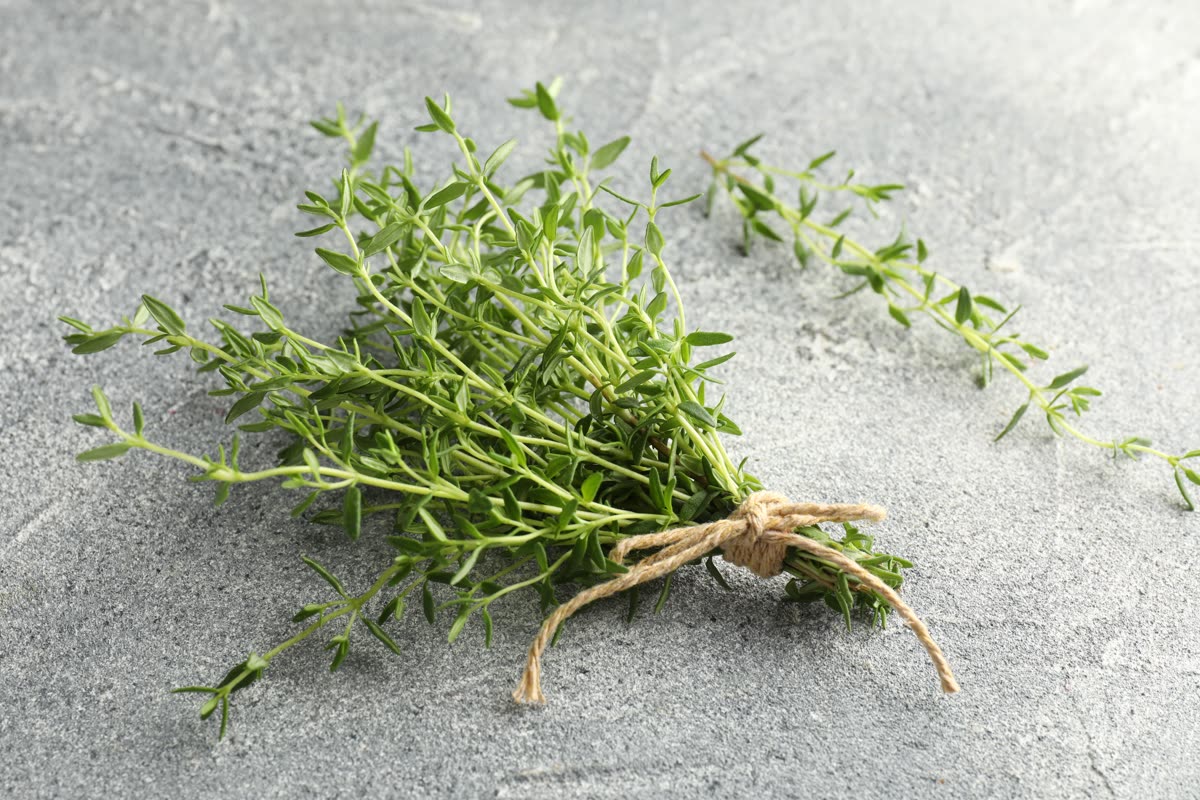
What it does
Thyme is one of the most aromatic plants of the Mediterranean garrigue, and a single species can yield very different essential oils — fiery thymol and carvacrol types, or soft linalool types — depending on where it grows. Thymol is a genuine, well-characterized antimicrobial used in mouthwashes and medicines. On skin, though, phenol-rich thyme oil is an irritant and an occasional sensitizer, and claims that it outperforms acne treatments rest on lab data, not trials.
Why people reach for it
- Potent antimicrobial (in the lab). Thymol and carvacrol disrupt bacterial and fungal membranes, including acne bacteria and yeasts, at low concentrations in vitro — the basis for thyme in clarifying and scalp products.
- Part of a trial-tested scalp blend. Thyme was one of four essential oils in a randomized trial in alopecia areata that found more regrowth than carrier oil alone; its individual role is unknown. See Thinning Hair & Hair Loss.
- Clean, herbal freshness. In rinse-off products, deodorants and foot care, thyme gives a crisp, medicinal-herbal scent with genuine antimicrobial backing.
- Proven in oral care. Thymol is one of the active essential-oil components of well-studied antiseptic mouthwashes — evidence for thymol in a specific formula, not for thyme oil on skin.
How to use it
| Form | Typical use | Notes |
|---|---|---|
| Linalool-type essential oil in leave-on products | ≤ 0.5% on the face, up to 1–2% on the body | The gentlest thyme oil; buy fresh and store cold. Use the Essential Oil Dilution Calculator. |
| Thymol or carvacrol type in rinse-off and scalp products | 0.25–1%, never neat | Keep off the face, eyes and broken skin. Best in shampoos, foot soaks and scalp blends. See Essential Oil Safety: The Complete Guide. |
| Scalp massage oil (in the style of the Hay trial) | About 2% total essential oils in a carrier such as jojoba | The trial blend combined thyme with rosemary, lavender and Atlas cedar. Massage in for 2–3 minutes at night. Sudden patchy hair loss needs a dermatologist’s diagnosis first. |
| Infusion or hydrosol | 1–2 tablespoons dried herb per 250 ml just-boiled water; hydrosol neat | Use infusions the same day as a toner or scalp rinse; buy hydrosols preserved and refrigerate after opening. |
Use it safely
- Thymol- and carvacrol-rich oils are skin and mucous-membrane irritants: never apply neat, keep away from the face and eyes, and use only in well-diluted or rinse-off products.
- Contact allergy to thyme is uncommon but documented, and oxidized oils sensitize more easily; patch test, especially if you react to rosemary, sage or other Lamiaceae.
- Do not use phenolic thyme oils on babies or young children; keep all essential oils out of their reach.
- Do not swallow thyme essential oil outside professional advice.
Pregnancy and breastfeeding: Culinary thyme and rinse-off products are fine. Avoid thymol- and carvacrol-type essential oils in pregnancy and breastfeeding; if you use thyme oil at all, choose the linalool type at ≤ 1%.
New to an ingredient? Patch test first.
When to see a doctor
- Sudden, patchy hair loss with smooth bald circles (possible alopecia areata).
- Hair loss with scalp itching, burning, pain, redness, scale or pustules, or a receding hairline with loss of eyebrows — possible scarring alopecia, which needs prompt specialist care.
- A child with scaly patches, broken hairs or black dots on the scalp (possible fungal infection).
- Rapid or heavy diffuse shedding lasting more than six months, or shedding with fatigue, weight change, heavy periods, feeling cold or palpitations.
- Hair loss with acne, excess body hair or irregular periods (possible androgen excess).
- Hair loss after starting a new medication — do not stop prescribed medicines without advice.
Other plants for Thinning Hair & Hair Loss
| Ingredient | Grade | What the evidence shows |
|---|---|---|
| Rosemary | C | One randomized comparative trial in androgenetic alopecia found rosemary oil gave similar hair-count gains to 2% minoxidil after six months, with less scalp itch; it was small, not placebo-controlled and has not been replicated. |
| Pumpkin Seed Oil | C | A placebo-controlled trial of an oral supplement containing pumpkin seed oil increased hair counts in men; it was a multi-ingredient product, and topical data are minimal. |
| Fenugreek | C | A small placebo-controlled trial of an oral fenugreek seed extract reported improved hair growth and thickness; topical use is traditional. |
| Peppermint | D | A mouse study showed hair growth with diluted peppermint oil; there are no meaningful human trials, and it can irritate the scalp. |
| Green Tea | D | EGCG inhibits 5-alpha-reductase and supports follicle cells in the lab; human evidence is lacking. |
| Stinging Nettle | D | Nettle root affects androgen pathways in prostate research, but there are no good hair-loss trials. |
| Castor Oil | D | A popular remedy with no published evidence of hair growth; it can coat hair and, rarely, cause severe matting. |