The ingredient encyclopedia · flower
Lavender
Lavandula angustifolia (syn. Lavandula officinalis, L. vera, true lavender) · Lamiaceae
Lavender’s soft, floral calm turns an ordinary evening into a slow, scented wind-down.
FR Lavande vraie (lavande fine)ES Lavanda / EspliegoAR الخزامىKhzama (Darija)
- How well proven
- CPromising
- Safety
- Use with care
- Sun-sensitive
- No
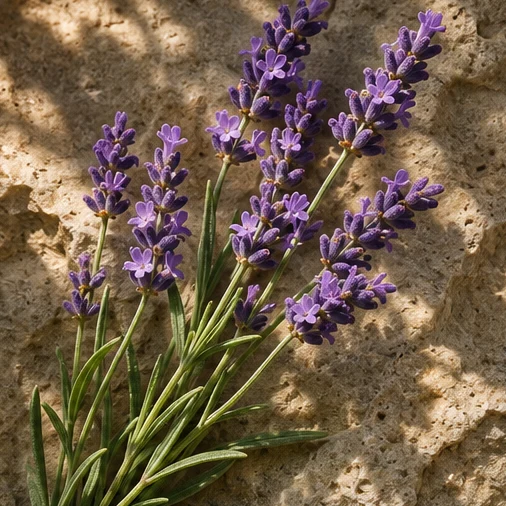
Also known as Lavandula angustifolia (syn. Lavandula officinalis, L. vera, true lavender)
FR Lavande vraie (lavande fine)ES Lavanda / EspliegoAR الخزامىKhzama (Darija)
What the evidence says
The best human evidence is a randomized trial of an essential-oil blend (including lavender) for alopecia areata; skin-healing claims rest mainly on lab and animal data.
- What it does
- A pleasant, relaxing fragrance. Lavender’s scent is the main reason people use it, and inhalation studies suggest modest calming effects.
- How to use it
- Essential oil in body oils and balms · 0.5–2% on the body; ≤0.5–1% on the face
- Watch out for
- Oxidized linalool and linalyl acetate are common contact allergens.
Checked against 4 cited studies and our safety review · Updated 26 November 2026 · How we grade
Why you’ll love Lavender
Why you’ll love it
- A relaxing scent that tells you it’s time to unwind
- Dried buds in the bath, gentle and lightly fragrant
- Lavender water gives you the scent with a featherlight touch
Best forEvening rituals, body care, and anyone who finds floral scents calming.
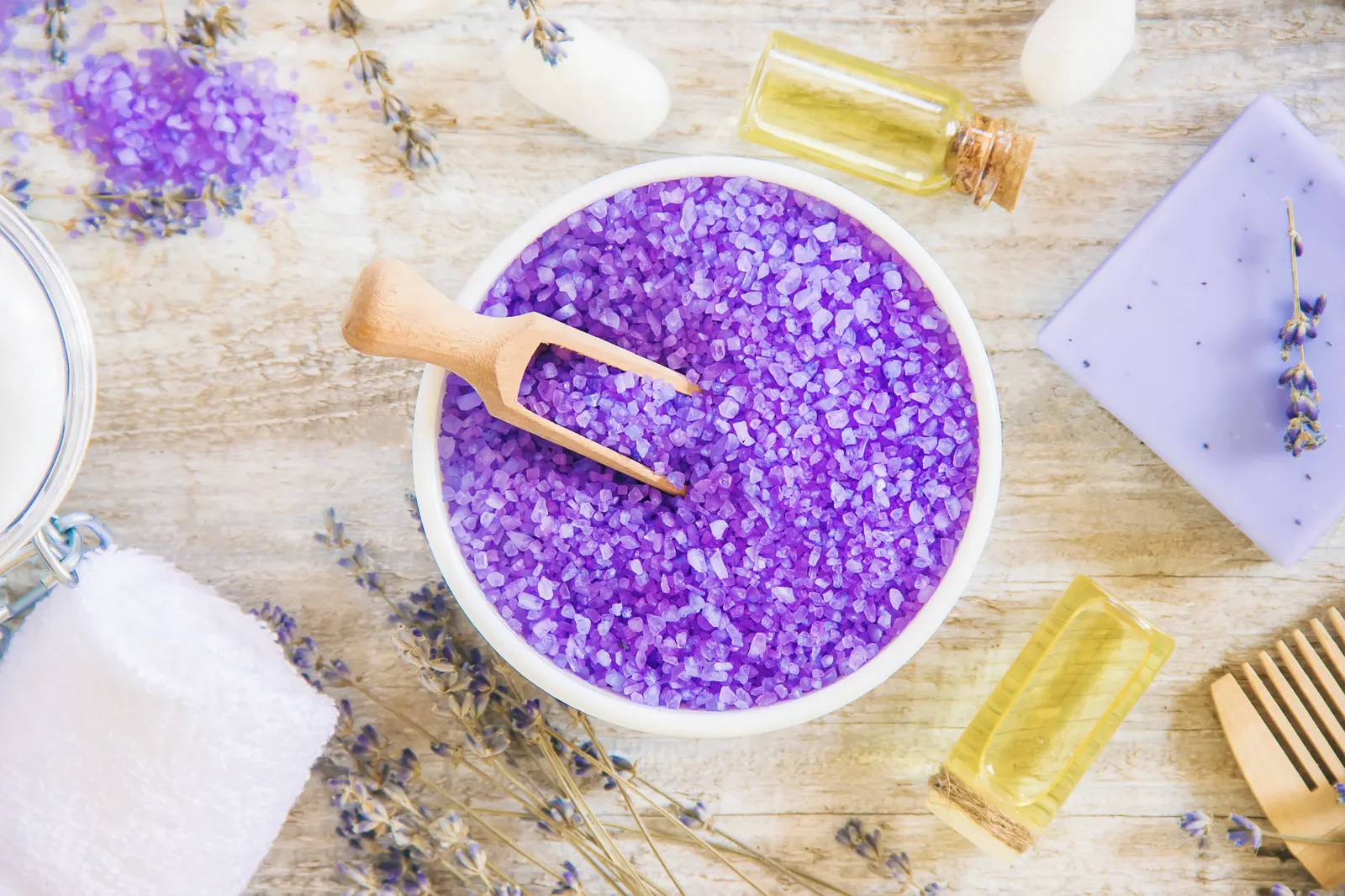
Try it today
A lavender bath, the gentle way
- Fill a muslin bag with a handful of dried lavender buds and tie it closed.
- Let it steep in the warm bath as it runs, instead of dropping essential oil onto the water.
- Soak and breathe slowly, then pat dry and follow with an unscented body oil or lotion.
Good to know: Old, air-exposed lavender oil is a common skin allergen. Buy small bottles, keep them cool and dark, and replace after about a year.
At a glance
| Parts used | Flowering tops; steam-distilled essential oil, hydrosol, infused oil, dried buds |
|---|---|
| Key actives | Linalool, Linalyl acetate, Terpinen-4-ol, Lavandulyl acetate, β-Caryophyllene |
| INCI names | Lavandula Angustifolia (Lavender) Oil Lavandula Angustifolia (Lavender) Flower Extract Lavandula Angustifolia (Lavender) Flower Water Lavandula Hybrida Oil |
| Skin types | normal, dry, combination |
| Pairs well with | JojobaSunflower OilRosemaryChamomile |
| Evidence grade | CPromising The best human evidence is a randomized trial of an essential-oil blend (including lavender) for alopecia areata; skin-healing claims rest mainly on lab and animal data. |
What it does for skin and hair
A pleasant, relaxing fragrance
Lavender’s scent is the main reason people use it, and inhalation studies suggest modest calming effects. On skin, this makes it a natural choice for body oils and bath products rather than an active treatment.
Part of a blend that helped alopecia areata
A nightly scalp massage with lavender, rosemary, thyme and cedarwood oils improved patchy alopecia areata more than carrier oil alone in a randomized trial.
Mild antimicrobial activity
Lavender oil inhibits some bacteria and fungi in the lab, though at concentrations far higher than are safe to leave on skin.
Soothing in very low doses
Lavender hydrosol is a gentle, lightly scented water phase for toners and mists, with far fewer volatile compounds than the oil.
How to use it
Start low, be consistent, and give it four to eight weeks. These are the amounts that work in real products and home recipes.
| Form | Typical use level | Notes |
|---|---|---|
| Essential oil in body oils and balms | 0.5–2% on the body; ≤0.5–1% on the face | Use fresh oil (within about a year of opening), add vitamin E or rosemary extract to slow oxidation, and see Lavender Calm Body Oil and Essential Oil Dilution Calculator. |
| Hydrosol | Up to 100% of the water phase | A gentle way to get lavender’s scent with very few volatiles. Treat it as water: preserve any formula it goes into, and refrigerate the bottle. |
| Dried buds | A handful in a muslin bag in the bath | Infuses the water lightly; far gentler than adding drops of essential oil, which float undiluted on the surface. |
Use it safely
Use with care
- Oxidized linalool and linalyl acetate are common contact allergens. Old, air-exposed oil is the main risk; buy small bottles, keep them tightly closed, cool and dark, and discard after about a year.
- Never apply neat. Even fresh lavender oil can irritate at high concentration; follow Essential Oil Safety: The Complete Guide.
- Children: case reports have linked regular use of lavender-oil products to reversible breast development in prepubertal children. Evidence is limited, but it is sensible to avoid frequent, liberal use on young children.
- Lavandin and Spanish lavender are camphor-rich; avoid them on or near the face of infants and young children.
- If you develop itchy eczema where you use fragranced products, ask a dermatologist about patch testing to fragrance allergens including oxidized linalool.
- Pregnancy & breastfeeding
- Diluted topical lavender oil is generally considered acceptable in pregnancy and breastfeeding; avoid oral use and high concentrations. Pregnancy guide
- Phototoxicity
- Not phototoxic at normal use levels.
- Declared fragrance allergens
- Linalool, Limonene, Geraniol, Coumarin
New to an ingredient? Patch test first. Stop and seek advice if you get burning, swelling, blistering or a spreading rash.
Make it at home: recipes with lavender
 Body care · BeginnerWhipped Shea Body ButterCloud-light whipped shea with coconut and sunflower oils and a hint of lavender — rich care for dry skin, with the trick that prevents graininess.
 Body care · BeginnerLavender Calm Body OilA silky after-bath body oil of sunflower, apricot kernel and jojoba with 2% true lavender — the maximum we recommend for body use.
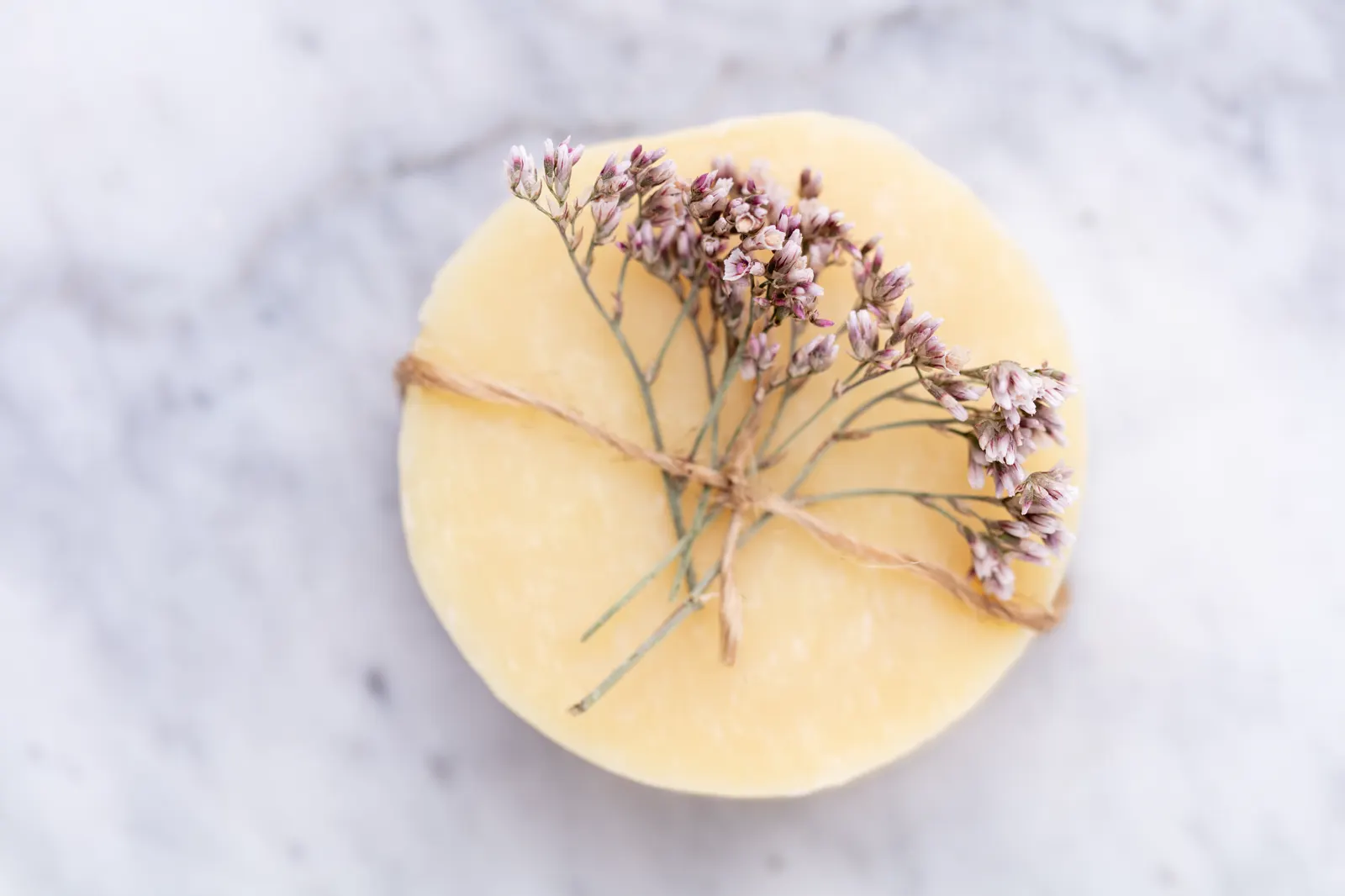 Body care · BeginnerShea Solid Lotion BarA three-ingredient lotion bar of shea, beeswax and sunflower oil that melts on contact with warm skin. No jar, no water, no preservative.
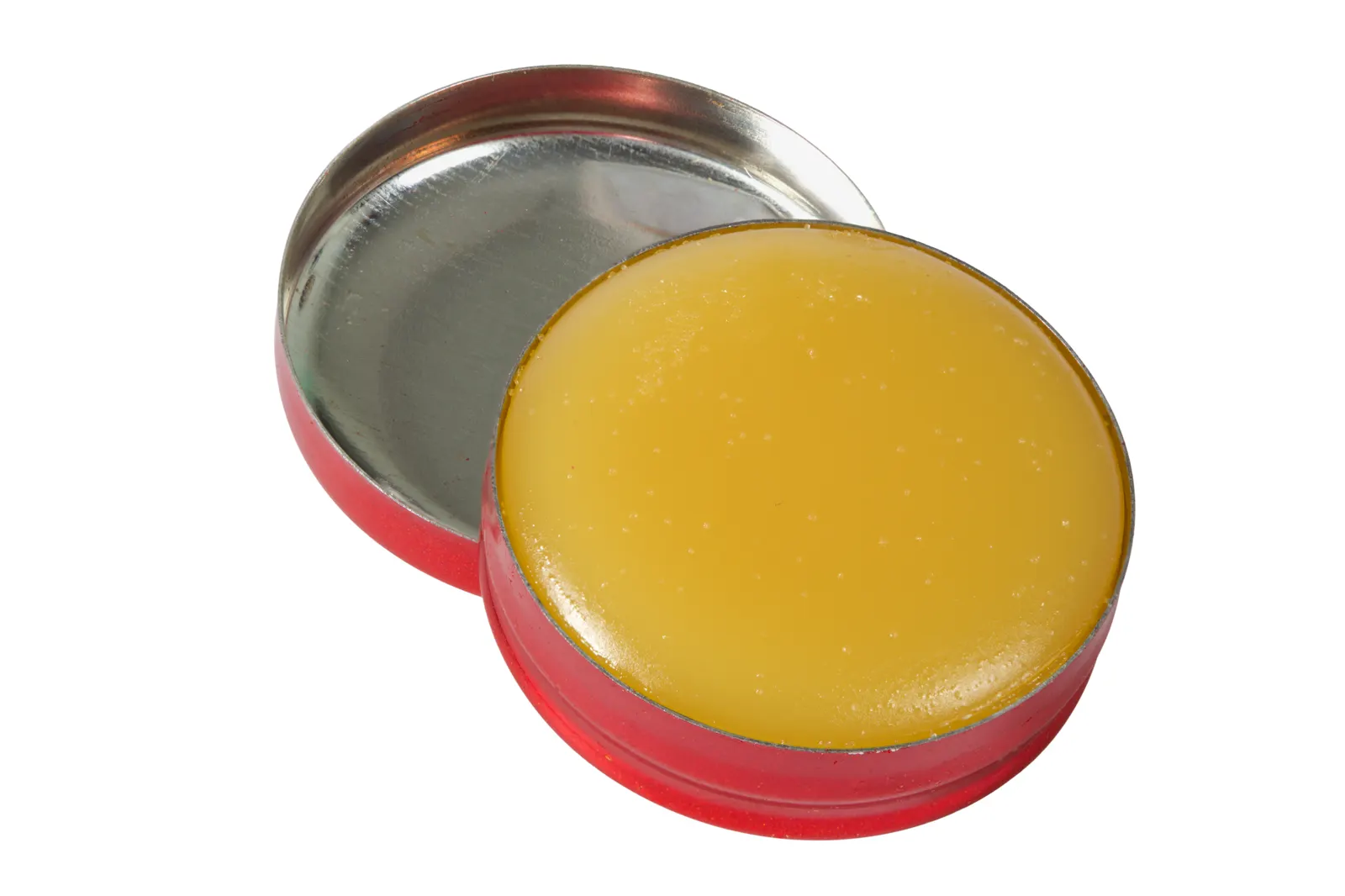 Balm · BeginnerJojoba & Beeswax Solid PerfumeA pocket-sized solid perfume of jojoba and beeswax with a soft, low-dose blend of lavender, Atlas cedar, sandalwood and neroli.
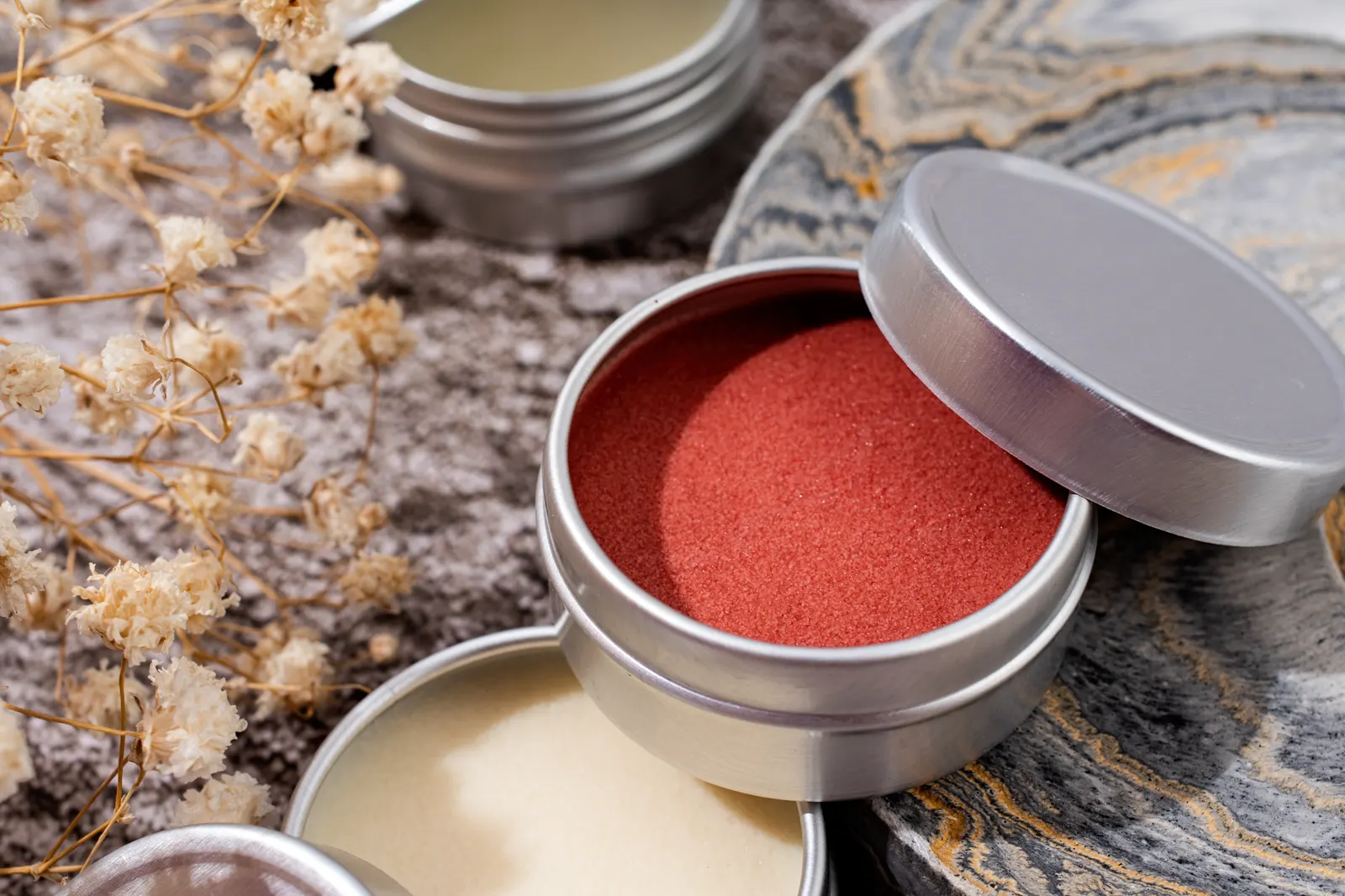 Balm · IntermediateThree-Balm Gift SetOne shea and beeswax base, three little tins: an unscented lip balm, a rose geranium hand balm and a lavender bedtime balm. A handmade gift people use.
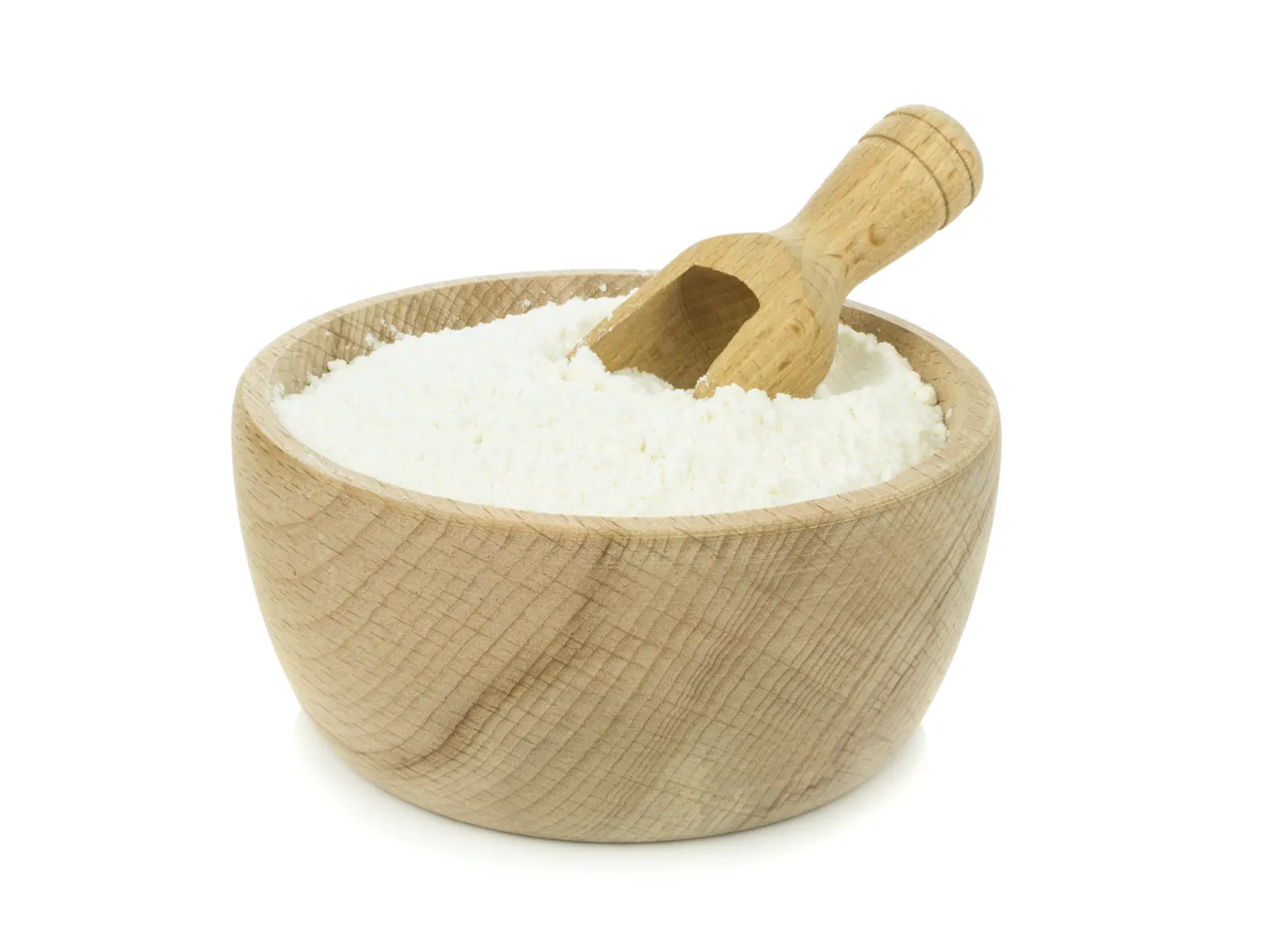 Hair care · BeginnerRice Starch & Rhassoul Dry ShampooA talc-free dry shampoo powder of rice starch, arrowroot and Moroccan rhassoul clay that soaks up oily roots between washes. Brush on, wait, brush out.
Buying well
Sustainability
Bulgaria is now one of the largest producers of true lavender oil, alongside France (Provence), and Spain and Morocco grow lavender and lavandin. Adulteration is widespread: lavandin sold as lavender, or oils “improved” with synthetic linalool and linalyl acetate. Chiral GC analysis can detect most of these.
How to choose quality
Look for Lavandula angustifolia (not just “lavender”), country of origin, distillation date and a GC-MS report. Lavandin (L. × intermedia) is cheaper and fine for scenting laundry, but less suited to skin. Buy small bottles and store them cold and dark; oxidation, not age alone, is the safety issue.
The research For professionals
The chemistry, the studies and the evidence by concern, for practitioners, formulators and the curious.
True lavender oil (Lavandula angustifolia) is typically dominated by linalool and linalyl acetate, with smaller amounts of terpinen-4-ol, lavandulyl acetate and β-caryophyllene, and only low camphor. Lavandin (L. × intermedia), spike lavender (L. latifolia) and Spanish lavender (L. stoechas) contain much more camphor and 1,8‑cineole; they smell sharper and are less suited to skin and to children. Cheap “lavender” oil is often lavandin, or true lavender extended with synthetic linalool and linalyl acetate.
Fresh linalool and linalyl acetate are weak sensitizers, but on contact with air they form hydroperoxides that are potent allergens. Patch-testing studies in European dermatitis clinics find positive reactions to oxidized linalool in a few percent of patients tested, making it one of the more common fragrance allergies. Lab work also shows lavender oil is cytotoxic to human skin cells at concentrations as low as 0.25% (Prashar, 2004) — a reminder that “natural” and “gentle” are not the same.
Evidence for benefits is modest. In a randomized trial in alopecia areata (Hay, 1998), a blend of lavender, rosemary, thyme and cedarwood oils outperformed carrier oil alone. Lavender oil promoted hair growth in mice in a later study, and animal wound models suggest faster healing, but human skin trials are lacking.
The hormone question. Henley et al. (NEJM, 2007) described three prepubertal boys who developed breast enlargement while using lavender- and/or tea-tree-containing products; it resolved after they stopped, and the oils showed weak estrogenic and anti-androgenic activity in cell assays. Further cases and lab data followed (Ramsey, 2019). These are case reports and in vitro findings — they do not prove causation, no population study has confirmed a link, and adult use is not implicated. A cautious, reasonable reading: avoid repeated, liberal use of lavender-oil products on young children, and stop if unexplained breast development appears.
Key studies
Three prepubertal boys with gynecomastia that resolved after stopping lavender- and tea-tree-containing products; both oils showed weak estrogenic and anti-androgenic activity in cell lines. Case reports, not proof of causation.
Henley DV, et al. N Engl J Med. 2007 Read it in the bibliography Find on PubMedAdditional case reports of premature breast development with lavender product use, plus in vitro endocrine activity of several common essential-oil components.
Ramsey JT, et al. J Clin Endocrinol Metab. 2019 Read it in the bibliography Find on PubMedIn 86 people with alopecia areata, a blend of lavender, rosemary, thyme and cedarwood oils improved 44% vs 15% with carrier oil alone.
Hay IC, et al. Arch Dermatol. 1998 Read it in the bibliography Find on PubMedLavender oil, linalool and linalyl acetate were cytotoxic to human skin cells in vitro at concentrations of 0.25% and above.
Prashar A, et al. Cell Prolif. 2004 Read it in the bibliography Find on PubMed
MythLavender oil is gentle enough to use neat on burns and spots.
EvidenceUndiluted lavender oil can irritate, and its oxidized components are recognized allergens. For a minor burn, cool running water for 20 minutes is the first-aid standard; for spots, evidence-based options such as benzoyl peroxide work better.
In tradition
Lavender has scented baths and linens since Roman times, and Provence built a perfume economy on it. In Morocco, khzama is used in herbal waters and to perfume clothes and homes.
From the first-edition dossier
From study to shelf
Fragrance, essential oil and the limits of skin-care claims.
On this page
What the studies found
Barbaud et al. (2023) PubMed
- Study design
- French dermatology clinics analyzed 42 selected patients with allergic contact dermatitis associated with essential oils they had used.
- Result
- Lavender was among the oils most often implicated in this group. Testing patients’ own oils and using an expanded series identified some reactions missed by the baseline series.
- Limitations
- This referred clinical group cannot show how frequently an allergy occurs among all users of lavender cosmetics. The results concern selected exposures and professional patch testing.
Hagvall et al. (2008) PubMed
- Study design
- Researchers exposed lavender oil to air and analyzed oxidation products. They compared sensitizing potency in mice and patch-tested selected people allergic to oxidized linalool.
- Result
- After air exposure, the oil had greater sensitizing potency in mice. The selected patients also showed positive patch-test reactions to air-exposed lavender oil.
- Limitations
- The animal model and selected patch-test group cannot estimate general reaction rates or show how quickly a finished cosmetic changes after opening.
A label can help you investigate a reaction
Look for Lavandula Angustifolia Oil or Flower Water, as well as Parfum, Fragrance and the names relevant to your diagnosed allergies. Fragrance disclosure differs across markets. Follow the product’s after-opening instructions and keep a photograph of the local ingredient list if a rash recurs.
FDA · Cosmetic allergens and labeling
Checks before you buy
- Read for Lavandula Angustifolia Oil, Linalool and Parfum if fragrance is a concern.
- Follow the package’s storage and after-opening instructions.
- Take the exact formula to a clinician if a rash recurs with fragranced products.
Questions readers ask
Does an allergy to fragrance mean all lavender ingredients are equivalent?
Oil, extract and flower water differ. A clinician can identify what you react to and help interpret the list.
Do aromatherapy results show a skin benefit?
A study of inhaled scent addresses a different exposure and outcome from an oil applied to skin.
Compare the preparations
Lavender oil, flower extract and flower water are different ingredients. “Unscented” can describe the smell of a product that contains fragrance used to mask other odors.
| Preparation | What to check |
|---|---|
| Distilled oil | Check the plant part or species declared and the manufacturer’s specification. |
| Flower water | Check whether the same preparation appears in the study or the formula you are comparing. |
| Parfum or named fragrance constituents | Read this term separately and check the rest of the ingredient list. |
The research
A French patch-test series documents lavender among oils associated with contact allergy in selected patients. The series cannot quantify the chance of a reaction to a given product. Studies of inhaled lavender address a different exposure.
Safety and tolerance
Topical lavender products can cause allergic skin reactions. If fragrance is a concern, check the complete list and discuss known allergies with a health professional.
What to look for on the label
Look for “Lavandula Angustifolia (Lavender) Oil”, “Lavandula Angustifolia Flower Water” and “Parfum” or “Fragrance”.
A real label example
United States ·
Weleda Relaxing Body & Beauty Oil - Lavender
- Lavandula Angustifolia (Lavender) Oil
- Prunus Amygdalus Dulcis (Sweet Almond) Oil
- Sesamum Indicum (Sesame) Seed Oil
Lavender oil appears in a body-oil blend with sweet almond and sesame oils. This is a finished body product, not a single-ingredient lavender essential oil.
Sources
- NCCIH · Lavender
- FDA · Allergens in cosmetics
- Barbaud et al. (2023) PubMed
- Hagvall et al. (2008) PubMed
Continue reading
First published in the original Herbs.Beauty atlas on 11 November 2026, with its sources as checked on that date.
Frequently asked questions
Is lavender oil good for your skin?
Can lavender oil cause hormone problems in boys?
Can I be allergic to lavender?
Does lavender oil help hair growth?
Cite this page
Herbs.Beauty. Lavender (Lavandula angustifolia): evidence-based monograph. Updated 26 November 2026. https://herbs.beauty/ingredients/lavender.html