Does it work?
Willow Bark for Acne & Breakouts
Willow bark is a soft-spoken toner for oily skin: soothing, lightly astringent and gentle by nature.
The short answer: Contains salicin and other salicylates that may gently exfoliate and calm, but it is far weaker than salicylic acid and human data are limited.
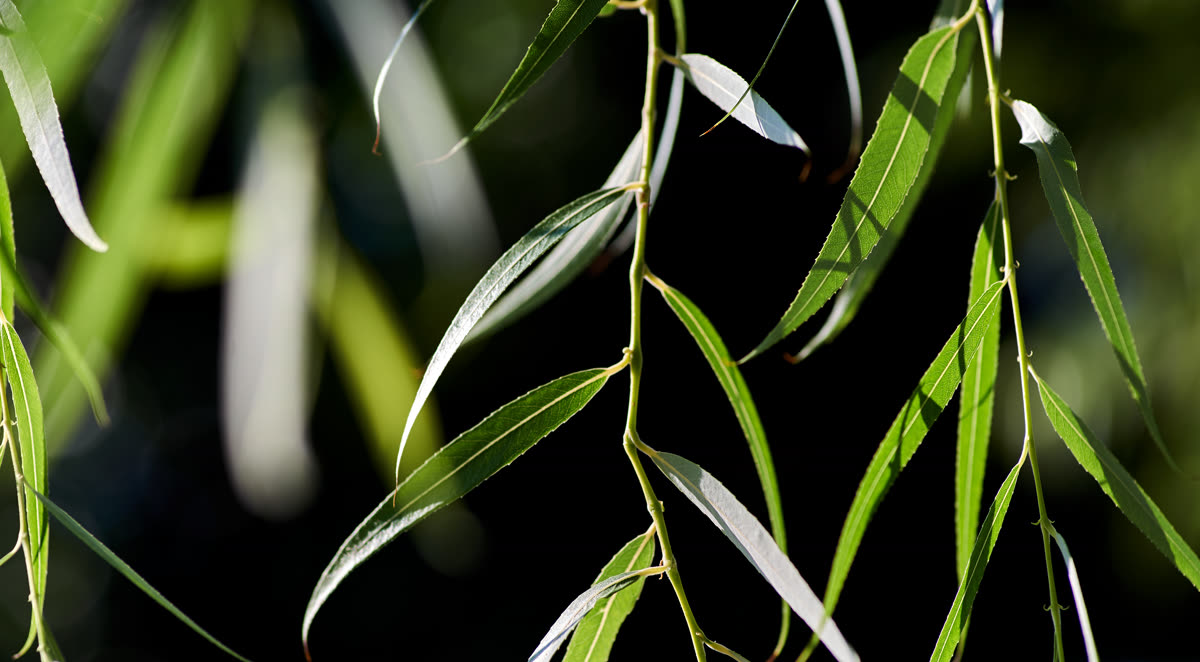
What Willow Bark can do for Acne & Breakouts
Willow bark is the plant that led chemists to aspirin, so it is often marketed as “natural salicylic acid” or a “natural BHA.” In reality, it contains salicin, a sugar-bound precursor that the body converts to salicylic acid only after swallowing it, mostly in the gut and liver. On skin, willow bark extract is a gentle, tannin-rich soother and mild astringent; if you want real exfoliation and pore-clearing, you need actual salicylic acid.
Why people reach for it
- Mild astringent and toner. Tannins (procyanidins) give a light tightening, shine-reducing feel on Oily Skin & Pores.
- Soothing and antioxidant. Polyphenols and flavonoids show anti-inflammatory and antioxidant activity in lab studies.
- Gentle alternative for very sensitive skin. Because it does not exfoliate like salicylic acid, it is unlikely to cause the dryness and peeling acids can; that is also why its effect on blemishes is modest.
How to use it
Try it today
A soft toning step
- Choose a toner with willow bark extract and patch test it first; skip it if aspirin disagrees with you.
- Sweep it over clean skin with a cotton pad, focusing on oily areas.
- Follow with moisturizer, especially if your skin leans dry.
| Form | Typical use | Notes |
|---|---|---|
| Extract in toners and cleansers | 1–5% (per supplier) | A soothing, lightly astringent addition for oily skin; water-based formulas need a preservative. |
| Scalp tonic or shampoo | 1–3% extract | For an oily scalp feel; for genuine flaking, salicylic acid or antifungal shampoos are better (see Dandruff & Itchy Scalp). |
| When you want real exfoliation | Salicylic acid 0.5–2% (within local regulatory limits) | Use a properly formulated salicylic acid product rather than relying on willow bark. See Acne & Breakouts. |
Use it safely
- If you are allergic to aspirin or other salicylates, or have aspirin-sensitive asthma, avoid willow bark products (and never take willow bark orally) unless your doctor approves.
- Do not give oral willow bark to children or teenagers (risk of Reye’s syndrome, as with aspirin) or combine it orally with anticoagulants or NSAIDs.
- Topically it is usually well tolerated; tannins can feel drying on already dry skin.
- Check labels: “willow bark” products for acne often also contain synthetic salicylic acid, which is regulated in the EU with concentration limits and restrictions for young children.
Pregnancy and breastfeeding: Avoid oral willow bark in pregnancy and breastfeeding. Topical extracts at cosmetic levels are likely low-risk, but salicylic acid products should be used only as your clinician advises.
New to an ingredient? Patch test first.
When to see a doctor
- Deep, painful nodules or cysts, or any acne that is leaving scars (pitted, rolling or raised) — early treatment prevents permanent scarring.
- No meaningful improvement after 2–3 months of consistent over-the-counter treatment.
- Acne with irregular periods, excess facial or body hair, scalp hair thinning or rapid weight gain, which can point to polycystic ovary syndrome or another hormonal cause.
- Sudden, severe, ulcerating acne with fever, joint pain or feeling unwell (acne fulminans) — seek prompt care.
- Acne that started after a new medicine or supplement (e.g. corticosteroids, anabolic steroids, some anticonvulsants).
- Acne affecting your mood, sleep or confidence — this is a valid reason to seek treatment.
Other plants for Acne & Breakouts
| Ingredient | Grade | What the evidence shows |
|---|---|---|
| Tea Tree | B | Several small randomized trials of 5% tea tree oil gel show fewer inflammatory and total lesions than placebo, with slower onset but better tolerability than 5% benzoyl peroxide. |
| Green Tea | B | Small randomized trials of 2–3% green tea extract lotions reduced lesion counts and sebum in mild to moderate acne; effects are modest. |
| Aloe Vera | C | In one randomized trial, aloe gel combined with tretinoin improved results and tolerability versus tretinoin alone — useful as a soothing partner to retinoids. |
| Bakuchiol | C | Small, mostly open-label studies suggest benefit in mild acne, often in combination products; plausible anti-inflammatory and anti-sebum effects. |
| Honey | C | Antimicrobial in the lab, but a randomized trial of medical-grade kanuka honey added to routine cleansing found no significant extra benefit. |
| Witch Hazel | D | Tannins are astringent and anti-inflammatory in vitro; there are no meaningful acne trials, and alcohol-based distillates can irritate. |
| Rhassoul Clay | D | Absorbs surface oil temporarily for a matte finish; no evidence it treats acne lesions. |