The ingredient encyclopedia · flower
Calendula
Calendula officinalis · Asteraceae
Sunny pot marigold petals, steeped in oil, make one of the gentlest balms for dry, chapped skin.
FR Souci officinalES Caléndula / MaravillaAR الآذريون
- How well proven
- BGood evidence
- Safety
- Low topical risk
- Sun-sensitive
- No
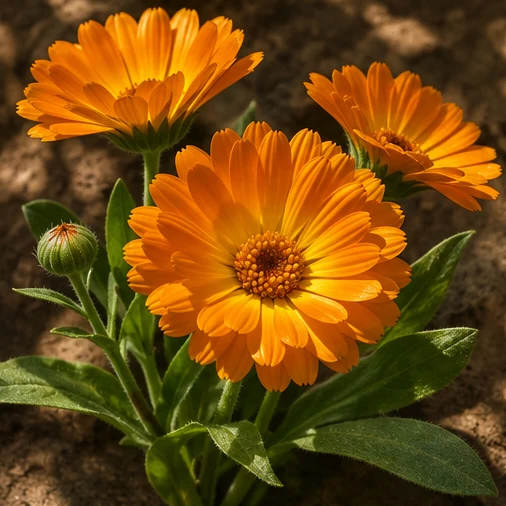
FR Souci officinalES Caléndula / MaravillaAR الآذريون
What the evidence says
One large randomized trial found calendula cream reduced severe radiation dermatitis versus trolamine, but a later blinded trial against a simple aqueous cream found no difference; wound-healing trials are encouraging but small.
- Best supported for
- Scars, Wounds & Stretch Marks CSun Care & After-Sun D
- How to use it
- Infused oil · 20–100% of the oil phase of balms, salves and body oils
- Watch out for
- Asteraceae (daisy family) allergy: people sensitized to ragweed, chrysanthemum, arnica, chamomile or feverfew can react.
Checked against 3 cited studies and our safety review · Updated 26 November 2026 · How we grade
Why you’ll love Calendula
Why you’ll love it
- Softens rough, cracked hands, heels and lips
- Comforting on minor scrapes once they’re clean
- Gentle enough for babies’ skin and sensitive faces
Best forDry, chapped or sensitive skin, from winter hands to delicate baby skin.
Try it today
A golden hand-and-heel rescue
- If calendula is new to you, patch test a little balm on your inner arm first.
- Warm a small amount between your fingertips and press it into dry knuckles, cuticles and heels.
- At bedtime, add a thin extra layer and slip on cotton gloves or socks overnight.
Good to know: It’s in the daisy family: if ragweed, chamomile or arnica bother you, patch test first. Don’t confuse it with Tagetes marigolds.
At a glance
| Parts used | Whole dried flower heads (mainly ray florets); used as oil infusions, CO₂ extracts, hydroglycerin and hydroalcoholic extracts |
|---|---|
| Key actives | Faradiol esters (triterpene alcohols), Flavonol glycosides (isorhamnetin, quercetin), Carotenoids (lutein, flavoxanthin), Oleanolic acid saponins, Polysaccharides |
| INCI names | Calendula Officinalis Flower Extract Calendula Officinalis Flower Oil Calendula Officinalis Flower |
| Skin types | dry, sensitive, normal, mature |
| Pairs well with | Shea ButterSunflower OilChamomileColloidal Oatmeal |
| Evidence grade | BGood evidence One large randomized trial found calendula cream reduced severe radiation dermatitis versus trolamine, but a later blinded trial against a simple aqueous cream found no difference; wound-healing trials are encouraging but small. |
What it does for skin and hair
Comforts dry, cracked and chapped skin
Calendula-infused oils and balms soften rough hands, lips and heels while delivering anti-inflammatory triterpenes. Most of the barrier benefit comes from the oil and butter base; calendula adds soothing.
Supports healing of minor wounds
Lab and animal studies show calendula extracts encourage fibroblast activity and new tissue formation, and the European Medicines Agency recognizes it as a traditional remedy for minor wounds and skin inflammation.
May ease radiation-related skin reactions
A 254-patient trial found less grade 2+ radiation dermatitis with calendula than with trolamine cream. A later trial found it no better than a plain cream, so it is an option to discuss with the oncology team rather than a proven preventive.
A gentle choice for babies’ and sensitive skin
Calendula is a long-standing ingredient in diaper and baby creams and is generally well tolerated — with the exception of people sensitized to Asteraceae plants.
How to use it
Start low, be consistent, and give it four to eight weeks. These are the amounts that work in real products and home recipes.
| Form | Typical use level | Notes |
|---|---|---|
| Infused oil | 20–100% of the oil phase of balms, salves and body oils | Fully dried flowers macerated in sunflower or olive oil (gentle warmth or 4–6 weeks cold). Never use fresh flowers — their water invites mold. Method in Infused Oils, Hydrosols & Extracts. |
| CO₂ extract | 0.1–1% (per supplier) | Concentrated, faradiol-rich and deep orange; ideal for creams and lip care where you want activity without a large oil load. |
| Glycerite or hydroglycerin extract | 2–5% in water-based products | Adds water-soluble flavonoids and polysaccharides; requires a broad-spectrum preservative like any aqueous formula. |
| Pharmacy calendula cream | 2–3 times daily on dry, chapped or minor-damaged skin | During radiotherapy, use only creams your treatment team approves and follow their timing advice. |
Use it safely
Low topical risk
- Asteraceae (daisy family) allergy: people sensitized to ragweed, chrysanthemum, arnica, chamomile or feverfew can react. Calendula contains less sesquiterpene lactone than arnica, but positive patch tests are documented. Patch test first (How to Patch Test).
- Do not confuse with French or African “marigolds” (Tagetes spp.). Tagetes essential oil is phototoxic and restricted by IFRA.
- Balms are for clean, minor wounds and dry, cracked skin. Deep, dirty, hot, swollen or pus-filled wounds need medical attention.
- Homemade infused oils can go moldy (if flowers were not fully dry) or rancid; strain well, add vitamin E or rosemary extract, and store cool and dark.
- Pregnancy & breastfeeding
- Topical calendula is widely used in pregnancy and on infants’ skin with no known concerns. Oral calendula is traditionally avoided in pregnancy. Pregnancy guide
- Phototoxicity
- Not phototoxic at normal use levels.
- Declared fragrance allergens
- None expected
New to an ingredient? Patch test first. Stop and seek advice if you get burning, swelling, blistering or a spreading rash.
Make it at home: recipes with calendula
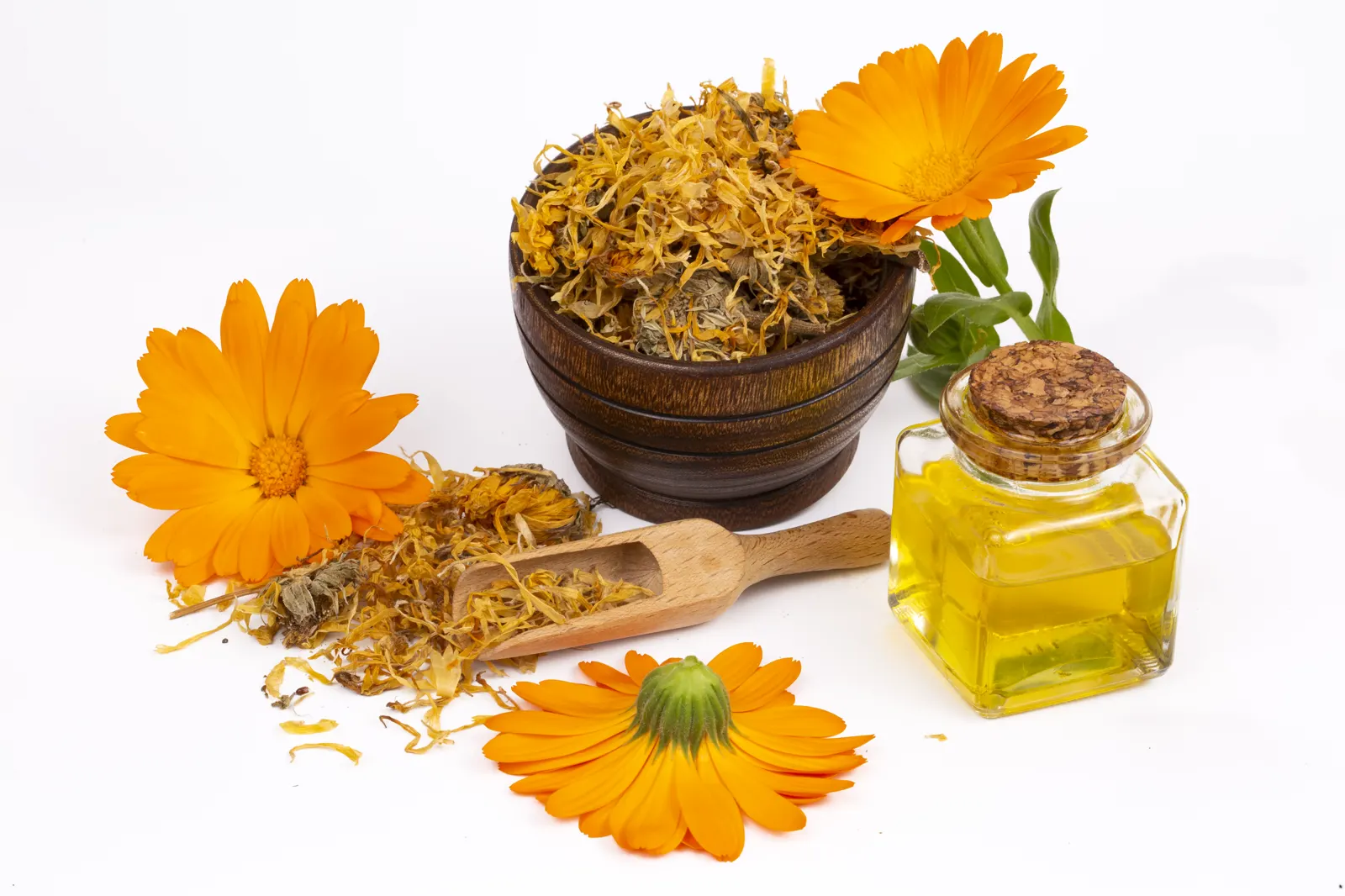 Balm · BeginnerCalendula Comfort BalmA rich, fragrance-free balm of calendula-infused oil, shea and beeswax for chapped hands, dry patches and minor scrapes once they have closed.
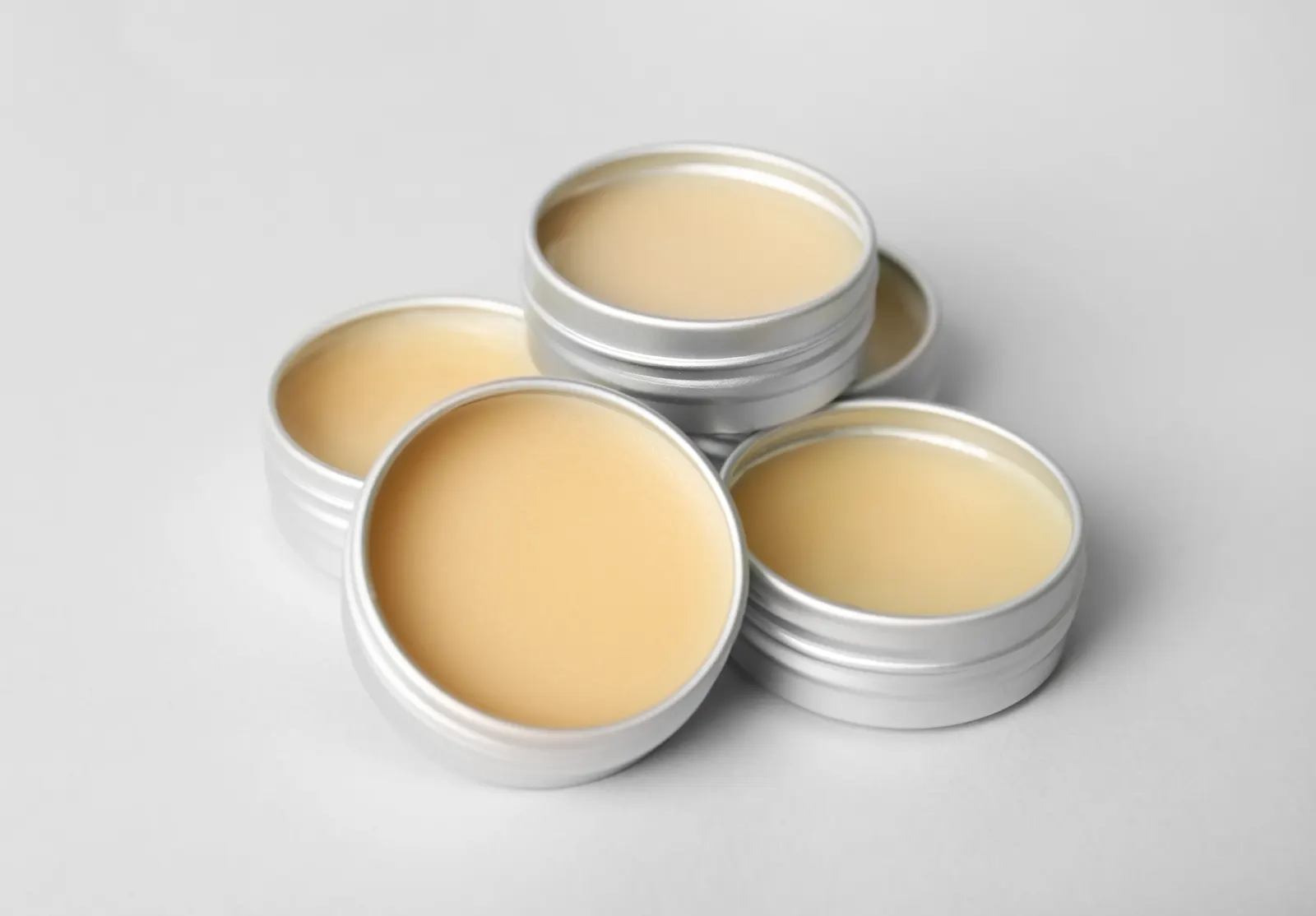 Lip care · BeginnerShea & Calendula Lip BalmA classic fragrance-free beeswax lip balm with shea, castor oil and calendula-infused oil — glossy, protective and easy to make.
Buying well
Sustainability
An easy annual that self-seeds across Mediterranean gardens, calendula is cultivated rather than wild-harvested and has no conservation concerns. Organic flowers are widely available, and growing your own is one of the simplest ways into botanical skin care.
How to choose quality
Choose whole, deep-orange dried flower heads (resin-sticky is good — that is where the triterpenes are) and check the label says Calendula officinalis, not Tagetes. For infused oil, ask for the flower-to-oil ratio and the carrier used. CO₂ extracts are more consistent than homemade infusions. Store dried flowers airtight away from light and use within a year.
The research For professionals
The chemistry, the studies and the evidence by concern, for practitioners, formulators and the curious.
Calendula’s anti-inflammatory activity tracks most closely with its triterpene alcohol esters, especially faradiol-3-O-myristate and -palmitate. In the classic mouse ear-edema model, these lipophilic esters accounted for much of the extract’s effect (Della Loggia, 1994). Because they are fat-soluble, they concentrate in oil infusions, balms and CO₂ extracts rather than in teas. The flowers also carry flavonol glycosides (isorhamnetin and quercetin derivatives), carotenoids that give the orange color, oleanolic-acid saponins and water-soluble polysaccharides.
In vitro and in animal wound models, calendula extracts stimulate fibroblast proliferation and migration, promote granulation tissue and new blood vessel formation, and modestly reduce inflammatory cytokines. Antimicrobial effects are weak and should not be relied upon to treat infection.
The headline human trial is Pommier et al. (J Clin Oncol, 2004): 254 women having breast radiotherapy were randomized to calendula ointment or trolamine (Biafine). Grade 2 or higher dermatitis occurred in 41% versus 63%, with less pain on calendula. The trial was not blinded and trolamine is not an inert comparator. A later Swedish randomized, blinded trial of about 420 women (Sharp, 2013) found no difference between calendula and an ordinary aqueous cream. Small trials in venous leg ulcers, episiotomy healing and diaper dermatitis have been encouraging but are too small to be conclusive.
So calendula earns a cautious B: credible mechanisms, a genuine positive trial, an equally genuine null result, and a long safety record. It is best thought of as a soothing, healing-supportive ingredient for minor skin damage.
Evidence by concern
| Concern | Grade | What the evidence shows |
|---|---|---|
| Sun Care & After-Sun | D | Traditional for minor burns and has some evidence in radiation skin reactions, but not tested for sunburn; daisy-family allergy is possible. |
| Scars, Wounds & Stretch Marks | C | Small trials suggest benefit for skin reactions to radiotherapy and minor wounds; daisy-family allergy is possible. |
Key studies
254 women receiving breast radiotherapy: grade ≥2 dermatitis in 41% with calendula vs 63% with trolamine, plus less radiation-related pain; open-label design.
Pommier P, et al. J Clin Oncol. 2004 Read it in the bibliography Find on PubMedRandomized, blinded trial in about 420 women having breast radiotherapy: calendula cream was no better than a simple aqueous cream at preventing acute skin reactions.
Sharp L, et al. Eur J Oncol Nurs. 2013 Read it in the bibliography Find on PubMedIdentified faradiol monoesters as the main anti-inflammatory constituents of calendula flowers in a mouse ear-edema model.
Della Loggia R, et al. Planta Med. 1994 Read it in the bibliography Find on PubMed
MythCalendula is a proven treatment for radiation burns.
EvidenceOne open-label trial favored calendula over trolamine, but a later blinded trial found it no better than a plain moisturizing cream. Guidelines generally recommend simple, fragrance-free moisturizers and gentle washing; use calendula only if your radiotherapy team agrees.
In tradition
The name comes from the Latin calendae, the first day of the month, a nod to its long flowering season. Across the Mediterranean the petals colored butter and rice (“poor man’s saffron”) and were steeped in oil for chapped hands and grazes.
From the first-edition dossier
From study to shelf
A traditional botanical and the difference between a balm and a medicine.
On this page
What the studies found
EMA · Calendulae flos
- Study design
- The EMA Committee on Herbal Medicinal Products assessed specified preparations of Calendula officinalis flowers.
- Result
- The EMA monograph supports traditional medicinal use for minor skin inflammation and as an aid in healing minor wounds. This classification reflects long-standing use.
- Limitations
- Clinical evidence was insufficient for a conclusion based on trials. The monograph is preparation-specific and does not substantiate the claims of an ordinary body balm.
Pommier et al. (2004) PubMed
- Study design
- In a randomized study, 254 people receiving breast radiotherapy after surgery used one specified calendula ointment or trolamine on irradiated areas.
- Result
- Grade 2 or higher acute dermatitis was reported in 41% of the calendula group and 63% of the trolamine group.
- Limitations
- The comparator was trolamine, and the outcome concerned radiation dermatitis. This comparison does not show what a retail balm would do on ordinary dry skin.
Sharp et al. (2013) PubMed
- Study design
- A later blinded randomized trial allocated 420 people receiving breast radiotherapy to a calendula cream or an aqueous cream. The analysis included 411 people.
- Result
- The study found no statistically significant difference in acute radiation skin reactions between the groups.
- Limitations
- The study used a different calendula formula and comparator. During radiation therapy, follow the skincare instructions from your oncology team.
Read the flower and the balm base
Look for Calendula Officinalis Flower Extract and check the carrier oils and waxes. The oils and waxes help determine the texture. The EMA records skin sensitization and contraindicates its specified medicines in people allergic to Asteraceae. If that allergy applies to you, check the cosmetic with your clinician.
EMA · Calendula indications and risks
Checks before you buy
- Look for Calendula Officinalis Flower Extract and identify the balm’s main oils and waxes.
- Decide whether you want a thin moisturizer or an occlusive balm. Their base can matter more to feel than the floral extract.
- Avoid calendula if you have a known allergy to Asteraceae plants.
Questions readers ask
Are wound-healing claims on a balm supported by the monograph?
The monograph concerns defined medicinal preparations, with specific indications. A retail balm requires evidence for its own claims.
Why might two trials disagree?
Formulas, comparators and clinical protocols differ. Their outcomes cannot be directly transferred to an ordinary body balm.
Compare the preparations
A flower extract and an oil macerate are different ingredients. A balm may feel emollient because of the base oils and waxes.
| Preparation | What to check |
|---|---|
| Flower extract | Check the plant part or species declared and the manufacturer’s specification. |
| Flower preparation in a carrier oil | Check whether the same preparation appears in the study or the formula you are comparing. |
The research
The EMA monograph covers specified herbal medicinal preparations for minor skin inflammation and as an aid to healing minor wounds, based on long-standing use. The assessment identifies limitations in the clinical evidence. This recognition is specific to the medicinal preparations.
Safety and tolerance
Avoid calendula if you have a known allergy to plants in the Asteraceae family. Skin sensitization has been reported.
What to look for on the label
Look for “Calendula Officinalis Flower Extract” and check the other ingredients, including the carrier oil.
A real label example
Spain ·
Weleda Skin Food
- Calendula Officinalis Flower Extract
- Lanolin
- Fragrance (Parfum)
Calendula flower extract appears in a cream that also lists lanolin and fragrance. This excerpt is not the complete ingredient list.
Sources
Continue reading
First published in the original Herbs.Beauty atlas on 11 November 2026, with its sources as checked on that date.
Frequently asked questions
What is calendula cream good for?
Is calendula safe for babies and diaper rash?
What’s the difference between calendula and arnica?
Can calendula fade scars?
Cite this page
Herbs.Beauty. Calendula (Calendula officinalis): evidence-based monograph. Updated 26 November 2026. https://herbs.beauty/ingredients/calendula.html