The ingredient encyclopedia · herb
Thyme
Thymus vulgaris L. (Related thymes in cosmetics: T. zygis (Spain), T. satureioides (Morocco), T. mastichina, Iberia) · Lamiaceae
The wild, sun-warmed scent of the Mediterranean garrigue, made for fresh scalp rinses and foot care.
FR Thym (thym commun)ES TomilloAR زعترZaïtra (Darija, mostly Thymus satureioides); tomillo salsero (T. zygis, Spain)
- How well proven
- CPromising
- Safety
- Use with care
- Sun-sensitive
- No
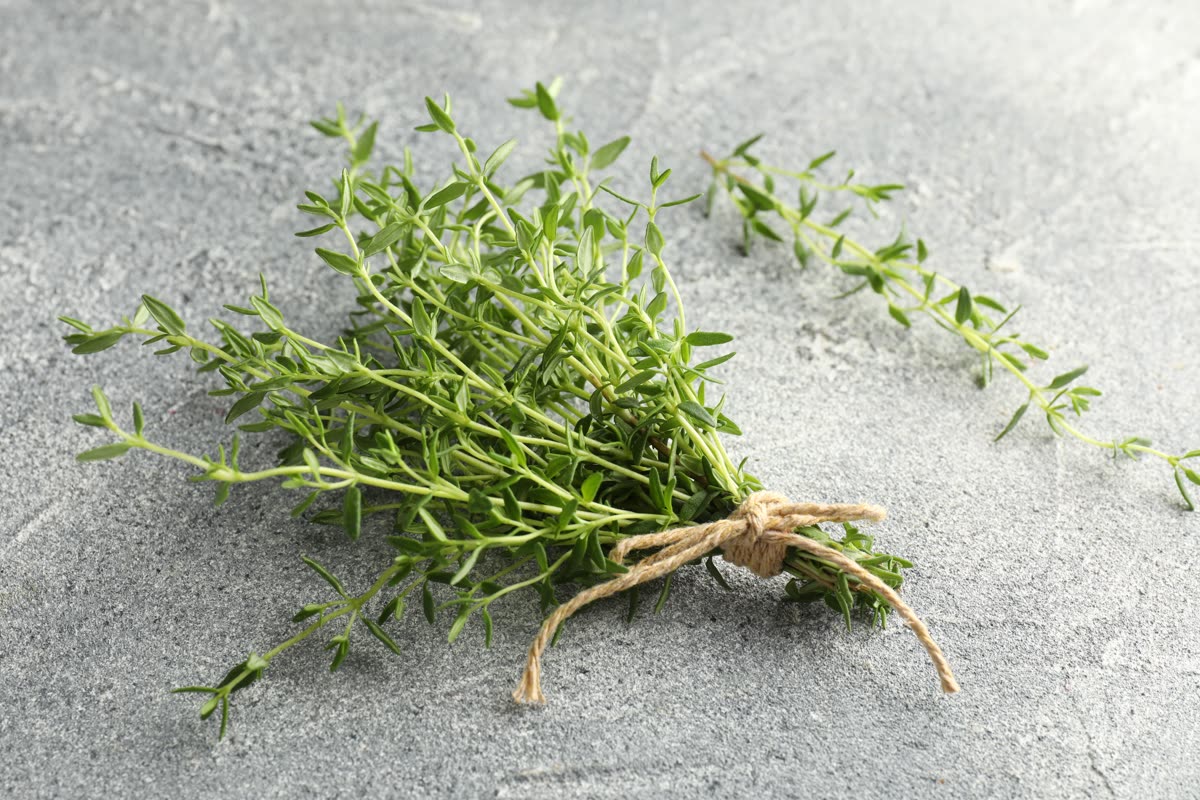
Also known as Thymus vulgaris L. (Related thymes in cosmetics: T. zygis (Spain), T. satureioides (Morocco), T. mastichina, Iberia)
FR Thym (thym commun)ES TomilloAR زعترZaïtra (Darija, mostly Thymus satureioides); tomillo salsero (T. zygis, Spain)
What the evidence says
Strong in-vitro antimicrobial data and one randomized trial of a blend including thyme for alopecia areata; no trials of thyme alone for acne or dandruff.
- What it does
- Potent antimicrobial (in the lab). Thymol and carvacrol disrupt bacterial and fungal membranes, including acne bacteria and yeasts, at low concentrations in vitro — the basis for thyme in clarifying and scalp products.
- How to use it
- Linalool-type essential oil in leave-on products · ≤ 0.5% on the face, up to 1–2% on the body
- Watch out for
- Thymol- and carvacrol-rich oils are skin and mucous-membrane irritants: never apply neat, keep away from the face and eyes, and use only in well-diluted or rinse-off products.
Checked against 1 cited study and our safety review · Updated 26 November 2026 · How we grade
Why you’ll love Thyme
Why you’ll love it
- A crisp, clean herbal scent that instantly feels fresh
- A classic of rinse-off scalp blends and reviving foot soaks
- One of four oils in a trial-tested scalp massage blend
Best forScalp rinses, foot soaks and rinse-off care; never neat oil on skin or face.
Try it today
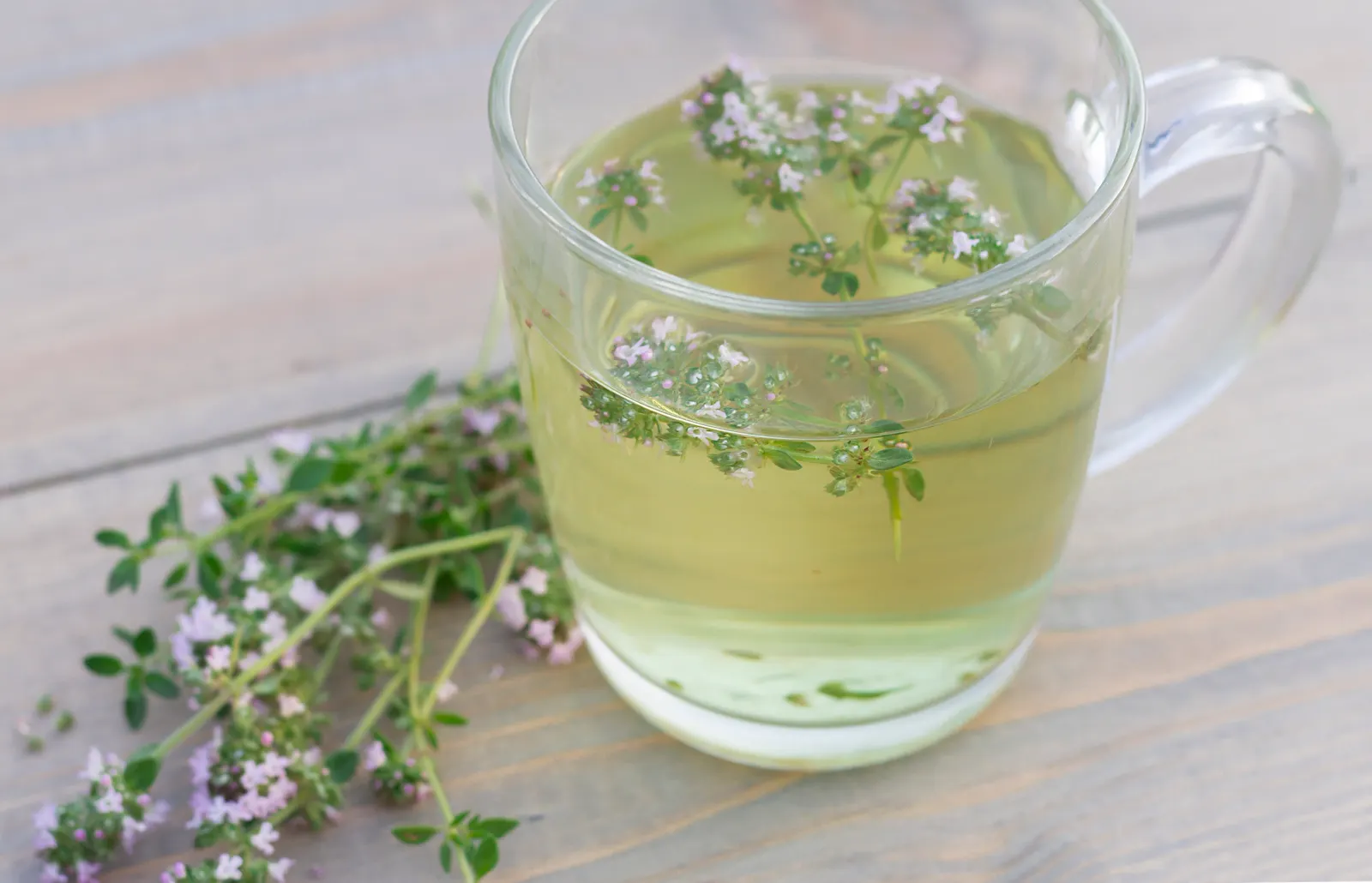
A Mediterranean thyme scalp rinse
- Steep 1–2 tablespoons of dried thyme in 250 ml of just-boiled water, then let it cool completely.
- After shampooing, pour it slowly over your scalp, keeping it away from your eyes. Patch test first if rosemary or sage bother you.
- Use it the same day and pour away any leftovers; brew a fresh batch next time.
Good to know: Thyme essential oil is strong stuff: never use it neat, keep it off your face, and pick the gentle linalool type for leave-on skin care.
At a glance
| Parts used | Leaves and flowering tops (infusions, extracts); essential oil steam-distilled from flowering tops; isolated thymol |
|---|---|
| Key actives | Thymol, Carvacrol, p-Cymene and γ-terpinene, Linalool (linalool chemotype), Rosmarinic acid (leaf extracts) |
| INCI names | Thymus Vulgaris (Thyme) Leaf Extract Thymus Vulgaris (Thyme) Flower/Leaf Oil Thymus Vulgaris (Thyme) Oil Thymol |
| Skin types | oily, combination |
| Hair & scalp | oily scalp |
| Pairs well with | RosemaryLavenderAtlas CedarJojoba |
| Evidence grade | CPromising Strong in-vitro antimicrobial data and one randomized trial of a blend including thyme for alopecia areata; no trials of thyme alone for acne or dandruff. |
What it does for skin and hair
Potent antimicrobial (in the lab)
Thymol and carvacrol disrupt bacterial and fungal membranes, including acne bacteria and yeasts, at low concentrations in vitro — the basis for thyme in clarifying and scalp products.
Part of a trial-tested scalp blend
Thyme was one of four essential oils in a randomized trial in alopecia areata that found more regrowth than carrier oil alone; its individual role is unknown. See Thinning Hair & Hair Loss.
Clean, herbal freshness
In rinse-off products, deodorants and foot care, thyme gives a crisp, medicinal-herbal scent with genuine antimicrobial backing.
Proven in oral care
Thymol is one of the active essential-oil components of well-studied antiseptic mouthwashes — evidence for thymol in a specific formula, not for thyme oil on skin.
How to use it
Start low, be consistent, and give it four to eight weeks. These are the amounts that work in real products and home recipes.
| Form | Typical use level | Notes |
|---|---|---|
| Linalool-type essential oil in leave-on products | ≤ 0.5% on the face, up to 1–2% on the body | The gentlest thyme oil; buy fresh and store cold. Use the Essential Oil Dilution Calculator. |
| Thymol or carvacrol type in rinse-off and scalp products | 0.25–1%, never neat | Keep off the face, eyes and broken skin. Best in shampoos, foot soaks and scalp blends. See Essential Oil Safety: The Complete Guide. |
| Scalp massage oil (in the style of the Hay trial) | About 2% total essential oils in a carrier such as jojoba | The trial blend combined thyme with rosemary, lavender and Atlas cedar. Massage in for 2–3 minutes at night. Sudden patchy hair loss needs a dermatologist’s diagnosis first. |
| Infusion or hydrosol | 1–2 tablespoons dried herb per 250 ml just-boiled water; hydrosol neat | Use infusions the same day as a toner or scalp rinse; buy hydrosols preserved and refrigerate after opening. |
Use it safely
Use with care
- Thymol- and carvacrol-rich oils are skin and mucous-membrane irritants: never apply neat, keep away from the face and eyes, and use only in well-diluted or rinse-off products.
- Contact allergy to thyme is uncommon but documented, and oxidized oils sensitize more easily; patch test, especially if you react to rosemary, sage or other Lamiaceae.
- Do not use phenolic thyme oils on babies or young children; keep all essential oils out of their reach.
- Do not swallow thyme essential oil outside professional advice.
- Pregnancy & breastfeeding
- Culinary thyme and rinse-off products are fine. Avoid thymol- and carvacrol-type essential oils in pregnancy and breastfeeding; if you use thyme oil at all, choose the linalool type at ≤ 1%. Pregnancy guide
- Phototoxicity
- Not phototoxic at normal use levels.
- Declared fragrance allergens
- Linalool, Limonene, Geraniol
New to an ingredient? Patch test first. Stop and seek advice if you get burning, swelling, blistering or a spreading rash.
Buying well
Sustainability
Garden thyme is widely cultivated (France, Spain, Morocco and Central Europe), but many related thymes are gathered wild: Spanish T. zygis and T. mastichina, and Morocco’s endemic T. satureioides, which is under pressure from wild harvesting in parts of the Atlas. Phenolic thyme oils are sometimes extended with synthetic thymol or p-cymene or blended with oregano oil. See Sustainable & Ethical Botanical Sourcing.
How to choose quality
Always buy by Latin name and chemotype (e.g. “Thymus vulgaris ct. linalool”) with a GC-MS report. “Red thyme” is the strong crude oil; “white thyme” is redistilled and may be reconstituted. For gentle skin use, choose the linalool type; for scalp and rinse-off antimicrobial products, a thymol type. Store in dark glass, cool and tightly closed; add tocopherol to blends.
The research For professionals
The chemistry, the studies and the evidence by concern, for practitioners, formulators and the curious.
Thyme is a textbook case of chemotypes: genetically distinct populations of Thymus vulgaris produce essential oils dominated by thymol, carvacrol, linalool, geraniol, α-terpineol or thujanol. In southern France, the phenolic (thymol and carvacrol) types tend to grow on hotter, drier sites and the non-phenolic types where winters are harsher. Commercial “red thyme” oil is the crude, phenol-rich distillate; “white thyme” is redistilled and sometimes reconstituted. Spain’s Thymus zygis is a major source of thymol-type oil, and Morocco’s endemic T. satureioides gives a borneol- and carvacrol-rich oil.
Thymol and carvacrol are phenols that insert into microbial membranes, making them leaky; in vitro they act against Cutibacterium acnes, Staphylococcus aureus, Candida and Malassezia. The same chemistry makes them irritating to skin and mucous membranes at modest concentrations. The linalool type is far gentler but, like all linalool-rich oils, becomes more allergenic as it oxidizes.
Human evidence is limited. In a randomized, double-blind trial, Hay and colleagues treated 86 people with alopecia areata with nightly scalp massage using either thyme, rosemary, lavender and Atlas cedarwood oils in jojoba and grapeseed oil, or the carrier oils alone; after seven months 44% of the essential-oil group improved versus 15% of controls. It has not been replicated, and the contribution of each oil is unknown. For acne, a much-publicized 2012 conference report found thyme tincture killed acne bacteria in the lab faster than benzoyl peroxide; there are no clinical trials of thyme alone for acne.
Key studies
Randomized, double-blind trial in 86 people with alopecia areata: nightly scalp massage with thyme, rosemary, lavender and Atlas cedarwood oils in carrier oil improved 44% versus 15% with carrier alone over seven months. Not replicated.
Hay IC, Jamieson M, Ormerod AD. Arch Dermatol. 1998 Read it in the bibliography Find on PubMed
MythThyme works better than benzoyl peroxide for acne.
EvidenceThis came from a 2012 conference report of a lab experiment: thyme tincture killed acne bacteria in a dish. No clinical trial has compared thyme with benzoyl peroxide on real skin, and thyme oil can irritate. Benzoyl peroxide, adapalene and azelaic acid have the evidence; see Acne & Breakouts.
In tradition
In Morocco, zaïtra goes into tea for coughs and colds and is sprinkled over bread and olives; in Andalusia and Murcia, tomillo scents olive brines and stews. The ancient Greeks burned thyme as incense, and its name is often linked to the Greek word for fumigation.
Frequently asked questions
Is thyme oil safe to put on skin?
Does thyme help acne?
Can thyme oil help hair growth?
What is a thyme chemotype?
Cite this page
Herbs.Beauty. Thyme (Thymus vulgaris L.): evidence-based monograph. Updated 26 November 2026. https://herbs.beauty/ingredients/thyme.html