Safety · 8 min read · Everyone
Essential Oil Safety: The Complete Guide
Dilution by use, phototoxic citrus limits, oxidation and allergy, IFRA standards, and special care for children, pregnancy and pets.
What you’ll take away
- Never apply essential oils undiluted (neat), and never take them internally except under qualified professional supervision.
- For leave-on use, keep to about 1% or less on the face and 2–3% on the body; lower for children, pregnancy and sensitive skin.
- Cold-pressed bergamot, lime, bitter orange, lemon and grapefruit are phototoxic above specific limits; choose bergaptene-free (FCF) or distilled versions for leave-on products.
- Oxidized oils — especially tea tree and citrus — are much stronger allergens. Store cool, dark and full; replace old bottles.
- Keep peppermint and eucalyptus away from infants’ and young children’s faces, and be very cautious using oils around cats.
Guides explain how things work; the grade for each plant is on its own page. How we grade
Why “concentrated” means caution
An essential oil is the volatile fraction of a plant, usually obtained by steam distillation (or, for citrus peels, cold expression). It can take many kilograms of plant material to make a small bottle, and each oil contains dozens to hundreds of compounds — terpenes, alcohols, aldehydes, phenols, esters. That concentration is why oils are effective in tiny amounts, and why the dose decides whether they help or harm.
The main risks are irritation (stinging, redness), sensitization (developing a lasting allergy), phototoxicity (burns with sunlight) and, mainly through accidental swallowing, systemic toxicity. Three rules prevent most problems: dilute, use fresh oils, and keep them away from children, eyes and pets.
Dilution by use
These are conservative maximums for total essential oil in a finished product. Individual oils may have lower limits (see phototoxicity below and IFRA). Weighing is more accurate than counting drops, which vary in size; use the Essential Oil Dilution Calculator.
| Use | Maximum total essential oil | Approx. drops per 30 mL carrier* |
|---|---|---|
| Face (leave-on), lips, eye area excluded | 0.5–1% | 3–6 |
| Body oils and lotions (daily) | 2–3% | 12–18 |
| Short-term massage or a small, localized area | Up to 3–5% | 18–30 |
| Spot treatment (e.g. tea tree on a blemish) | Up to 5% | 30 |
| Bath | 3–6 drops in total, pre-mixed with a dispersant | — |
| Pregnancy; sensitive or older skin | ≤1% | ≤6 |
| Children 2–6 years | ≤1% (avoid on the face) | ≤6 |
| Infants under 2 years | Generally avoid; seek professional advice | — |
*Assuming about 20 drops per mL; thick oils such as vetiver or sandalwood give larger, fewer drops. Oils float on bath water and can reach skin almost undiluted, so blend them first with a dispersant (a mild liquid soap or a solubilizer such as polysorbate 20). The Lavender Calm Body Oil and Tea Tree Blemish Spot Gel show these limits in practice.
Phototoxicity: citrus and sunlight
Some oils contain furocoumarins such as bergapten (5-methoxypsoralen). On skin exposed to UVA, they cause phototoxic burns — redness and blistering that may appear a day or two later and can leave dark marks for months. (Lime juice causes the same reaction, sometimes called “margarita dermatitis.”) The widely used maximum levels below come from Tisserand and Young’s reference text Essential Oil Safety (2nd ed., 2014) and are consistent with the approach of IFRA standards for leave-on products.
| Oil | Phototoxic? | Max in leave-on products on sun-exposed skin |
|---|---|---|
| Bergamot, cold-pressed | Yes | 0.4% |
| Lime, cold-pressed | Yes | 0.7% |
| Bitter orange, cold-pressed | Yes | 1.25% |
| Lemon, cold-pressed | Yes | 2% |
| Grapefruit, cold-pressed | Yes (mild) | 4% |
| Bergamot FCF (bergaptene-free); steam-distilled lime or lemon | No | Normal dilution limits |
| Sweet orange, mandarin, tangerine (cold-pressed) | Not significantly | Normal dilution limits |
If a leave-on product exceeds these levels, keep the skin out of sun and tanning beds for at least 12 hours. Rinse-off products such as shower gels carry little risk.
Sensitization and oxidation
Allergy to essential oil constituents builds silently with repeated exposure, and once established is usually lifelong. Frequent sensitizers include cinnamon bark (cinnamaldehyde), clove (eugenol), lemongrass and may chang (citral), ylang-ylang, and oakmoss — whose most potent allergens, atranol and chloroatranol, are now banned in EU cosmetics.
Oxidation turns mild oils into strong allergens. When exposed to air, light and heat, limonene (in citrus oils) and linalool (in lavender and many others) form hydroperoxides that sensitize far more readily than the fresh molecules; oxidized limonene and linalool are now part of routine dermatology patch testing. Tea tree oil also becomes much more allergenic as it ages. To slow this:
- Buy small bottles from suppliers who give the botanical name, origin and batch date.
- Store in dark glass, tightly capped, in a cool place (the fridge is ideal for citrus).
- Decant into smaller bottles as you use them, to limit headspace air.
- Replace citrus oils after about a year of opening and most others within one to two years; discard any that smell sharp, “off” or turpentine-like.
IFRA standards, explained
The International Fragrance Association (IFRA) is the fragrance industry’s self-regulatory body. Based on safety assessments by the Research Institute for Fragrance Materials (RIFM), IFRA Standards prohibit some materials, restrict others to maximum concentrations, and set purity specifications. Limits differ by product category — lip products, face creams, body lotions, fine fragrance and rinse-off products each have their own figure, because exposure differs. IFRA updates its Standards through numbered amendments, so always check you are working to the current one.
IFRA Standards are not themselves law, but IFRA members must follow them and EU safety assessors routinely expect compliance. Separately, EU law bans or restricts certain fragrance substances and requires many allergens to be named on the label (see How to Read a Cosmetic Ingredient List). If you formulate, ask suppliers for the IFRA certificate and safety data sheet for each oil and check your blend against the category limits.
Children, pregnancy and breastfeeding
- Never apply peppermint (menthol) or 1,8‑cineole-rich oils such as eucalyptus and rosemary on or near the face of infants and young children: these can trigger breathing problems, including spasm of the larynx. Many experts extend this caution to around age 6–10.
- Accidental swallowing is the main cause of serious essential oil poisoning in children, with wintergreen (methyl salicylate), camphor and eucalyptus among the most dangerous. Use child-resistant caps (required in the EU for many oils because of their aspiration hazard) and store out of reach.
- Pregnancy: use ≤1%, and many practitioners avoid essential oils in the first trimester. Avoid oils with known reproductive or neurotoxic concerns, including wintergreen and birch (methyl salicylate), pennyroyal, rue, savin, mugwort, tansy, wormwood, sage and Spanish sage, parsley seed, and anise, star anise and fennel. See Skincare in Pregnancy & Breastfeeding.
- Breastfeeding: keep oils off the chest and away from the baby’s face.
Pets — especially cats
Cats lack enough of certain liver enzymes (glucuronidation pathways) to break down many essential oil constituents, particularly phenols and some terpenes. Tea tree oil toxicity in cats and dogs is well documented by veterinary poison services, usually after owners applied it to treat skin problems. Never apply essential oils to pets without veterinary advice; keep diffusers out of rooms where cats or birds cannot leave freely, and run them intermittently in ventilated spaces. Signs of trouble include drooling, vomiting, wobbliness, tremors and breathing difficulty — call a vet promptly.
Golden rules and first aid
- Never neat. Even “gentle” lavender causes reactions undiluted.
- Never internally without supervision by a qualified health professional. Licensed medicines such as enteric-coated peppermint oil capsules for irritable bowel syndrome are standardized, dosed products — not a reason to swallow bottled oil.
- Patch test new blends (How to Patch Test) and keep oils away from eyes and mucous membranes.
- Diffuse briefly (around 30–60 minutes, then a break) in a ventilated room; stop if anyone has asthma symptoms or headaches.
First aid: on skin, wipe with a plain carrier oil, then wash with soap and water. In the eye, rinse with plenty of clean water for at least 15 minutes and seek medical advice. If swallowed, especially by a child, contact your poison center or emergency services immediately and do not induce vomiting.
Frequently asked questions
Can I put tea tree oil directly on a pimple?
How many drops of essential oil per 30 mL for the face?
Is bergamot oil safe in skincare?
Are essential oil diffusers safe around cats?
Keep reading
 No. 008
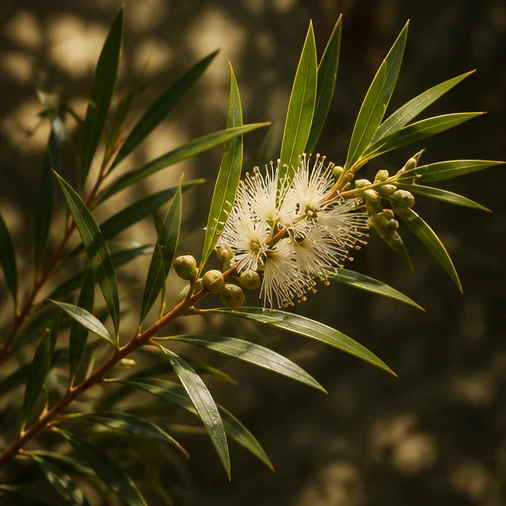
Tea TreeMelaleuca alternifoliaFresh, herbal and clinically studied, tea tree oil is a gentle, patient answer to mild breakouts.
 No. 007
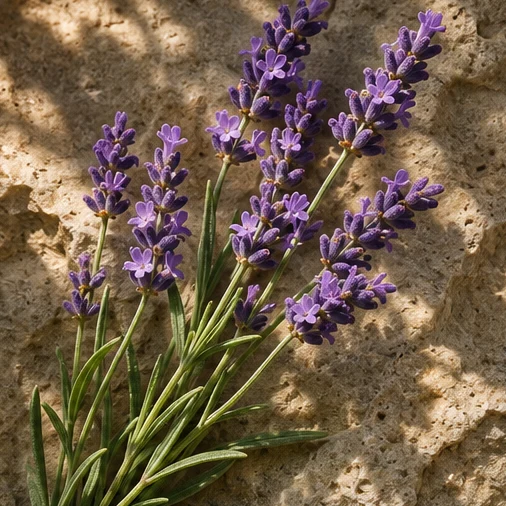
LavenderLavandula angustifoliaLavender’s soft, floral calm turns an ordinary evening into a slow, scented wind-down.GuideSkincare in Pregnancy & BreastfeedingWhat’s generally considered fine, what to avoid (retinoids, high-strength peels, hydroquinone), plus melasma, acne and stretch-mark evidence.