The ingredient encyclopedia · herb
Rosemary
Salvia rosmarinus (syn. Rosmarinus officinalis) · Lamiaceae
Bright, herbal and invigorating, rosemary turns a simple scalp massage into a ritual worth keeping.
FR RomarinES RomeroAR إكليل الجبلAzir (Darija)
- How well proven
- CPromising
- Safety
- Use with care
- Sun-sensitive
- No
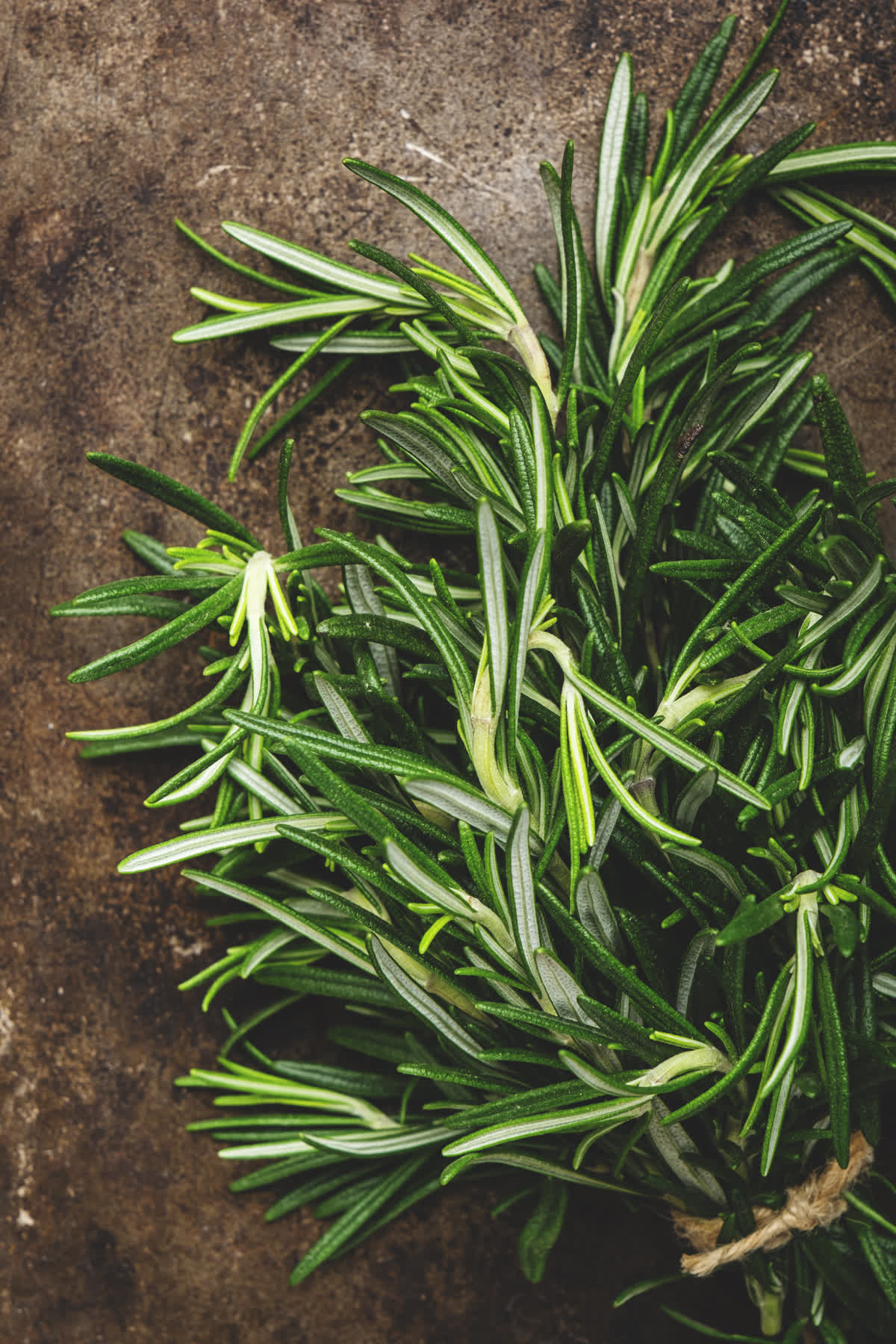
Also known as Salvia rosmarinus (syn. Rosmarinus officinalis)
FR RomarinES RomeroAR إكليل الجبلAzir (Darija)
What the evidence says
One randomized trial found rosemary oil comparable to 2% minoxidil after six months, but it had no placebo arm and a loosely described formulation; supportive data are mainly from lab and mouse studies.
- Best supported for
- Thinning Hair & Hair Loss CDandruff & Itchy Scalp D
- How to use it
- Essential oil in a scalp oil · 1–2% in a carrier (about 10–20 drops per 50 ml)
- Watch out for
- Always dilute the essential oil.
Checked against 4 cited studies and our safety review · Updated 26 November 2026 · How we grade
Why you’ll love Rosemary
Why you’ll love it
- A wake-up scalp massage with a fresh, piney-herbal scent
- Leaves oily scalps feeling clean and refreshed
- Promising early research for thinning hair, worth a patient try
Best forOily scalps, and anyone curious about a patient, natural approach to thinning hair.
Try it today
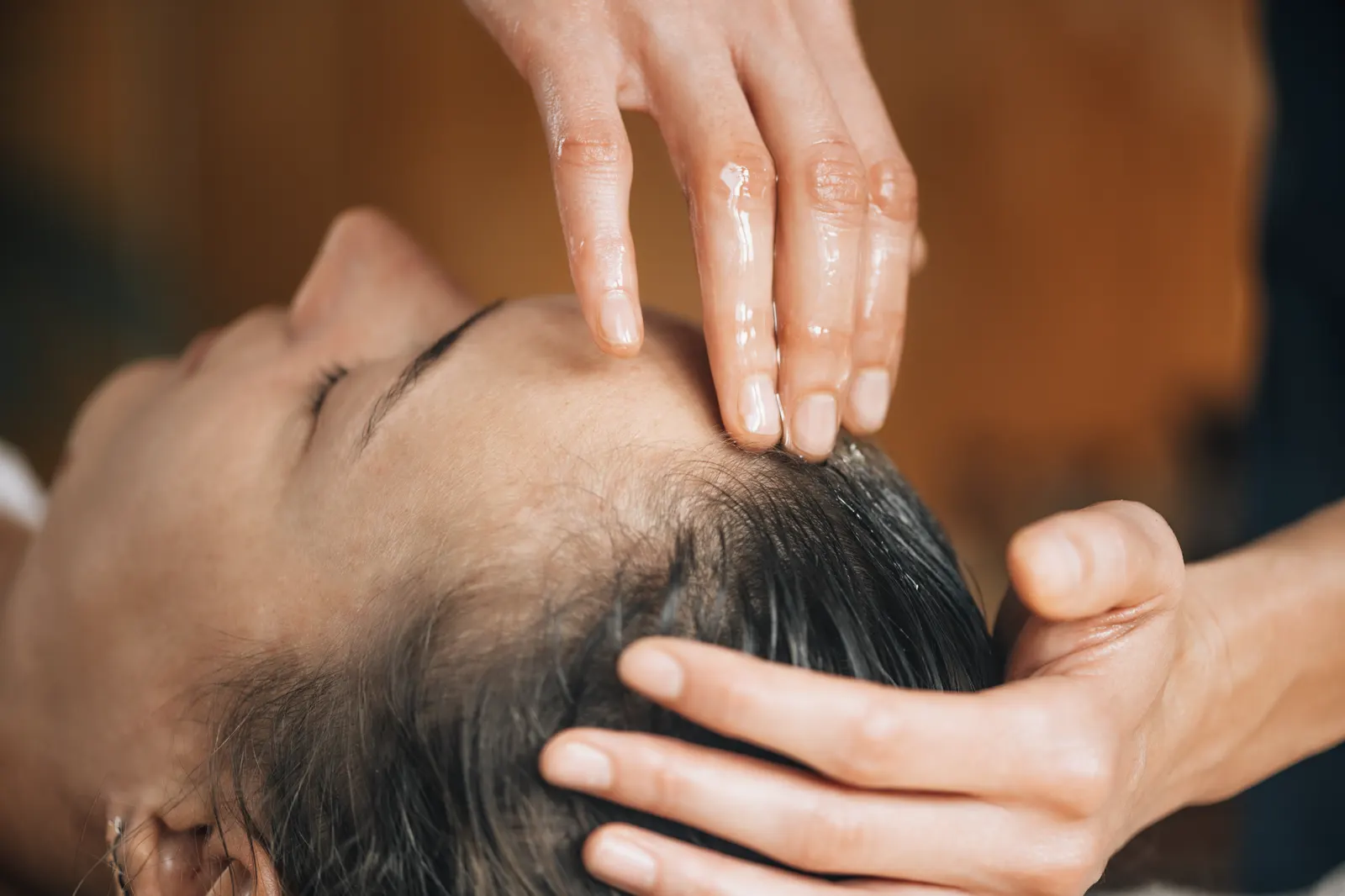
A 5-minute scalp wake-up
- Dilute rosemary essential oil to 1–2% in a carrier oil (about 10–20 drops per 50 ml), and patch test first.
- Part your hair and massage a little into your scalp with your fingertips for five minutes.
- Leave it an hour or overnight, then shampoo. Repeat 2–3 times a week and judge after 3–6 months.
Good to know: Never use rosemary oil neat or near little ones’ faces. Sudden or patchy hair loss deserves a doctor’s visit first.
At a glance
| Parts used | Leaf and flowering tops; essential oil, CO₂ extract (antioxidant grade), infusions, hydrosol |
|---|---|
| Key actives | Carnosic acid, Carnosol, Rosmarinic acid, 1,8‑Cineole, Camphor, α-Pinene |
| INCI names | Rosmarinus Officinalis Leaf Extract Rosmarinus Officinalis Leaf Oil Rosmarinus Officinalis Leaf Water |
| Skin types | oily, combination |
| Hair & scalp | oily scalp, fine |
| Pairs well with | Pumpkin Seed OilStinging NettleJojobaPeppermint |
| Evidence grade | CPromising One randomized trial found rosemary oil comparable to 2% minoxidil after six months, but it had no placebo arm and a loosely described formulation; supportive data are mainly from lab and mouse studies. |
What it does for skin and hair
May support hair growth in pattern hair loss
In a six-month trial of 100 people with androgenetic alopecia, a rosemary oil product increased hair counts about as much as 2% minoxidil, with less scalp itching. Without a placebo group, the size of rosemary’s own effect is uncertain.
Part of a proven blend for alopecia areata
A massage blend of rosemary, thyme, lavender and cedarwood oils outperformed carrier oil alone for patchy alopecia areata in a randomized trial — a result for the blend, not rosemary alone.
Freshens oily scalps
Rosemary infusions and hydrosols make clean-feeling scalp rinses, and the oil has antimicrobial activity in the lab against some fungi and bacteria.
Protects oils from rancidity
Rosemary CO₂ extract rich in carnosic acid slows oxidation of plant oils and butters, extending the life of balms and face oils.
How to use it
Start low, be consistent, and give it four to eight weeks. These are the amounts that work in real products and home recipes.
| Form | Typical use level | Notes |
|---|---|---|
| Essential oil in a scalp oil | 1–2% in a carrier (about 10–20 drops per 50 ml) | Massage into the scalp 2–3 times a week, leave an hour or overnight, then shampoo. Expect at least 3–6 months before judging. See Rosemary & Pumpkin Seed Scalp Oil and Essential Oil Dilution Calculator. |
| Hydrosol or infusion rinse | Use as a final rinse or scalp spritz | Refreshing for oily scalps. Homemade infusions keep 2–3 days refrigerated; for a stable leave-on tonic use a preserved formula like Nettle & Rosemary Scalp Tonic. |
| Rosemary CO₂ extract (antioxidant grade) | 0.05–0.2% in oils, balms and butters | Add to the oil phase to slow rancidity. It is not a preservative — it does nothing against microbes in water-containing products. |
Use it safely
Use with care
- Always dilute the essential oil. Neat rosemary oil can irritate the scalp and skin; keep it to about 1–2% for leave-on scalp use and ≤1% on the face (Essential Oil Safety: The Complete Guide).
- Rosemary extracts can cause allergic contact dermatitis; carnosol has been identified as an allergen. Patch test before regular use (How to Patch Test).
- Camphor- and 1,8‑cineole-rich oils should not be applied on or near the face of infants and young children, and people with epilepsy should avoid camphor-rich oils.
- Rosemary does not replace medical assessment: sudden, patchy or rapid hair loss, or hair loss with scalp pain, scaling or other symptoms, warrants a doctor’s visit. See Thinning Hair & Hair Loss.
- Pregnancy & breastfeeding
- Culinary rosemary is fine. Many aromatherapy authorities advise avoiding rosemary essential oil, or using only low dilutions, during pregnancy; avoid oral supplements. Pregnancy guide
- Phototoxicity
- Not phototoxic at normal use levels.
- Declared fragrance allergens
- Limonene, Linalool
New to an ingredient? Patch test first. Stop and seek advice if you get burning, swelling, blistering or a spreading rash.
Make it at home: recipes with rosemary
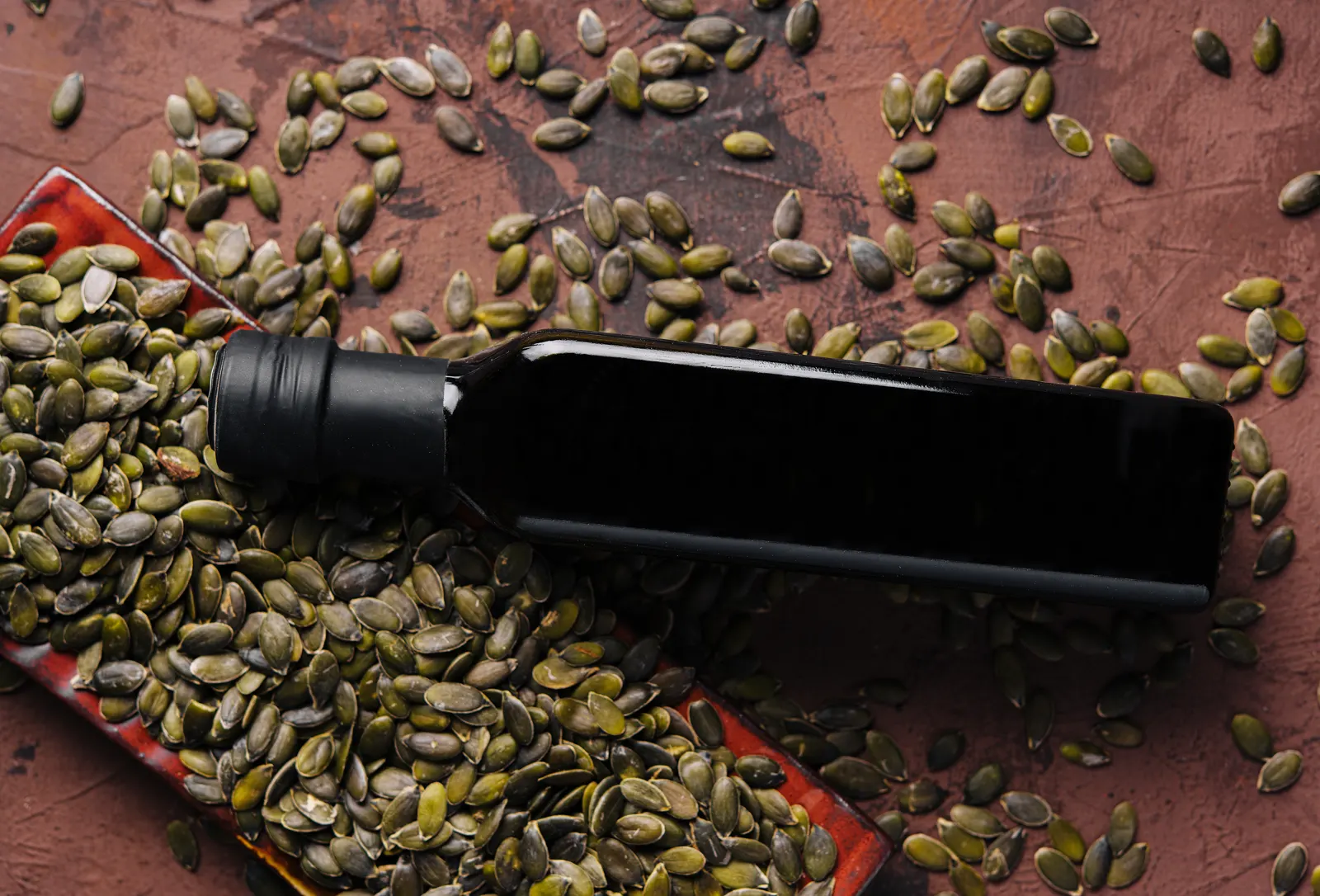 Hair care · BeginnerRosemary & Pumpkin Seed Scalp OilA pre-wash scalp massage oil with 2% rosemary essential oil in pumpkin seed, jojoba and argan oils — a supportive ritual, not a medical treatment.
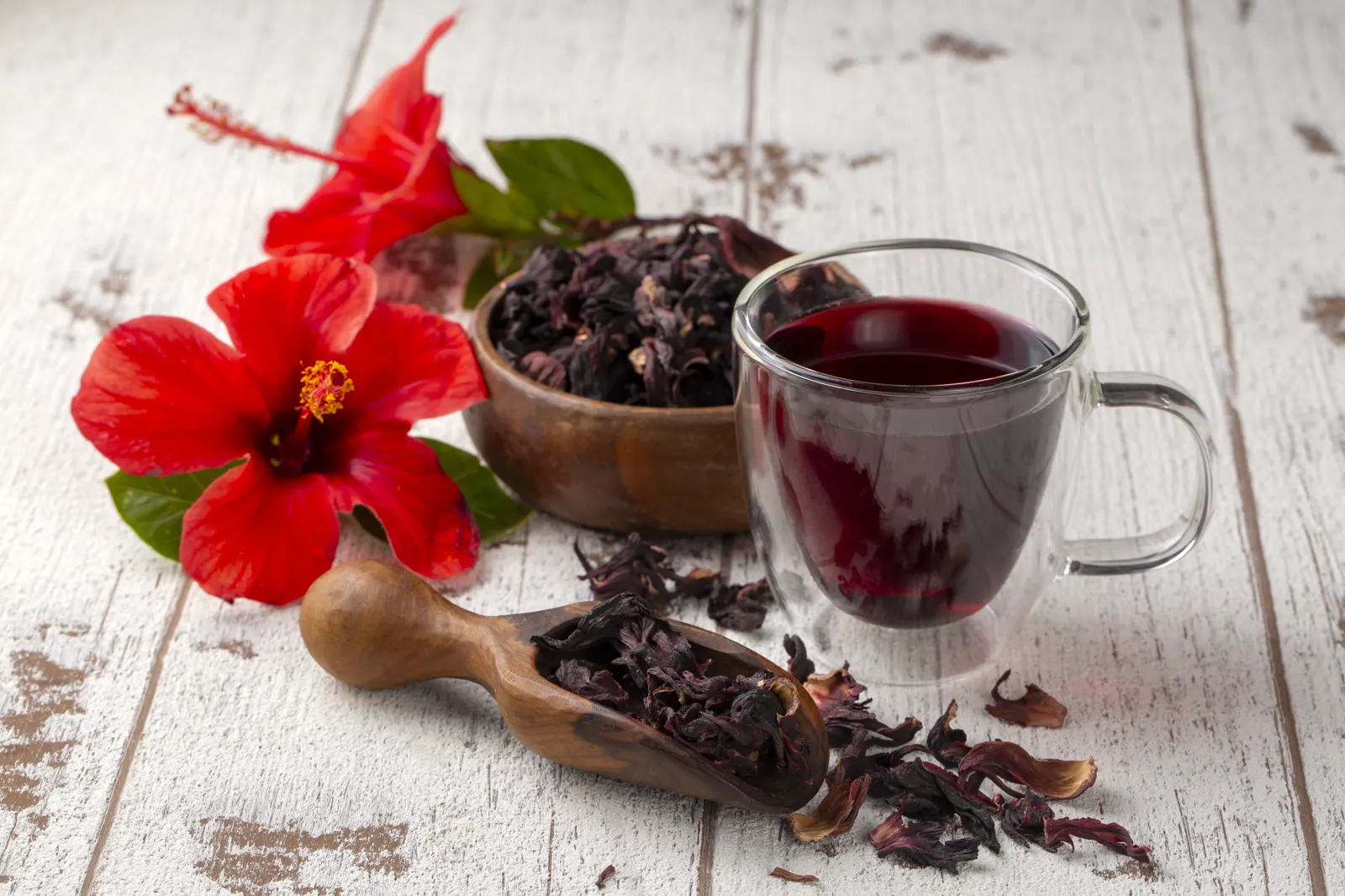 Hair care · BeginnerHibiscus Shine Hair RinseA tangy hibiscus and rosemary infusion poured over clean hair as a final rinse to smooth the cuticle and boost shine. Make it fresh each time.
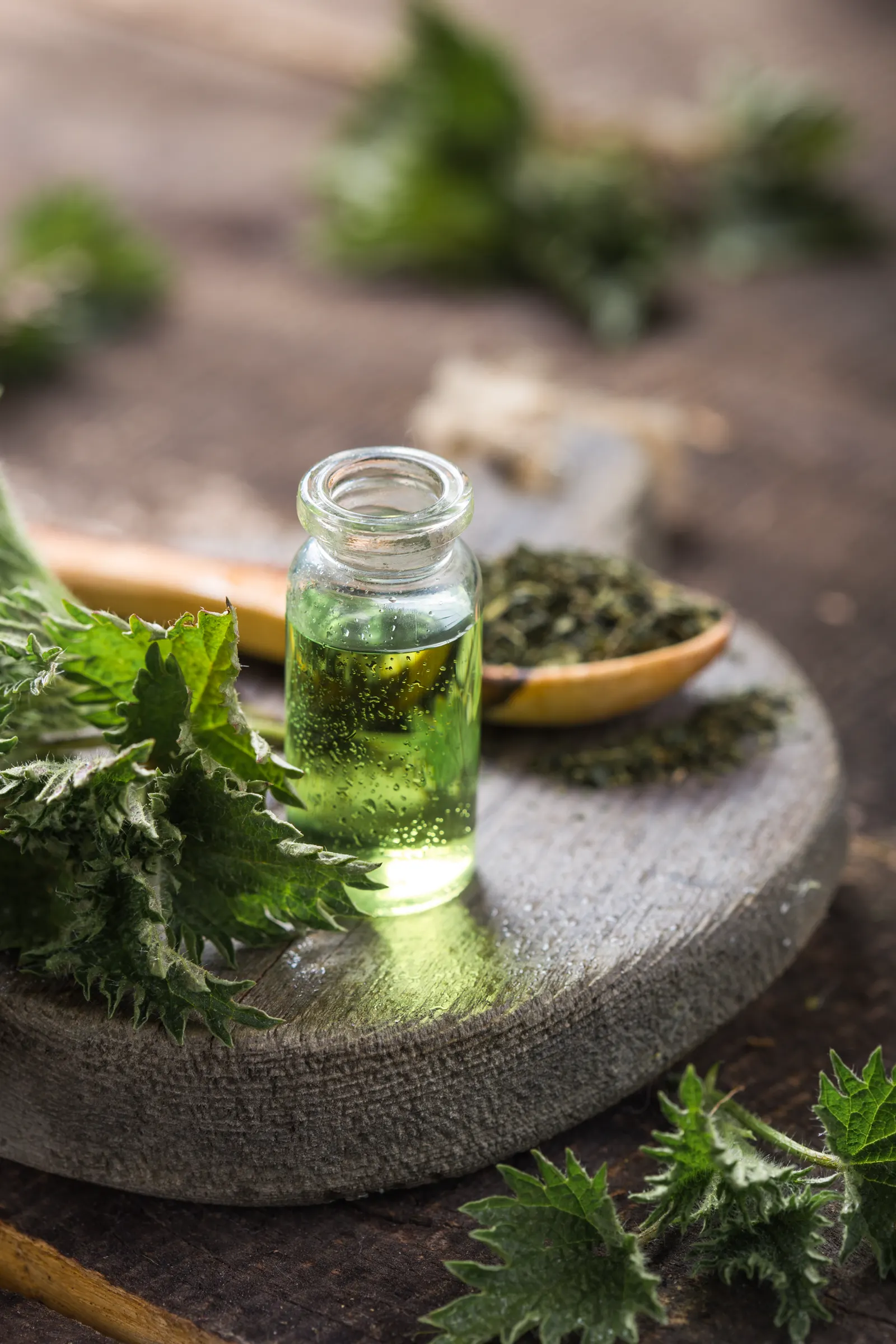 Hair care · IntermediateNettle & Rosemary Scalp TonicA preserved leave-on scalp tonic with nettle and rosemary extracts, solubilized rosemary oil and panthenol, at a scalp-friendly pH of 4.5–5.5.
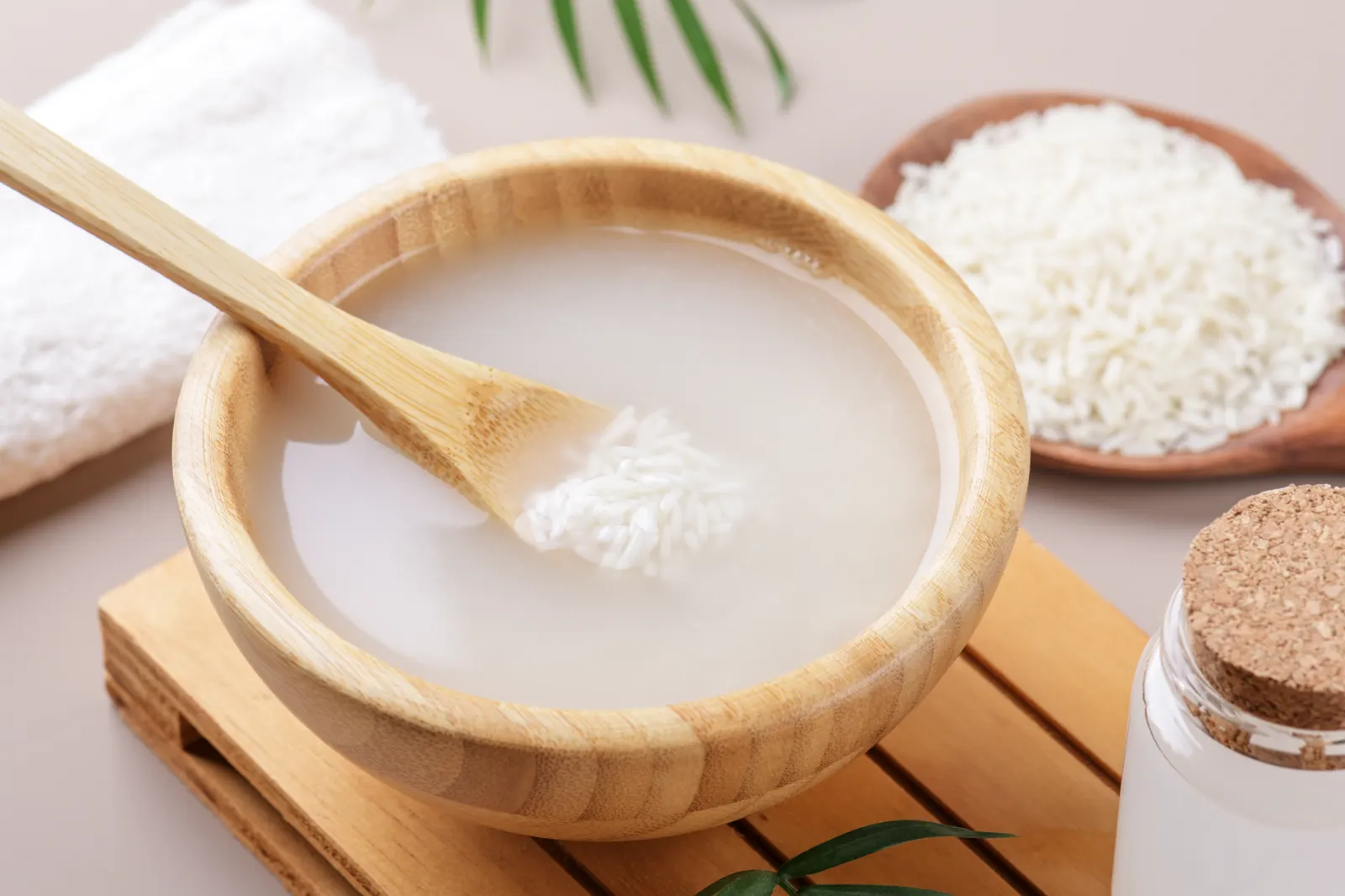 Hair care · BeginnerSimple Rice Water Hair RinseSoaked rice water as a same-day final rinse for smoother, shinier-feeling hair. A cherished tradition with limited science — here’s the honest version.
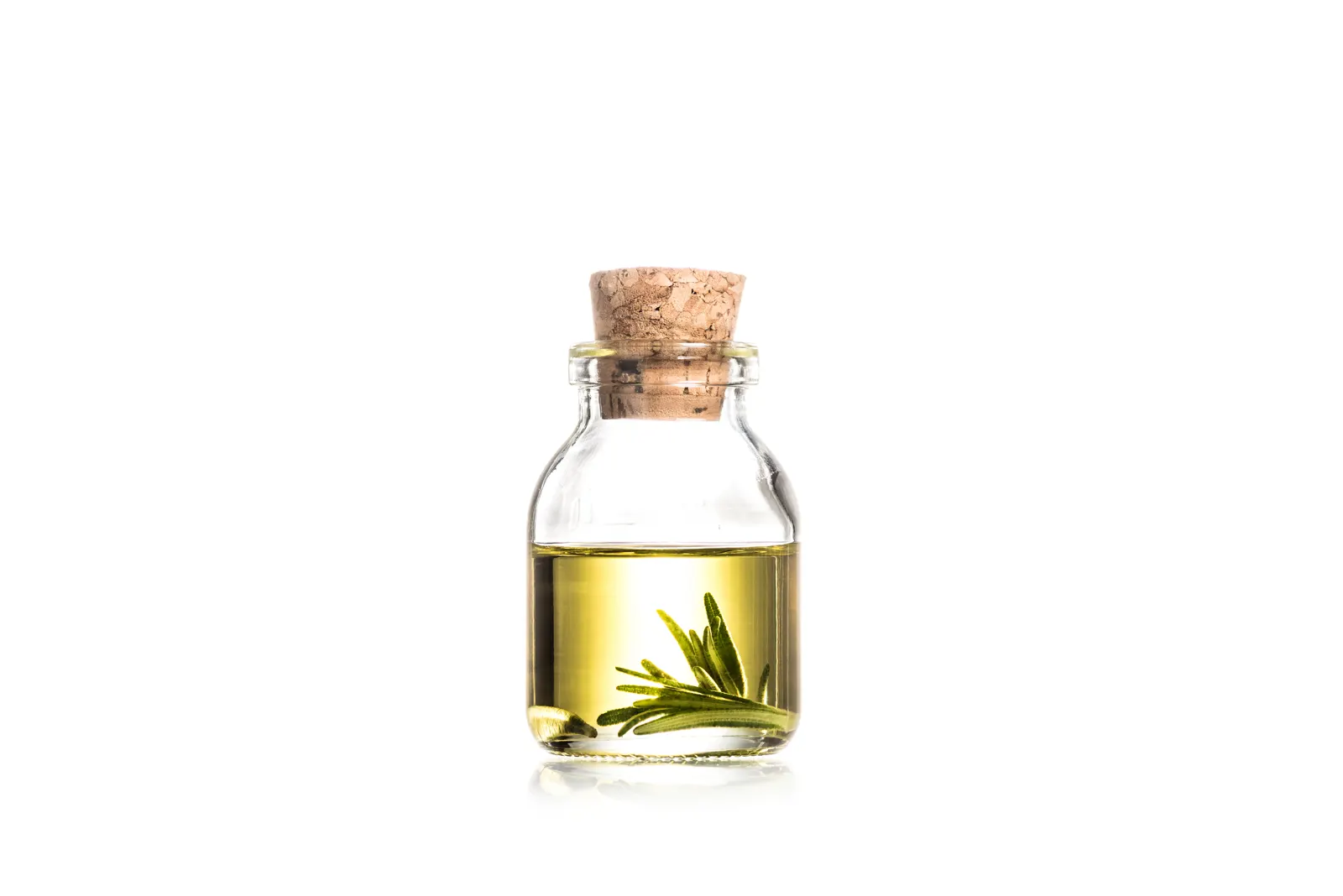 Hair care · BeginnerRosemary Pre-Wash Hair & Scalp OilA weekly pre-shampoo oil of sunflower, coconut and argan with 1% rosemary essential oil, massaged into scalp and lengths before wash day.
Buying well
Sustainability
Morocco and Tunisia are among the world’s major producers of rosemary essential oil, much of it wild-harvested from hillsides in eastern Morocco; responsible cutting regimes matter for regeneration. Spain is a major producer of camphor-type oil. The plant is abundant and not threatened.
How to choose quality
For hair, buy rosemary essential oil labeled with botanical name, chemotype (cineole is the most common for scalp blends) and country of origin, in dark glass. For antioxidant use, choose a CO₂ extract standardized to carnosic acid. Avoid “rosemary oil” of unstated composition, and store essential oils cool, dark and tightly closed — they oxidize once opened.
The research For professionals
The chemistry, the studies and the evidence by concern, for practitioners, formulators and the curious.
Rosemary has two chemically distinct sides. Its essential oil is dominated by 1,8‑cineole, camphor and α-pinene, in proportions that vary by chemotype: cineole-type oils come largely from Morocco and Tunisia, camphor-type from Spain, and verbenone-type from France and Corsica. Its non-volatile extracts contain the phenolic diterpenes carnosic acid and carnosol and the caffeic ester rosmarinic acid — powerful antioxidants that do not distill into the essential oil.
For hair, proposed mechanisms include improved microcirculation, anti-inflammatory activity, and inhibition of 5α-reductase; a rosemary leaf extract inhibited 5α-reductase and promoted hair regrowth in testosterone-treated mice (Murata, 2013). These are plausible but not confirmed in human scalp.
The key human trial is Panahi et al. (SKINmed, 2015): 100 people with androgenetic alopecia were randomized to rosemary oil or 2% minoxidil for six months. Both groups had significantly more hair at six months (not at three), with no significant difference between them; scalp itching was more common with minoxidil. Limitations matter: no placebo, unclear rosemary concentration and vehicle, and a comparator (2% minoxidil) weaker than the 5% often used in men. A separate double-blind trial in alopecia areata (Hay, 1998) found 44% improved with an essential-oil blend including rosemary versus 15% with carrier oil.
The popular “rosemary water” spray has not been tested in any trial; it contains far lower concentrations of the oil’s actives. Rosemary is a reasonable adjunct while waiting for, or alongside, proven therapy — not a substitute for it.
Evidence by concern
| Concern | Grade | What the evidence shows |
|---|---|---|
| Thinning Hair & Hair Loss | C | One randomized comparative trial in androgenetic alopecia found rosemary oil gave similar hair-count gains to 2% minoxidil after six months, with less scalp itch; it was small, not placebo-controlled and has not been replicated. |
| Dandruff & Itchy Scalp | D | Antimicrobial in vitro and used traditionally in scalp rinses; no clinical dandruff data. |
Key studies
100 people with androgenetic alopecia: rosemary oil and 2% minoxidil both increased hair count at 6 months with no significant difference between them; less scalp itch with rosemary. No placebo arm.
Panahi Y, et al. SKINmed. 2015 Read it in the bibliography Find on PubMed86 people with alopecia areata: nightly massage with thyme, rosemary, lavender and cedarwood oils in a carrier improved 44% vs 15% with carrier alone over 7 months.
Hay IC, et al. Arch Dermatol. 1998 Read it in the bibliography Find on PubMedRosemary leaf extract inhibited 5α-reductase in vitro and promoted hair regrowth in testosterone-treated mice.
Murata K, et al. Phytother Res. 2013 Read it in the bibliography Find on PubMedIdentified carnosol as a contact allergen responsible for occupational allergic dermatitis to rosemary.
Hjorther AB, et al. Contact Dermatitis. 1997 Read it in the bibliography Find on PubMed
MythRosemary water regrows hair as well as minoxidil.
EvidenceThe only comparison trial used a rosemary oil product against 2% minoxidil, with no placebo. Rosemary water has never been tested in a trial. It may be a pleasant rinse, but anyone with progressing hair loss should consider proven options.
In tradition
Rosemary has been the Mediterranean herb of remembrance since antiquity, and the 17th-century “Hungary water” toilet water was built around it. In Morocco, azir infusions are a folk rinse for hair and scalp.
From the first-edition dossier
From study to shelf
The hair-growth claim behind the rosemary oil trend.
- What was tested
- Six months of rosemary oil lotion or 2% minoxidil in 100 men with androgenetic alopecia.
- What was found
- Mean hair counts rose from baseline at six months in both groups.
- What applies to a product
- A standardized scalp lotion in men with pattern hair loss.
- Main limitation
- There was no placebo group or design to establish equivalence.
On this page
What the studies found
Panahi et al. (2015) · SKINmed full report
- Study design
- A six-month, single-blind randomized study in one clinic assigned 100 men aged 18 to 49 with androgenetic alopecia to rosemary oil lotion or 2% minoxidil, 50 per group. Two dermatologists unaware of treatment allocation assessed standardized photographs. The supplier provided a lotion standardized to at least 3.7 mg of 1,8‑cineole per mL.
- Result
- There was no statistically significant hair-count change at month three. Mean counts increased from 122.8 to 129.6 with rosemary and from 138.4 to 140.7 with minoxidil by month six. There was no significant between-group difference in hair counts at either follow-up. Scalp itching increased in both groups and was more frequent with minoxidil.
- Limitations
- The investigators compared hair counts using significance tests, with no prespecified equivalence or noninferiority margin reported. There was no placebo or vehicle-only group. The study covers a particular lotion and 2% minoxidil in men with pattern hair loss.
What a before-and-after photograph can show
In the trial, two dermatologists who were unaware of the treatment assignment evaluated standardized scalp photographs. The study also collected patients’ impressions. A hair count and a reader’s impression of fuller hair are different outcomes. Ask how a brand obtained its photographs and which outcome it measured.
Checks before you buy
- Identify the form on the ingredient list. Rosemary leaf oil, leaf water and leaf extract are separate entries.
- Check where the brand directs application. A hair-length finishing oil and a scalp lotion serve different uses.
- For new, patchy or persistent shedding, seek the cause before choosing a product by its claims.
Questions readers ask
Did the study show results after three months?
No statistically significant hair-count change was detected in either group at that visit. The change from baseline appeared at six months.
Can I use the trial to decide how many drops to mix?
The study used a prepared lotion. A drop count cannot reproduce its composition or predict tolerability.
Compare the preparations
Rosemary water, glycerin extracts, essential oil and a finished scalp serum are distinct preparations. The trial gives no basis for assuming that rosemary water or any rosemary shampoo produces the same outcome.
| Preparation | What to check |
|---|---|
| Distilled leaf oil | Check where it is used and if the label gives a dilution. |
| Leaf water or hydrosol | Check whether the label identifies a distillate or another water-based preparation. |
| Leaf extract | Check whether the supplier describes the solvent and plant part. |
The research
A randomized 2015 comparative trial in people with androgenetic alopecia compared a rosemary oil preparation with 2% minoxidil. Hair counts increased in both groups at six months. There was no placebo group, and the design does not establish that rosemary oil is equivalent to minoxidil.
Safety and tolerance
Avoid applying neat essential oil to the scalp. Stop a cosmetic that causes irritation. Sudden, patchy or persistent hair loss is a reason to seek a diagnosis.
What to look for on the label
Look for “Rosmarinus Officinalis (Rosemary) Leaf Oil” or “Leaf Extract”. Confirm which form the product uses and whether it is rinse-off or leave-on.
A real label example
Spain ·
Weleda Skin Food
- Rosmarinus Officinalis (Rosemary) Leaf Extract
The Spanish cream label names rosemary leaf extract. This is not a label example of rosemary essential oil or the preparation used in a hair trial.
Sources
Continue reading
Rosemary oil and hair growth. Read the trial behind the claim
First published in the original Herbs.Beauty atlas on 11 November 2026, with its sources as checked on that date.
Frequently asked questions
Does rosemary oil really make hair grow?
Is rosemary water or rosemary oil better for hair?
Can I put rosemary oil directly on my scalp?
How long does rosemary oil take to work?
Cite this page
Herbs.Beauty. Rosemary (Salvia rosmarinus): evidence-based monograph. Updated 26 November 2026. https://herbs.beauty/ingredients/rosemary.html