Does it work?
Tamanu Oil for Acne & Breakouts
What the research says about tamanu oil for acne & breakouts, how to use it at home and how to stay safe.
The short answer: Consistent laboratory data on wound-healing, anti-inflammatory and antibacterial activity with a plausible mechanism, but no robust human trials.
Our Acne & Breakouts guide does not rank Tamanu Oil for this use yet, so this is the overall grade for Tamanu Oil.
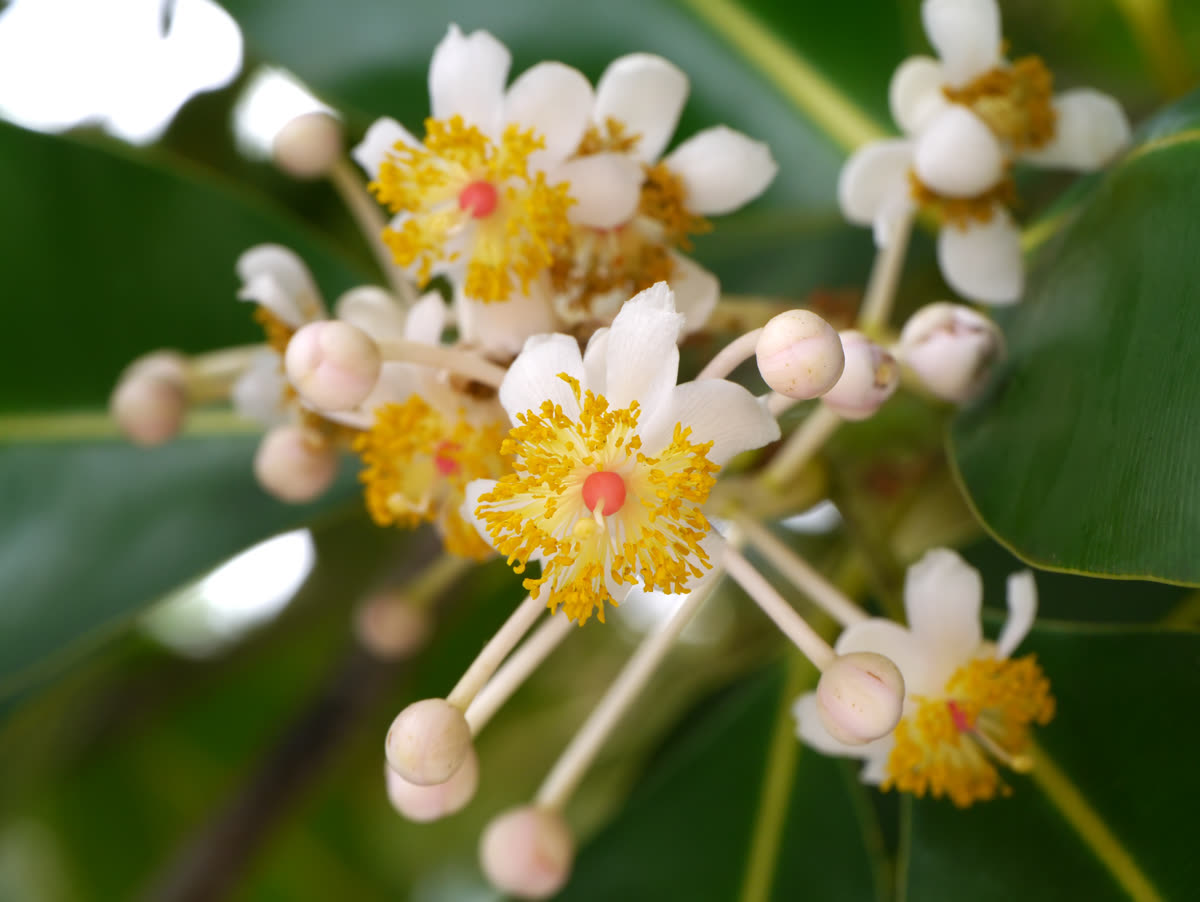
What it does
Tamanu oil comes from the kernels of a coastal tree of the Indian Ocean and Pacific, revered in Polynesia. Unlike most carrier oils it carries a large resinous fraction of coumarins (including calophyllolide) and xanthones, which give it a dark green color, a strong earthy smell and real anti-inflammatory and antibacterial activity in laboratory studies. Human trials are lacking, so its reputation for scars and blemishes is promising rather than proven. It suits targeted use more than all-over application.
Why people reach for it
- Traditional skin-repair oil. Used for generations in Polynesia on cuts, scrapes and rough skin; lab studies show tamanu extracts help skin cells close artificial “wounds” — a reason it features in scar-care blends.
- Anti-inflammatory and antibacterial in the lab. Its coumarins and xanthones calm inflammatory signaling and inhibit several Gram-positive bacteria, including skin-relevant species, in vitro — interesting for blemish care, unproven in people.
- Rich, protective emollient. A mixed oleic–linoleic oil with a substantial saturated fraction, it softens rough, dry patches, elbows and heels.
- Powerful in small amounts. Because its actives are concentrated, 5–20% in a blend is usually enough, which also keeps the smell manageable.
How to use it
| Form | Typical use | Notes |
|---|---|---|
| Targeted spot or scar oil | 5–20% in a carrier oil; neat only on small areas after a patch test | Massage into healed, closed scars once or twice daily for several months. Never apply to open or infected wounds. |
| Face oil or balm | 2–10% of an anhydrous formula | Lighter carriers such as jojoba or squalane help soften the smell and heavy feel. |
| Rough-skin balm (heels, elbows) | 5–15% of a balm | Combine with shea butter and beeswax; works well alongside calendula-infused oil. |
Use it safely
- Tamanu is a tree-nut kernel oil. People with tree-nut allergy should avoid it unless an allergist advises otherwise.
- Allergic contact dermatitis to tamanu oil is documented in case reports; patch test as in our guide (twice daily for 7 days, read at 48 and 96 hours), especially before facial use.
- Not for ingestion: the seeds and crude oil are considered toxic if eaten.
- Do not use on open, deep or infected wounds; see a doctor for wounds that are not healing.
- The dark oil can stain fabrics and pale formulas; its strong smell is natural, not a sign of spoilage.
Pregnancy and breastfeeding: Little safety data. Topical use of small amounts on limited areas is unlikely to be a concern, but because of its concentrated actives many practitioners avoid extensive use in pregnancy; ask your midwife or doctor.
New to an ingredient? Patch test first.
When to see a doctor
- Deep, painful nodules or cysts, or any acne that is leaving scars (pitted, rolling or raised) — early treatment prevents permanent scarring.
- No meaningful improvement after 2–3 months of consistent over-the-counter treatment.
- Acne with irregular periods, excess facial or body hair, scalp hair thinning or rapid weight gain, which can point to polycystic ovary syndrome or another hormonal cause.
- Sudden, severe, ulcerating acne with fever, joint pain or feeling unwell (acne fulminans) — seek prompt care.
- Acne that started after a new medicine or supplement (e.g. corticosteroids, anabolic steroids, some anticonvulsants).
- Acne affecting your mood, sleep or confidence — this is a valid reason to seek treatment.
Other plants for Acne & Breakouts
| Ingredient | Grade | What the evidence shows |
|---|---|---|
| Tea Tree | B | Several small randomized trials of 5% tea tree oil gel show fewer inflammatory and total lesions than placebo, with slower onset but better tolerability than 5% benzoyl peroxide. |
| Green Tea | B | Small randomized trials of 2–3% green tea extract lotions reduced lesion counts and sebum in mild to moderate acne; effects are modest. |
| Aloe Vera | C | In one randomized trial, aloe gel combined with tretinoin improved results and tolerability versus tretinoin alone — useful as a soothing partner to retinoids. |
| Bakuchiol | C | Small, mostly open-label studies suggest benefit in mild acne, often in combination products; plausible anti-inflammatory and anti-sebum effects. |
| Willow Bark | C | Contains salicin and other salicylates that may gently exfoliate and calm, but it is far weaker than salicylic acid and human data are limited. |
| Honey | C | Antimicrobial in the lab, but a randomized trial of medical-grade kanuka honey added to routine cleansing found no significant extra benefit. |
| Witch Hazel | D | Tannins are astringent and anti-inflammatory in vitro; there are no meaningful acne trials, and alcohol-based distillates can irritate. |
| Rhassoul Clay | D | Absorbs surface oil temporarily for a matte finish; no evidence it treats acne lesions. |