Does it work?
Tamanu Oil for Scars, Wounds & Stretch Marks
Dark green, earthy and treasured in Polynesia: a small-dose oil for rough patches and healed scars.
The short answer: Consistent laboratory data on wound-healing, anti-inflammatory and antibacterial activity with a plausible mechanism, but no robust human trials.
Our Scars, Wounds & Stretch Marks guide does not rank Tamanu Oil for this use yet, so this is the overall grade for Tamanu Oil.
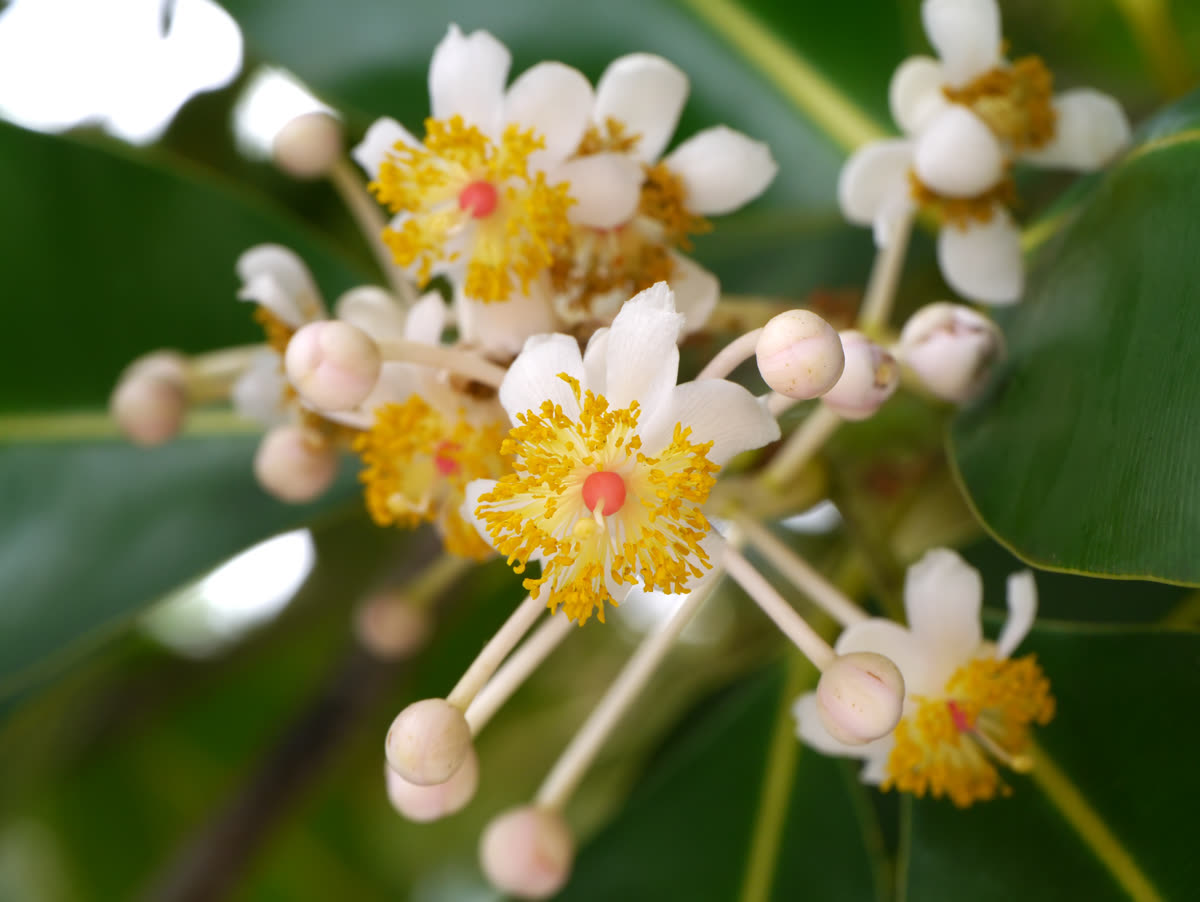
What Tamanu Oil can do for Scars, Wounds & Stretch Marks
Tamanu oil comes from the kernels of a coastal tree of the Indian Ocean and Pacific, revered in Polynesia. Unlike most carrier oils it carries a large resinous fraction of coumarins (including calophyllolide) and xanthones, which give it a dark green color, a strong earthy smell and real anti-inflammatory and antibacterial activity in laboratory studies. Human trials are lacking, so its reputation for scars and blemishes is promising rather than proven. It suits targeted use more than all-over application.
Why people reach for it
- Traditional skin-repair oil. Used for generations in Polynesia on cuts, scrapes and rough skin; lab studies show tamanu extracts help skin cells close artificial “wounds” — a reason it features in scar-care blends.
- Anti-inflammatory and antibacterial in the lab. Its coumarins and xanthones calm inflammatory signaling and inhibit several Gram-positive bacteria, including skin-relevant species, in vitro — interesting for blemish care, unproven in people.
- Rich, protective emollient. A mixed oleic–linoleic oil with a substantial saturated fraction, it softens rough, dry patches, elbows and heels.
- Powerful in small amounts. Because its actives are concentrated, 5–20% in a blend is usually enough, which also keeps the smell manageable.
How to use it
Try it today
A healed-scar massage
- Blend tamanu into a carrier such as jojoba at 5–20%, then patch test: twice daily for 7 days, read at 48 and 96 hours.
- Massage a little into a fully healed, closed scar once or twice a day.
- Keep going for several months, and never use it on open or infected wounds.
| Form | Typical use | Notes |
|---|---|---|
| Targeted spot or scar oil | 5–20% in a carrier oil; neat only on small areas after a patch test | Massage into healed, closed scars once or twice daily for several months. Never apply to open or infected wounds. |
| Face oil or balm | 2–10% of an anhydrous formula | Lighter carriers such as jojoba or squalane help soften the smell and heavy feel. |
| Rough-skin balm (heels, elbows) | 5–15% of a balm | Combine with shea butter and beeswax; works well alongside calendula-infused oil. |
Use it safely
- Tamanu is a tree-nut kernel oil. People with tree-nut allergy should avoid it unless an allergist advises otherwise.
- Allergic contact dermatitis to tamanu oil is documented in case reports; patch test as in our guide (twice daily for 7 days, read at 48 and 96 hours), especially before facial use.
- Not for ingestion: the seeds and crude oil are considered toxic if eaten.
- Do not use on open, deep or infected wounds; see a doctor for wounds that are not healing.
- The dark oil can stain fabrics and pale formulas; its strong smell is natural, not a sign of spoilage.
Pregnancy and breastfeeding: Little safety data. Topical use of small amounts on limited areas is unlikely to be a concern, but because of its concentrated actives many practitioners avoid extensive use in pregnancy; ask your midwife or doctor.
New to an ingredient? Patch test first.
When to see a doctor
- Signs of infection: spreading redness or warmth, red streaks, increasing pain or swelling, pus, a bad smell, or fever.
- Deep, gaping or long cuts, wounds on the face, hands or joints, or bleeding that does not stop with 10 minutes of firm pressure — stitches work best within hours.
- Animal or human bites, puncture wounds, dirty wounds, or if your tetanus vaccination is not up to date.
- Burns larger than your palm, or any burn on the face, hands, feet, genitals or over joints, or with white, leathery or charred skin.
- Wounds not healing within two weeks, especially if you have diabetes, poor circulation or a weakened immune system.
- A scar that keeps growing beyond its edges, is painful or itchy (possible keloid), or an old scar that ulcerates, bleeds or changes.
- New, wide purple stretch marks together with weight gain, a rounded face, easy bruising or muscle weakness.
Other plants for Scars, Wounds & Stretch Marks
| Ingredient | Grade | What the evidence shows |
|---|---|---|
| Honey | B | Systematic reviews suggest sterile, medical-grade honey dressings heal partial-thickness burns faster than some conventional dressings, though trial quality varies; kitchen honey is not for open wounds. |
| Aloe Vera | B | Several trials and a systematic review suggest aloe preparations may shorten healing time of superficial burns; evidence for surgical wounds is inconclusive. |
| Centella Asiatica (Cica) | B | Asiaticoside and madecassoside promote collagen organization; small trials (mostly of combination creams) support use for stretch-mark prevention and scar appearance. |
| Calendula | C | Small trials suggest benefit for skin reactions to radiotherapy and minor wounds; daisy-family allergy is possible. |
| Rosehip Oil | C | A small controlled study suggested rosehip oil improved the color and appearance of post-surgical scars after the wound had closed. |
| Helichrysum (Immortelle) | D | Popular in aromatherapy for scars, but evidence is anecdotal or from lab studies; as an essential oil it must be diluted and never used on open wounds. |
| Olive Oil | D | Trials of massaging plain oils, including olive oil, in pregnancy have not shown clear prevention of stretch marks; massage itself is harmless and pleasant. |