The ingredient encyclopedia · oil
Tamanu Oil
Calophyllum inophyllum L. (Formerly placed in Clusiaceae, Guttiferae) · Calophyllaceae
Dark green, earthy and treasured in Polynesia: a small-dose oil for rough patches and healed scars.
FR Huile de tamanu (huile de calophylle)ES Aceite de tamanuAR زيت التامانوTamanu (Tahitian); foraha (Malagasy); kamani (Hawaiian); dilo (Fijian); punnaga (Sanskrit); Alexandrian laurel
- How well proven
- CPromising
- Safety
- Use with care
- Sun-sensitive
- No
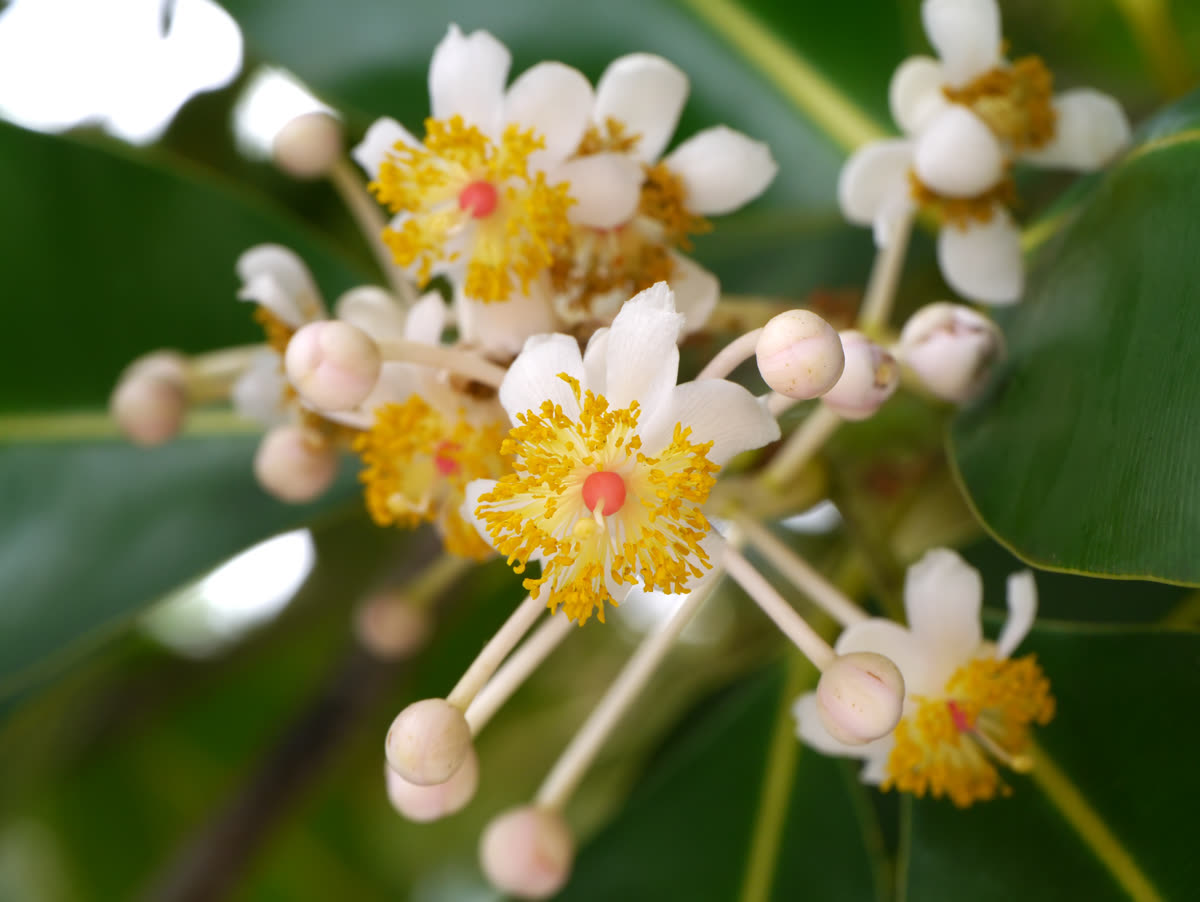
Also known as Calophyllum inophyllum L. (Formerly placed in Clusiaceae, Guttiferae)
FR Huile de tamanu (huile de calophylle)ES Aceite de tamanuAR زيت التامانوTamanu (Tahitian); foraha (Malagasy); kamani (Hawaiian); dilo (Fijian); punnaga (Sanskrit); Alexandrian laurel
What the evidence says
Consistent laboratory data on wound-healing, anti-inflammatory and antibacterial activity with a plausible mechanism, but no robust human trials.
- What it does
- Traditional skin-repair oil. Used for generations in Polynesia on cuts, scrapes and rough skin; lab studies show tamanu extracts help skin cells close artificial “wounds” — a reason it features in scar-care blends.
- How to use it
- Targeted spot or scar oil · 5–20% in a carrier oil; neat only on small areas after a patch test
- Watch out for
- Tamanu is a tree-nut kernel oil.
Checked against 3 cited studies and our safety review · Updated 26 November 2026 · How we grade
Why you’ll love Tamanu Oil
Why you’ll love it
- Softens rough, dry patches on elbows, knees and heels
- A little goes a long way, mixed into a lighter oil
- A Polynesian favorite with promising lab research for scar care
Best forRough patches, healed scars and spot care; not for anyone with a nut allergy.

Try it today
A healed-scar massage
- Blend tamanu into a carrier such as jojoba at 5–20%, then patch test: twice daily for 7 days, read at 48 and 96 hours.
- Massage a little into a fully healed, closed scar once or twice a day.
- Keep going for several months, and never use it on open or infected wounds.
Good to know: Tamanu is a tree-nut oil, so skip it if you have a nut allergy. Its strong earthy smell is natural, and it can stain fabric.
At a glance
| Parts used | Kernel oil, cold-pressed from kernels dried for several weeks until oily; dark green, thick and strongly scented |
|---|---|
| Key actives | Oleic acid, Linoleic acid, Stearic and palmitic acids, Calophyllolide, Inophyllums (4-phenylcoumarins), Calophyllic acid, Xanthones, Triterpenes (e.g., friedelin) |
| INCI names | Calophyllum Inophyllum Seed Oil |
| Skin types | oily, combination, normal, dry |
| Pairs well with | CalendulaJojobaHelichrysum (Immortelle)Shea Butter |
| Evidence grade | CPromising Consistent laboratory data on wound-healing, anti-inflammatory and antibacterial activity with a plausible mechanism, but no robust human trials. |
What it does for skin and hair
Traditional skin-repair oil
Used for generations in Polynesia on cuts, scrapes and rough skin; lab studies show tamanu extracts help skin cells close artificial “wounds” — a reason it features in scar-care blends.
Anti-inflammatory and antibacterial in the lab
Its coumarins and xanthones calm inflammatory signaling and inhibit several Gram-positive bacteria, including skin-relevant species, in vitro — interesting for blemish care, unproven in people.
Rich, protective emollient
A mixed oleic–linoleic oil with a substantial saturated fraction, it softens rough, dry patches, elbows and heels.
Powerful in small amounts
Because its actives are concentrated, 5–20% in a blend is usually enough, which also keeps the smell manageable.
How to use it
Start low, be consistent, and give it four to eight weeks. These are the amounts that work in real products and home recipes.
| Form | Typical use level | Notes |
|---|---|---|
| Targeted spot or scar oil | 5–20% in a carrier oil; neat only on small areas after a patch test | Massage into healed, closed scars once or twice daily for several months. Never apply to open or infected wounds. |
| Face oil or balm | 2–10% of an anhydrous formula | Lighter carriers such as jojoba or squalane help soften the smell and heavy feel. |
| Rough-skin balm (heels, elbows) | 5–15% of a balm | Combine with shea butter and beeswax; works well alongside calendula-infused oil. |
Use it safely
Use with care
- Tamanu is a tree-nut kernel oil. People with tree-nut allergy should avoid it unless an allergist advises otherwise.
- Allergic contact dermatitis to tamanu oil is documented in case reports; patch test as in our guide (twice daily for 7 days, read at 48 and 96 hours), especially before facial use.
- Not for ingestion: the seeds and crude oil are considered toxic if eaten.
- Do not use on open, deep or infected wounds; see a doctor for wounds that are not healing.
- The dark oil can stain fabrics and pale formulas; its strong smell is natural, not a sign of spoilage.
- Pregnancy & breastfeeding
- Little safety data. Topical use of small amounts on limited areas is unlikely to be a concern, but because of its concentrated actives many practitioners avoid extensive use in pregnancy; ask your midwife or doctor. Pregnancy guide
- Phototoxicity
- Not phototoxic at normal use levels.
- Declared fragrance allergens
- None expected
New to an ingredient? Patch test first. Stop and seek advice if you get burning, swelling, blistering or a spreading rash.
Buying well
Sustainability
Tamanu grows along tropical coastlines from East Africa to Polynesia and is not threatened. Yields are low — many fruits make a little oil — so price reflects labor. In Polynesia the tree is culturally significant, traditionally planted around marae (sacred sites) and valued for canoe timber. Prefer suppliers from Pacific or Malagasy communities who share the value of the harvest. See Sustainable & Ethical Botanical Sourcing.
How to choose quality
Genuine cold-pressed tamanu oil is dark green to green-brown, thick, and smells strongly earthy, nutty or curry-like. A pale, odorless “tamanu” is refined or diluted. The INCI should read Calophyllum Inophyllum Seed Oil. Origin affects composition, so reputable suppliers state the island or country. Store cool and dark; it may cloud or deposit sediment in the cold.
The research For professionals
The chemistry, the studies and the evidence by concern, for practitioners, formulators and the curious.
Tamanu kernel oil is unusual among carrier oils. Its fatty acids are fairly balanced — roughly 30–50% oleic, 15–30% linoleic and 10–20% each of stearic and palmitic acid — but crude oil also carries a sizable resinous, non-triglyceride fraction. This fraction contains coumarins (calophyllolide and a family of 4-phenylcoumarins known as inophyllums), calophyllic acid, xanthones, triterpenes such as friedelin, and sterols. These compounds give the oil its green-black color, thick texture and pungent smell, and they are the reason tamanu has drawn pharmacological interest.
In laboratory and animal models, calophyllolide shows anti-inflammatory activity, and tamanu oils and extracts promote migration and proliferation of skin cells, stimulate collagen-related activity in fibroblasts, and inhibit Gram-positive bacteria. Léguillier and colleagues (2015) compared five ethnomedical oils from different Pacific locations and found wound-closure and antibacterial activity in vitro, with composition varying markedly by origin. Inophyllum B attracted attention decades ago for inhibiting HIV reverse transcriptase in the test tube — a lab curiosity with no cosmetic relevance.
Human evidence is the gap. There are no well-designed randomized trials of tamanu oil for scars, acne, eczema or stretch marks; claims rest on tradition, lab data and small uncontrolled reports. Oxidative stability is moderate: the linoleic fraction is vulnerable, but the phenolic resin offers some protection, and well-stored oil typically lasts one to two years.
Key studies
In vitro: five Calophyllum inophyllum oils from different Pacific islands promoted keratinocyte wound closure and showed antibacterial activity; composition and activity varied by origin.
Léguillier T, et al. PLoS One. 2015 Read it in the bibliography Find on PubMedLaboratory study of a Polynesian tamanu oil extract on human skin cells: wound-healing-related and anti-inflammatory activities in vitro.
Ansel JL, et al. Planta Med. 2016 Read it in the bibliography Find on PubMedReview of tamanu oil chemistry and skin-active properties, from Polynesian traditional uses to modern cosmetics; notes the scarcity of clinical trials.
Raharivelomanana P, et al. OCL. 2018 Read it in the bibliography Find on PubMed
MythTamanu oil erases scars and stretch marks.
EvidenceLaboratory studies support skin-repair activity, but no controlled human trial shows that tamanu removes established scars or stretch marks. It may help healing skin feel and look better; for raised or troublesome scars, silicone gel or sheeting has better evidence — see Scars, Wounds & Stretch Marks.
In tradition
In Tahiti and across Polynesia, tamanu oil was applied to skin, cuts and burns and used in massage; the oil was also part of the preparation of monoi-style scented oils. In India, the tree (punnaga) appears in Ayurvedic texts, and in Madagascar foraha oil is a household remedy.
Frequently asked questions
Is tamanu oil good for acne?
Why does tamanu oil smell so strong?
Can I use tamanu oil if I have a nut allergy?
Does tamanu oil help scars?
Cite this page
Herbs.Beauty. Tamanu Oil (Calophyllum inophyllum L.): evidence-based monograph. Updated 26 November 2026. https://herbs.beauty/ingredients/tamanu-oil.html