Does it work?
Tamanu Oil for Dry & Dehydrated Skin
What the research says about tamanu oil for dry & dehydrated skin, how to use it at home and how to stay safe.
The short answer: Consistent laboratory data on wound-healing, anti-inflammatory and antibacterial activity with a plausible mechanism, but no robust human trials.
Our Dry & Dehydrated Skin guide does not rank Tamanu Oil for this use yet, so this is the overall grade for Tamanu Oil.
What it does
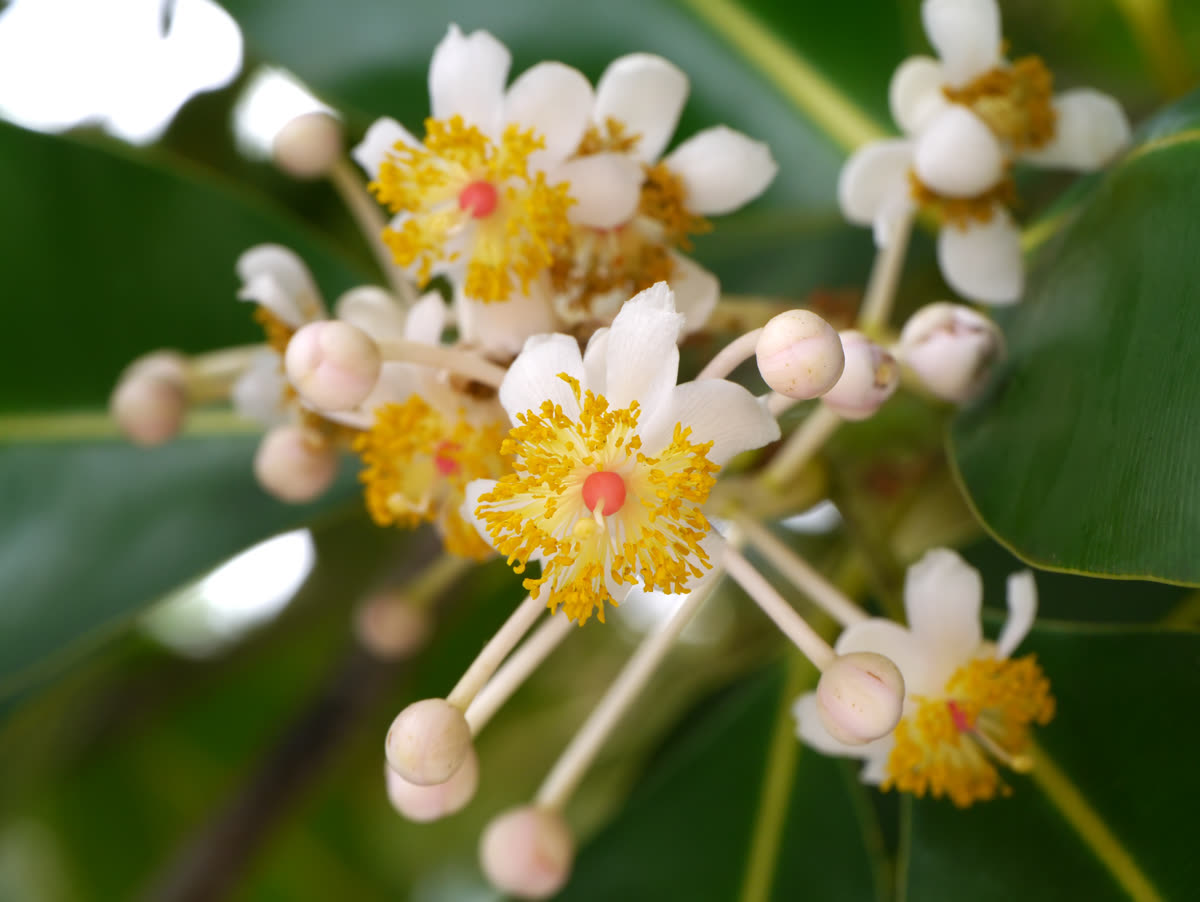
Tamanu oil comes from the kernels of a coastal tree of the Indian Ocean and Pacific, revered in Polynesia. Unlike most carrier oils it carries a large resinous fraction of coumarins (including calophyllolide) and xanthones, which give it a dark green color, a strong earthy smell and real anti-inflammatory and antibacterial activity in laboratory studies. Human trials are lacking, so its reputation for scars and blemishes is promising rather than proven. It suits targeted use more than all-over application.
Why people reach for it
- Traditional skin-repair oil. Used for generations in Polynesia on cuts, scrapes and rough skin; lab studies show tamanu extracts help skin cells close artificial “wounds” — a reason it features in scar-care blends.
- Anti-inflammatory and antibacterial in the lab. Its coumarins and xanthones calm inflammatory signaling and inhibit several Gram-positive bacteria, including skin-relevant species, in vitro — interesting for blemish care, unproven in people.
- Rich, protective emollient. A mixed oleic–linoleic oil with a substantial saturated fraction, it softens rough, dry patches, elbows and heels.
- Powerful in small amounts. Because its actives are concentrated, 5–20% in a blend is usually enough, which also keeps the smell manageable.
How to use it
| Form | Typical use | Notes |
|---|---|---|
| Targeted spot or scar oil | 5–20% in a carrier oil; neat only on small areas after a patch test | Massage into healed, closed scars once or twice daily for several months. Never apply to open or infected wounds. |
| Face oil or balm | 2–10% of an anhydrous formula | Lighter carriers such as jojoba or squalane help soften the smell and heavy feel. |
| Rough-skin balm (heels, elbows) | 5–15% of a balm | Combine with shea butter and beeswax; works well alongside calendula-infused oil. |
Use it safely
- Tamanu is a tree-nut kernel oil. People with tree-nut allergy should avoid it unless an allergist advises otherwise.
- Allergic contact dermatitis to tamanu oil is documented in case reports; patch test as in our guide (twice daily for 7 days, read at 48 and 96 hours), especially before facial use.
- Not for ingestion: the seeds and crude oil are considered toxic if eaten.
- Do not use on open, deep or infected wounds; see a doctor for wounds that are not healing.
- The dark oil can stain fabrics and pale formulas; its strong smell is natural, not a sign of spoilage.
Pregnancy and breastfeeding: Little safety data. Topical use of small amounts on limited areas is unlikely to be a concern, but because of its concentrated actives many practitioners avoid extensive use in pregnancy; ask your midwife or doctor.
New to an ingredient? Patch test first.
When to see a doctor
- Dryness with intense itch that disturbs sleep, or red, inflamed patches (possible eczema or another dermatitis).
- Cracked, bleeding or weeping skin, or signs of infection (pain, warmth, yellow crusts, pus).
- Fish-scale-like dryness present since childhood (possible ichthyosis).
- New, persistent dryness with fatigue, weight change, feeling cold or hair thinning (thyroid), or with excessive thirst and urination (diabetes).
- Severe dryness in older adults with widespread itch that does not respond to moisturizers.
Other plants for Dry & Dehydrated Skin
| Ingredient | Grade | What the evidence shows |
|---|---|---|
| Colloidal Oatmeal | B | Multiple clinical studies show colloidal oatmeal creams and baths reduce dryness, scaling and itch; it is an approved skin protectant in the US. |
| Sunflower Oil | B | Linoleic-rich sunflower seed oil preserved stratum corneum integrity and improved hydration in a comparative study with olive oil, and supports barrier function in neonatal studies. |
| Coconut Oil | B | A randomized trial found virgin coconut oil as effective and safe as mineral oil for mild to moderate xerosis of the legs. |
| Shea Butter | C | Rich emollient and mild occlusive with anti-inflammatory triterpene esters; small studies of shea-containing creams support hydration. |
| Squalane | C | A skin-identical, stable, lightweight emollient that reduces roughness; excellent tolerability but limited trial data on its own. |
| Jojoba | C | A liquid wax ester that resembles skin’s own wax esters; small studies support barrier repair and softness. |
| Aloe Vera | C | A humectant gel that improved skin hydration in small studies; on its own it is not enough for very dry skin and needs an emollient on top. |
| Marshmallow Root | D | Mucilage polysaccharides form a soothing, humectant film; evidence is traditional and lab-based. |