Does it work?
Sage for Acne & Breakouts
What the research says about sage for acne & breakouts, how to use it at home and how to stay safe.
The short answer: One small human study found a topical sage extract reduced UV-induced redness; other skin claims rest on lab data and tradition, and oral studies do not transfer to topical use.
Our Acne & Breakouts guide does not rank Sage for this use yet, so this is the overall grade for Sage.
What it does
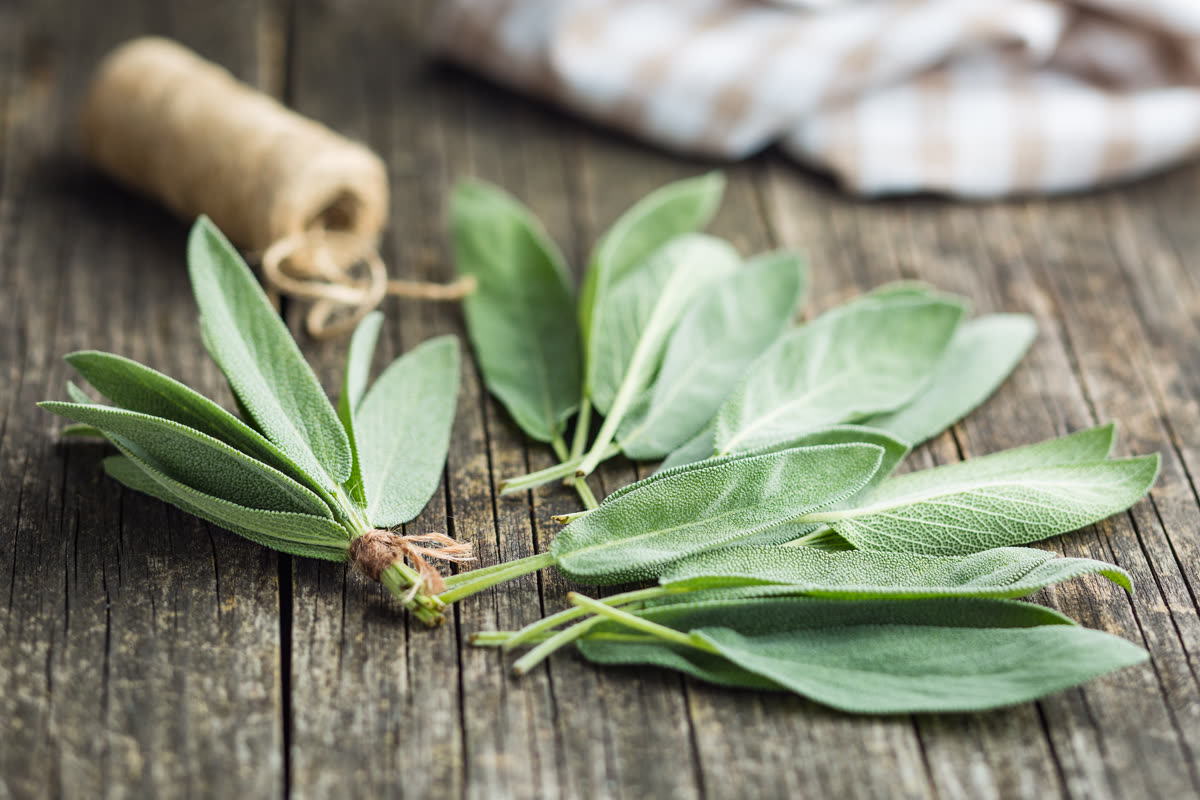
Garden sage has been a Mediterranean household remedy for so long that its Latin name comes from salvare, “to heal” or “to save.” Its leaves are rich in the same antioxidant diterpenes as rosemary, which makes sage extract a useful, gentle ingredient for toners, scalp products and deodorants. The essential oil is another matter: it contains thujone, a neurotoxic ketone, so it belongs at very low dilution in expert hands — or not at all.
Why people reach for it
- Antioxidant leaf extract. Carnosic acid and carnosol — shared with rosemary — are powerful lipid antioxidants that protect both skin lipids and the oils in a formula.
- A clarifying toner for oily skin. Tannins and phenolic acids give sage infusions a mild astringency that suits oily and combination skin in toners and rinses.
- A natural deodorant ingredient. Sage extracts inhibit odor-causing bacteria in the lab and add a fresh, herbal scent. They reduce odor, not the amount of sweat.
- A traditional scalp and hair rinse. Sage rinses are a folk remedy for oily scalp and flaking, and tannins can temporarily deepen the tone of gray or dark hair; evidence is anecdotal. See Dandruff & Itchy Scalp.
How to use it
| Form | Typical use | Notes |
|---|---|---|
| Fresh leaf infusion (toner or scalp rinse) | About 4–5 g dried leaf (2 tablespoons) per 250 ml just-boiled water, steeped 15 minutes | Strain, cool and use the same day as a final rinse or splash toner; discard leftovers. It can stain light hair and fabrics. |
| Leaf extract in toners, deodorants and scalp tonics | 0.5–3% of a preserved water-based formula | Choose glycerin or hydroglycolic extracts; any water-based product needs a preservative. See DIY Safety: Water, Microbes & Preservatives. |
| Sage CO₂ or leaf extract as an antioxidant | 0.05–0.3% of the oil phase | Used like rosemary CO₂ extract to protect fragile oils from rancidity. |
| Essential oil (experienced formulators only) | ≤ 0.5% in body or rinse-off products; avoid on the face | Never use on children, in pregnancy or breastfeeding, or in people with epilepsy. Clary sage oil or leaf extract is a safer choice. See Essential Oil Safety: The Complete Guide. |
Use it safely
- Thujone: sage essential oil is neurotoxic if swallowed and can trigger seizures; never ingest it, keep it away from children and avoid it entirely in epilepsy.
- Do not swap sage oil for clary sage oil in recipes — they are different plants with different chemistry and safety.
- Leaf infusions and extracts are well tolerated; allergy to Lamiaceae plants (sage, rosemary, thyme) is uncommon but possible — patch test.
- Oxidized oils and products containing limonene and linalool can sensitize fragrance-allergic skin.
Pregnancy and breastfeeding: Avoid sage essential oil and medicinal-dose sage preparations in pregnancy and breastfeeding (sage is traditionally used to reduce milk supply). Culinary amounts and rinse-off leaf extracts are not a concern.
New to an ingredient? Patch test first.
When to see a doctor
- Deep, painful nodules or cysts, or any acne that is leaving scars (pitted, rolling or raised) — early treatment prevents permanent scarring.
- No meaningful improvement after 2–3 months of consistent over-the-counter treatment.
- Acne with irregular periods, excess facial or body hair, scalp hair thinning or rapid weight gain, which can point to polycystic ovary syndrome or another hormonal cause.
- Sudden, severe, ulcerating acne with fever, joint pain or feeling unwell (acne fulminans) — seek prompt care.
- Acne that started after a new medicine or supplement (e.g. corticosteroids, anabolic steroids, some anticonvulsants).
- Acne affecting your mood, sleep or confidence — this is a valid reason to seek treatment.
Other plants for Acne & Breakouts
| Ingredient | Grade | What the evidence shows |
|---|---|---|
| Tea Tree | B | Several small randomized trials of 5% tea tree oil gel show fewer inflammatory and total lesions than placebo, with slower onset but better tolerability than 5% benzoyl peroxide. |
| Green Tea | B | Small randomized trials of 2–3% green tea extract lotions reduced lesion counts and sebum in mild to moderate acne; effects are modest. |
| Aloe Vera | C | In one randomized trial, aloe gel combined with tretinoin improved results and tolerability versus tretinoin alone — useful as a soothing partner to retinoids. |
| Bakuchiol | C | Small, mostly open-label studies suggest benefit in mild acne, often in combination products; plausible anti-inflammatory and anti-sebum effects. |
| Willow Bark | C | Contains salicin and other salicylates that may gently exfoliate and calm, but it is far weaker than salicylic acid and human data are limited. |
| Honey | C | Antimicrobial in the lab, but a randomized trial of medical-grade kanuka honey added to routine cleansing found no significant extra benefit. |
| Witch Hazel | D | Tannins are astringent and anti-inflammatory in vitro; there are no meaningful acne trials, and alcohol-based distillates can irritate. |
| Rhassoul Clay | D | Absorbs surface oil temporarily for a matte finish; no evidence it treats acne lesions. |