Does it work?
Sage for Oily Skin & Pores
Fresh, green and herbal, a cooled sage infusion makes a clarifying splash for oily skin and a bright final rinse for the scalp.
The short answer: One small human study found a topical sage extract reduced UV-induced redness; other skin claims rest on lab data and tradition, and oral studies do not transfer to topical use.
Our Oily Skin & Pores guide does not rank Sage for this use yet, so this is the overall grade for Sage.
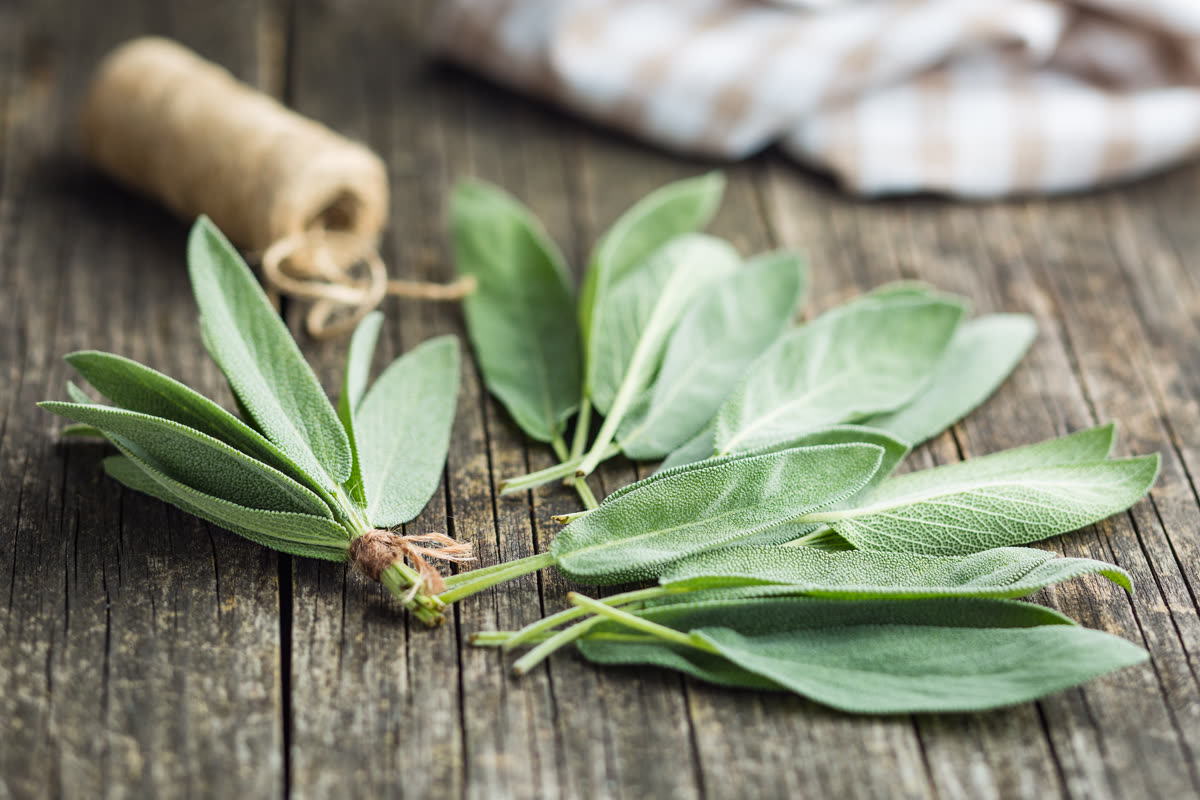
What Sage can do for Oily Skin & Pores
Garden sage has been a Mediterranean household remedy for so long that its Latin name comes from salvare, “to heal” or “to save.” Its leaves are rich in the same antioxidant diterpenes as rosemary, which makes sage extract a useful, gentle ingredient for toners, scalp products and deodorants. The essential oil is another matter: it contains thujone, a neurotoxic ketone, so it belongs at very low dilution in expert hands — or not at all.
Why people reach for it
- Antioxidant leaf extract. Carnosic acid and carnosol — shared with rosemary — are powerful lipid antioxidants that protect both skin lipids and the oils in a formula.
- A clarifying toner for oily skin. Tannins and phenolic acids give sage infusions a mild astringency that suits oily and combination skin in toners and rinses.
- A natural deodorant ingredient. Sage extracts inhibit odor-causing bacteria in the lab and add a fresh, herbal scent. They reduce odor, not the amount of sweat.
- A traditional scalp and hair rinse. Sage rinses are a folk remedy for oily scalp and flaking, and tannins can temporarily deepen the tone of gray or dark hair; evidence is anecdotal. See Dandruff & Itchy Scalp.
How to use it
Try it today
A same-day sage rinse
- Steep 2 tablespoons of dried sage leaf in 250 ml of just-boiled water for 15 minutes.
- Strain and cool completely; patch test, then use as a splash toner or final hair rinse.
- Discard leftovers the same day, and note it can stain light hair and fabrics.
| Form | Typical use | Notes |
|---|---|---|
| Fresh leaf infusion (toner or scalp rinse) | About 4–5 g dried leaf (2 tablespoons) per 250 ml just-boiled water, steeped 15 minutes | Strain, cool and use the same day as a final rinse or splash toner; discard leftovers. It can stain light hair and fabrics. |
| Leaf extract in toners, deodorants and scalp tonics | 0.5–3% of a preserved water-based formula | Choose glycerin or hydroglycolic extracts; any water-based product needs a preservative. See DIY Safety: Water, Microbes & Preservatives. |
| Sage CO₂ or leaf extract as an antioxidant | 0.05–0.3% of the oil phase | Used like rosemary CO₂ extract to protect fragile oils from rancidity. |
| Essential oil (experienced formulators only) | ≤ 0.5% in body or rinse-off products; avoid on the face | Never use on children, in pregnancy or breastfeeding, or in people with epilepsy. Clary sage oil or leaf extract is a safer choice. See Essential Oil Safety: The Complete Guide. |
Use it safely
- Thujone: sage essential oil is neurotoxic if swallowed and can trigger seizures; never ingest it, keep it away from children and avoid it entirely in epilepsy.
- Do not swap sage oil for clary sage oil in recipes — they are different plants with different chemistry and safety.
- Leaf infusions and extracts are well tolerated; allergy to Lamiaceae plants (sage, rosemary, thyme) is uncommon but possible — patch test.
- Oxidized oils and products containing limonene and linalool can sensitize fragrance-allergic skin.
Pregnancy and breastfeeding: Avoid sage essential oil and medicinal-dose sage preparations in pregnancy and breastfeeding (sage is traditionally used to reduce milk supply). Culinary amounts and rinse-off leaf extracts are not a concern.
New to an ingredient? Patch test first.
When to see a doctor
- Sudden increase in oiliness with acne, excess facial or body hair, irregular periods or scalp hair thinning (possible androgen excess or polycystic ovary syndrome).
- Greasy, flaky, red patches around the nose, brows or scalp that persist (possible seborrheic dermatitis).
- A shiny, pearly or translucent bump that grows or bleeds, which can mimic sebaceous hyperplasia but may be a basal cell carcinoma.
- Oily skin with significant acne or scarring, or if you want to discuss prescription options.
Other plants for Oily Skin & Pores
| Ingredient | Grade | What the evidence shows |
|---|---|---|
| Green Tea | B | Small controlled trials of topical green tea extract emulsions reduced sebum production over several weeks. |
| Willow Bark | C | Natural salicylates may provide light exfoliation and smoothing, but it is much weaker than salicylic acid and poorly studied. |
| Tea Tree | C | Helpful for acne lesions on oily skin, but there is little evidence it reduces sebum itself. |
| Witch Hazel | D | Tannins give a temporary tightening, matte feel; no good evidence it reduces sebum, and alcohol-containing distillates can irritate. |
| Rhassoul Clay | D | Absorbs surface oil for a temporary matte finish and pleasant texture; does not change sebum production. |
| Jojoba | D | Often claimed to “rebalance” oil production; there is no solid human evidence, though its light, non-greasy feel suits many oily skins. |