Formulation · 8 min read · Enthusiast
DIY Safety: Water, Microbes & Preservatives
Why anything with water needs a real preservative, how pH and water activity work, which preservatives fit natural standards, and what doesn’t work.
What you’ll take away
- Any product containing water, hydrosol, aloe juice, tea or fresh produce must either be made fresh and used once, or contain a broad-spectrum preservative at the supplier’s recommended level.
- Most preservatives that fit natural standards are organic acids that only work at low pH — measure pH with a meter, don’t guess.
- Vitamin E, rosemary extract and grapefruit seed extract are not preservatives; essential oils are not reliable ones at skin-safe levels.
- Good hygiene, distilled water, small batches and pump or airless packaging matter as much as the preservative itself.
- Only a challenge test (such as ISO 11930) proves a formula is adequately preserved; anyone selling cosmetics needs one.
- Plants in this guide
- Rosemary C
Guides explain how things work; the grade for each plant is on its own page. How we grade
Why water changes everything
Bacteria, yeasts and molds need available water to grow. An oil, butter or wax on its own offers them almost none, which is why an anhydrous balm can last months. The moment you add water — or a water-based ingredient such as a hydrosol, aloe juice, herbal tea or fruit pulp — you create a growth medium. Fingers, air, tap water, utensils and the raw ingredients themselves all introduce microbes.
The consequences are real. Contaminated cosmetics have caused eye infections (notably with Pseudomonas aeruginosa from mascara and eye products), skin infections and outbreaks linked to organisms such as the Burkholderia cepacia complex. Microbial contamination is a recurring reason for cosmetic recalls and alerts in the EU’s Safety Gate system. Spoilage is often invisible: a cream can carry a large microbial load before it smells, separates or grows visible spots.
Our recipe collection follows this rule strictly: water-containing recipes are either fresh (one use, discard leftovers) or aqueous with a named broad-spectrum preservative and a pH check.
Water activity: why “contains water” isn’t the whole story
Microbiologists talk about water activity (aw): how much water is actually free for microbes to use, on a scale from 0 to 1 (pure water). Most bacteria need an aw above about 0.90; many yeasts and molds grow at lower levels, and very few organisms grow below about 0.6. Dissolved sugars, glycerin and salts bind water and lower aw — which is why honey resists spoilage in the jar.
For home formulators, the practical lessons are:
- Anhydrous products (oils, balms, butters, powders) are low-risk as long as water stays out. Scrubs and balms used in the shower, or scooped with wet fingers, can become contaminated; a preservative suited to anhydrous products, or single-use portions, is wise.
- High-glycerin or honey-rich products may resist growth, but you cannot measure aw at home, so treat them as water-containing.
- Powder masks such as Moroccan Rhassoul & Orange Blossom Mask should be mixed with water only immediately before use.
- Antioxidants slow rancidity in oils; they do nothing against microbes.
pH: the switch that turns preservatives on
Many preservatives accepted by natural standards — benzoic, sorbic and dehydroacetic acids and their salts — work only in their undissociated (acid) form, which dominates when pH is below the acid’s pKa. Sodium benzoate (benzoic acid pKa about 4.2) is far more effective at pH 4.5 than at pH 6. Put it in a cream at pH 6.5 and you have a product that is “preserved” on paper only.
- Use a calibrated pH meter. Strips are too imprecise for this job, particularly in colored or creamy products.
- Measure thick creams as a 10% dilution in distilled water.
- Adjust down with small amounts of citric or lactic acid solution; adjust up with a dilute sodium bicarbonate or sodium hydroxide solution, mixing and re-measuring between additions.
- Aim for the skin-friendly range of roughly pH 4.5–5.5 for leave-on products, which also suits the acid mantle (see The Skin Barrier, Explained).
Broad-spectrum preservatives for natural formulas
“Broad-spectrum” means effective against Gram-negative and Gram-positive bacteria, yeasts and molds. Single organic acids are mainly antifungal, so they are usually sold as blends or combined with boosters. Always follow the supplier’s recommended level and pH range; the EU maximums below come from Annex V of the Cosmetics Regulation (EC) No 1223/2009.
| Preservative (INCI) | Effective pH | EU maximum (as acid) | Fits COSMOS? | Notes |
|---|---|---|---|---|
| Sodium Benzoate / Benzoic Acid | Below about 5 (best 3–4.5) | 0.5% leave-on; 2.5% rinse-off | Yes | Stronger against yeasts and molds; usually paired with sorbate or a booster |
| Potassium Sorbate / Sorbic Acid | Below about 5.5 | 0.6% | Yes | Mainly antifungal; weak against bacteria alone |
| Dehydroacetic Acid / Sodium Dehydroacetate | Up to about 6 | 0.6% | Yes | Often blended with benzyl alcohol for broader cover; not for aerosol sprays |
| Benzyl Alcohol | Wide (about 3–8) | 1% as preservative | Yes | Bacterial cover weak alone; a base for many natural blends; also a labeled fragrance allergen |
| Sodium Levulinate & Sodium Anisate | Below about 5.5 | Not listed as preservatives in the EU (used as skin conditioning/fragrance) | Yes | Gentle, but bacterial cover can be patchy; often needs boosting |
| Phenoxyethanol & Ethylhexylglycerin | Wide (about 3–10) | Phenoxyethanol 1% | No | Robust, pH-independent and well tolerated; acceptable to many “natural” brands but not to COSMOS or NATRUE |
Practical points: add heat-sensitive preservatives in the cool-down phase (usually below 40 °C); clays, starches, proteins and some nonionic emulsifiers can bind preservatives and reduce their effect; and hydroalcoholic products with roughly 20% or more ethanol may be self-preserving. Calculate percentages with the Formula & Cost Calculator.
What is not a preservative
- Vitamin E (tocopherol) is an antioxidant. It slows oils going rancid; it does not kill or stop microbes.
- Rosemary extract (rosemary CO₂ or “ROE”) is likewise an excellent antioxidant for oils — see rosemary — not an antimicrobial preservative.
- Grapefruit seed extract: independent laboratory analyses of commercial products have repeatedly found that their antimicrobial activity came from synthetic preservatives such as benzethonium chloride, triclosan or parabens, not from the grapefruit itself.
- Essential oils: some are antimicrobial in a test tube, but the concentrations needed to preserve a product are far above skin-safe levels, and coverage is unreliable.
- Citric acid adjusts pH; it is not a preservative by itself.
- “Preservative-free” refrigeration slows growth but does not stop it. An unpreserved homemade toner in the fridge is still a fresh product: use within a day or two.
Hygiene and home GMP
Professional manufacturers follow Good Manufacturing Practice (ISO 22716). At home, the same principles apply on a small scale:
- Clean work surfaces, tie back hair, wash hands and wear disposable gloves.
- Sanitize tools and containers with 70% ethanol or isopropyl alcohol and let them air-dry.
- Use distilled or deionized water, never tap water; treat hydrosols and aloe juice as potential contamination sources and buy preserved, in-date stock.
- For emulsions, heat the water and oil phases (commonly to 70–75 °C) and hold briefly before emulsifying; this reduces, but does not eliminate, microbial load.
- Weigh everything on a 0.01 g scale; record ingredient batches, quantities, pH and date for every batch.
- Make small batches you will use within weeks.
- Choose airless pumps, tubes or pump bottles over open jars; if you use a jar, use a clean spatula, never fingers.
Shelf life, PAO symbols and challenge tests
The open-jar period-after-opening (PAO) symbol (“6M”, “12M”) on commercial products tells you how long a product stays safe after first opening. Under EU rules it is required when a product’s minimum durability exceeds 30 months; shorter-lived products must carry a “best used before the end of” date instead.
A commercial PAO is backed by stability and preservative efficacy (challenge) testing. In the standard method, ISO 11930, the product is deliberately inoculated with Pseudomonas aeruginosa, Staphylococcus aureus, Escherichia coli, Candida albicans and Aspergillus brasiliensis, and microbial counts are measured over 28 days; the formula passes only if counts fall by set amounts. Your homemade cream has not been tested, so be conservative: preserved aqueous products for a few weeks to about three months, unpreserved ones for a single use, and discard anything at the first change in smell, color, texture or separation.
If you plan to sell, EU law requires a safety assessment by a qualified assessor, a Responsible Person, notification on the CPNP portal and, in practice, challenge and stability data. See Starting a Natural Beauty Brand: The Practical Roadmap.
Frequently asked questions
Can I make a natural cream without preservatives?
Is vitamin E a natural preservative?
What is the most natural broad-spectrum preservative?
How long does a homemade face cream last?
Keep reading
 No. 006
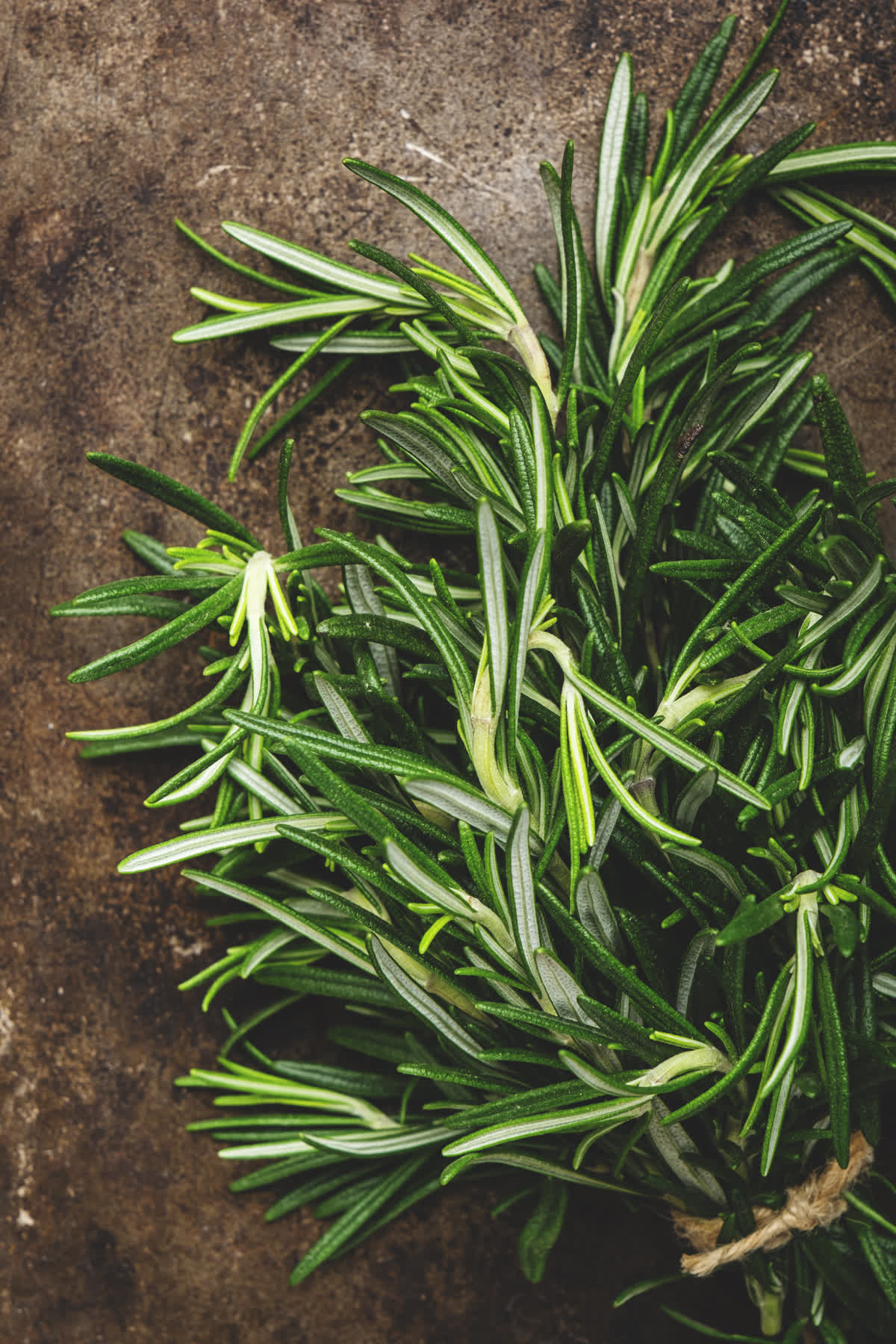
RosemarySalvia rosmarinusBright, herbal and invigorating, rosemary turns a simple scalp massage into a ritual worth keeping.
 Toner · IntermediateGreen Tea & Centella Soothing TonerA preserved, alcohol-free toner with green tea, centella, witch hazel and panthenol to hydrate and calm, formulated to pH 5.0–5.5.