Does it work?
Pumpkin Seed Oil for Thinning Hair & Hair Loss
Deep green and nutty, pumpkin seed oil turns a weekly scalp massage into a comforting, nourishing pre-wash ritual.
The short answer: A placebo-controlled trial of an oral supplement containing pumpkin seed oil increased hair counts in men; it was a multi-ingredient product, and topical data are minimal.
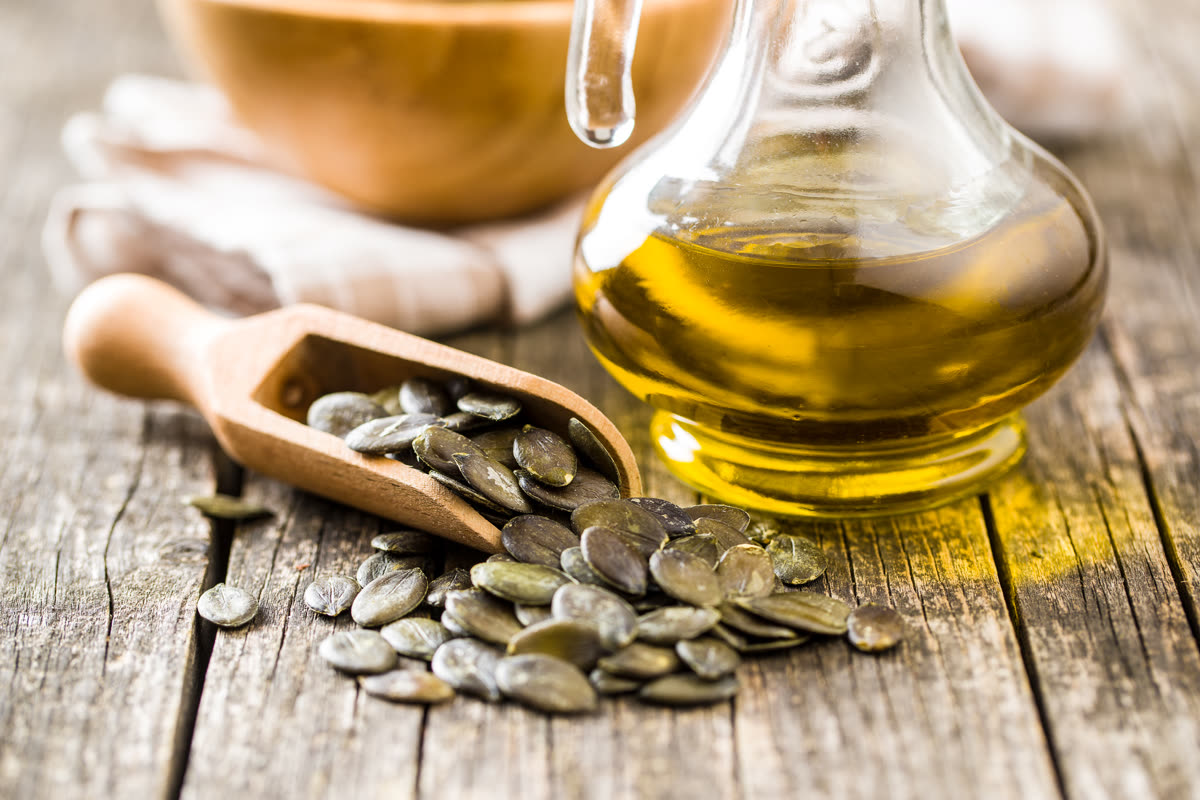
What Pumpkin Seed Oil can do for Thinning Hair & Hair Loss
Pumpkin seed oil is a dark green, linoleic-rich oil famous as the culinary pride of Styria in Austria. In hair care it is known for one randomized trial in which men with pattern hair loss taking pumpkin-seed-oil capsules had more hair than those on placebo — a promising but limited result, because the capsule also contained other ingredients. Topically it is a nourishing scalp oil whose hair-growth effect is still unproven.
Why people reach for it
- Possible support in pattern hair loss. In a 24-week placebo-controlled trial, men taking capsules containing pumpkin seed oil had greater increases in hair count than those on placebo.
- Nourishing scalp oil. Linoleic acid, sterols and tocopherols make it a comforting pre-wash oil for a dry scalp.
- Antioxidant-rich. Natural tocopherols and carotenoids give it reasonable stability for a linoleic-rich oil.
How to use it
Try it today
A weekly scalp massage
- Mix 1 teaspoon of cold-pressed pumpkin seed oil into 3 teaspoons of jojoba, then patch test at the scalp edge.
- Massage it into your scalp with your fingertips and leave it for one to eight hours.
- Shampoo out well, and use a dark towel, as the oil can stain pale fabrics.
| Form | Typical use | Notes |
|---|---|---|
| Scalp oil (topical) | 10–30% of a scalp-oil blend | Massage into the scalp, leave 1–8 hours, then shampoo; see Rosemary & Pumpkin Seed Scalp Oil. |
| Oral supplement | The trial used 400 mg/day (in a combination product) | Discuss with your doctor or pharmacist, especially if you take hormonal medicines. |
| Face and body oil | 5–20% of a blend | Cold-pressed, unroasted oil only; the strong color can tint pale formulas. |
Recipes for Thinning Hair & Hair Loss with Pumpkin Seed Oil
Daily rituals with Pumpkin Seed Oil
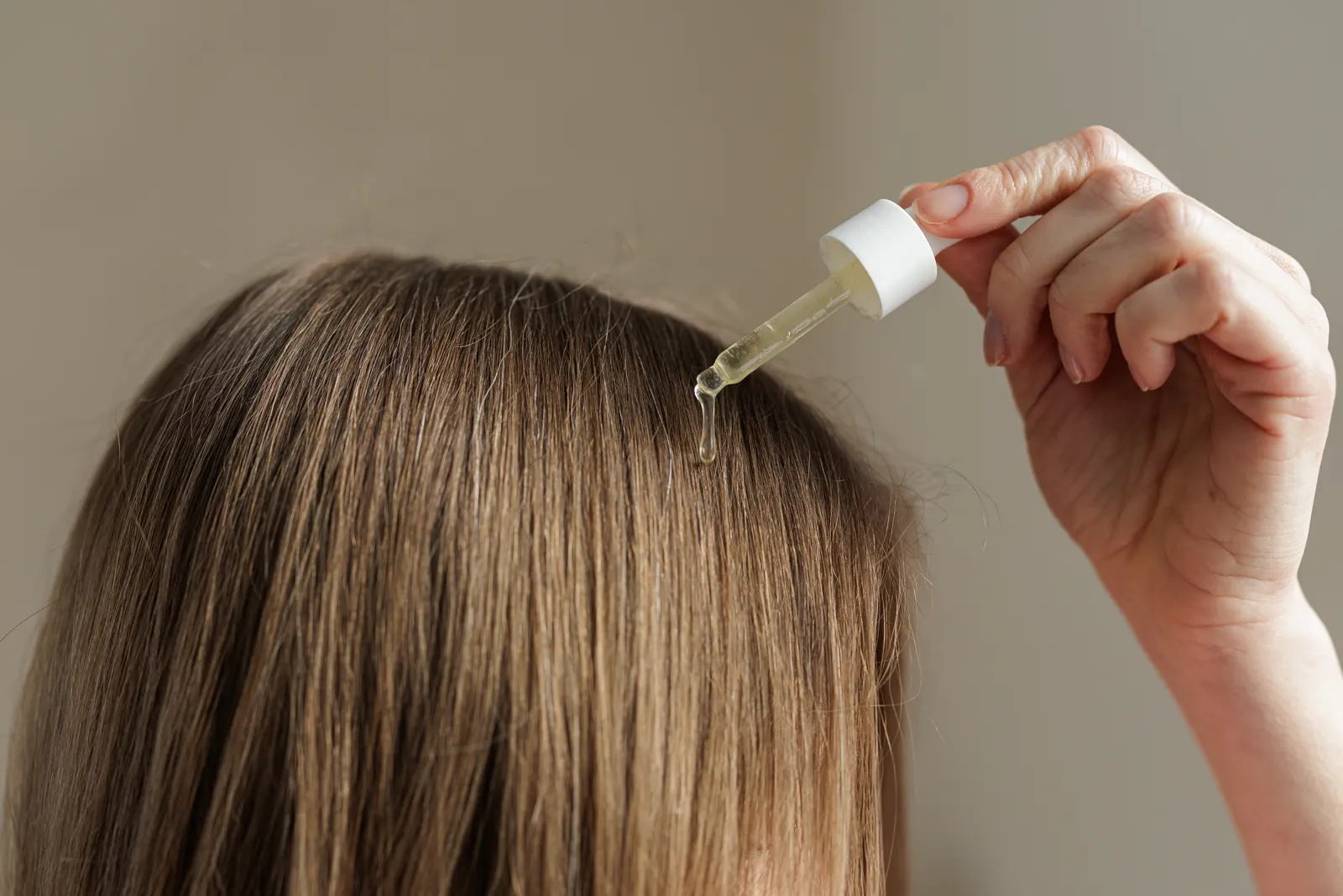
Use it safely
- Topical allergy is rare; patch test on the scalp edge first.
- Dark, roasted oil can stain light hair, towels and pillowcases.
- Sudden, patchy or rapid hair loss, or loss with scalp redness or scaling, needs a doctor’s assessment — see Thinning Hair & Hair Loss.
- Oral supplements are not standardized; they should not replace proven treatments.
Pregnancy and breastfeeding: Food amounts and topical use are considered safe. Supplements marketed for “DHT blocking” have not been studied in pregnancy and should be avoided.
New to an ingredient? Patch test first.
When to see a doctor
- Sudden, patchy hair loss with smooth bald circles (possible alopecia areata).
- Hair loss with scalp itching, burning, pain, redness, scale or pustules, or a receding hairline with loss of eyebrows — possible scarring alopecia, which needs prompt specialist care.
- A child with scaly patches, broken hairs or black dots on the scalp (possible fungal infection).
- Rapid or heavy diffuse shedding lasting more than six months, or shedding with fatigue, weight change, heavy periods, feeling cold or palpitations.
- Hair loss with acne, excess body hair or irregular periods (possible androgen excess).
- Hair loss after starting a new medication — do not stop prescribed medicines without advice.
Other plants for Thinning Hair & Hair Loss
| Ingredient | Grade | What the evidence shows |
|---|---|---|
| Rosemary | C | One randomized comparative trial in androgenetic alopecia found rosemary oil gave similar hair-count gains to 2% minoxidil after six months, with less scalp itch; it was small, not placebo-controlled and has not been replicated. |
| Fenugreek | C | A small placebo-controlled trial of an oral fenugreek seed extract reported improved hair growth and thickness; topical use is traditional. |
| Peppermint | D | A mouse study showed hair growth with diluted peppermint oil; there are no meaningful human trials, and it can irritate the scalp. |
| Green Tea | D | EGCG inhibits 5-alpha-reductase and supports follicle cells in the lab; human evidence is lacking. |
| Stinging Nettle | D | Nettle root affects androgen pathways in prostate research, but there are no good hair-loss trials. |
| Castor Oil | D | A popular remedy with no published evidence of hair growth; it can coat hair and, rarely, cause severe matting. |