Does it work?
Fenugreek for Thinning Hair & Hair Loss
What the research says about fenugreek for thinning hair & hair loss, how to use it at home and how to stay safe.
The short answer: A small placebo-controlled trial of an oral fenugreek seed extract reported improved hair growth and thickness; topical use is traditional.
What it does
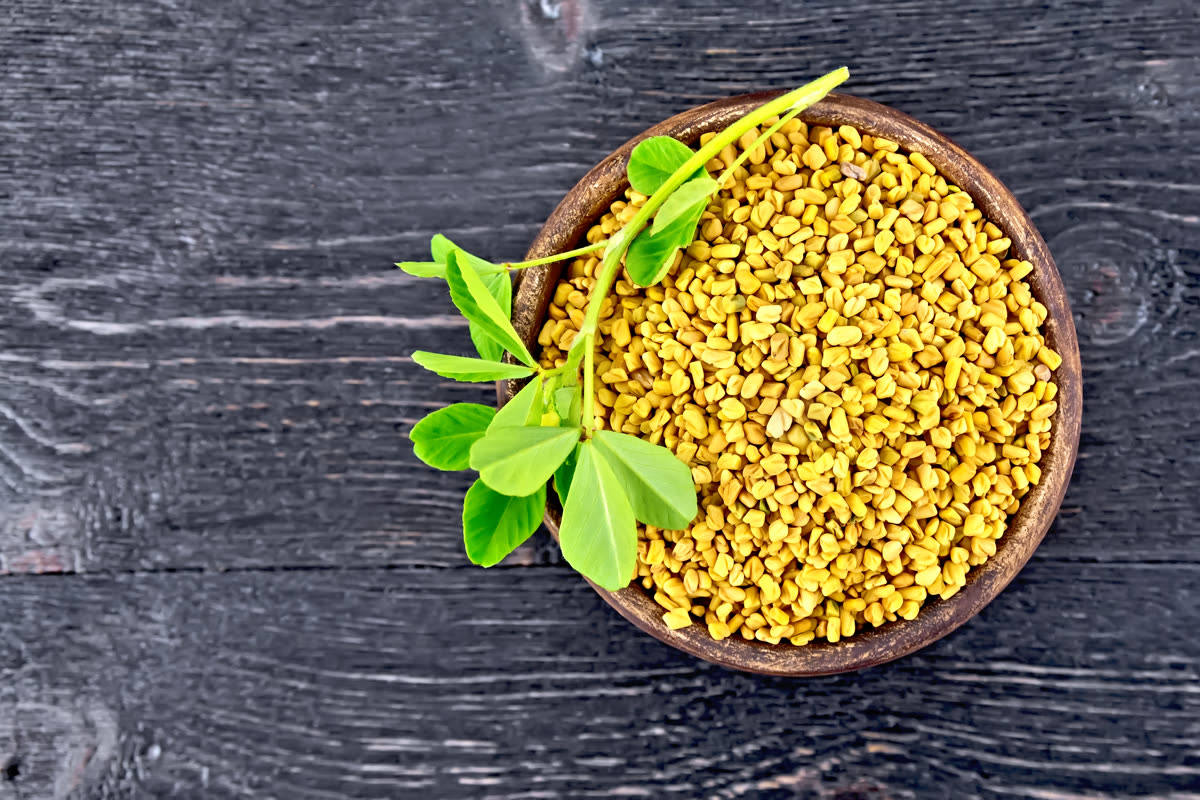
Fenugreek seeds, helba in Arabic and methi in India, swell into a slippery gel when soaked, making a conditioning mask that softens hair and adds slip. Fenugreek is widely promoted for hair growth and shedding, but the support is largely tradition and lab work; topical human trials are lacking. Enjoy it as a conditioning treatment and keep expectations modest.
Why people reach for it
- Conditioning and slip. Galactomannan mucilage coats the hair shaft, smoothing the cuticle and easing detangling. See Dry, Damaged & Frizzy Hair.
- Soothing for a dry scalp. The gel is gentle and moisturizing; traditional users apply it for itchy, flaky scalps, though evidence is anecdotal.
- Hair-shedding claims (unproven topically). Saponins and other compounds are proposed to support follicles; this rests on lab and animal work, not topical human trials.
How to use it
| Form | Typical use | Notes |
|---|---|---|
| Soaked-seed paste mask | 2–3 tbsp (about 20–30 g) seeds soaked overnight, then ground | Apply to scalp and lengths for 20–40 minutes, then rinse thoroughly; the gel can be hard to rinse from very dense hair. Use fresh. |
| Powder in hair masks | 10–30% of a powder blend | Combine with amla (Indian gooseberry) and water or yogurt for a traditional mask; see Fenugreek & Amla Hair Mask. |
| Extract in shampoos and conditioners | 0.5–3% (per supplier) | Odor-reduced extracts avoid the lingering maple-syrup smell. |
Recipes for Thinning Hair & Hair Loss with Fenugreek
Daily rituals with Fenugreek
Use it safely
- Fenugreek is a legume: people allergic to peanuts or chickpeas may cross-react. Patch test, and avoid if you have a known legume allergy.
- The smell (sotolone) can linger on hair, skin and even sweat for a day or two.
- Oral fenugreek can lower blood sugar and interact with diabetes and anticoagulant medicines; this concerns supplements, not hair masks.
- Sudden or patchy hair loss warrants a doctor’s visit rather than home remedies.
Pregnancy and breastfeeding: Hair masks are considered low-risk. Avoid medicinal oral doses in pregnancy, as fenugreek has traditionally been considered uterotonic.
New to an ingredient? Patch test first.
When to see a doctor
- Sudden, patchy hair loss with smooth bald circles (possible alopecia areata).
- Hair loss with scalp itching, burning, pain, redness, scale or pustules, or a receding hairline with loss of eyebrows — possible scarring alopecia, which needs prompt specialist care.
- A child with scaly patches, broken hairs or black dots on the scalp (possible fungal infection).
- Rapid or heavy diffuse shedding lasting more than six months, or shedding with fatigue, weight change, heavy periods, feeling cold or palpitations.
- Hair loss with acne, excess body hair or irregular periods (possible androgen excess).
- Hair loss after starting a new medication — do not stop prescribed medicines without advice.
Other plants for Thinning Hair & Hair Loss
| Ingredient | Grade | What the evidence shows |
|---|---|---|
| Rosemary | C | One randomized comparative trial in androgenetic alopecia found rosemary oil gave similar hair-count gains to 2% minoxidil after six months, with less scalp itch; it was small, not placebo-controlled and has not been replicated. |
| Pumpkin Seed Oil | C | A placebo-controlled trial of an oral supplement containing pumpkin seed oil increased hair counts in men; it was a multi-ingredient product, and topical data are minimal. |
| Peppermint | D | A mouse study showed hair growth with diluted peppermint oil; there are no meaningful human trials, and it can irritate the scalp. |
| Green Tea | D | EGCG inhibits 5-alpha-reductase and supports follicle cells in the lab; human evidence is lacking. |
| Stinging Nettle | D | Nettle root affects androgen pathways in prostate research, but there are no good hair-loss trials. |
| Castor Oil | D | A popular remedy with no published evidence of hair growth; it can coat hair and, rarely, cause severe matting. |