Does it work?
Calendula for Scars, Wounds & Stretch Marks
Sunny pot marigold petals, steeped in oil, make one of the gentlest balms for dry, chapped skin.
The short answer: Small trials suggest benefit for skin reactions to radiotherapy and minor wounds; daisy-family allergy is possible.
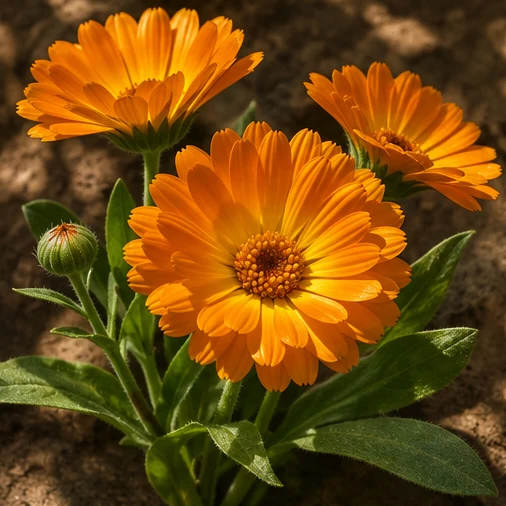
What Calendula can do for Scars, Wounds & Stretch Marks
Calendula is the bright orange pot marigold of Mediterranean gardens, and one of the most trusted botanicals for dry, chapped and lightly damaged skin. Its anti-inflammatory triterpene esters are oil-soluble, which is why infused oils and balms are the classic form. Human evidence is real but mixed, and people allergic to the daisy family should patch test first.
Why people reach for it
- Comforts dry, cracked and chapped skin. Calendula-infused oils and balms soften rough hands, lips and heels while delivering anti-inflammatory triterpenes. Most of the barrier benefit comes from the oil and butter base; calendula adds soothing.
- Supports healing of minor wounds. Lab and animal studies show calendula extracts encourage fibroblast activity and new tissue formation, and the European Medicines Agency recognizes it as a traditional remedy for minor wounds and skin inflammation.
- May ease radiation-related skin reactions. A 254-patient trial found less grade 2+ radiation dermatitis with calendula than with trolamine cream. A later trial found it no better than a plain cream, so it is an option to discuss with the oncology team rather than a proven preventive.
- A gentle choice for babies’ and sensitive skin. Calendula is a long-standing ingredient in diaper and baby creams and is generally well tolerated — with the exception of people sensitized to Asteraceae plants.
How to use it
Try it today
A golden hand-and-heel rescue
- If calendula is new to you, patch test a little balm on your inner arm first.
- Warm a small amount between your fingertips and press it into dry knuckles, cuticles and heels.
- At bedtime, add a thin extra layer and slip on cotton gloves or socks overnight.
| Form | Typical use | Notes |
|---|---|---|
| Infused oil | 20–100% of the oil phase of balms, salves and body oils | Fully dried flowers macerated in sunflower or olive oil (gentle warmth or 4–6 weeks cold). Never use fresh flowers — their water invites mold. Method in Infused Oils, Hydrosols & Extracts. |
| CO₂ extract | 0.1–1% (per supplier) | Concentrated, faradiol-rich and deep orange; ideal for creams and lip care where you want activity without a large oil load. |
| Glycerite or hydroglycerin extract | 2–5% in water-based products | Adds water-soluble flavonoids and polysaccharides; requires a broad-spectrum preservative like any aqueous formula. |
| Pharmacy calendula cream | 2–3 times daily on dry, chapped or minor-damaged skin | During radiotherapy, use only creams your treatment team approves and follow their timing advice. |
Recipes for Scars, Wounds & Stretch Marks with Calendula
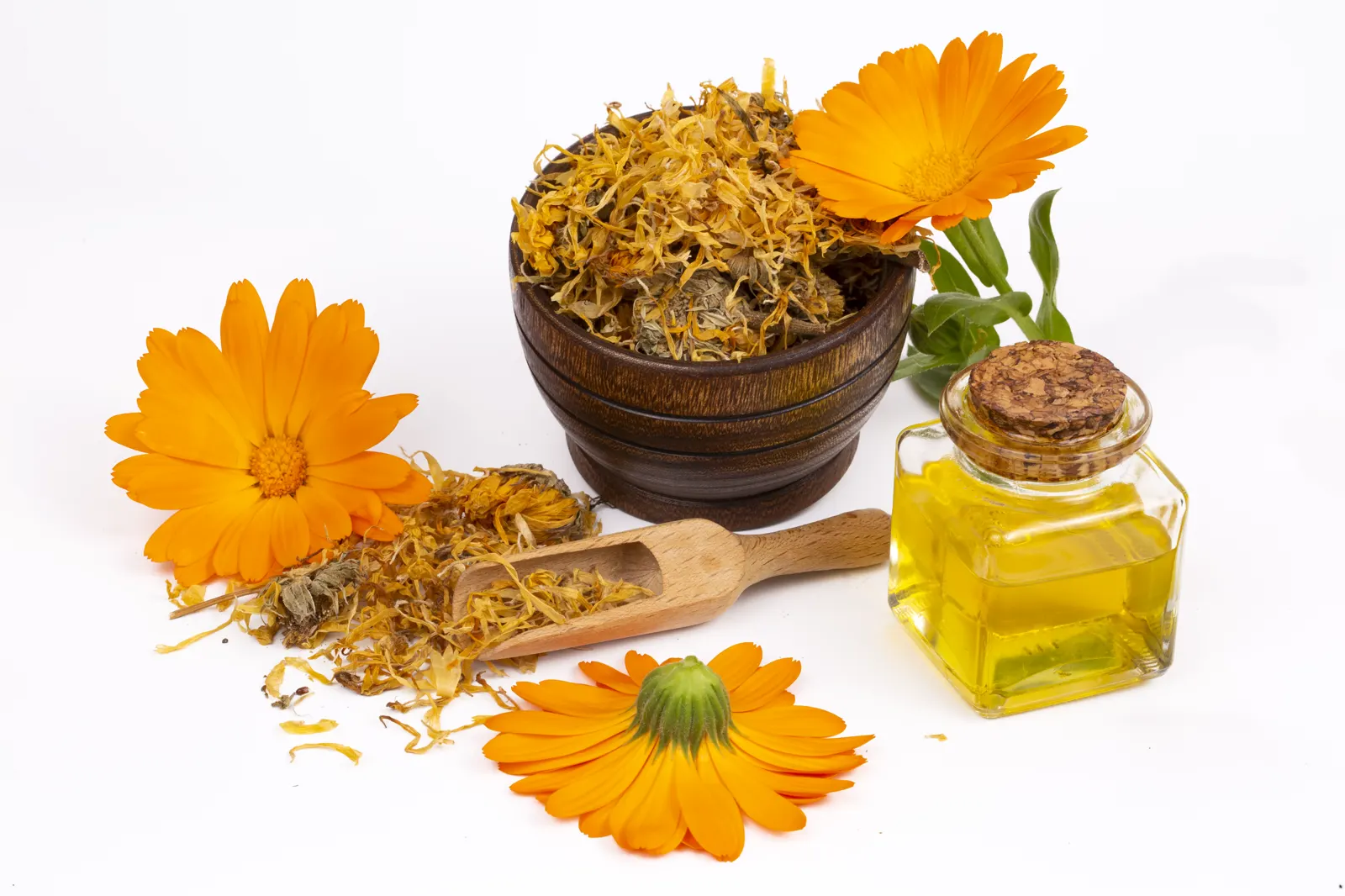
Daily rituals with Calendula
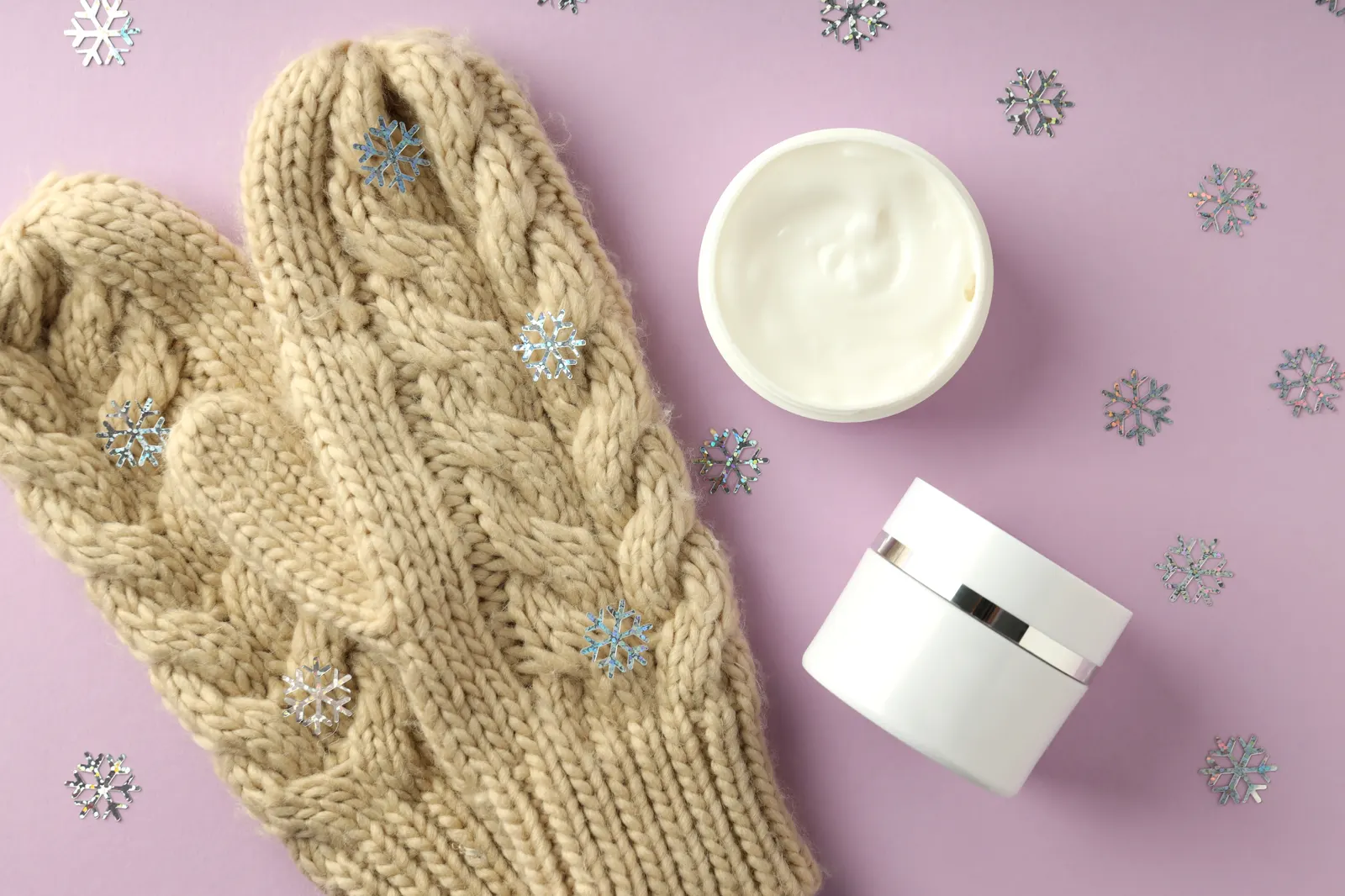 The Overnight Glove Method for Winter HandsCracked knuckles and rough fingertips? A thick balm under cotton gloves overnight, plus three daytime habits, rescues winter hands within days.
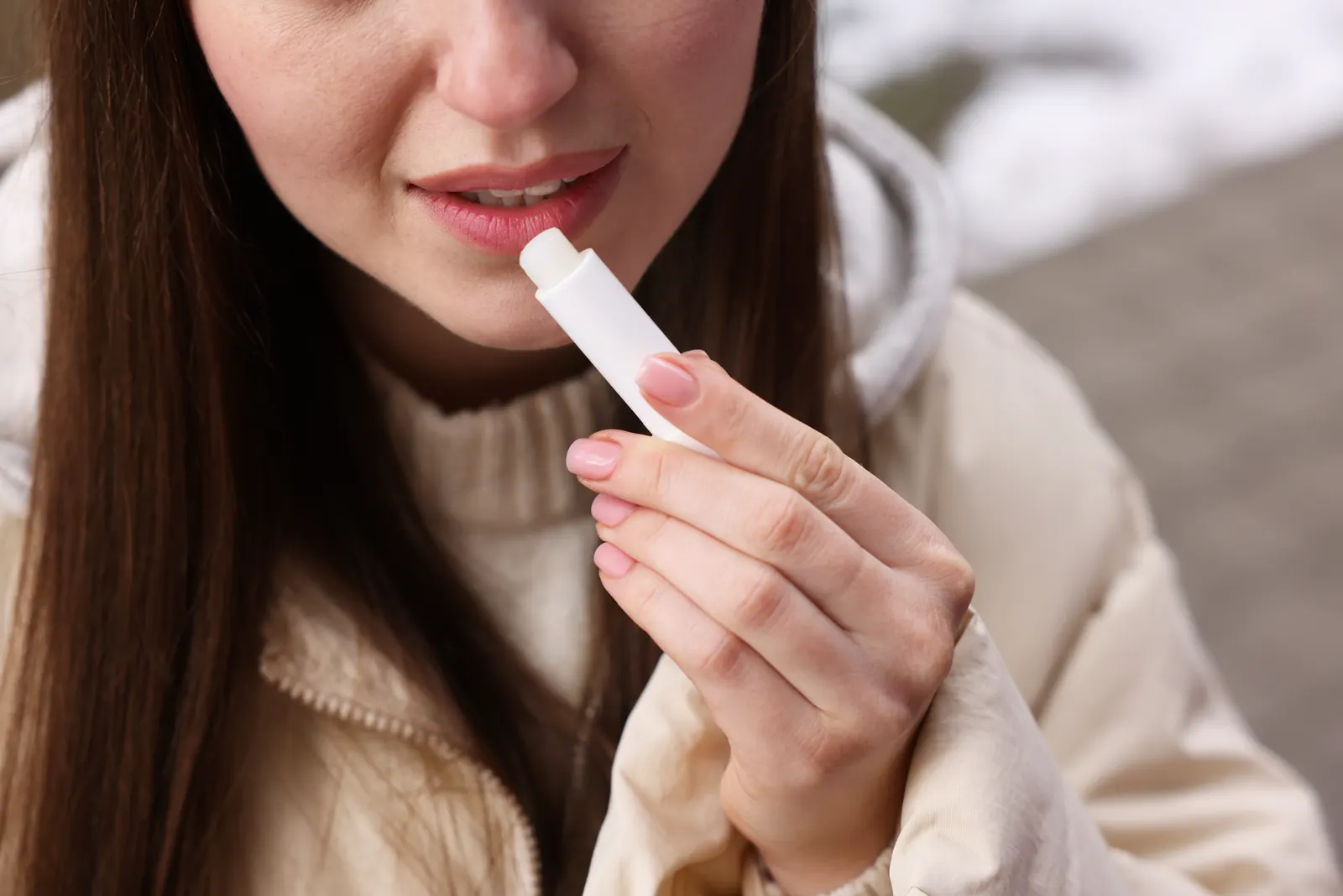 Lip Care for Cold, Windy DaysChapped lips in the cold wind? Stop licking, seal before you step out, and choose a plain balm over minty ones. A two-minute routine that works.
Use it safely
- Asteraceae (daisy family) allergy: people sensitized to ragweed, chrysanthemum, arnica, chamomile or feverfew can react. Calendula contains less sesquiterpene lactone than arnica, but positive patch tests are documented. Patch test first (How to Patch Test).
- Do not confuse with French or African “marigolds” (Tagetes spp.). Tagetes essential oil is phototoxic and restricted by IFRA.
- Balms are for clean, minor wounds and dry, cracked skin. Deep, dirty, hot, swollen or pus-filled wounds need medical attention.
- Homemade infused oils can go moldy (if flowers were not fully dry) or rancid; strain well, add vitamin E or rosemary extract, and store cool and dark.
Pregnancy and breastfeeding: Topical calendula is widely used in pregnancy and on infants’ skin with no known concerns. Oral calendula is traditionally avoided in pregnancy.
New to an ingredient? Patch test first.
When to see a doctor
- Signs of infection: spreading redness or warmth, red streaks, increasing pain or swelling, pus, a bad smell, or fever.
- Deep, gaping or long cuts, wounds on the face, hands or joints, or bleeding that does not stop with 10 minutes of firm pressure — stitches work best within hours.
- Animal or human bites, puncture wounds, dirty wounds, or if your tetanus vaccination is not up to date.
- Burns larger than your palm, or any burn on the face, hands, feet, genitals or over joints, or with white, leathery or charred skin.
- Wounds not healing within two weeks, especially if you have diabetes, poor circulation or a weakened immune system.
- A scar that keeps growing beyond its edges, is painful or itchy (possible keloid), or an old scar that ulcerates, bleeds or changes.
- New, wide purple stretch marks together with weight gain, a rounded face, easy bruising or muscle weakness.
Other plants for Scars, Wounds & Stretch Marks
| Ingredient | Grade | What the evidence shows |
|---|---|---|
| Honey | B | Systematic reviews suggest sterile, medical-grade honey dressings heal partial-thickness burns faster than some conventional dressings, though trial quality varies; kitchen honey is not for open wounds. |
| Aloe Vera | B | Several trials and a systematic review suggest aloe preparations may shorten healing time of superficial burns; evidence for surgical wounds is inconclusive. |
| Centella Asiatica (Cica) | B | Asiaticoside and madecassoside promote collagen organization; small trials (mostly of combination creams) support use for stretch-mark prevention and scar appearance. |
| Rosehip Oil | C | A small controlled study suggested rosehip oil improved the color and appearance of post-surgical scars after the wound had closed. |
| Helichrysum (Immortelle) | D | Popular in aromatherapy for scars, but evidence is anecdotal or from lab studies; as an essential oil it must be diluted and never used on open wounds. |
| Olive Oil | D | Trials of massaging plain oils, including olive oil, in pregnancy have not shown clear prevention of stretch marks; massage itself is harmless and pleasant. |