Does it work?
Helichrysum (Immortelle) for Scars, Wounds & Stretch Marks
Golden immortelle from Mediterranean hillsides has a warm, honeyed scent and a long history in bruise care.
The short answer: Popular in aromatherapy for scars, but evidence is anecdotal or from lab studies; as an essential oil it must be diluted and never used on open wounds.
What Helichrysum (Immortelle) can do for Scars, Wounds & Stretch Marks
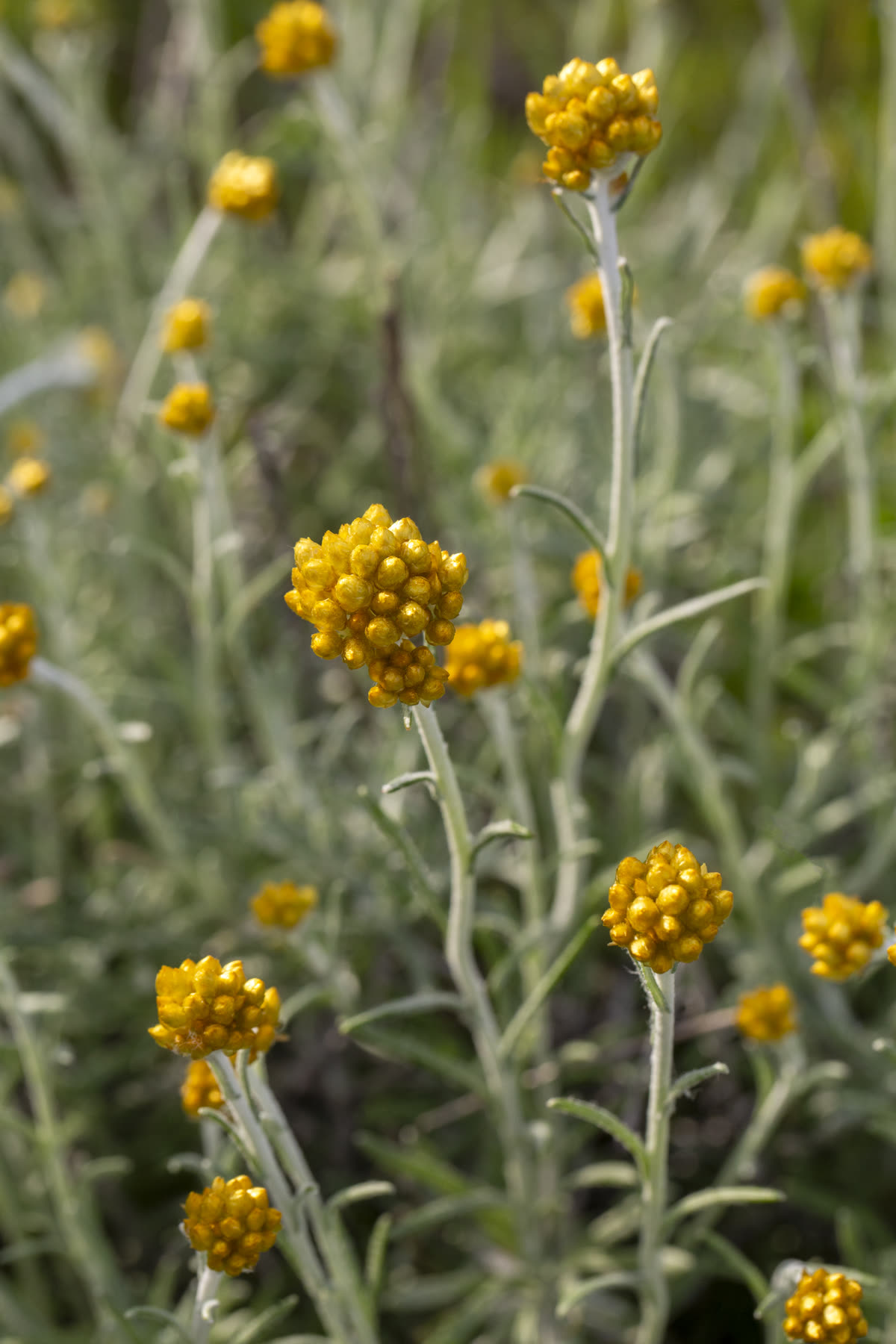
Immortelle is the silvery, curry-scented shrub of Mediterranean coasts whose golden flowers keep their color when dried. Its essential oil has a cult reputation in aromatherapy for bruises, scars and redness, and its extracts contain anti-inflammatory compounds such as arzanol. Those effects are documented in the lab, not in controlled human trials, so treat it as a lovely, expensive and unproven ingredient.
Why people reach for it
- Anti-inflammatory compounds (lab data). Arzanol and other phloroglucinols from the plant inhibit inflammatory signaling (NF-κB, prostaglandin pathways) in cell studies.
- Traditional bruise and scar oil. Aromatherapists use it in balms for bruises and healing scars; this is tradition and anecdote, not trial evidence. See Scars, Wounds & Stretch Marks.
- Antioxidant protection. Extracts and flavonoids show antioxidant activity that may help protect formula oils and skin lipids from oxidation.
- Distinctive natural fragrance. Honeyed, herbaceous and slightly spicy, it blends well with citrus and resin notes in facial oils.
How to use it
Try it today
A simple immortelle bruise balm
- Patch test first, especially if daisy-family plants bother you.
- Blend helichrysum essential oil at 1–2% into a soft butter such as shea.
- Smooth a little over bruised, unbroken skin, never on open wounds.
| Form | Typical use | Notes |
|---|---|---|
| Essential oil in facial oil or serum | 0.25–1% | A little goes a long way; pair with rosehip oil or jojoba. |
| Body or bruise balm | 1–2% essential oil | For intact skin only; combine with soothing butters such as shea butter. |
| Hydrosol (flower water) | As a toner or 10–50% of the water phase | Hydrosols spoil: buy preserved, refrigerate after opening, or preserve your formula. See DIY Safety: Water, Microbes & Preservatives. |
Use it safely
- People allergic to daisy-family plants (Asteraceae: ragweed, chamomile, arnica, calendula) may react; patch test first.
- Dilute the essential oil; neat application can irritate. See Essential Oil Safety: The Complete Guide.
- Do not use on open wounds; see a doctor for bruises that appear without injury, are very large or keep recurring.
Pregnancy and breastfeeding: No specific hazards are documented at low dilution, but safety data are limited; many practitioners avoid it in the first trimester. Keep to ≤1% if used.
New to an ingredient? Patch test first.
When to see a doctor
- Signs of infection: spreading redness or warmth, red streaks, increasing pain or swelling, pus, a bad smell, or fever.
- Deep, gaping or long cuts, wounds on the face, hands or joints, or bleeding that does not stop with 10 minutes of firm pressure — stitches work best within hours.
- Animal or human bites, puncture wounds, dirty wounds, or if your tetanus vaccination is not up to date.
- Burns larger than your palm, or any burn on the face, hands, feet, genitals or over joints, or with white, leathery or charred skin.
- Wounds not healing within two weeks, especially if you have diabetes, poor circulation or a weakened immune system.
- A scar that keeps growing beyond its edges, is painful or itchy (possible keloid), or an old scar that ulcerates, bleeds or changes.
- New, wide purple stretch marks together with weight gain, a rounded face, easy bruising or muscle weakness.
Other plants for Scars, Wounds & Stretch Marks
| Ingredient | Grade | What the evidence shows |
|---|---|---|
| Honey | B | Systematic reviews suggest sterile, medical-grade honey dressings heal partial-thickness burns faster than some conventional dressings, though trial quality varies; kitchen honey is not for open wounds. |
| Aloe Vera | B | Several trials and a systematic review suggest aloe preparations may shorten healing time of superficial burns; evidence for surgical wounds is inconclusive. |
| Centella Asiatica (Cica) | B | Asiaticoside and madecassoside promote collagen organization; small trials (mostly of combination creams) support use for stretch-mark prevention and scar appearance. |
| Calendula | C | Small trials suggest benefit for skin reactions to radiotherapy and minor wounds; daisy-family allergy is possible. |
| Rosehip Oil | C | A small controlled study suggested rosehip oil improved the color and appearance of post-surgical scars after the wound had closed. |
| Olive Oil | D | Trials of massaging plain oils, including olive oil, in pregnancy have not shown clear prevention of stretch marks; massage itself is harmless and pleasant. |