The ingredient encyclopedia · oil
Rosehip Oil
Rosa canina L. (Also from Rosa rubiginosa L. (sweet briar) and Rosa moschata Herrm.) · Rosaceae
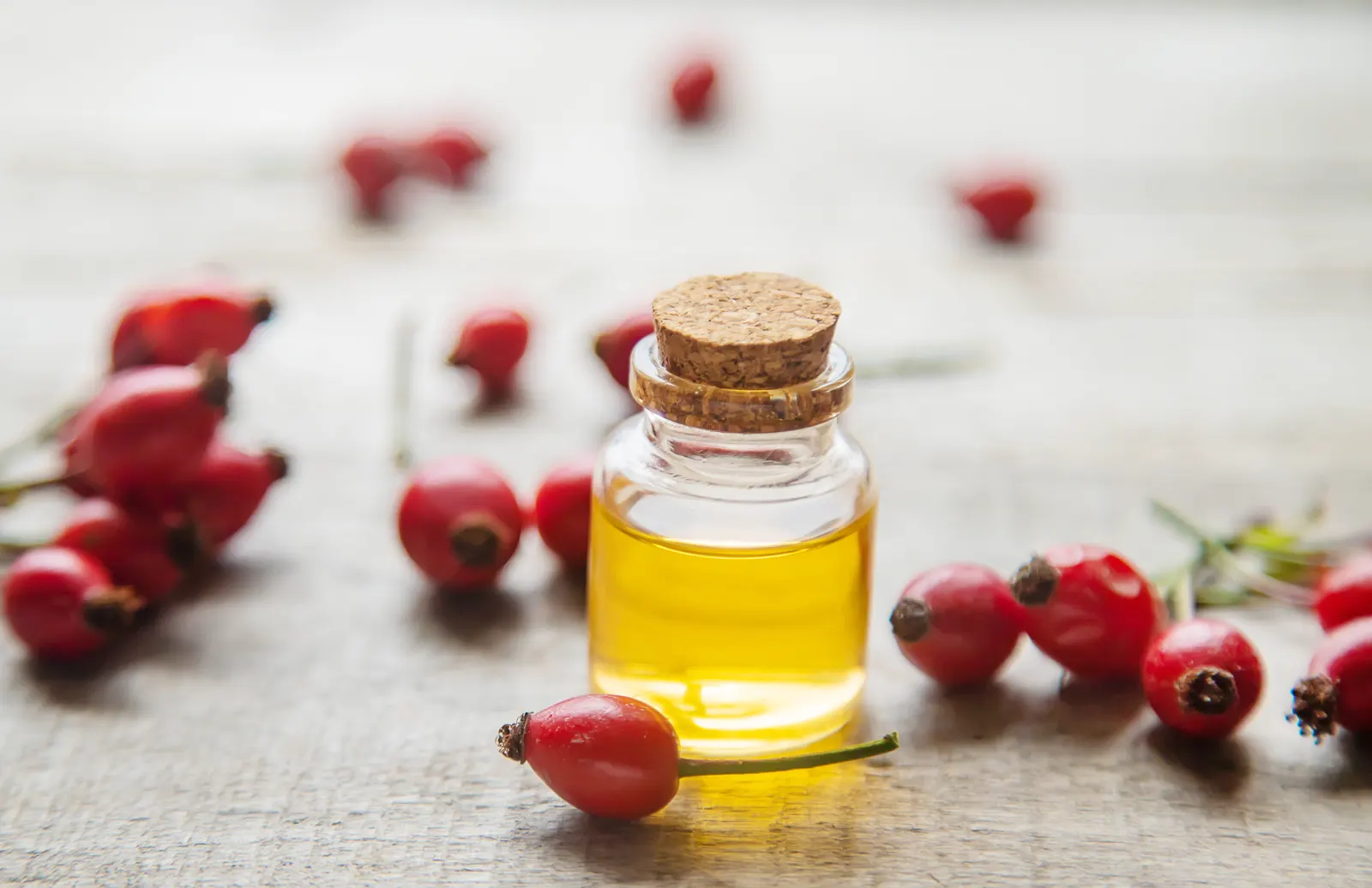
Light, fast-absorbing and full of essential fatty acids, rosehip is the night oil that leaves skin soft and supple by morning.
FR Huile de rose musquéeES Aceite de rosa mosquetaAR زيت ثمر الوردRosa mosqueta (Chile)
- How well proven
- CPromising
- Safety
- Low topical risk
- Sun-sensitive
- No

Also known as Rosa canina L. (Also from Rosa rubiginosa L. (sweet briar) and Rosa moschata Herrm.)
FR Huile de rose musquéeES Aceite de rosa mosquetaAR زيت ثمر الوردRosa mosqueta (Chile)
What the evidence says
Mechanistic data and small, mostly uncontrolled human studies; a positive oral rosehip-powder trial does not apply directly to the topical oil.
- Best supported for
- Aging & Photoaging CScars, Wounds & Stretch Marks CDark Spots & Hyperpigmentation D
- How to use it
- Face oil · 2–3 drops neat, or 10–30% in a face-oil blend
- Watch out for
- Rancid rosehip oil smells sharp, fishy or like paint and can irritate — buy small bottles and refrigerate after opening.
Checked against 2 cited studies and our safety review · Updated 26 November 2026 · How we grade
Why you’ll love Rosehip Oil
Why you’ll love it
- Absorbs quickly with little shine, even on combination skin
- Rich in linoleic acid, a building block of a healthy barrier
- A comforting massage oil for fully healed, closed scars
Best forNormal, combination and dry skin, night routines, and healed scars that feel tight.
Try it today
A simple night oil ritual
- After cleansing at night, warm 2–3 drops of rosehip oil between your fingertips.
- Press over face and neck; on healed, closed scars, massage gently for two to three minutes.
- Close the bottle tightly and store it in the fridge to keep it fresh.
Good to know: Buy small bottles and keep them cold: rancid rosehip smells sharp or paint-like and can irritate. It is not a sunscreen, so keep your SPF.
At a glance
| Parts used | Seed oil, cold-pressed or CO₂-extracted; CO₂ extracts of seed and fruit (carotenoid-rich) |
|---|---|
| Key actives | Linoleic acid, α-Linolenic acid, Oleic acid, Tocopherols, Carotenoids (β-carotene, lycopene), Phytosterols |
| INCI names | Rosa Canina Fruit Oil Rosa Rubiginosa Seed Oil Rosa Moschata Seed Oil |
| Skin types | dry, normal, combination, oily, mature |
| Pairs well with | Sea BuckthornSqualaneJojobaCalendula |
| Evidence grade | CPromising Mechanistic data and small, mostly uncontrolled human studies; a positive oral rosehip-powder trial does not apply directly to the topical oil. |
What it does for skin and hair
Rich in essential fatty acids
Linoleic acid feeds the synthesis of barrier ceramides, and topical linoleic acid may help the skin of acne-prone people, whose sebum tends to be low in it.
Light texture for most skin types
Absorbs quickly with little shine, so it suits normal and combination skin as well as dry skin.
Comfort for healing scars
Massaging a non-irritating oil into a closed, healed scar keeps it supple; small studies suggest benefits, but rosehip has not been shown to beat silicone gel, the evidence-based standard.
Antioxidant carotenoids (in some grades)
Deep-orange CO₂ extracts carry carotenoids and tocopherols, which mainly protect the oil and give provitamin-A content.
How to use it
Start low, be consistent, and give it four to eight weeks. These are the amounts that work in real products and home recipes.
| Form | Typical use level | Notes |
|---|---|---|
| Face oil | 2–3 drops neat, or 10–30% in a face-oil blend | Best at night. Blend with stable carriers such as jojoba or squalane; see Rosehip & Sea Buckthorn Glow Oil. |
| Scar massage | A few drops, massaged for 2–3 minutes twice daily | Only on fully closed, healed skin — never on open wounds. See Scars, Wounds & Stretch Marks. |
| Creams and serums | 2–10% of a formula | Add tocopherol at 0.2–0.5% and use airless or dark packaging. |
Use it safely
Low topical risk
- Rancid rosehip oil smells sharp, fishy or like paint and can irritate — buy small bottles and refrigerate after opening.
- Allergic reactions are rare; patch test, especially with orange CO₂ extracts that contain more fruit material.
- It is not a sunscreen and does not replace a broad-spectrum SPF — see Sun Care & After-Sun.
- Do not apply to open or infected wounds; see a doctor for wounds that are not healing.
- Pregnancy & breastfeeding
- Considered safe topically in pregnancy and breastfeeding; it contains no meaningful retinoid. Evidence that it prevents stretch marks is lacking. Pregnancy guide
- Phototoxicity
- Not phototoxic at normal use levels.
- Declared fragrance allergens
- None expected
New to an ingredient? Patch test first. Stop and seek advice if you get burning, swelling, blistering or a spreading rash.
Make it at home: recipes with rosehip oil
Buying well
Sustainability
Much rosehip oil comes from wild-harvested sweet briar and dog rose in Chilean and Argentine Patagonia, where these roses are introduced and often invasive, and from wild stands in Lesotho — harvesting can therefore support rural incomes without depleting native flora. Check that labor and fair-trade standards are stated.
How to choose quality
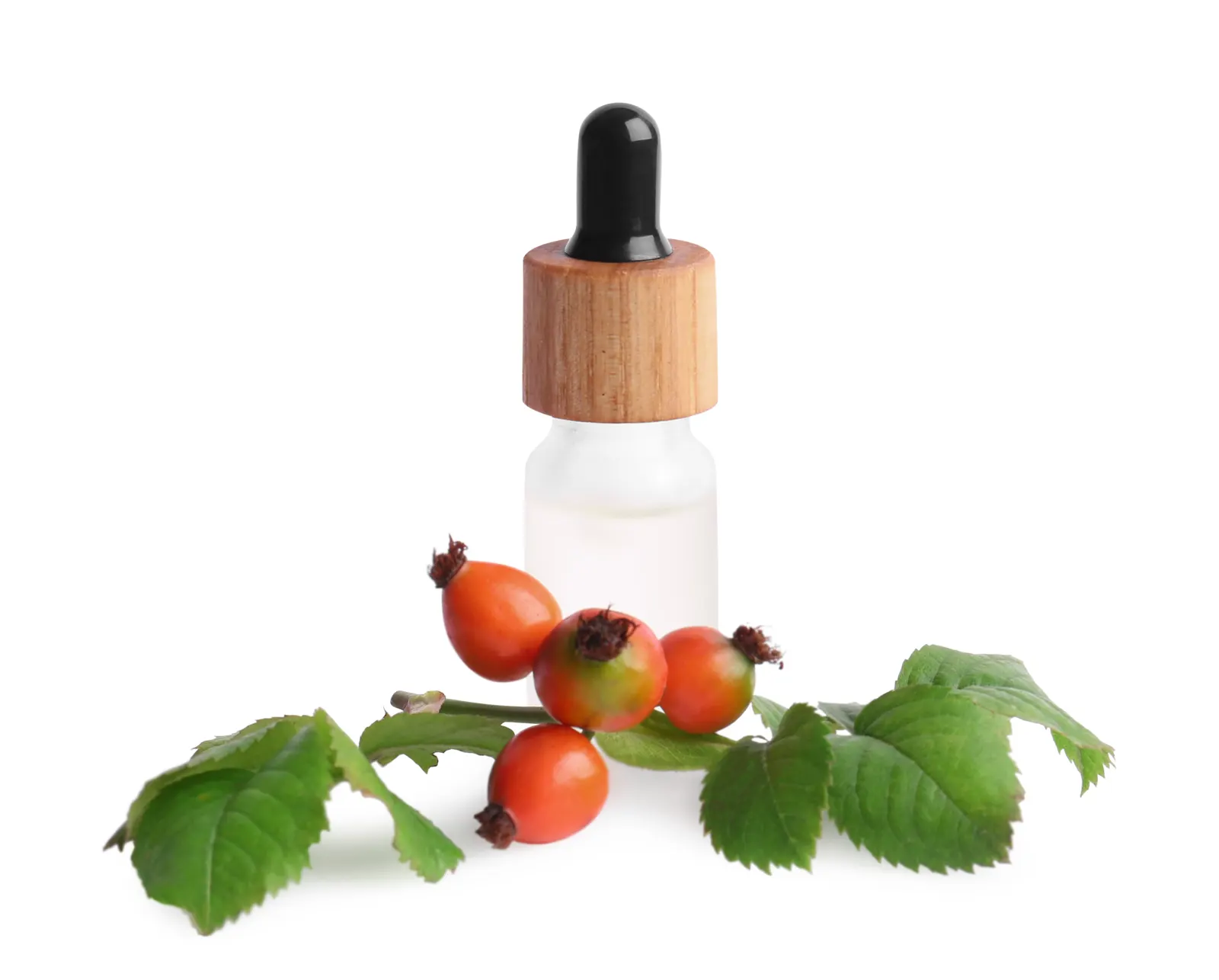
Cold-pressed seed oil is golden to light amber; a deep red-orange color usually signals a CO₂ extract including fruit carotenoids. Both are legitimate — check the INCI. Look for a recent pressing date, dark glass or airless packaging, and added tocopherol. Avoid large bottles that will sit open for months. Refrigerate after opening and use within 3–6 months.
The research For professionals
The chemistry, the studies and the evidence by concern, for practitioners, formulators and the curious.
Cold-pressed rosehip seed oil is roughly 40–50% linoleic acid (omega-6), 25–35% α-linolenic acid (omega-3) and 13–20% oleic acid, with small amounts of saturated fats. This polyunsaturated profile is the source of both its light skin feel and its poor oxidative stability. Tocopherols and carotenoids help, but once opened the oil can turn rancid within a few months unless refrigerated and protected with added tocopherol.
Linoleic acid is incorporated into the skin’s acylceramides, which are essential for the lamellar lipid barrier. People with acne have been shown to have relatively low linoleic acid in their surface lipids, and a small trial of topical linoleic acid reduced microcomedone size — a rationale (not proof) for linoleic-rich oils in acne-prone routines.
The often-repeated claim that rosehip oil contains significant amounts of retinoic acid (tretinoin) traces back to early, poorly replicated work; cold-pressed seed oil is not a meaningful source of retinoids. Its vitamin-A link is mainly provitamin-A carotenoids, concentrated in orange CO₂ extracts that include fruit material. Clinical evidence for scars and photoaging is limited to small, often uncontrolled studies; a well-known randomized trial showing benefits for skin aging used oral rosehip powder, not topical oil.
Evidence by concern
| Concern | Grade | What the evidence shows |
|---|---|---|
| Dark Spots & Hyperpigmentation | D | Often marketed for dark marks, but its trans-retinoic acid content is unproven and human data for pigmentation are lacking; useful as a light emollient. |
| Aging & Photoaging | C | Rich in linoleic acid and carotenoids; small studies (mainly of oral rosehip powder) suggest improved skin texture. Topical anti-wrinkle data are thin. |
| Scars, Wounds & Stretch Marks | C | A small controlled study suggested rosehip oil improved the color and appearance of post-surgical scars after the wound had closed. |
Key studies
Randomized, double-blind trial in 34 adults: oral standardized rose hip powder (seeds and shells) for eight weeks improved crow’s-feet wrinkles, moisture and elasticity compared with the control group. Oral powder, not topical oil.
Phetcharat L, et al. Clin Interv Aging. 2015 Read it in the bibliography Find on PubMedReview of topical plant oils: linoleic-rich oils such as rosehip have plausible barrier-repair mechanisms, but clinical evidence is sparse.
Lin TK, Zhong L, Santiago JL. Int J Mol Sci. 2017 Read it in the bibliography Find on PubMed
MythRosehip oil is a natural retinol or tretinoin.
EvidenceIt is not. Claims of retinoic acid in rosehip oil come from early, unreplicated work, and cold-pressed seed oil does not deliver retinoid levels. Its provitamin-A carotenoids are a different, much weaker story. If you want a retinoid effect, use a retinoid — or consider bakuchiol as a gentler, evidence-backed alternative.
In tradition
In Chile, rosa mosqueta oil became a household remedy for scars and burns in the twentieth century, while rose hips themselves have long been used in European folk medicine for teas and syrups rich in vitamin C.
Frequently asked questions
Does rosehip oil fade scars?
Can I use rosehip oil with retinol?
Does rosehip oil clog pores?
Why does my rosehip oil smell bad?
Cite this page
Herbs.Beauty. Rosehip Oil (Rosa canina L.): evidence-based monograph. Updated 26 November 2026. https://herbs.beauty/ingredients/rosehip-oil.html