Does it work?
Cistus (Labdanum) for Oily Skin & Pores
What the research says about cistus (labdanum) for oily skin & pores, how to use it at home and how to stay safe.
The short answer: Antioxidant and antimicrobial activity in lab studies and a long traditional and perfumery history; no controlled human studies of skin outcomes.
Our Oily Skin & Pores guide does not rank Cistus (Labdanum) for this use yet, so this is the overall grade for Cistus (Labdanum).
What it does
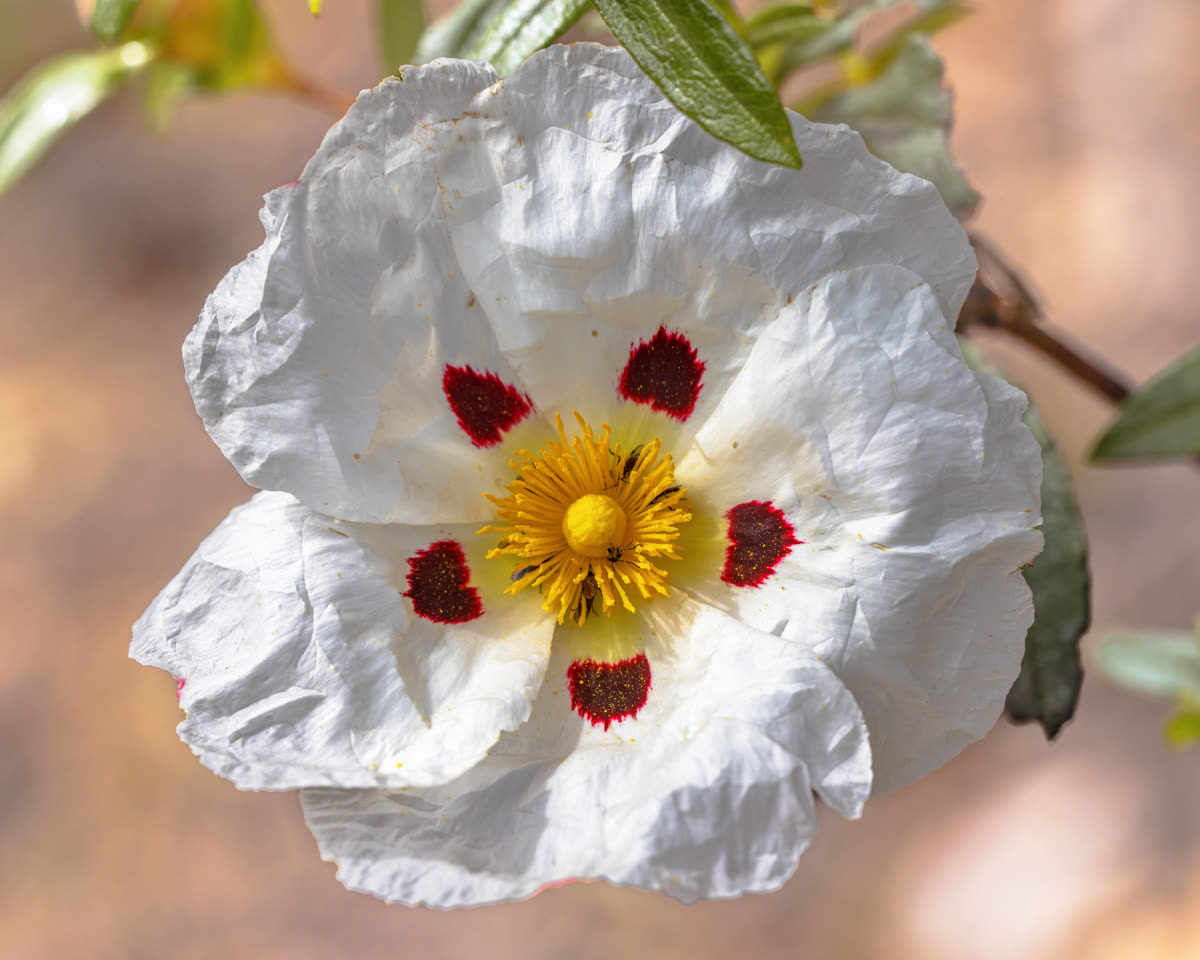
Cistus ladanifer, the gum rockrose, is the sticky, white-flowered shrub that carpets hills from Andalusia and Extremadura to northern Morocco. On hot days its leaves sweat a fragrant resin, labdanum, which perfumers have prized for millennia as the warm, leathery-amber base of chypre and amber accords. In skincare, cistus oil and hydrosol appear in “anti-aging” and “wound-care” blends on the strength of tradition and laboratory data. There are no meaningful human skin trials, so value it chiefly for scent, ritual and as a natural fixative.
Why people reach for it
- A cornerstone of fine fragrance. Labdanum’s deep, ambery, slightly leathery scent anchors chypre and amber perfumes and is the classic plant-based echo of ambergris.
- A natural fixative. Its heavy diterpenes evaporate slowly, helping lighter notes linger in natural perfumes, solid perfumes and body balms.
- Traditional astringent toner. Cistus hydrosol has a long folk reputation as a tightening toner for oily and combination skin; the effect is mild and sensory.
- Antioxidant and antimicrobial in the lab. Leaf extracts and the essential oil show antioxidant and antibacterial activity in vitro — a rationale, not proof, for “skin-renewing” claims.
How to use it
| Form | Typical use | Notes |
|---|---|---|
| Natural or solid perfume | Labdanum absolute or resinoid at roughly 1–10% of the fragrance concentrate | Keep the total fragrance at the levels allowed by the supplier’s IFRA certificate; for leave-on skin products that is typically ≤ 1% on the face and ≤ 2–3% on the body. Warm the thick resinoid gently to pour it. |
| Essential oil in face or body oils | 0.25–1% on the face, up to 2% on the body | Pairs well with frankincense, Damask rose and Atlas cedar. Calculate drops with the Essential Oil Dilution Calculator; see Essential Oil Safety: The Complete Guide. |
| Hydrosol toner | Neat as a toner (commercial, preserved), or 10–50% of the water phase | Homemade or opened hydrosols spoil; refrigerate and use within weeks unless a preservative is added. See DIY Safety: Water, Microbes & Preservatives. |
Use it safely
- Labdanum and cistus oil are rarely reported as sensitizers, but natural materials can carry trace allergens: check the supplier’s allergen declaration and patch test.
- Do not rely on cistus to stop bleeding or treat wounds; clean minor cuts normally and seek care for deep, dirty or bleeding wounds.
- Always dilute the essential oil; avoid use on infants and keep it away from the eyes.
- The resin is extremely sticky and stains fabrics; work with gloves.
Pregnancy and breastfeeding: No specific hazard is documented, but data are lacking. Keep essential oil and absolute use low (≤ 1%) in pregnancy and breastfeeding, and prefer the hydrosol. See Skincare in Pregnancy & Breastfeeding.
New to an ingredient? Patch test first.
When to see a doctor
- Sudden increase in oiliness with acne, excess facial or body hair, irregular periods or scalp hair thinning (possible androgen excess or polycystic ovary syndrome).
- Greasy, flaky, red patches around the nose, brows or scalp that persist (possible seborrheic dermatitis).
- A shiny, pearly or translucent bump that grows or bleeds, which can mimic sebaceous hyperplasia but may be a basal cell carcinoma.
- Oily skin with significant acne or scarring, or if you want to discuss prescription options.
Other plants for Oily Skin & Pores
| Ingredient | Grade | What the evidence shows |
|---|---|---|
| Green Tea | B | Small controlled trials of topical green tea extract emulsions reduced sebum production over several weeks. |
| Willow Bark | C | Natural salicylates may provide light exfoliation and smoothing, but it is much weaker than salicylic acid and poorly studied. |
| Tea Tree | C | Helpful for acne lesions on oily skin, but there is little evidence it reduces sebum itself. |
| Witch Hazel | D | Tannins give a temporary tightening, matte feel; no good evidence it reduces sebum, and alcohol-containing distillates can irritate. |
| Rhassoul Clay | D | Absorbs surface oil for a temporary matte finish and pleasant texture; does not change sebum production. |
| Jojoba | D | Often claimed to “rebalance” oil production; there is no solid human evidence, though its light, non-greasy feel suits many oily skins. |