Does it work?
Witch Hazel for Oily Skin & Pores
A cool, crisp swipe of witch hazel makes oily skin feel instantly fresh and tidy.
The short answer: Tannins give a temporary tightening, matte feel; no good evidence it reduces sebum, and alcohol-containing distillates can irritate.
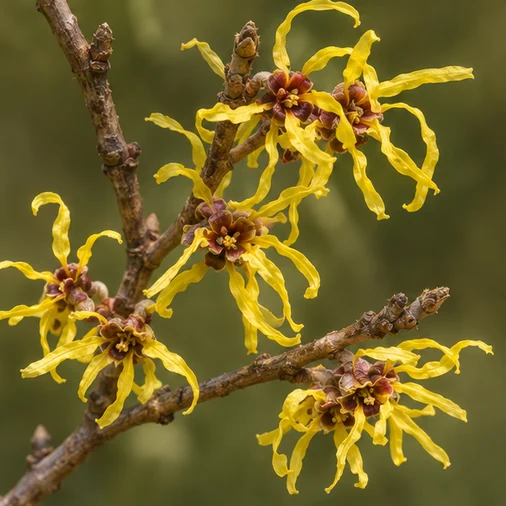
What Witch Hazel can do for Oily Skin & Pores
“Witch hazel” on a label can mean two quite different things: a steam distillate that is mostly water plus about 14% added alcohol and almost no tannins, or a tannin-rich extract that is genuinely astringent. Both can feel cooling and tightening on oily skin and minor irritation. Neither is a strong acne treatment, and the alcohol-containing versions can dry and sting sensitive skin.
Why people reach for it
- Feels cooling and tightening. Tannins in extracts precipitate surface proteins and temporarily tighten skin; the alcohol in distillates adds cooling and a degreased feel welcome on oily skin.
- Modestly reduces redness. Lotions with 10% witch hazel distillate reduced UV-induced redness in healthy volunteers, though less than hydrocortisone.
- Comfort for minor irritation. Witch hazel is approved in the US as an over-the-counter astringent for minor skin irritation and hemorrhoids, and is a traditional European remedy for minor inflammation.
- Antioxidant tannins. Hamamelitannin and proanthocyanidins in extracts are strong antioxidants in the lab, with some anti-inflammatory and antiviral activity in cell studies.
How to use it
Try it today
A fresh after-shave compress
- Choose an alcohol-free witch hazel water and chill it briefly in the fridge.
- Soak a cotton pad and press it gently onto razor-irritated or oily areas.
- Keep it away from your eyes, and use it no more than once or twice a day.
| Form | Typical use | Notes |
|---|---|---|
| Alcohol-free distillate (witch hazel water) | 10–100% of the water phase | For toners and mists on oily or combination skin. Alcohol-free versions need a broad-spectrum preservative in the bottle and in your formula. |
| Tannin-rich extract (leaf or bark) | 1–5% in toners, gels and creams | This is the genuinely astringent form; higher levels can feel drying. Check compatibility — tannins can darken with iron and precipitate some proteins. |
| Drugstore witch hazel (with ~14% alcohol) | Apply with a pad to oily areas, at most once or twice daily | Avoid on dry, sensitive, eczema-prone or broken skin, and around the eyes. A cooled compress can ease minor itching, insect bites or razor irritation. |
Recipes for Oily Skin & Pores with Witch Hazel
Use it safely
- Check the alcohol. Many witch hazel products contain about 14% ethanol; frequent use can dry and sting, and worsen eczema or a compromised barrier (The Skin Barrier, Explained).
- Tannin-rich extracts can be drying at high concentration; balance with humectants such as glycerin or aloe vera.
- Allergic contact dermatitis is uncommon but reported. Patch test before use on sensitive skin.
- Do not swallow: tannin-rich preparations can upset the stomach, and the drugstore product contains alcohol.
Pregnancy and breastfeeding: Topical witch hazel is considered safe in pregnancy and is commonly used for pregnancy hemorrhoids. Avoid ingesting it.
New to an ingredient? Patch test first.
When to see a doctor
- Sudden increase in oiliness with acne, excess facial or body hair, irregular periods or scalp hair thinning (possible androgen excess or polycystic ovary syndrome).
- Greasy, flaky, red patches around the nose, brows or scalp that persist (possible seborrheic dermatitis).
- A shiny, pearly or translucent bump that grows or bleeds, which can mimic sebaceous hyperplasia but may be a basal cell carcinoma.
- Oily skin with significant acne or scarring, or if you want to discuss prescription options.
Other plants for Oily Skin & Pores
| Ingredient | Grade | What the evidence shows |
|---|---|---|
| Green Tea | B | Small controlled trials of topical green tea extract emulsions reduced sebum production over several weeks. |
| Willow Bark | C | Natural salicylates may provide light exfoliation and smoothing, but it is much weaker than salicylic acid and poorly studied. |
| Tea Tree | C | Helpful for acne lesions on oily skin, but there is little evidence it reduces sebum itself. |
| Rhassoul Clay | D | Absorbs surface oil for a temporary matte finish and pleasant texture; does not change sebum production. |
| Jojoba | D | Often claimed to “rebalance” oil production; there is no solid human evidence, though its light, non-greasy feel suits many oily skins. |