Does it work?
Cistus (Labdanum) for Aging & Photoaging
Sun-warmed Andalusian rockrose gives labdanum, the deep amber heart of perfumery, and a fresh, gently toning flower water.
The short answer: Antioxidant and antimicrobial activity in lab studies and a long traditional and perfumery history; no controlled human studies of skin outcomes.
Our Aging & Photoaging guide does not rank Cistus (Labdanum) for this use yet, so this is the overall grade for Cistus (Labdanum).
What Cistus (Labdanum) can do for Aging & Photoaging
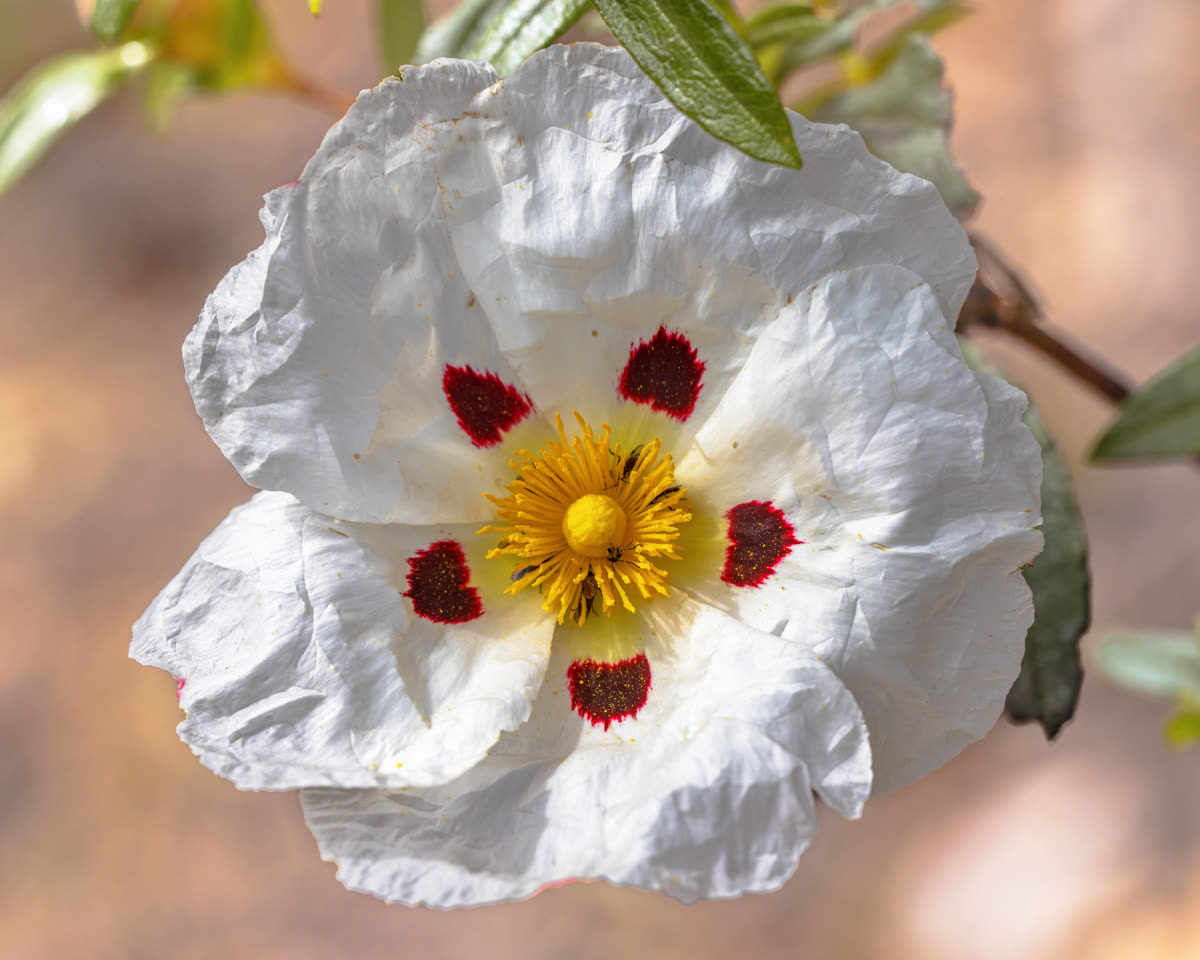
Cistus ladanifer, the gum rockrose, is the sticky, white-flowered shrub that carpets hills from Andalusia and Extremadura to northern Morocco. On hot days its leaves sweat a fragrant resin, labdanum, which perfumers have prized for millennia as the warm, leathery-amber base of chypre and amber accords. In skincare, cistus oil and hydrosol appear in “anti-aging” and “wound-care” blends on the strength of tradition and laboratory data. There are no meaningful human skin trials, so value it chiefly for scent, ritual and as a natural fixative.
Why people reach for it
- A cornerstone of fine fragrance. Labdanum’s deep, ambery, slightly leathery scent anchors chypre and amber perfumes and is the classic plant-based echo of ambergris.
- A natural fixative. Its heavy diterpenes evaporate slowly, helping lighter notes linger in natural perfumes, solid perfumes and body balms.
- Traditional astringent toner. Cistus hydrosol has a long folk reputation as a tightening toner for oily and combination skin; the effect is mild and sensory.
- Antioxidant and antimicrobial in the lab. Leaf extracts and the essential oil show antioxidant and antibacterial activity in vitro — a rationale, not proof, for “skin-renewing” claims.
How to use it
Try it today
A cistus hydrosol toner
- Choose a commercial, preserved cistus hydrosol and keep it in the fridge once opened.
- Patch test on your inner arm, then pat it onto clean skin with your palms.
- Follow with a light moisturizer, and discard the hydrosol if it turns cloudy or smells off.
| Form | Typical use | Notes |
|---|---|---|
| Natural or solid perfume | Labdanum absolute or resinoid at roughly 1–10% of the fragrance concentrate | Keep the total fragrance at the levels allowed by the supplier’s IFRA certificate; for leave-on skin products that is typically ≤ 1% on the face and ≤ 2–3% on the body. Warm the thick resinoid gently to pour it. |
| Essential oil in face or body oils | 0.25–1% on the face, up to 2% on the body | Pairs well with frankincense, Damask rose and Atlas cedar. Calculate drops with the Essential Oil Dilution Calculator; see Essential Oil Safety: The Complete Guide. |
| Hydrosol toner | Neat as a toner (commercial, preserved), or 10–50% of the water phase | Homemade or opened hydrosols spoil; refrigerate and use within weeks unless a preservative is added. See DIY Safety: Water, Microbes & Preservatives. |
Use it safely
- Labdanum and cistus oil are rarely reported as sensitizers, but natural materials can carry trace allergens: check the supplier’s allergen declaration and patch test.
- Do not rely on cistus to stop bleeding or treat wounds; clean minor cuts normally and seek care for deep, dirty or bleeding wounds.
- Always dilute the essential oil; avoid use on infants and keep it away from the eyes.
- The resin is extremely sticky and stains fabrics; work with gloves.
Pregnancy and breastfeeding: No specific hazard is documented, but data are lacking. Keep essential oil and absolute use low (≤ 1%) in pregnancy and breastfeeding, and prefer the hydrosol. See Skincare in Pregnancy & Breastfeeding.
New to an ingredient? Patch test first.
When to see a doctor
- A new or changing mole or spot, especially using the ABCDE signs (asymmetry, irregular border, uneven color, diameter over 6 mm, evolving).
- Rough, scaly patches on sun-exposed skin that persist (possible actinic keratoses).
- A pearly or shiny bump, a sore that does not heal within 3–4 weeks, or a lesion that bleeds easily.
- Sudden skin thinning, easy bruising or stretch marks that may be medication-related (e.g. long-term steroids).
- If you want prescription retinoids or in-office treatments, or are unsure which actives are safe for you.
Other plants for Aging & Photoaging
| Ingredient | Grade | What the evidence shows |
|---|---|---|
| Bakuchiol | B | A randomized, double-blind trial found 0.5% bakuchiol twice daily comparable to 0.5% retinol for wrinkles and pigmentation over 12 weeks, with less stinging; it is not a true retinoid and is less studied. |
| Green Tea | B | Topical green tea polyphenols reduce UV-induced redness and DNA damage in human skin; trials for wrinkles show mixed, modest results. |
| Centella Asiatica (Cica) | C | Madecassoside and asiaticoside stimulate collagen in the lab; small trials of centella-containing creams showed improved firmness, mostly in combination products. |
| Argan Oil | C | A small study in postmenopausal women found improved elasticity with argan oil (oral and topical arms); useful as an emollient. |
| Rosehip Oil | C | Rich in linoleic acid and carotenoids; small studies (mainly of oral rosehip powder) suggest improved skin texture. Topical anti-wrinkle data are thin. |
| Frankincense | C | One small trial of a Boswellia serrata extract cream reported improvement in photoaging signs; needs replication. |
| Sea Buckthorn | D | High in antioxidants and omega-7 (palmitoleic acid), but clinical anti-aging evidence is minimal; unrefined oil stains orange. |