Does it work?
Frankincense for Aging & Photoaging
Warm, resinous and grounding, frankincense brings an ancient incense calm to your evening skincare.
The short answer: One small trial of a Boswellia serrata extract cream reported improvement in photoaging signs; needs replication.
What Frankincense can do for Aging & Photoaging
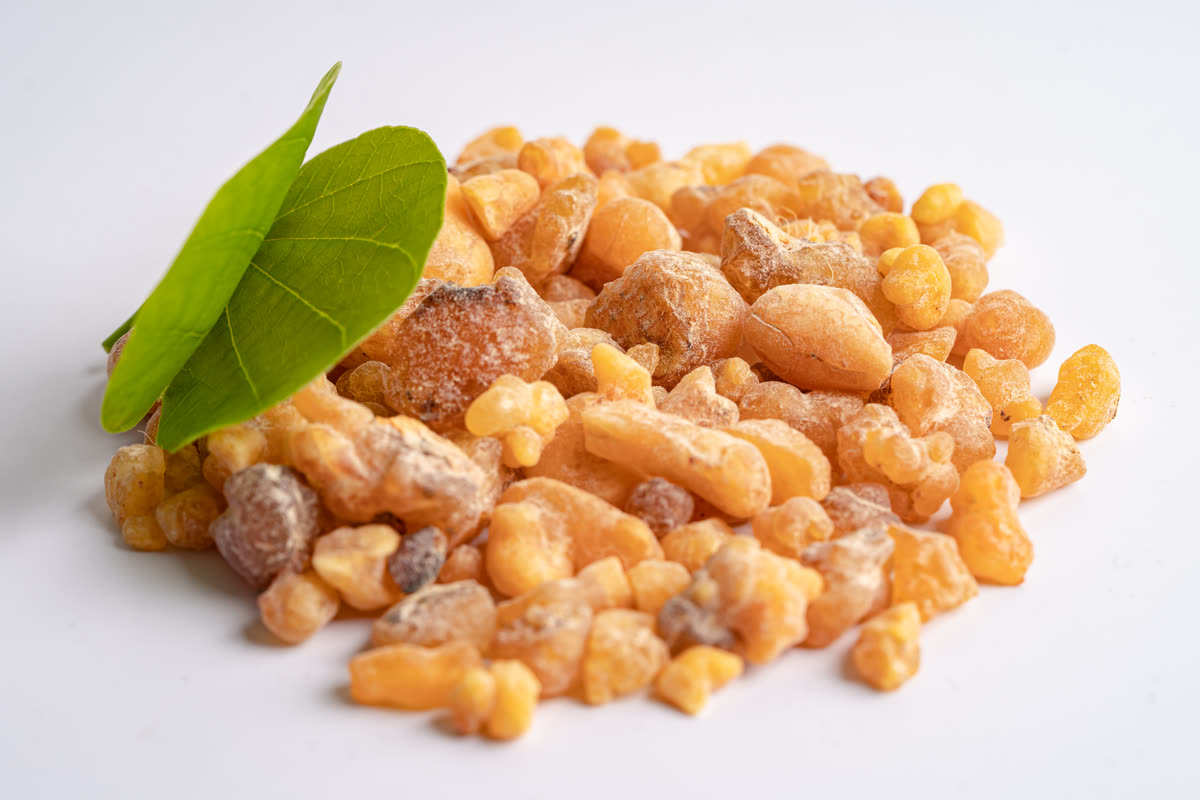
Frankincense is the aromatic resin tapped from Boswellia trees in Arabia, the Horn of Africa and India. Its anti-inflammatory boswellic acids are heavy, non-volatile molecules found in resin extracts, not in the steam-distilled essential oil most people buy. Small trials suggest boswellic acid creams may help photoaged and irritated skin; the essential oil is mainly a fragrance ingredient. Some wild populations, especially B. papyrifera, are in serious decline.
Why people reach for it
- Anti-inflammatory resin acids. Boswellic acids, especially AKBA, inhibit 5-lipoxygenase and other inflammatory pathways in the lab, a plausible basis for calming redness.
- Smoother photoaged skin. In a small split-face study, a cream with 0.5% boswellic acids improved fine lines and skin roughness compared with the base cream.
- Support during radiotherapy. A placebo-controlled trial in women receiving breast radiotherapy found a Boswellia cream reduced the intensity of skin redness.
- Warm, grounding fragrance. The essential oil’s resinous, citrus-pine scent makes it a favorite in facial oils and balms, where it functions mainly as fragrance.
How to use it
Try it today
A resin-scented night oil
- Patch test first, then add frankincense essential oil at 0.5–1% to a light facial oil.
- Warm a few drops between your palms and press them into clean skin at night.
- Keep the bottle cold and tightly closed, and use it within about a year.
| Form | Typical use | Notes |
|---|---|---|
| Boswellia resin extract (standardized) | 0.5–2% in creams and serums | Choose an extract specifying boswellic acid content; the clinical study used 0.5% boswellic acids. |
| Essential oil in facial oil or balm | 0.5–1% on the face, up to 2% on the body | Use fresh oil and add vitamin E; discard oil that smells sharp or turpentine-like. See Essential Oil Safety: The Complete Guide. |
| Resin-infused oil | 5–20% of an oil or balm | Warm-infusing ground resin in a carrier extracts some resin acids along with aroma; strain carefully. |
Use it safely
- Fresh frankincense oil is rarely irritating, but oxidized oil can cause allergic contact dermatitis. Store cold, tightly closed, and use within about a year of opening.
- Patch test before using on sensitive or eczema-prone skin (see How to Patch Test).
- Oral boswellia supplements can interact with medicines; topical use is not known to.
- It is not a treatment for skin cancer or any cancer, despite online claims; see a doctor for any changing mole or lesion.
Pregnancy and breastfeeding: The essential oil at ≤1% is generally considered acceptable; there are no pregnancy data for concentrated boswellic acid extracts, so keep to fragrance-level use unless your clinician agrees.
New to an ingredient? Patch test first.
When to see a doctor
- A new or changing mole or spot, especially using the ABCDE signs (asymmetry, irregular border, uneven color, diameter over 6 mm, evolving).
- Rough, scaly patches on sun-exposed skin that persist (possible actinic keratoses).
- A pearly or shiny bump, a sore that does not heal within 3–4 weeks, or a lesion that bleeds easily.
- Sudden skin thinning, easy bruising or stretch marks that may be medication-related (e.g. long-term steroids).
- If you want prescription retinoids or in-office treatments, or are unsure which actives are safe for you.
Other plants for Aging & Photoaging
| Ingredient | Grade | What the evidence shows |
|---|---|---|
| Bakuchiol | B | A randomized, double-blind trial found 0.5% bakuchiol twice daily comparable to 0.5% retinol for wrinkles and pigmentation over 12 weeks, with less stinging; it is not a true retinoid and is less studied. |
| Green Tea | B | Topical green tea polyphenols reduce UV-induced redness and DNA damage in human skin; trials for wrinkles show mixed, modest results. |
| Centella Asiatica (Cica) | C | Madecassoside and asiaticoside stimulate collagen in the lab; small trials of centella-containing creams showed improved firmness, mostly in combination products. |
| Argan Oil | C | A small study in postmenopausal women found improved elasticity with argan oil (oral and topical arms); useful as an emollient. |
| Rosehip Oil | C | Rich in linoleic acid and carotenoids; small studies (mainly of oral rosehip powder) suggest improved skin texture. Topical anti-wrinkle data are thin. |
| Sea Buckthorn | D | High in antioxidants and omega-7 (palmitoleic acid), but clinical anti-aging evidence is minimal; unrefined oil stains orange. |