Formulation · 8 min read · Enthusiast
Carrier Oils: The Formulator’s Guide
Fatty acid chemistry, oxidative stability and skin feel for 12 core oils, plus why comedogenic ratings mislead and how to store oils well.
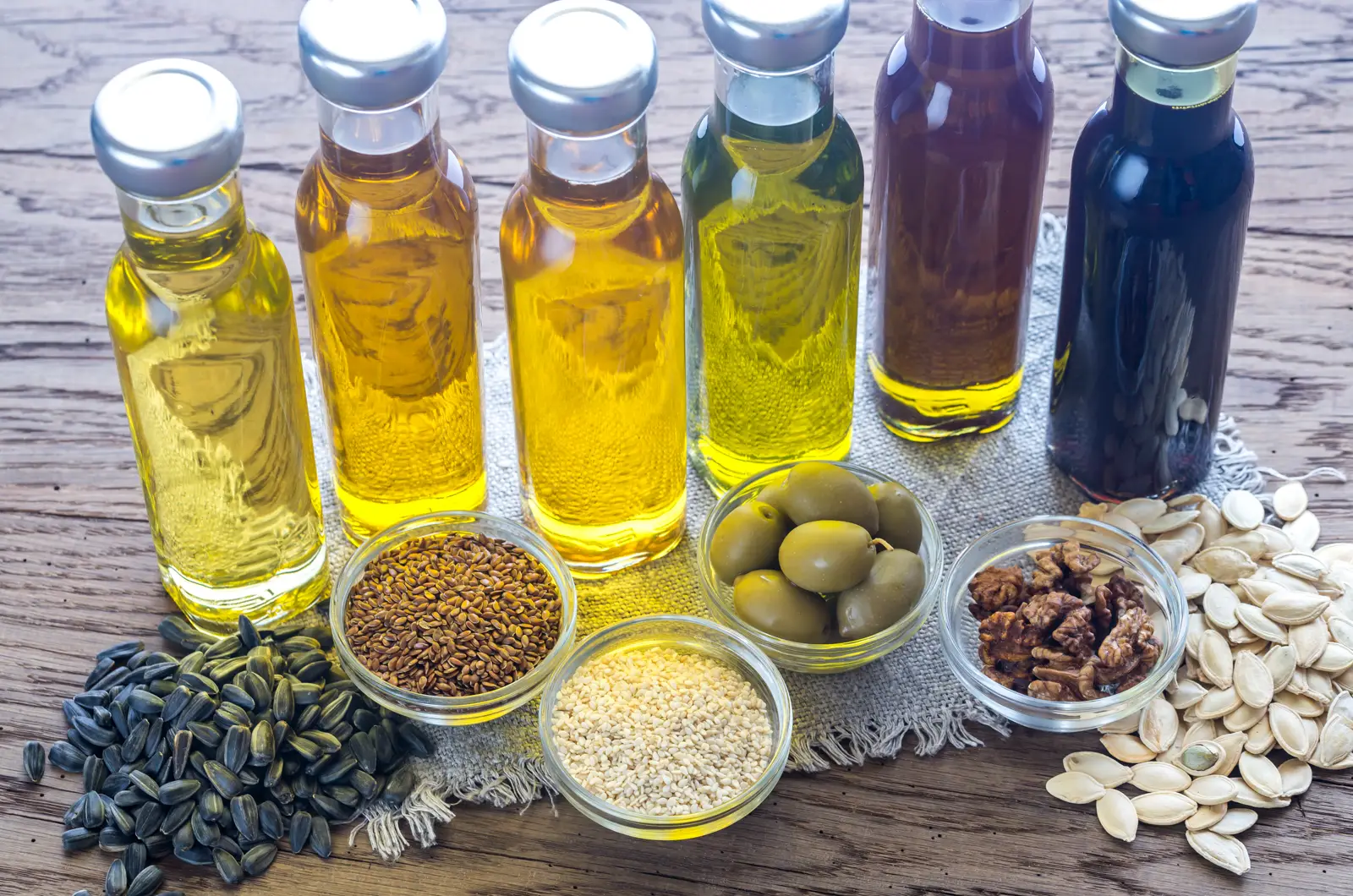
What you’ll take away
- Linoleic-rich oils feel light and support the skin barrier but oxidize quickly; oleic-rich oils feel richer and keep longer.
- Oxidative stability depends mainly on polyunsaturated fat content, so protect fragile oils with an antioxidant and cool, dark storage.
- Comedogenicity scales come from decades-old rabbit-ear tests on raw materials and do not reliably predict breakouts from a finished product.
- Unrefined oils keep more scent, color and minor actives; refined oils are more neutral and consistent.
- Jojoba and squalane are not triglycerides at all, which is why they are so stable.
- Plants in this guide
- Rosehip Oil CJojoba C
Guides explain how things work; the grade for each plant is on its own page. How we grade
What a carrier oil actually is
Most plant oils are triglycerides: three fatty acids attached to a glycerol backbone. The fatty acids decide the oil’s personality. Saturated fatty acids (lauric, palmitic, stearic) have no double bonds, pack tightly and make oils solid or heavy. Monounsaturated fatty acids (oleic, palmitoleic) have one double bond. Polyunsaturated fatty acids, or PUFAs (linoleic, alpha-linolenic), have two or more, which keeps oils fluid and light but chemically fragile.
Alongside the triglycerides sits a small “unsaponifiable” fraction, usually around 1–2% and higher in shea and avocado. It contains phytosterols, tocopherols (vitamin E), carotenoids, squalene and polyphenols. These minor components drive much of an oil’s color, scent, antioxidant protection and marketing story, and they are the first casualties of heavy refining.
Two popular “oils” break the pattern. Jojoba is a liquid wax ester (long-chain fatty acids joined to long-chain fatty alcohols), chemically closer to part of human sebum than to olive oil. Squalane is a fully saturated hydrocarbon, made by hydrogenating squalene from olives or sugarcane. Neither contains the fragile double-bond patterns of PUFA oils, which is why both last for years.
Linoleic vs oleic: the two fatty acids that matter most
Linoleic acid (omega-6) is an essential fatty acid. The skin uses it to build acylceramides, the lipids that hold the barrier’s “mortar” together; deficiency causes scaly, leaky skin. Sebum from people with acne tends to contain relatively little linoleic acid, an observation made in the 1980s by Downing and colleagues, and a small study by Letawe and colleagues (Clinical and Experimental Dermatology, 1998) found topical linoleic acid reduced the size of microcomedones. That is promising rather than proof, but it explains why linoleic-rich oils such as sunflower, rosehip and prickly pear seed are favored for oily and acne-prone skin.
Oleic acid (omega-9) feels richer and more cushioning, but in pure form it is a known penetration enhancer that loosens the lipid lamellae of the stratum corneum. In a frequently cited trial (Danby and colleagues, Pediatric Dermatology, 2013), olive oil applied twice daily for several weeks measurably weakened the barrier of healthy adult skin, while sunflower oil preserved barrier integrity. That matters for eczema-prone skin and for baby massage. Oleic-rich oils are still excellent for dry body skin, balms and soaps.
Practical rule: build face oils for oily, acne-prone or barrier-impaired skin around linoleic-rich oils, and use oleic-rich oils where richness and stability matter more than barrier repair.
Why polyunsaturated oils go rancid
Rancidity is mostly autoxidation. The carbon sitting between two double bonds (the “bis-allylic” position) gives up a hydrogen easily; oxygen then attacks, forming hydroperoxides that break down into the aldehydes and ketones behind the smell of old crayons, paint or fish. The reaction is self-propagating and accelerated by light, heat, air and trace metals.
As a rough rule of lipid chemistry, linoleic acid oxidizes on the order of ten times faster than oleic acid, and alpha-linolenic acid faster still. So rosehip, sea buckthorn seed and high-linoleic sunflower are fragile, olive and argan are moderate, and coconut, castor, jojoba and squalane are very stable. Oxidized oil is not just unpleasant: lipid peroxides can irritate skin, and some oxidation products are sensitizers.
- Add an antioxidant to fragile oils: tocopherol (vitamin E) at about 0.1–0.5%, or a rosemary CO₂ extract at about 0.05–0.2%. These protect the oil; they cannot rescue one that is already rancid.
- Blend fragile oils into a stable base (jojoba, squalane, high-oleic sunflower) to slow the whole blend down.
- Buy fresh and small, and check the supplier’s production date and peroxide value on the certificate of analysis.
Comparison table: 12 core oils
Fatty acid ranges are typical and vary with cultivar, climate and processing; always check your supplier’s certificate of analysis.
| Oil | Dominant fatty acids | Feel | Oxidative stability | Best uses |
|---|---|---|---|---|
| Argan | Oleic (~45%), linoleic (~30–35%) | Medium, satiny | Moderate | All-round face oil, hair ends, nails |
| Jojoba | Liquid wax esters (mainly C20–C22 monounsaturated) | Light, dry, sebum-like | Very high | Oily and combination skin, cleansing balms, stabilizing blends |
| Rosehip seed | Linoleic (~35–50%), alpha-linolenic (~25–35%) | Light, fast-absorbing | Low (refrigerate) | Night serums, uneven tone, scar care |
| Sunflower | High-linoleic types ~55–70% linoleic; high-oleic types ~75–90% oleic | Light | Low (high-linoleic) to good (high-oleic) | Barrier support, infusions, affordable base |
| Olive | Oleic (~55–80%) | Rich, slow to absorb | Good (virgin oils carry polyphenols) | Soaps, body balms; caution on barrier-impaired skin |
| Coconut | Lauric (~45–50%), myristic (~15–20%) | Solid below ~24 °C, melts on contact | Very high | Pre-wash hair treatment, body, soap; caution on acne-prone faces |
| Castor | Ricinoleic (~85–90%) | Thick, tacky, glossy | High | Lip products, balms, cleansing oils at low % |
| Pumpkin seed | Linoleic and oleic in similar proportions | Medium, dark green | Low to moderate | Scalp oils, body blends |
| Black seed | Linoleic (~50–60%), oleic (~20–25%) | Medium, pungent | Low to moderate | Scalp and targeted blends at low %; contact allergy reported |
| Prickly pear seed | Linoleic (~55–70%) | Light, dry | Moderate (tocopherol-rich) | Luxury face serums; high adulteration risk |
| Sea buckthorn | Fruit oil: palmitoleic and palmitic; seed oil: linoleic and alpha-linolenic | Medium; fruit oil stains orange | Low to moderate | 1–5% in face oils for carotenoids and color |
| Squalane | Saturated hydrocarbon (no fatty acids) | Very light, silky | Very high | Every skin type; thinning heavy blends |
Comedogenicity ratings, and why they mislead
Lists that score oils from 0 (“won’t clog pores”) to 5 trace back to the rabbit-ear assay developed in the 1970s and refined in the 1980s. Rabbit ear skin is far more reactive than human facial skin, materials were often tested neat or at high concentrations, and different labs produced conflicting scores for the same ingredient. Modern online lists copy each other, so one oil may be rated 2 on one site and 4 on another.
Three further problems: the same oil varies by grade and freshness (oxidized oils are more irritating); a finished product behaves differently from a raw material at 100%; and individual skin varies enormously. Coconut oil genuinely breaks some people out on the face, while others use it without issue.
A better approach for acne-prone skin: favor light, linoleic-rich or non-triglyceride oils, keep total oil low, choose fresh oils, introduce one product at a time and judge over several weeks. See Acne & Breakouts and How to Patch Test (and Read the Result).
Refined vs unrefined
Unrefined oils (cold-pressed, virgin) are pressed mechanically without high heat and filtered. They keep their natural color, scent and most minor components: carotenoids in sea buckthorn, chlorophyll in pumpkin seed, polyphenols in olive. The trade-offs are batch variability, stronger odor, and sometimes more free fatty acids and pro-oxidant traces.
Refined oils usually go through degumming, neutralization, bleaching and deodorization (“RBD”). The result is pale, near-odorless and consistent, ideal for fragrance-sensitive products. Refining removes free fatty acids and odor compounds but also strips some tocopherols and sterols, so a refined PUFA oil is not automatically more stable. Most commercial formulators use refined oils for bulk and unrefined or CO₂-extracted oils for character at lower percentages.
“Cold-pressed” is not a regulated term in cosmetics, so ask suppliers how the oil was made, and whether solvent (usually hexane) extraction was used.
Storage and shelf life
- Dark glass or opaque packaging, tightly closed, with as little headspace as possible; decant large containers into smaller ones as you use them.
- Cool storage: refrigerate rosehip, sea buckthorn seed, black seed, high-linoleic sunflower and prickly pear seed once opened. Stable oils (jojoba, coconut, castor, squalane) are fine at room temperature away from heat.
- Typical shelf life once opened: roughly 6–12 months for fragile PUFA oils kept cold, 1–2 years for argan, olive and high-oleic sunflower, and several years for jojoba and squalane. Always trust the supplier’s date and your nose over a generic rule.
- Your finished blend is only as stable as its weakest oil. Date every bottle and use the Formula & Cost Calculator to work out percentages so antioxidants are dosed accurately.
Frequently asked questions
Which carrier oil is best for acne-prone skin?
How do I know if my oil has gone rancid?
Is olive oil bad for skin?
Are comedogenic ratings worth using?
Keep reading
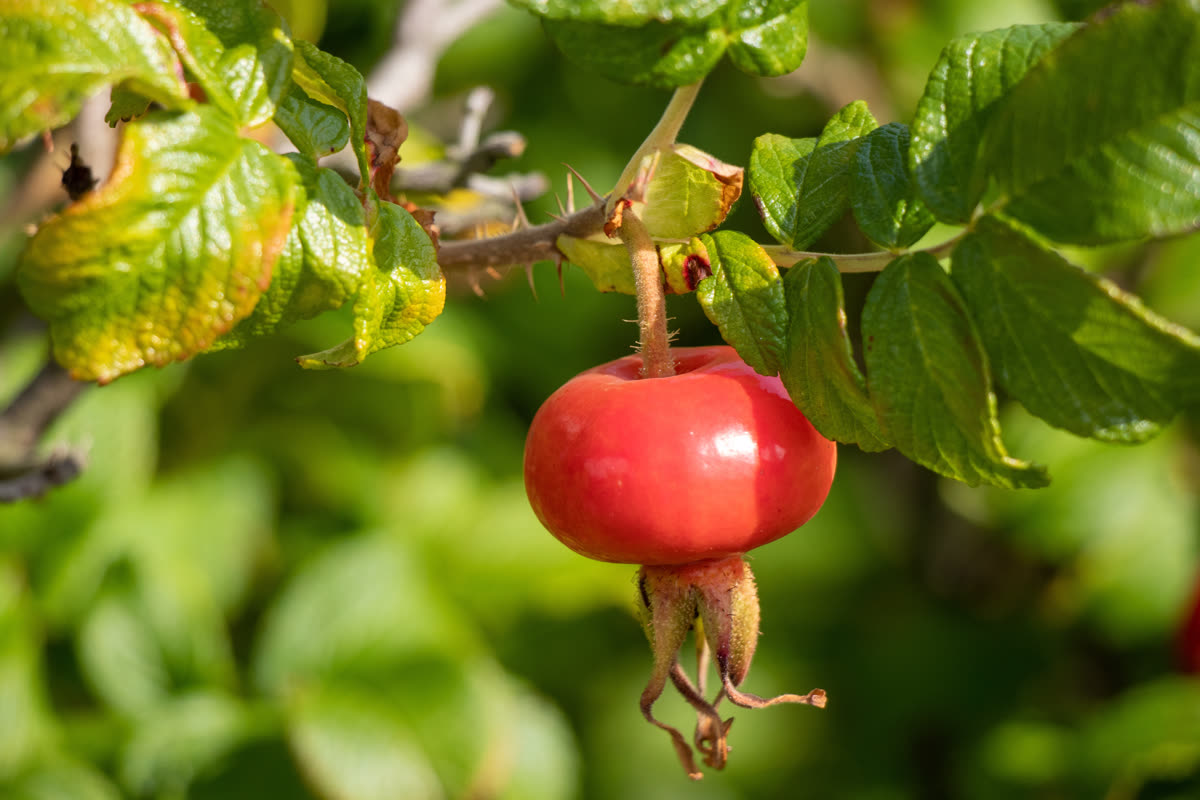 No. 029
Rosehip OilRosa canina L.Light, fast-absorbing and full of essential fatty acids, rosehip is the night oil that leaves skin soft and supple by morning.
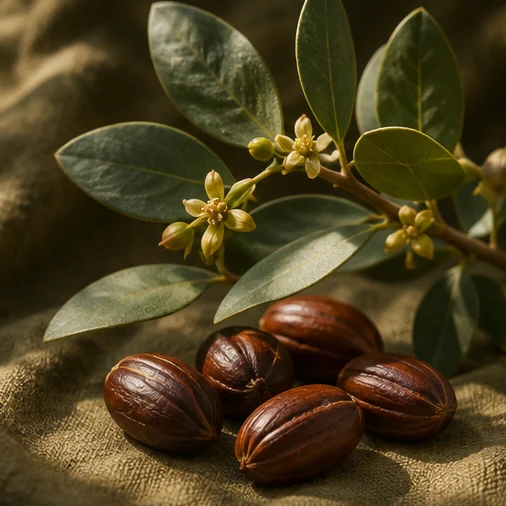 No. 028
JojobaSimmondsia chinensis (Link) C.K.Schneid.Jojoba is really a liquid wax, which is why it feels so silky, sinks in with a satin finish and keeps for years.GuideInfused Oils, Hydrosols & ExtractsMacerates, glycerites, tinctures, hydrosols, CO₂ and standardized extracts: what each captures, how to make them safely and how they appear in INCI.ToolFormula & Cost CalculatorScale any formula from percentages to grams, check it adds up, and price a batch for your brand.
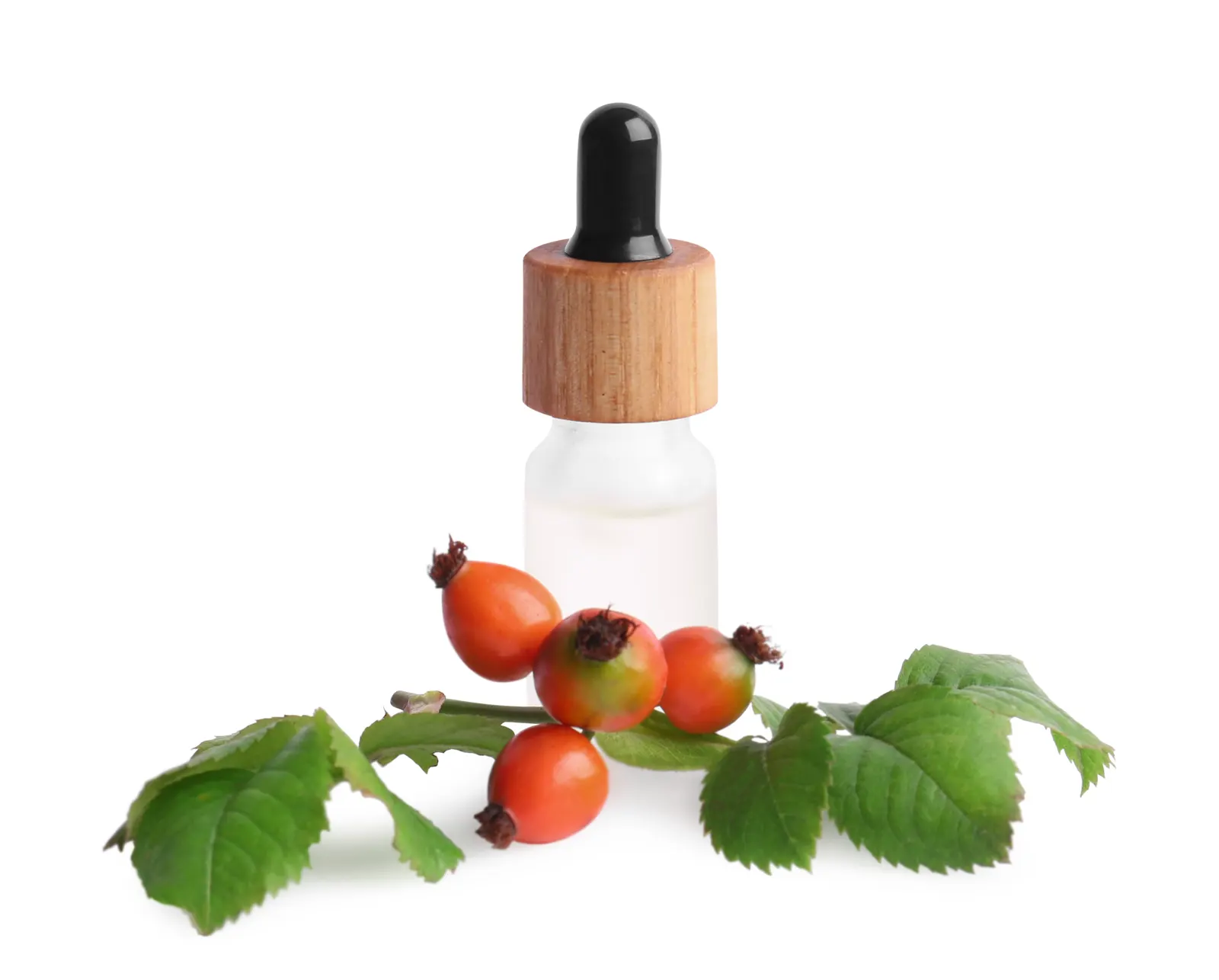 Face oil · BeginnerRosehip & Sea Buckthorn Glow OilA light face oil of rosehip, jojoba and squalane with a touch of sea buckthorn, protected with vitamin E. Three or four drops at night.