The ingredient encyclopedia · oil
Black Seed Oil
Nigella sativa L. · Ranunculaceae
Prized from Egypt to India, black seed oil is a potent, peppery oil with promising early research: a little, well diluted, goes far.
FR Huile de nigelleES Aceite de comino negroAR زيت الحبة السوداءHabbat al-baraka (Arabic); kalonji (Hindi/Urdu)
- How well proven
- CPromising
- Safety
- Use with care
- Sun-sensitive
- No
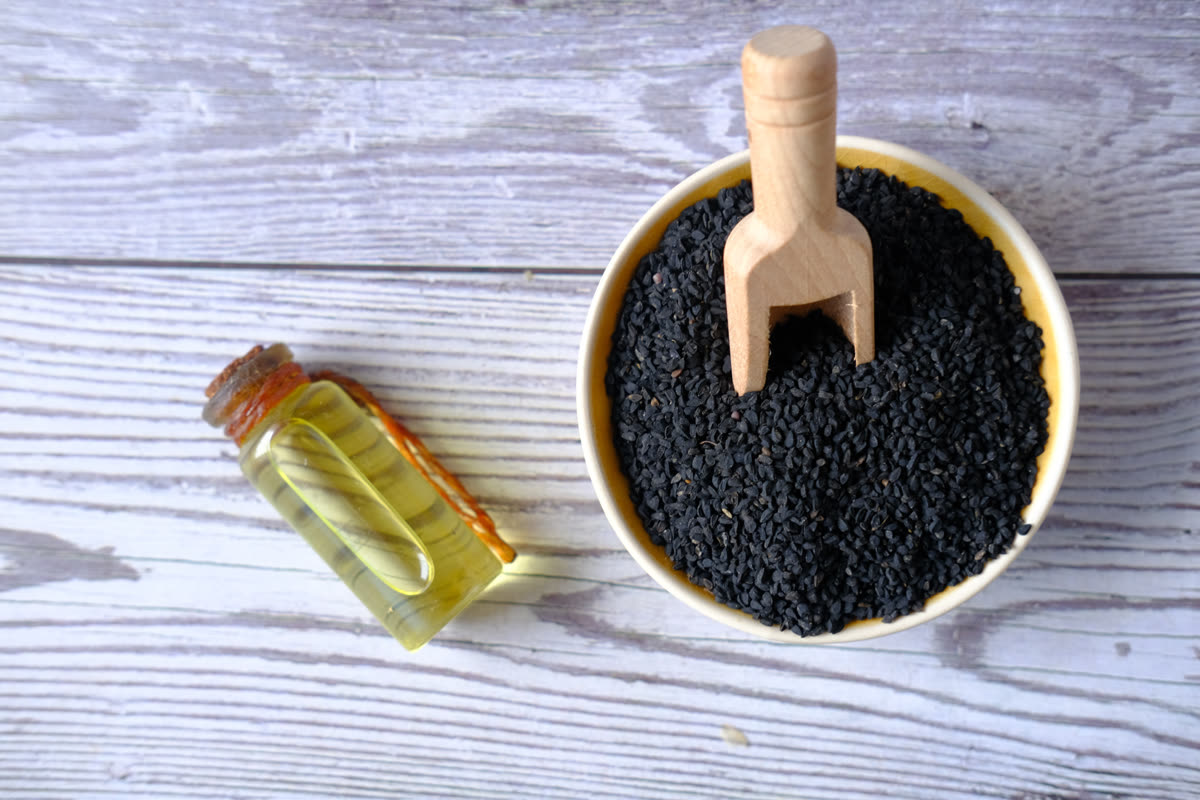
FR Huile de nigelleES Aceite de comino negroAR زيت الحبة السوداءHabbat al-baraka (Arabic); kalonji (Hindi/Urdu)
What the evidence says
A few small randomized trials (e.g. in hand eczema) and abundant lab data, offset by reports of allergic contact dermatitis.
- Best supported for
- Dandruff & Itchy Scalp D
- How to use it
- Face or spot oil · 5–10% in a light carrier oil
- Watch out for
- Thymoquinone is a recognized skin sensitizer; allergic contact dermatitis, including severe or blistering reactions, is reported.
Checked against 3 cited studies and our safety review · Updated 26 November 2026 · How we grade
Why you’ll love Black Seed Oil
Why you’ll love it
- A small trial in hand eczema found encouraging, calming results
- A light, non-greasy feel that suits oilier skin when diluted
- A warm, spicy note in a pre-wash scalp oil
Best forOily and blemish-prone skin and scalps, always diluted, if your skin is not reactive.
Try it today
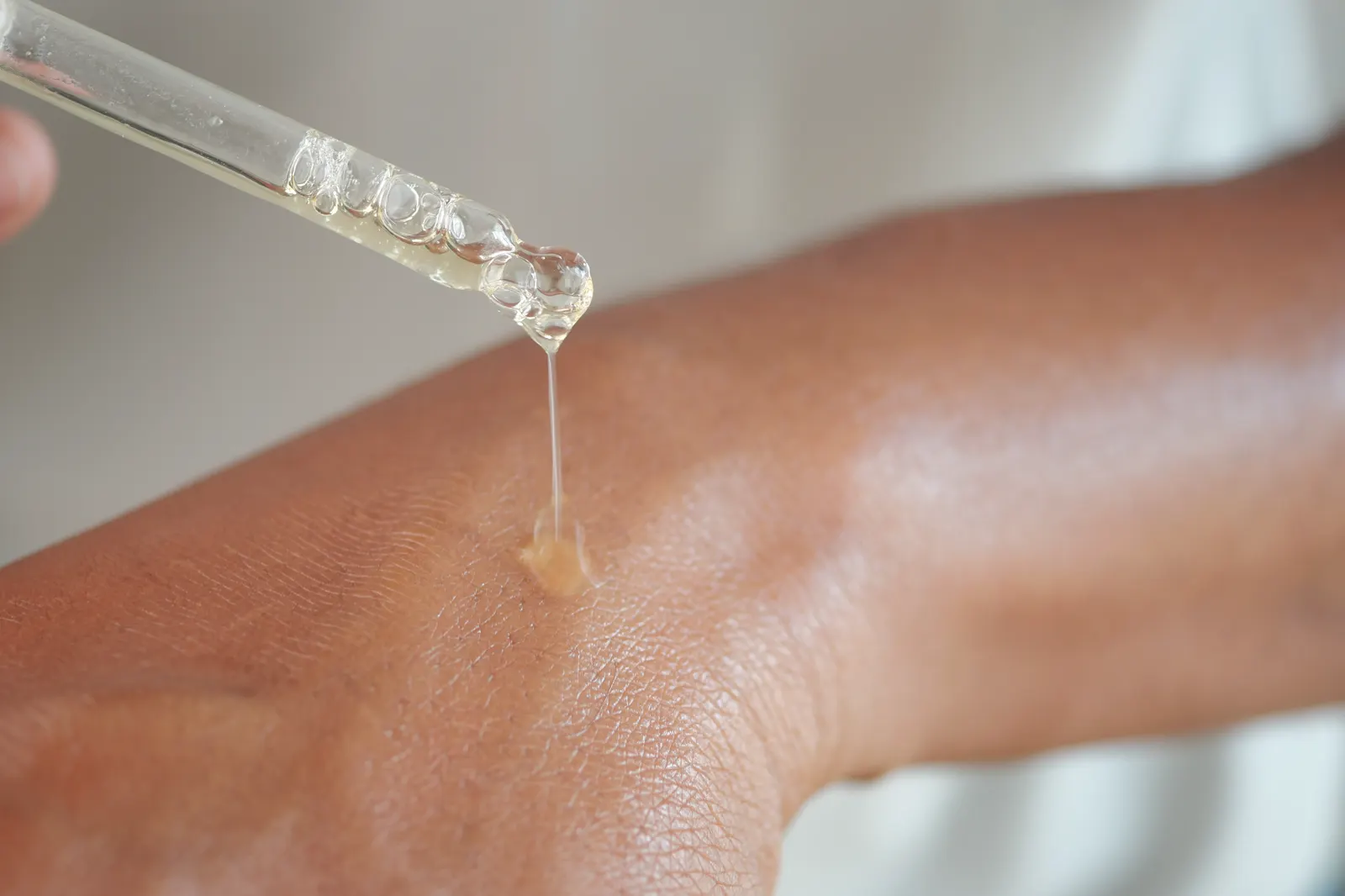
A careful first patch test
- Mix 1 drop of black seed oil into 10–20 drops of a light carrier such as jojoba.
- Dab a little on your inner forearm twice a day for 7 days, and read it at 48 and 96 hours.
- If there is no itch or redness, use the blend as a spot oil; never apply it neat to your face.
Good to know: Black seed oil can cause allergic skin reactions, sometimes strong ones. Always dilute and patch test, keep it off broken skin, and stop if it itches.
At a glance
| Parts used | Seed oil, cold-pressed (contains a small volatile fraction); essential oil (steam-distilled, far more concentrated) |
|---|---|
| Key actives | Thymoquinone, Linoleic acid, Oleic acid, Eicosadienoic acid, p-Cymene, Thymohydroquinone |
| INCI names | Nigella Sativa Seed Oil Nigella Sativa Seed Extract |
| Skin types | oily, combination, normal |
| Hair & scalp | oily scalp |
| Pairs well with | HoneyJojobaAloe VeraRosemary |
| Evidence grade | CPromising A few small randomized trials (e.g. in hand eczema) and abundant lab data, offset by reports of allergic contact dermatitis. |
What it does for skin and hair
Anti-inflammatory potential
Thymoquinone dampens inflammatory signaling in lab models; a small trial in hand eczema reported improvement comparable to a topical steroid.
Antimicrobial activity
Active in vitro against acne bacteria, staphylococci and Malassezia yeasts — a rationale, not proof, for acne-prone skin and scalp care.
Linoleic-rich base
Around half linoleic acid, giving a light, non-greasy feel suitable for oilier skin in diluted blends.
How to use it
Start low, be consistent, and give it four to eight weeks. These are the amounts that work in real products and home recipes.
| Form | Typical use level | Notes |
|---|---|---|
| Face or spot oil | 5–10% in a light carrier oil | Never neat on the face or on broken skin. Patch test as in our guide: twice daily for 7 days, read at 48 and 96 hours. |
| Scalp oil | 5–15% of a scalp-oil blend | Pre-wash only; shampoo out. Stop if itching or redness develops. |
| Creams and ointments | 1–10% of a formula | Thymoquinone is light-sensitive; use opaque packaging. |
| Food and supplements | Culinary amounts of seed are safe | Oral oil or capsules can affect blood sugar and blood pressure and may interact with medicines — speak to a pharmacist. |
Use it safely
Use with care
- Thymoquinone is a recognized skin sensitizer; allergic contact dermatitis, including severe or blistering reactions, is reported. Patch test and dilute.
- Avoid on eczema that is broken, weeping or infected — see a doctor instead.
- Keep away from the eyes and mucous membranes; it stings.
- Oral black seed products may lower blood glucose and blood pressure and may interact with diabetes, blood-pressure and anticoagulant medicines.
- Pregnancy & breastfeeding
- Culinary use of the seed is fine. Avoid medicinal oral doses in pregnancy; for topical use, prefer short-term, diluted use on small areas, or avoid it, given its sensitizing potential. Pregnancy guide
- Phototoxicity
- Not phototoxic at normal use levels.
- Declared fragrance allergens
- None expected
New to an ingredient? Patch test first. Stop and seek advice if you get burning, swelling, blistering or a spreading rash.
Buying well
Sustainability
Nigella is an annual crop grown in Ethiopia, India, Egypt, Syria and Turkey, among others, and is not threatened. Quality varies greatly: some oils are diluted with cheaper seed oils or have very low thymoquinone. Prefer suppliers who state origin, pressing method and a measured thymoquinone range.
How to choose quality
Choose cold-pressed oil from whole seeds, dark in color with a strong peppery, slightly bitter smell. Do not confuse it with the essential oil, which is much stronger. Check for a certificate of analysis and a best-before date. Store cool and dark, tightly closed; use within about 12 months.
The research For professionals
The chemistry, the studies and the evidence by concern, for practitioners, formulators and the curious.
Cold-pressed black seed oil is roughly 50–60% linoleic acid, about 20–25% oleic acid and 12% palmitic acid, with a characteristic 2–3% eicosadienoic acid. A small volatile fraction contains thymoquinone, p-cymene, thymohydroquinone and related compounds; thymoquinone content varies widely between batches, so “standardized” labels are worth checking. The steam-distilled essential oil is far more concentrated than the pressed oil.
Thymoquinone inhibits inflammatory pathways (including NF-κB and eicosanoid synthesis) and is antioxidant and antimicrobial in vitro. In a randomized trial in hand eczema, a topical Nigella preparation improved severity and quality of life comparably to betamethasone and better than a plain emollient; small trials in acne have also reported improvements. These studies were short, small and from single centers.
Thymoquinone is also a sensitizer. Published case reports describe allergic contact dermatitis after topical black seed oil, sometimes widespread or blistering, typically in people self-treating eczema or acne with undiluted oil. Dilution, patch testing and avoiding damaged skin reduce, but do not remove, the risk.
Evidence by concern
| Concern | Grade | What the evidence shows |
|---|---|---|
| Dandruff & Itchy Scalp | D | Thymoquinone shows antifungal activity in the lab; as an oil it may also feed Malassezia, so evidence is uncertain. |
Key studies
Randomized trial in about 60 patients with hand eczema: topical Nigella sativa ointment improved severity and quality of life similarly to betamethasone and more than a plain emollient over four weeks.
Yousefi M, et al. J Eur Acad Dermatol Venereol. 2013 Read it in the bibliography Find on PubMedCase reports of allergic contact dermatitis after topical black cumin (Nigella sativa) oil use.
Steinmann A, et al. Contact Dermatitis. 1997 Read it in the bibliography Find on PubMedCase report of allergic contact dermatitis from a black cumin oil–containing ointment, with a positive patch test.
Zedlitz S, et al. Contact Dermatitis. 2002 Read it in the bibliography Find on PubMed
MythBlack seed is “a remedy for every disease except death,” so it must be safe on any skin problem.
EvidenceThe saying comes from a revered prophetic tradition and reflects black seed’s cultural importance — not clinical proof. Small trials are encouraging, but black seed oil can itself cause allergic dermatitis, particularly when used neat on inflamed skin.
In tradition
Called habbat al-baraka (“the seed of blessing”), black seed holds a special place in Islamic prophetic medicine and in Unani and Ayurvedic practice (as kalonji); seeds were reportedly found in Tutankhamun’s tomb.
Frequently asked questions
Is black seed oil good for acne?
Can black seed oil cause a rash or burn?
Does black seed oil help hair loss?
Is black seed the same as black cumin?
Cite this page
Herbs.Beauty. Black Seed Oil (Nigella sativa L.): evidence-based monograph. Updated 26 November 2026. https://herbs.beauty/ingredients/black-seed-oil.html