The ingredient encyclopedia · oil
Pumpkin Seed Oil
Cucurbita pepo L. · Cucurbitaceae
Deep green and nutty, pumpkin seed oil turns a weekly scalp massage into a comforting, nourishing pre-wash ritual.
FR Huile de pépins de courgeES Aceite de semilla de calabazaAR زيت بذور اليقطينKürbiskernöl (German; Styrian oil)
- How well proven
- CPromising
- Safety
- Low topical risk
- Sun-sensitive
- No
- Best for
- Thinning Hair & Hair Loss
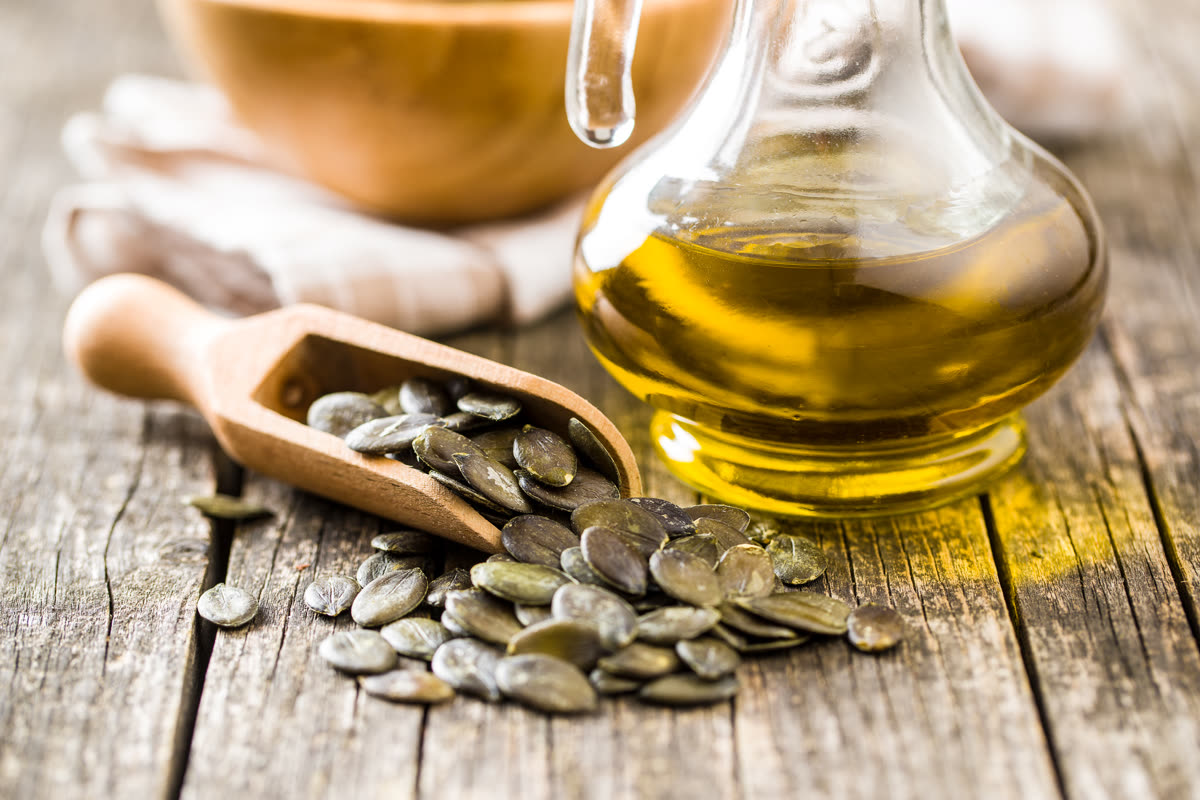
FR Huile de pépins de courgeES Aceite de semilla de calabazaAR زيت بذور اليقطينKürbiskernöl (German; Styrian oil)
What the evidence says
One small randomized oral trial with a multi-ingredient product and small unblinded topical studies; promising but not conclusive.
- Best supported for
- Thinning Hair & Hair Loss C
- How to use it
- Scalp oil (topical) · 10–30% of a scalp-oil blend
- Watch out for
- Topical allergy is rare; patch test on the scalp edge first.
Checked against 1 cited study and our safety review · Updated 26 November 2026 · How we grade
Why you’ll love Pumpkin Seed Oil
Why you’ll love it
- A nourishing pre-wash oil for a dry, tight-feeling scalp
- Naturally rich in vitamin E, which helps it stay fresh
- Promising early research in hair loss, though not yet conclusive
Best forDry scalps, and anyone building a gentle weekly scalp-care routine.
Try it today
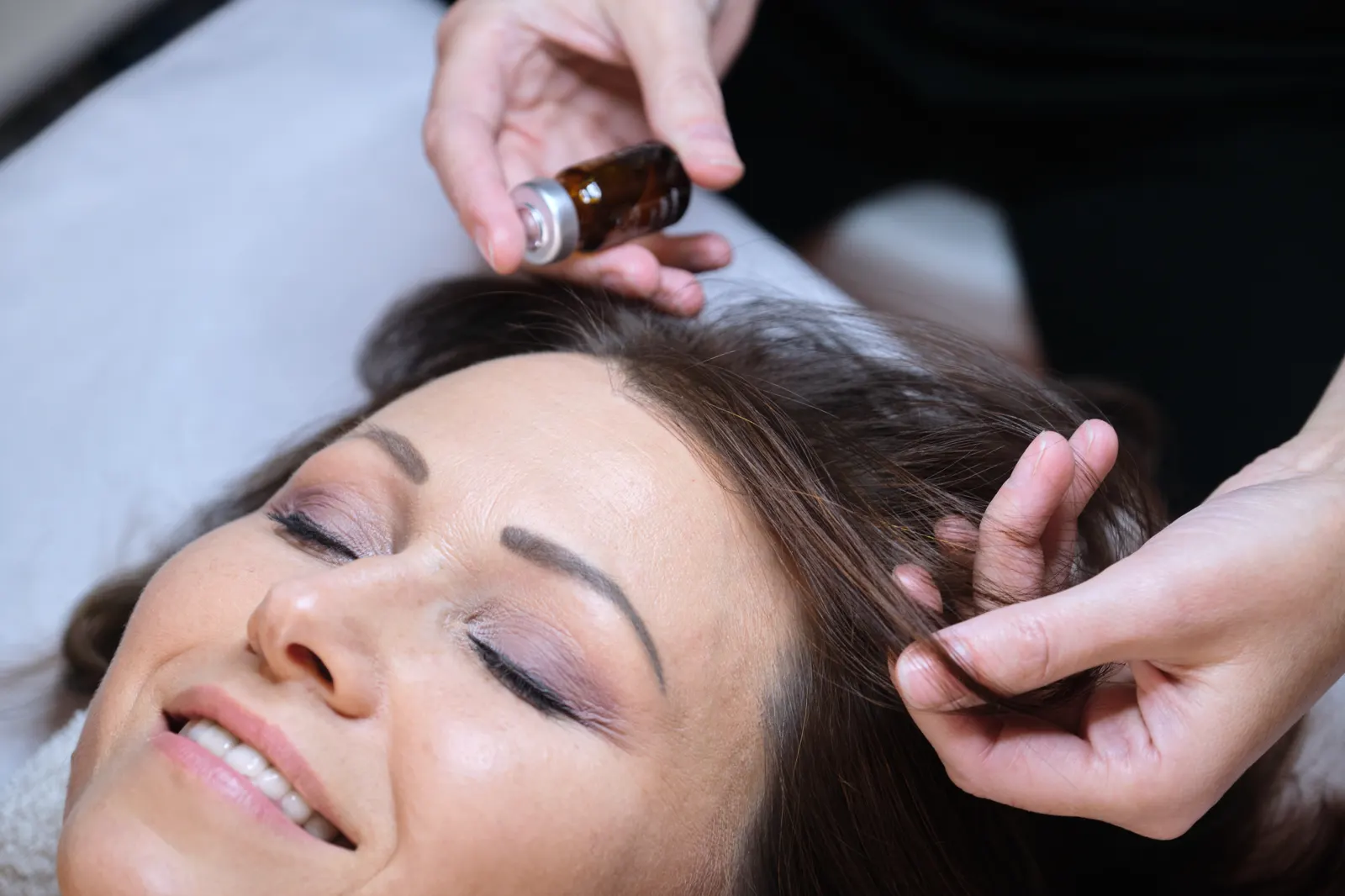
A weekly scalp massage
- Mix 1 teaspoon of cold-pressed pumpkin seed oil into 3 teaspoons of jojoba, then patch test at the scalp edge.
- Massage it into your scalp with your fingertips and leave it for one to eight hours.
- Shampoo out well, and use a dark towel, as the oil can stain pale fabrics.
Good to know: Sudden, patchy or fast hair loss, or loss with redness or scaling, deserves a doctor’s check. This oil is a comfort, not a proven treatment.
At a glance
| Parts used | Seed oil, cold-pressed (lighter) or from roasted seeds (dark Styrian culinary oil) |
|---|---|
| Key actives | Linoleic acid, Oleic acid, Δ7-Phytosterols, γ-Tocopherol, Carotenoids (lutein), Chlorophyll |
| INCI names | Cucurbita Pepo Seed Oil Cucurbita Pepo Seed Extract |
| Hair & scalp | fine, dry scalp |
| Pairs well with | RosemaryStinging NettleJojoba |
| Evidence grade | CPromising One small randomized oral trial with a multi-ingredient product and small unblinded topical studies; promising but not conclusive. |
What it does for skin and hair
Possible support in pattern hair loss
In a 24-week placebo-controlled trial, men taking capsules containing pumpkin seed oil had greater increases in hair count than those on placebo.
Nourishing scalp oil
Linoleic acid, sterols and tocopherols make it a comforting pre-wash oil for a dry scalp.
Antioxidant-rich
Natural tocopherols and carotenoids give it reasonable stability for a linoleic-rich oil.
How to use it
Start low, be consistent, and give it four to eight weeks. These are the amounts that work in real products and home recipes.
| Form | Typical use level | Notes |
|---|---|---|
| Scalp oil (topical) | 10–30% of a scalp-oil blend | Massage into the scalp, leave 1–8 hours, then shampoo; see Rosemary & Pumpkin Seed Scalp Oil. |
| Oral supplement | The trial used 400 mg/day (in a combination product) | Discuss with your doctor or pharmacist, especially if you take hormonal medicines. |
| Face and body oil | 5–20% of a blend | Cold-pressed, unroasted oil only; the strong color can tint pale formulas. |
Use it safely
Low topical risk
- Topical allergy is rare; patch test on the scalp edge first.
- Dark, roasted oil can stain light hair, towels and pillowcases.
- Sudden, patchy or rapid hair loss, or loss with scalp redness or scaling, needs a doctor’s assessment — see Thinning Hair & Hair Loss.
- Oral supplements are not standardized; they should not replace proven treatments.
- Pregnancy & breastfeeding
- Food amounts and topical use are considered safe. Supplements marketed for “DHT blocking” have not been studied in pregnancy and should be avoided. Pregnancy guide
- Phototoxicity
- Not phototoxic at normal use levels.
- Declared fragrance allergens
- None expected
New to an ingredient? Patch test first. Stop and seek advice if you get burning, swelling, blistering or a spreading rash.
Make it at home: recipes with pumpkin seed oil
Buying well
Sustainability
Styrian pumpkin seed oil (Steirisches Kürbiskernöl) is a protected geographical indication in the EU; the hull-less pumpkin variety used there makes pressing easier. Fraud — dilution with cheaper oils or non-local seeds — has been reported, so look for the PGI seal and a numbered label on culinary oils.
How to choose quality
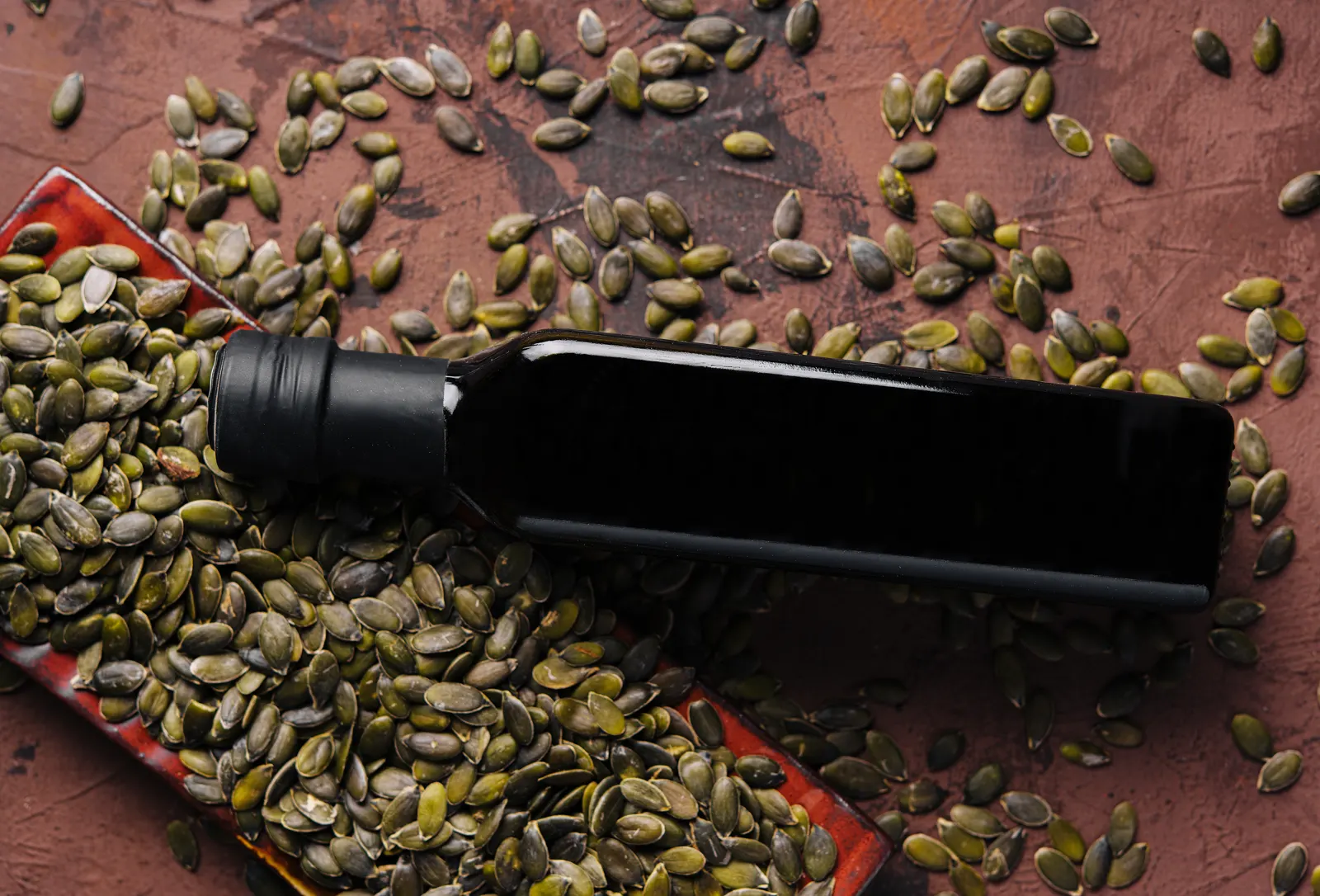
For skin and scalp products choose cold-pressed, unroasted cosmetic pumpkin seed oil, which is lighter and less pungent. Dark, roasted Styrian oil is a culinary oil. Store cool and dark and use within 6–12 months of opening; add tocopherol when formulating.
The research For professionals
The chemistry, the studies and the evidence by concern, for practitioners, formulators and the curious.
Pumpkin seed oil contains roughly 35–60% linoleic acid and 20–40% oleic acid, with palmitic and stearic acids. Its minor fraction is distinctive: Δ7-phytosterols, γ-tocopherol, and carotenoids and chlorophyll that give the dark oil its striking green-to-red dichroism. Roasted Styrian oil is intensely flavored and colored; cold-pressed cosmetic grades are lighter in color and smell.
The hair-loss interest comes from laboratory and animal work suggesting that pumpkin seed constituents (possibly the sterols) inhibit 5-α-reductase, the enzyme that converts testosterone to dihydrotestosterone (DHT), which drives androgenetic alopecia. In the key human trial, Cho and colleagues gave 76 men with mild-to-moderate androgenetic alopecia either 400 mg/day of pumpkin seed oil in capsules or placebo for 24 weeks; hair count rose more in the treatment group (about 40% versus 10%). However, the capsule also contained other plant ingredients, so the effect cannot be attributed to pumpkin seed oil alone, and the trial was small.
Topical use is supported only by small, unblinded comparisons. There is no evidence that pumpkin seed oil matches finasteride or minoxidil, and no head-to-head trial against them in men. See Hair Science for Natural Hair Care.
Evidence by concern
| Concern | Grade | What the evidence shows |
|---|---|---|
| Thinning Hair & Hair Loss | C | A placebo-controlled trial of an oral supplement containing pumpkin seed oil increased hair counts in men; it was a multi-ingredient product, and topical data are minimal. |
Key studies
Randomized, double-blind, placebo-controlled trial in 76 men with androgenetic alopecia: 400 mg/day pumpkin seed oil (in a multi-ingredient capsule) for 24 weeks increased mean hair count by about 40% vs about 10% with placebo.
Cho YH, et al. Evid Based Complement Alternat Med. 2014 Read it in the bibliography Find on PubMed
MythPumpkin seed oil works like finasteride.
Evidence5-α-reductase inhibition has been shown in laboratory and animal studies, and one small human trial was positive, but nothing shows pumpkin seed oil matches finasteride or minoxidil. It is a reasonable complementary option, not a replacement for medical treatment.
In tradition
In Styria and neighboring Slovenia and Hungary, roasted pumpkin seed oil is a culinary staple; pumpkin seeds are also a traditional remedy for prostate and urinary complaints, which inspired research into their effects on androgen metabolism.
Frequently asked questions
Does pumpkin seed oil really work for hair loss?
Should I use pumpkin seed oil topically or orally?
Is pumpkin seed oil as good as minoxidil or finasteride?
Will pumpkin seed oil stain my hair?
Cite this page
Herbs.Beauty. Pumpkin Seed Oil (Cucurbita pepo L.): evidence-based monograph. Updated 26 November 2026. https://herbs.beauty/ingredients/pumpkin-seed-oil.html