The ingredient encyclopedia · oil
Sea Buckthorn
Hippophae rhamnoides L. (Some recent classifications treat it as Elaeagnus rhamnoides (L.) A.Nelson) · Elaeagnaceae
A drop of sunset-orange sea buckthorn oil gives a face oil or balm a golden glow and a comforting feel for dry, weathered skin.
FR ArgousierES Espino amarilloAR نبق البحرOblepikha (Russian)
- How well proven
- CPromising
- Safety
- Low topical risk
- Sun-sensitive
- No
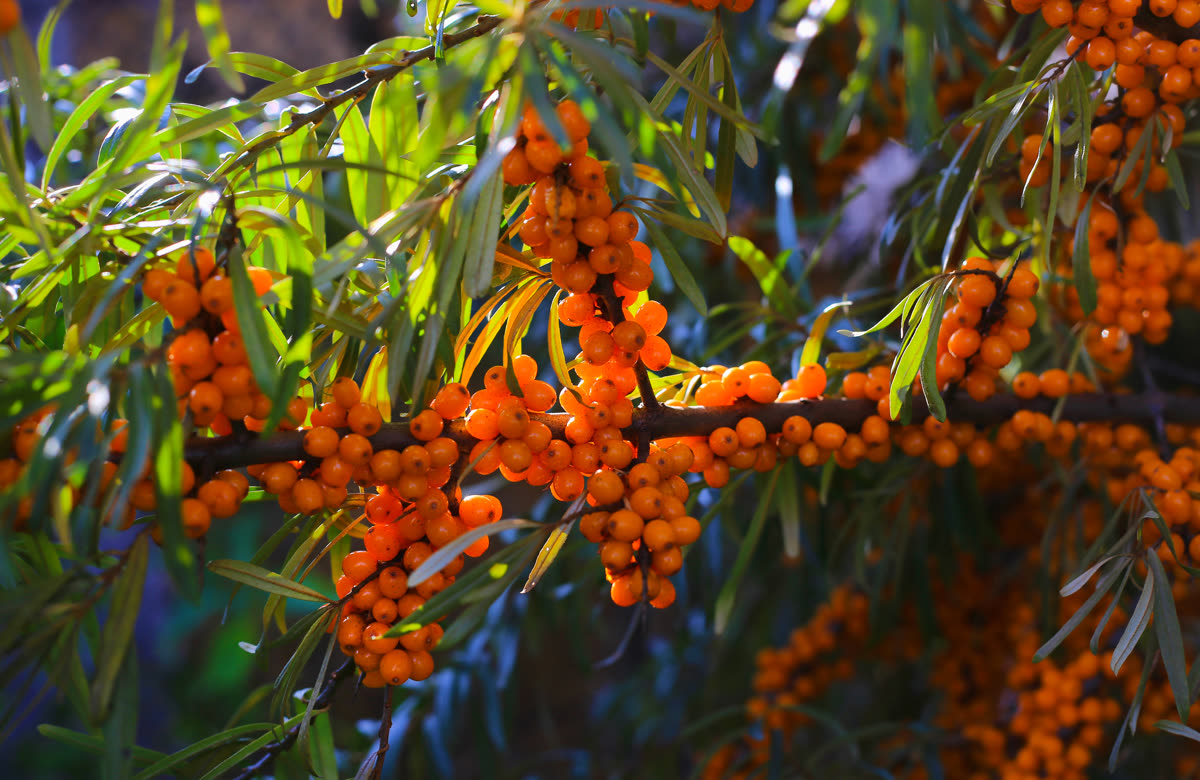
Also known as Hippophae rhamnoides L. (Some recent classifications treat it as Elaeagnus rhamnoides (L.) A.Nelson)
FR ArgousierES Espino amarilloAR نبق البحرOblepikha (Russian)
What the evidence says
Small oral trials (e.g. in atopic dermatitis) and lab and animal wound data; topical human trials are scarce.
- Best supported for
- Aging & Photoaging DSun Care & After-Sun D
- How to use it
- Pulp/fruit oil in face oils · 0.5–5% of a blend
- Watch out for
- Pulp oil stains: undiluted, it can temporarily tint skin orange and permanently mark fabrics.
Checked against 1 cited study and our safety review · Updated 26 November 2026 · How we grade
Why you’ll love Sea Buckthorn
Why you’ll love it
- Comforting for dry, weathered and wind-worn skin
- Rich in carotenoids, the antioxidant pigments behind its vivid color
- Two oils from one berry: pale seed oil and golden pulp oil
Best forDry, weathered and stressed skin, in small amounts blended into face oils and balms.
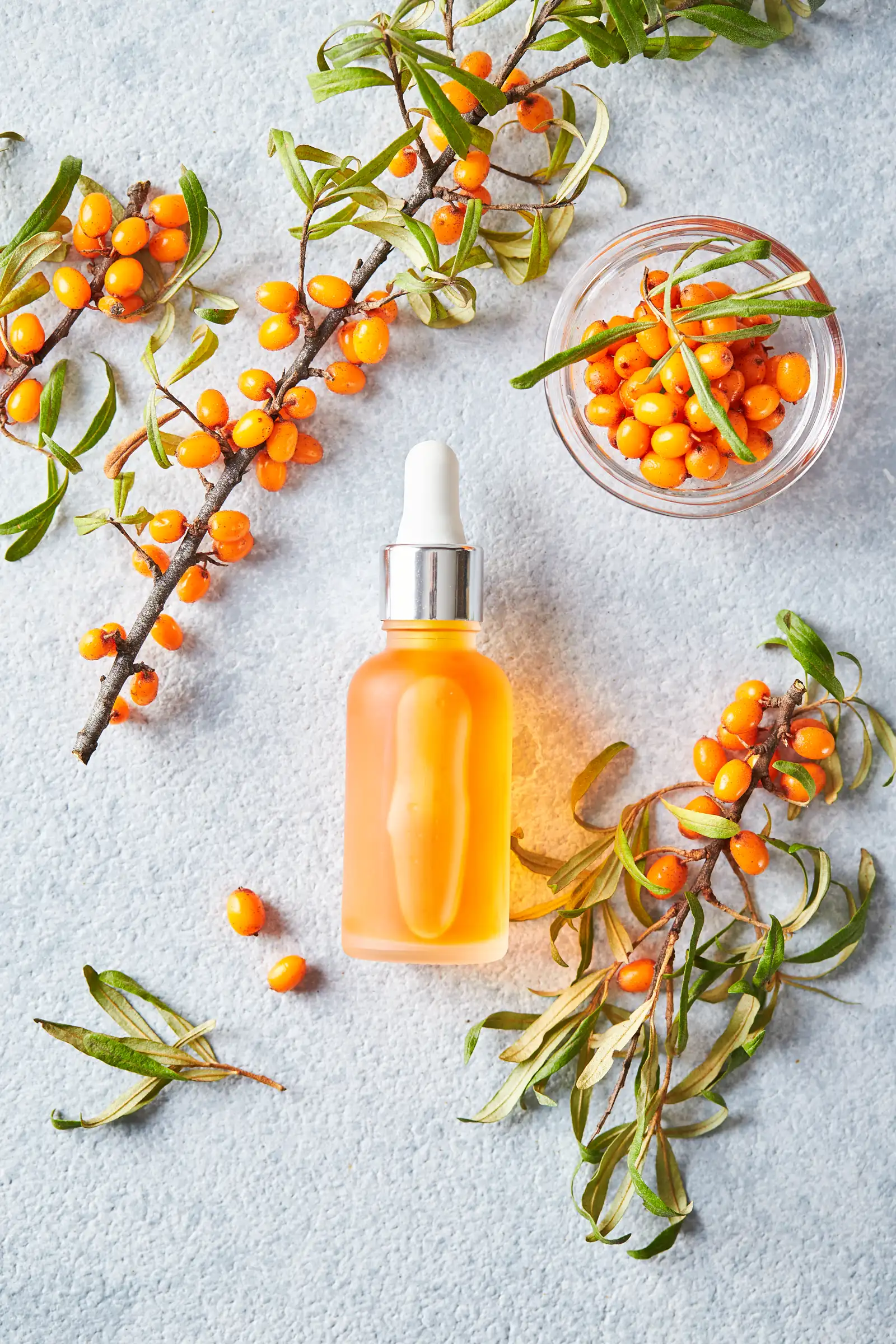
Try it today
A golden face-oil boost
- Pour about 10 ml of a stable face oil, such as squalane or jojoba, into a small dark bottle.
- Add 1–2 drops of sea buckthorn pulp oil and shake well.
- Press 2–3 drops onto clean skin at night, and keep pale pillowcases out of the way.
Good to know: Undiluted pulp oil can tint skin orange for a while and stain fabrics for good. Keep the pale seed oil in the fridge; it turns rancid quickly.
At a glance
| Parts used | Fruit (pulp) oil, deep orange; seed oil, pale yellow; CO₂ extracts; fruit juice and extracts |
|---|---|
| Key actives | Palmitoleic acid (omega-7, pulp oil), Linoleic and α-linolenic acids (seed oil), Carotenoids (β-carotene, zeaxanthin, lycopene), Tocopherols and tocotrienols, Flavonols (isorhamnetin) |
| INCI names | Hippophae Rhamnoides Fruit Oil Hippophae Rhamnoides Seed Oil Hippophae Rhamnoides Fruit Extract |
| Skin types | dry, mature, normal, sensitive |
| Pairs well with | Rosehip OilCalendulaSqualaneJojoba |
| Evidence grade | CPromising Small oral trials (e.g. in atopic dermatitis) and lab and animal wound data; topical human trials are scarce. |
What it does for skin and hair
Rich in carotenoids and antioxidants
The pulp oil’s carotenoids and tocopherols give its color and help protect skin lipids from oxidation in lab models.
Comfort for dry, stressed skin
Used at low levels in face oils and balms for dry and weathered skin.
Traditional wound and burn care
Long used in Russian and Central Asian practice on burns and healed scars; animal studies support wound-healing effects, human data are limited.
Two oils, two profiles
Seed oil provides essential fatty acids for the barrier; pulp oil provides omega-7 and pigments — together they make a well-rounded blend.
How to use it
Start low, be consistent, and give it four to eight weeks. These are the amounts that work in real products and home recipes.
| Form | Typical use level | Notes |
|---|---|---|
| Pulp/fruit oil in face oils | 0.5–5% of a blend | Higher levels stain skin, towels and pillowcases orange. See Rosehip & Sea Buckthorn Glow Oil. |
| Seed oil | 5–20% of a face oil or cream | Pale and non-staining; very polyunsaturated, so add tocopherol and refrigerate. |
| Balms | 1–3% pulp oil | Gives a natural golden tint and carotenoid content to healing or lip balms. |
| Oral supplements | As directed on standardized capsules | Discuss with a doctor if you take anticoagulants or have upcoming surgery. |
Use it safely
Low topical risk
- Pulp oil stains: undiluted, it can temporarily tint skin orange and permanently mark fabrics.
- Allergic reactions are uncommon; patch test, especially on sensitive skin.
- Seed oil oxidizes quickly; rancid oil irritates. Buy small and refrigerate.
- It is not a sunscreen — see Sun Care & After-Sun.
- Pregnancy & breastfeeding
- Topical use is considered safe in pregnancy and breastfeeding. Oral supplements have not been studied in pregnancy; food amounts are fine. Pregnancy guide
- Phototoxicity
- Not phototoxic at normal use levels.
- Declared fragrance allergens
- None expected
New to an ingredient? Patch test first. Stop and seek advice if you get burning, swelling, blistering or a spreading rash.
Make it at home: recipes with sea buckthorn
Buying well
Sustainability
Sea buckthorn is a hardy, nitrogen-fixing shrub planted on a large scale in China, Mongolia and Russia for erosion control, and grown in Northern and Central Europe. It is not threatened. Wild harvesting of thorny branches can damage plants; cultivated sources are easy to find.
How to choose quality
Ask whether you are buying pulp/fruit oil (deep orange-red, viscous, may partly solidify when cold) or seed oil (pale yellow, fluid). CO₂ extracts are concentrated and expensive. Look for stated palmitoleic acid content and a pressing date. Store in the fridge, tightly closed.
The research For professionals
The chemistry, the studies and the evidence by concern, for practitioners, formulators and the curious.
The pulp (fruit) oil is unusual: a large share of its fatty acids (frequently 20–40%) is palmitoleic acid (C16:1 n-7), with palmitic and oleic acids, plus very high carotenoids, tocopherols and tocotrienols. The seed oil is quite different: roughly 30–40% linoleic and 20–35% α-linolenic acid with oleic acid, and little palmitoleic acid. Labels using “fruit oil” may contain either or a blend — check the color and supplier specification.
Palmitoleic acid occurs in human skin surface lipids, which is often used to market omega-7 as “skin-identical.” Note that human sebum’s characteristic monounsaturated fatty acid is actually sapienic acid (C16:1 n-10), a different isomer. Lab and animal studies suggest palmitoleic acid and sea buckthorn extracts support wound healing and reduce inflammation.
Human evidence comes mainly from oral use: in a four-month trial in atopic dermatitis, sea buckthorn pulp oil supplements were associated with improvement in symptoms. Topical controlled trials are lacking. The pulp oil’s carotenoids absorb visible light, not meaningful UV — it is not a sunscreen.
Evidence by concern
| Concern | Grade | What the evidence shows |
|---|---|---|
| Aging & Photoaging | D | High in antioxidants and omega-7 (palmitoleic acid), but clinical anti-aging evidence is minimal; unrefined oil stains orange. |
| Sun Care & After-Sun | D | Rich in carotenoids and antioxidants and used in after-sun products; no clinical evidence for protection or recovery, and it offers no SPF. |
Key studies
Randomized, placebo-controlled trial in 49 patients with atopic dermatitis: four months of oral sea buckthorn pulp oil was associated with improvement in symptoms; results for seed oil were less clear.
Yang B, et al. J Nutr Biochem. 1999 Read it in the bibliography Find on PubMed
MythSea buckthorn oil is a natural sunscreen because it is so rich in carotenoids.
EvidenceCarotenoids mainly absorb visible blue light and offer negligible UV protection. Sea buckthorn has never been shown to prevent sunburn. Use a tested broad-spectrum sunscreen — and never make DIY sunscreen.
In tradition
Sea buckthorn appears in Tibetan and Mongolian traditional medicine, and in Russia and the former Soviet republics its oil has long been a household remedy for burns, mucosal sores and dry skin.
Frequently asked questions
Will sea buckthorn oil stain my skin orange?
What is the difference between sea buckthorn seed oil and fruit oil?
Is sea buckthorn oil good for acne-prone skin?
Should I take sea buckthorn capsules for dry skin?
Cite this page
Herbs.Beauty. Sea Buckthorn (Hippophae rhamnoides L.): evidence-based monograph. Updated 26 November 2026. https://herbs.beauty/ingredients/sea-buckthorn.html