Does it work?
Witch Hazel for Scars, Wounds & Stretch Marks
What the research says about witch hazel for scars, wounds & stretch marks, how to use it at home and how to stay safe.
The short answer: Small studies show modest reductions in UV redness and comfort in minor skin irritation, but a randomized trial in eczema found witch hazel cream no better than its vehicle.
Our Scars, Wounds & Stretch Marks guide does not rank Witch Hazel for this use yet, so this is the overall grade for Witch Hazel.
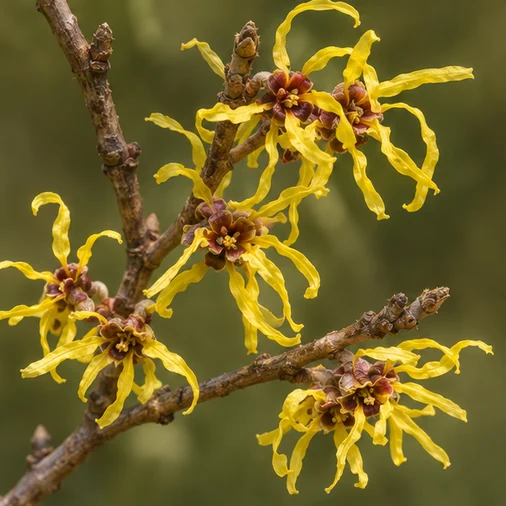
What it does
“Witch hazel” on a label can mean two quite different things: a steam distillate that is mostly water plus about 14% added alcohol and almost no tannins, or a tannin-rich extract that is genuinely astringent. Both can feel cooling and tightening on oily skin and minor irritation. Neither is a strong acne treatment, and the alcohol-containing versions can dry and sting sensitive skin.
Why people reach for it
- Feels cooling and tightening. Tannins in extracts precipitate surface proteins and temporarily tighten skin; the alcohol in distillates adds cooling and a degreased feel welcome on oily skin.
- Modestly reduces redness. Lotions with 10% witch hazel distillate reduced UV-induced redness in healthy volunteers, though less than hydrocortisone.
- Comfort for minor irritation. Witch hazel is approved in the US as an over-the-counter astringent for minor skin irritation and hemorrhoids, and is a traditional European remedy for minor inflammation.
- Antioxidant tannins. Hamamelitannin and proanthocyanidins in extracts are strong antioxidants in the lab, with some anti-inflammatory and antiviral activity in cell studies.
How to use it
| Form | Typical use | Notes |
|---|---|---|
| Alcohol-free distillate (witch hazel water) | 10–100% of the water phase | For toners and mists on oily or combination skin. Alcohol-free versions need a broad-spectrum preservative in the bottle and in your formula. |
| Tannin-rich extract (leaf or bark) | 1–5% in toners, gels and creams | This is the genuinely astringent form; higher levels can feel drying. Check compatibility — tannins can darken with iron and precipitate some proteins. |
| Drugstore witch hazel (with ~14% alcohol) | Apply with a pad to oily areas, at most once or twice daily | Avoid on dry, sensitive, eczema-prone or broken skin, and around the eyes. A cooled compress can ease minor itching, insect bites or razor irritation. |
Recipes with Witch Hazel
Use it safely
- Check the alcohol. Many witch hazel products contain about 14% ethanol; frequent use can dry and sting, and worsen eczema or a compromised barrier (The Skin Barrier, Explained).
- Tannin-rich extracts can be drying at high concentration; balance with humectants such as glycerin or aloe vera.
- Allergic contact dermatitis is uncommon but reported. Patch test before use on sensitive skin.
- Do not swallow: tannin-rich preparations can upset the stomach, and the drugstore product contains alcohol.
Pregnancy and breastfeeding: Topical witch hazel is considered safe in pregnancy and is commonly used for pregnancy hemorrhoids. Avoid ingesting it.
New to an ingredient? Patch test first.
When to see a doctor
- Signs of infection: spreading redness or warmth, red streaks, increasing pain or swelling, pus, a bad smell, or fever.
- Deep, gaping or long cuts, wounds on the face, hands or joints, or bleeding that does not stop with 10 minutes of firm pressure — stitches work best within hours.
- Animal or human bites, puncture wounds, dirty wounds, or if your tetanus vaccination is not up to date.
- Burns larger than your palm, or any burn on the face, hands, feet, genitals or over joints, or with white, leathery or charred skin.
- Wounds not healing within two weeks, especially if you have diabetes, poor circulation or a weakened immune system.
- A scar that keeps growing beyond its edges, is painful or itchy (possible keloid), or an old scar that ulcerates, bleeds or changes.
- New, wide purple stretch marks together with weight gain, a rounded face, easy bruising or muscle weakness.
Other plants for Scars, Wounds & Stretch Marks
| Ingredient | Grade | What the evidence shows |
|---|---|---|
| Honey | B | Systematic reviews suggest sterile, medical-grade honey dressings heal partial-thickness burns faster than some conventional dressings, though trial quality varies; kitchen honey is not for open wounds. |
| Aloe Vera | B | Several trials and a systematic review suggest aloe preparations may shorten healing time of superficial burns; evidence for surgical wounds is inconclusive. |
| Centella Asiatica (Cica) | B | Asiaticoside and madecassoside promote collagen organization; small trials (mostly of combination creams) support use for stretch-mark prevention and scar appearance. |
| Calendula | C | Small trials suggest benefit for skin reactions to radiotherapy and minor wounds; daisy-family allergy is possible. |
| Rosehip Oil | C | A small controlled study suggested rosehip oil improved the color and appearance of post-surgical scars after the wound had closed. |
| Helichrysum (Immortelle) | D | Popular in aromatherapy for scars, but evidence is anecdotal or from lab studies; as an essential oil it must be diluted and never used on open wounds. |
| Olive Oil | D | Trials of massaging plain oils, including olive oil, in pregnancy have not shown clear prevention of stretch marks; massage itself is harmless and pleasant. |