Foundations · 8 min read · Everyone
The Skin Barrier, Explained
Bricks, mortar, acid mantle and microbes: how your skin barrier works, what damages it, and a calm, evidence-based plan to repair it.
What you’ll take away
- The outermost layer of skin works like a brick wall: flattened dead cells (bricks) held in a lipid “mortar” of ceramides, cholesterol and free fatty acids in roughly equal molar amounts.
- Natural moisturizing factor (NMF), a slightly acidic surface pH and a balanced microbiome are as much part of the barrier as the lipids.
- Over-cleansing, alkaline soaps, hot water, over-exfoliation and too many actives at once are the most common avoidable causes of barrier damage.
- Good moisturizers combine humectants, emollients and occlusives; the right balance depends on how damaged and how dry your skin is.
- Repair is mostly subtraction: simplify for two to four weeks, protect from sun, then reintroduce actives one at a time.
- Plants in this guide
- Colloidal Oatmeal B
Guides explain how things work; the grade for each plant is on its own page. How we grade
What the barrier actually is
When dermatologists talk about “the barrier,” they mostly mean the stratum corneum, the outermost layer of the epidermis. On the face it is only around 10–20 cell layers thick — thinner than a sheet of paper — yet it does two vital jobs at once: it keeps water in and keeps irritants, allergens and microbes out.
The classic model is brick and mortar. The bricks are corneocytes: flattened, dead skin cells packed with keratin and wrapped in a tough protein envelope. Protein rivets called corneodesmosomes hold them together. The mortar is a highly ordered stack of lipid layers (lamellae) secreted by the living cells beneath. As the deepest corneocytes move up, enzymes slowly dissolve the rivets so the surface sheds invisibly — a full turnover of the stratum corneum takes roughly two weeks.
Below the stratum corneum, tight junctions between living cells form a second seal, and the immune system stands ready. So when the outer wall fails, the skin doesn’t just dry out — it also becomes more reactive.
The mortar: ceramides, cholesterol and fatty acids
The lipid mortar is made of three main classes in roughly equimolar proportions: ceramides (about half the lipid mass, in many sub-types), cholesterol and free fatty acids. Their ratio matters. Classic barrier-repair research from the laboratory of Peter Elias and colleagues found that applying a single lipid class alone can actually slow recovery of experimentally damaged skin, while a complete mixture of all three supports it — which is why “physiological lipid” moisturizers combine them.
One special ceramide family carries linoleic acid, an essential fatty acid the body cannot make. That is one reason linoleic-rich oils such as sunflower oil are favored for dry and barrier-impaired skin. Not all plant oils behave the same way: in a small study in adult volunteers (Danby SG, et al., Pediatric Dermatology, 2013), repeated application of olive oil, which is high in oleic acid, impaired barrier function, whereas sunflower seed oil did not. Oleic acid can loosen the lipid lamellae — useful as a penetration enhancer, less helpful on fragile skin. The Carrier Oils: The Formulator’s Guide compares oils in detail.
NMF, pH and the acid mantle
Inside the corneocytes sits natural moisturizing factor (NMF): a water-attracting mix of free amino acids, pyrrolidone carboxylic acid (PCA), lactate, urea and salts. Most of it comes from the breakdown of a protein called filaggrin. People with inherited filaggrin variants have a markedly higher risk of atopic eczema and dry, scaly skin — a clear illustration of how much the barrier depends on NMF. (See Eczema-Prone Skin.)
The skin surface is mildly acidic, typically around pH 4.5–5.5 and often below 5. This “acid mantle” is not just a curiosity: the enzymes that assemble ceramides work best at acidic pH, while the enzymes that dissolve corneocyte rivets become overactive as pH rises, causing premature shedding and a weaker wall. Traditional bar soaps (pH roughly 9–10) can raise skin pH for hours after washing. Mildly acidic or neutral syndet cleansers are kinder for most people.
The microbiome: living part of the barrier
Healthy skin hosts a diverse community of bacteria, fungi and viruses. Common residents include Staphylococcus epidermidis, Cutibacterium acnes, Corynebacterium species and Malassezia yeasts. Several of them produce antimicrobial molecules and help train skin immunity, crowding out less friendly organisms.
In atopic eczema, flares are associated with overgrowth of Staphylococcus aureus and a loss of diversity; in acne, it is less about the presence of C. acnes than about which strains dominate and how the skin reacts to them. Probiotic and “postbiotic” skincare is an active research area, but human evidence is still early. The most reliable way to support your microbiome remains the unglamorous one: avoid harsh antiseptic washes on intact skin, keep the barrier intact and the pH acidic.
TEWL and what damages the barrier
Researchers measure barrier function as transepidermal water loss (TEWL) — the rate at which water evaporates through the skin, recorded with a probe called an evaporimeter. Higher TEWL means a leakier barrier. TEWL rises with damage and falls as the barrier recovers; it is the standard endpoint in barrier-repair trials.
The most common culprits:
- Over-cleansing: frequent washing, foaming cleansers with harsh surfactants (sodium lauryl sulfate is the classic irritant used in research), hot water.
- Over-exfoliation: daily scrubs, stacking acids, retinoids and benzoyl peroxide without a break.
- Environment: low humidity, cold wind, central heating, UV exposure, pollution.
- Friction and occlusion: masks, wet work, gloves, nappies/diapers.
- Fragrance and irritant-heavy products, including high essential oil loads (see Essential Oil Safety: The Complete Guide).
- Internal factors: age (lipid production and acidification decline), genetics, psychological stress and some medications.
Signs of a stressed barrier: stinging when you apply products that never used to sting, tightness after washing, rough or flaky patches, a dull “glazed” look, and new redness.
Humectants, emollients and occlusives
Moisturizers work through three complementary mechanisms. Most good formulas contain all three.
| Type | What it does | Examples (natural and conventional) | Watch-outs |
|---|---|---|---|
| Humectants | Attract and hold water in the stratum corneum | Glycerin, urea, sodium PCA, lactic acid/sodium lactate, hyaluronic acid, panthenol, honey, aloe vera polysaccharides | In very dry air, use under an occlusive layer; urea and lactic acid can sting broken skin |
| Emollients | Fill gaps between corneocytes, making skin feel smooth and flexible | Squalane, jojoba (a liquid wax), plant oils, esters, ceramides, cholesterol, fatty acids | Oils vary: oleic-rich oils may not suit compromised skin |
| Occlusives | Form a film that slows evaporation and lowers TEWL | Petrolatum (the benchmark), lanolin, beeswax, candelilla wax, shea butter, dimethicone | Heavy occlusion can feel greasy and may aggravate acne-prone areas; lanolin and propolis-containing waxes are occasional allergens |
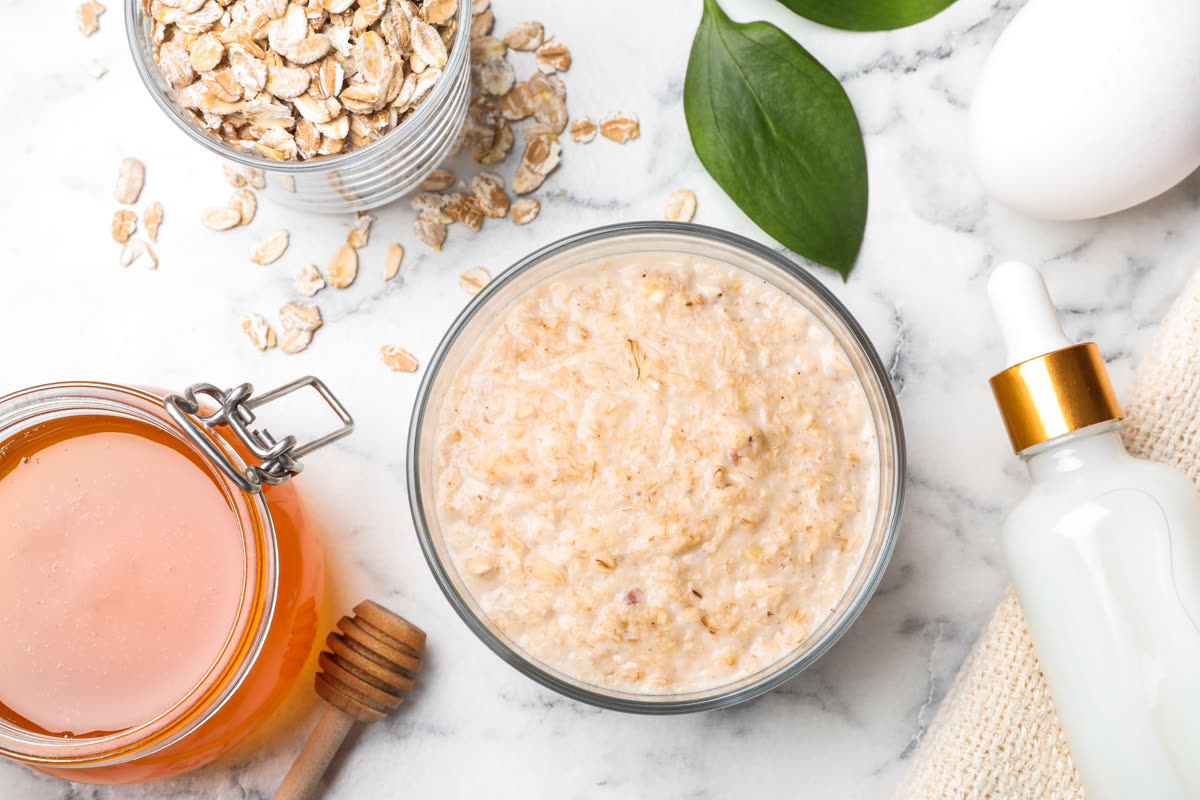
Colloidal oatmeal deserves special mention: it combines humectant, emollient and soothing properties and is recognized by the US FDA as an over-the-counter skin protectant. Try the Colloidal Oat Soothing Bath on flaring skin.
A practical repair plan
- Stop the stressors for 2–4 weeks. Pause scrubs, peels, retinoids, vitamin C serums and fragranced products. Keep only what you truly need (prescribed medicines stay — ask your doctor before stopping them).
- Cleanse gently, once or twice a day. A mild, low-pH cleanser or a cleansing balm, lukewarm water, pat dry.
- Moisturize on damp skin. Use a fragrance-free cream with humectants and barrier lipids; seal very dry patches with a thin occlusive layer at night.
- Protect from UV every day. A broad-spectrum sunscreen (SPF 30 or more) that does not sting. See Sun Care & After-Sun.
- Reintroduce one active at a time, a few nights a week, waiting at least two weeks before adding the next. The Build a Routine That Works (Minimal & Evidence-Based) guide shows how to layer.
Acute damage begins to repair within hours, but complete recovery takes days to weeks, and longer in older skin. Expect stinging to fade first, then texture to improve.
See a doctor or dermatologist if you have oozing, crusting or painful skin (possible infection), widespread eczema, a rash that keeps returning in the same place (possible allergy — see How to Patch Test), or no improvement after a month of gentle care. For more support, see Sensitive Skin & Redness and Dry & Dehydrated Skin.
Frequently asked questions
How long does it take to repair a damaged skin barrier?
Are ceramide creams better than plant oils?
Is “skin barrier repair” just a marketing term?
Can I use hyaluronic acid on its own?
Keep reading
 No. 042
Colloidal OatmealAvena sativa L.Finely milled oats turn a lukewarm bath milky and soothing: an officially recognized skin protectant for itchy, irritated skin.GuideBuild a Routine That Works (Minimal & Evidence-Based)Cleanse, treat, moisturize, protect: application order, introducing products one at a time, how long to wait for results and sample routines by skin type.GuideCarrier Oils: The Formulator’s GuideFatty acid chemistry, oxidative stability and skin feel for 12 core oils, plus why comedogenic ratings mislead and how to store oils well.