Does it work?
Sandalwood for Oily Skin & Pores
What the research says about sandalwood for oily skin & pores, how to use it at home and how to stay safe.
The short answer: Anti-inflammatory and antimicrobial effects are documented in lab and animal studies, and small open-label pilot studies (mostly industry-sponsored) report benefits in acne and other conditions, but controlled trials are lacking.
Our Oily Skin & Pores guide does not rank Sandalwood for this use yet, so this is the overall grade for Sandalwood.
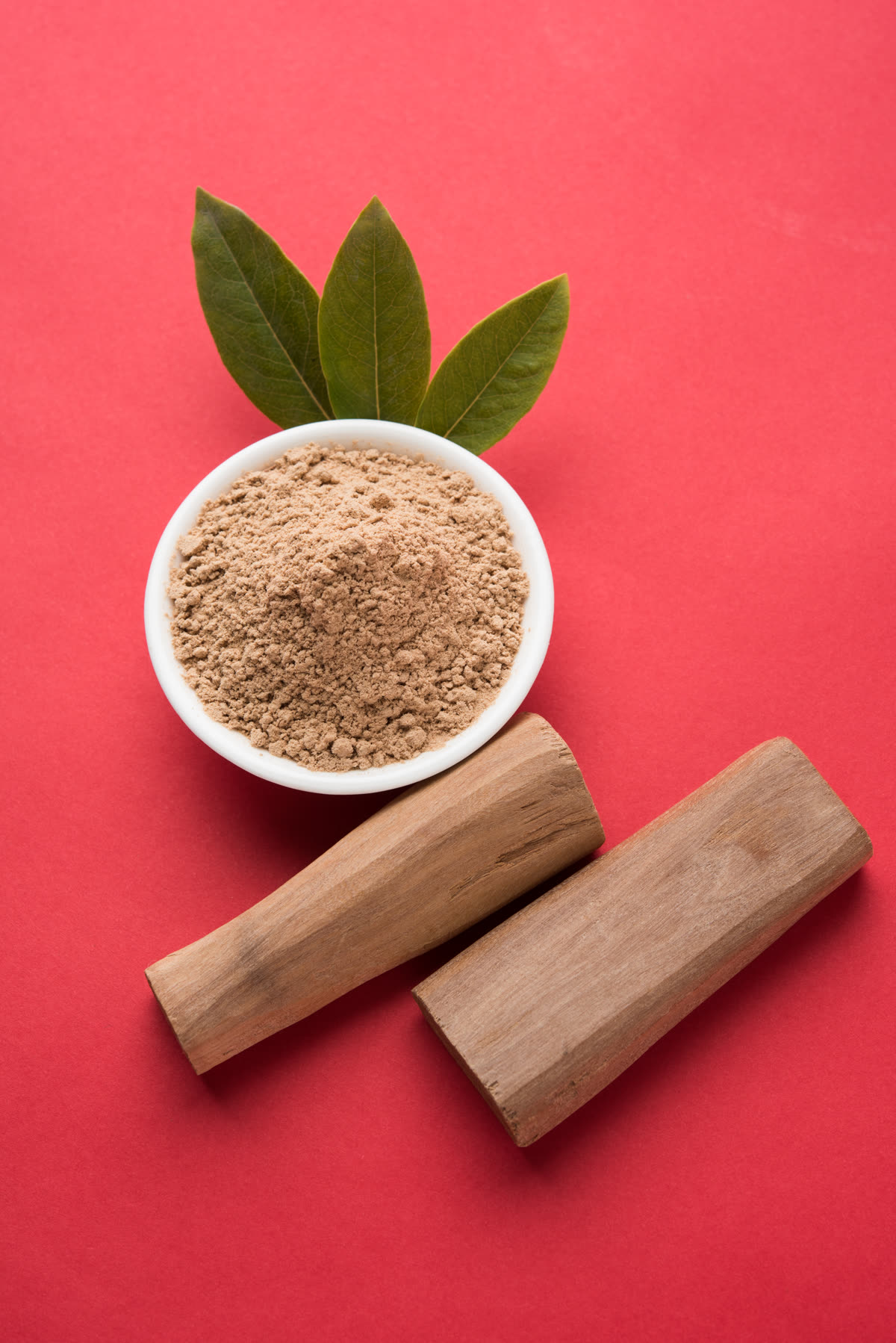
What it does
True sandalwood oil is distilled from the fragrant heartwood of Santalum album, a slow-growing tree of southern India and Southeast Asia. Its creamy, woody scent comes from the santalols, which also show anti-inflammatory activity in lab studies. Sandalwood is overharvested and listed as Vulnerable, heavily adulterated, and a known if uncommon skin allergen, so buying carefully matters as much as using it well.
Why people reach for it
- A grounding, long-lasting fragrance. Sandalwood is one of perfumery’s great base notes: soft, creamy, woody and long-lasting. A trace in a face oil, balm or body oil adds depth and fixes lighter notes.
- Anti-inflammatory activity in the lab. α-Santalol and sandalwood oil reduce inflammatory signaling in cell and animal models, which underpins interest in its use for inflamed, blemish-prone skin. Human evidence is still preliminary.
- A traditional cooling paste. In India, sandalwood powder mixed with water or rose water is a centuries-old cooling face pack for heat and blemishes — framed today as a traditional ritual rather than a proven treatment for Acne & Breakouts.
How to use it
| Form | Typical use | Notes |
|---|---|---|
| Sandalwood essential oil in face products | Up to 0.5–1% of a face oil, serum or cream | A little goes a long way. Patch test first; it is a known, though uncommon, contact allergen. Use the Essential Oil Dilution Calculator and our Essential Oil Safety: The Complete Guide guide. |
| Body oil, balm or natural perfume | Body: 1–2%; solid or oil perfume: up to 5–10% of the fragrance blend for small-area use | Pairs beautifully with Damask rose, frankincense and orange blossom (neroli). Keep perfume use to pulse points, not large areas of skin. |
| Sandalwood powder face pack (traditional) | 1–2 teaspoons powder mixed to a paste with water or rose water; rinse after 10–15 minutes | Make fresh for each use and discard leftovers. Genuine S. album powder is scarce; much sold online is other wood dust or spent wood after distillation. Not for broken skin. |
Recipes with Sandalwood
Use it safely
- Sandalwood oil and santalol are recognized contact allergens. Reactions are uncommon but can be persistent; perfume-allergic people should patch test (How to Patch Test).
- Western Australian oil contains farnesol, an EU-labeled fragrance allergen. Sandalwood constituents also appear on the EU’s expanded fragrance-allergen labeling list.
- Keep essential oil out of reach of children and never take it internally.
- Not phototoxic, but avoid applying any fragrance oil to sunburnt, broken or freshly exfoliated skin.
Pregnancy and breastfeeding: Low-level use in cosmetics and perfume is generally considered acceptable in pregnancy and breastfeeding; avoid high-concentration blends and patch test, as skin can be more reactive (Skincare in Pregnancy & Breastfeeding).
New to an ingredient? Patch test first.
When to see a doctor
- Sudden increase in oiliness with acne, excess facial or body hair, irregular periods or scalp hair thinning (possible androgen excess or polycystic ovary syndrome).
- Greasy, flaky, red patches around the nose, brows or scalp that persist (possible seborrheic dermatitis).
- A shiny, pearly or translucent bump that grows or bleeds, which can mimic sebaceous hyperplasia but may be a basal cell carcinoma.
- Oily skin with significant acne or scarring, or if you want to discuss prescription options.
Other plants for Oily Skin & Pores
| Ingredient | Grade | What the evidence shows |
|---|---|---|
| Green Tea | B | Small controlled trials of topical green tea extract emulsions reduced sebum production over several weeks. |
| Willow Bark | C | Natural salicylates may provide light exfoliation and smoothing, but it is much weaker than salicylic acid and poorly studied. |
| Tea Tree | C | Helpful for acne lesions on oily skin, but there is little evidence it reduces sebum itself. |
| Witch Hazel | D | Tannins give a temporary tightening, matte feel; no good evidence it reduces sebum, and alcohol-containing distillates can irritate. |
| Rhassoul Clay | D | Absorbs surface oil for a temporary matte finish and pleasant texture; does not change sebum production. |
| Jojoba | D | Often claimed to “rebalance” oil production; there is no solid human evidence, though its light, non-greasy feel suits many oily skins. |