Does it work?
Moringa (Ben Oil) for Dry, Damaged & Frizzy Hair
What the research says about moringa (ben oil) for dry, damaged & frizzy hair, how to use it at home and how to stay safe.
The short answer: One small base-controlled study of a moringa leaf cream plus laboratory antioxidant data; ben oil’s emollient role rests on its composition rather than trials.
Our Dry, Damaged & Frizzy Hair guide does not rank Moringa (Ben Oil) for this use yet, so this is the overall grade for Moringa (Ben Oil).
What it does
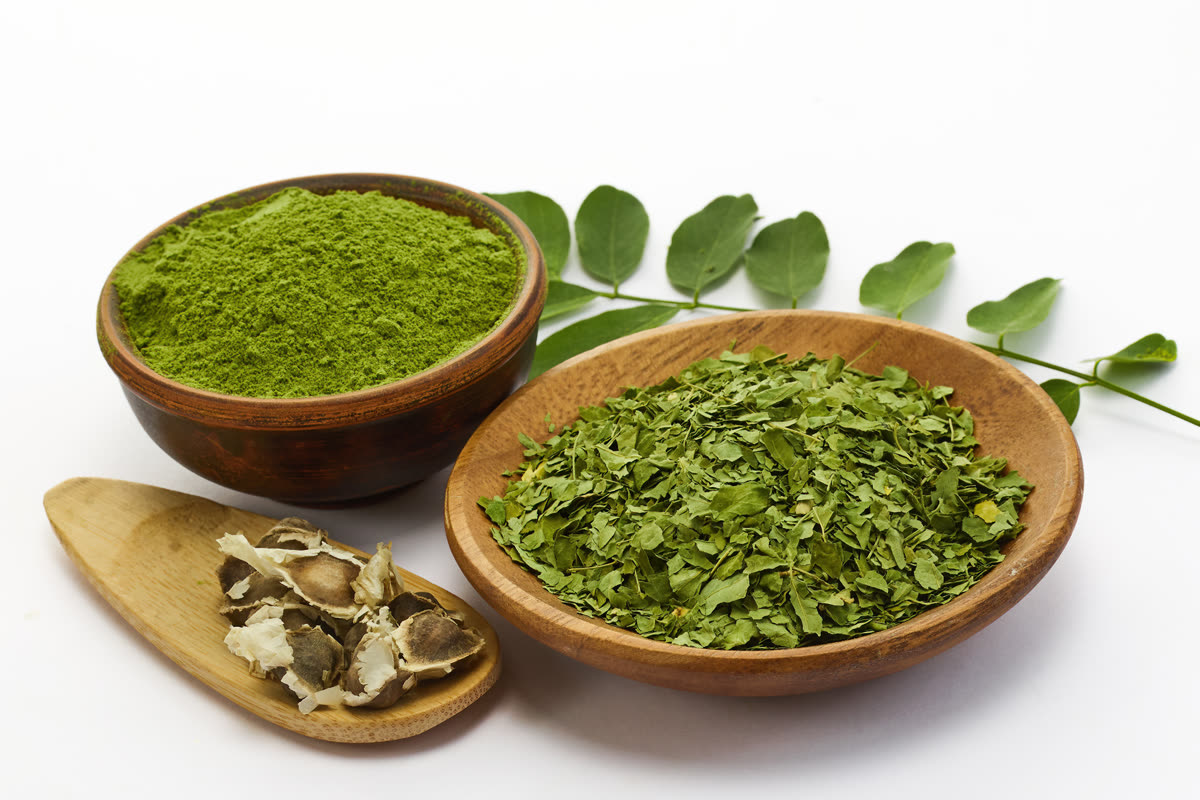
Moringa, the fast-growing “drumstick tree” of India and the tropics, gives cosmetics two quite different ingredients. Its seeds yield ben oil, a pale, very stable oil rich in oleic acid with a distinctive share of behenic acid, historically prized as a perfume base. Its leaves yield antioxidant extracts studied mostly in the laboratory, plus one small cream trial. Ben oil is a dependable emollient; the leaf extract is promising but far from proven.
Why people reach for it
- A remarkably stable emollient. Ben oil is mostly oleic acid with saturated long-chain fats and almost no polyunsaturates, so it resists rancidity — a long-lived base for balms, face oils and natural perfumes.
- Silky, cushioned feel. Behenic acid, a long saturated fatty acid named after ben oil itself, gives a slightly velvety, protective finish on dry skin, lips and hair ends.
- Antioxidant leaf extract. Moringa leaves are rich in flavonols and chlorogenic acid; extracts show antioxidant and anti-inflammatory activity in lab studies, and one small cream study reported smoother skin.
- Traditional perfume carrier. Because it is nearly odorless and slow to oxidize, ben oil has long been used to carry fragrance — still useful for natural oil perfumes (respect Essential Oil Safety: The Complete Guide limits).
How to use it
| Form | Typical use | Notes |
|---|---|---|
| Face oil, balm or lip care | 5–30% of an anhydrous formula; neat as a body or hair oil | A stable base that extends the life of blends containing fragile oils such as rosehip oil. |
| Natural oil perfume | As the carrier, with fragrance materials at levels within IFRA limits | Nearly odorless and slow to oxidize. Keep total essential oils within safe limits and use the Essential Oil Dilution Calculator. |
| Leaf extract in creams or serums | 0.5–3% (the published trial used 3%), per supplier | Water-based formulas need a broad-spectrum preservative; see DIY Safety: Water, Microbes & Preservatives. |
| Seed peptide extract | Per supplier, typically 0.5–2% | Marketed for “anti-pollution” claims; treat these as unproven. |
Use it safely
- Topical ben oil and leaf extracts are rarely irritating; patch test new products.
- Leaf powder and capsules (oral) may lower blood sugar and blood pressure in some studies; people on diabetes or blood-pressure medication should talk to their doctor before supplementing.
- Moringa root and bark contain potentially toxic alkaloids and are not for home use.
- Fresh leaf powder smells grassy and can tint pale formulas green.
Pregnancy and breastfeeding: Topical ben oil and leaf extracts raise no specific concerns. Avoid root and bark preparations, which have traditional abortifacient use, and discuss leaf supplements with your doctor or midwife.
New to an ingredient? Patch test first.
When to see a doctor
- Hair that breaks easily together with brittle nails, fatigue, heavy periods or feeling cold (possible iron deficiency or thyroid disease).
- Breakage in patches, or hair loss with scalp symptoms — it may not be breakage at all; see Thinning Hair & Hair Loss.
- Scalp burns, blisters or severe itching after relaxers, dyes or bleach.
- Hair that has always been fragile or breaks at a short length since childhood (possible hair shaft disorder).
Other plants for Dry, Damaged & Frizzy Hair
| Ingredient | Grade | What the evidence shows |
|---|---|---|
| Coconut Oil | C | Hair-fiber lab studies show coconut oil penetrates the shaft and reduces protein loss when used before and after washing — unlike mineral or sunflower oil; human trials are lacking. |
| Argan Oil | C | A lab study on dyed hair fibers found argan oil improved fiber quality after repeated coloring; supports its use as a finishing and pre-wash oil. |
| Shea Butter | D | A rich sealant that reduces frizz and adds softness, especially for coily hair; evidence is practical and traditional. |
| Olive Oil | D | Traditionally used across the Mediterranean as a pre-wash treatment; limited lab data suggest some penetration, less than coconut oil. |
| Marshmallow Root | D | Mucilage gives slip for detangling, popular in curly-hair routines; evidence is traditional and anecdotal. |
| Jojoba | D | A light liquid wax that adds shine without much weight, suiting fine hair; little formal evidence. |