The ingredient encyclopedia · oil
Moringa (Ben Oil)
Moringa oleifera Lam. (syn. Moringa pterygosperma Gaertn.) · Moringaceae
Pale, nearly scentless and famously slow to spoil: ben oil has carried perfumes since antiquity.
FR Moringa, huile de benES Moringa, aceite de benAR المورينغا؛ زيت البانDrumstick tree; sahjan (Hindi); murungai (Tamil); shigru (Sanskrit, Ayurveda)
- How well proven
- CPromising
- Safety
- Low topical risk
- Sun-sensitive
- No
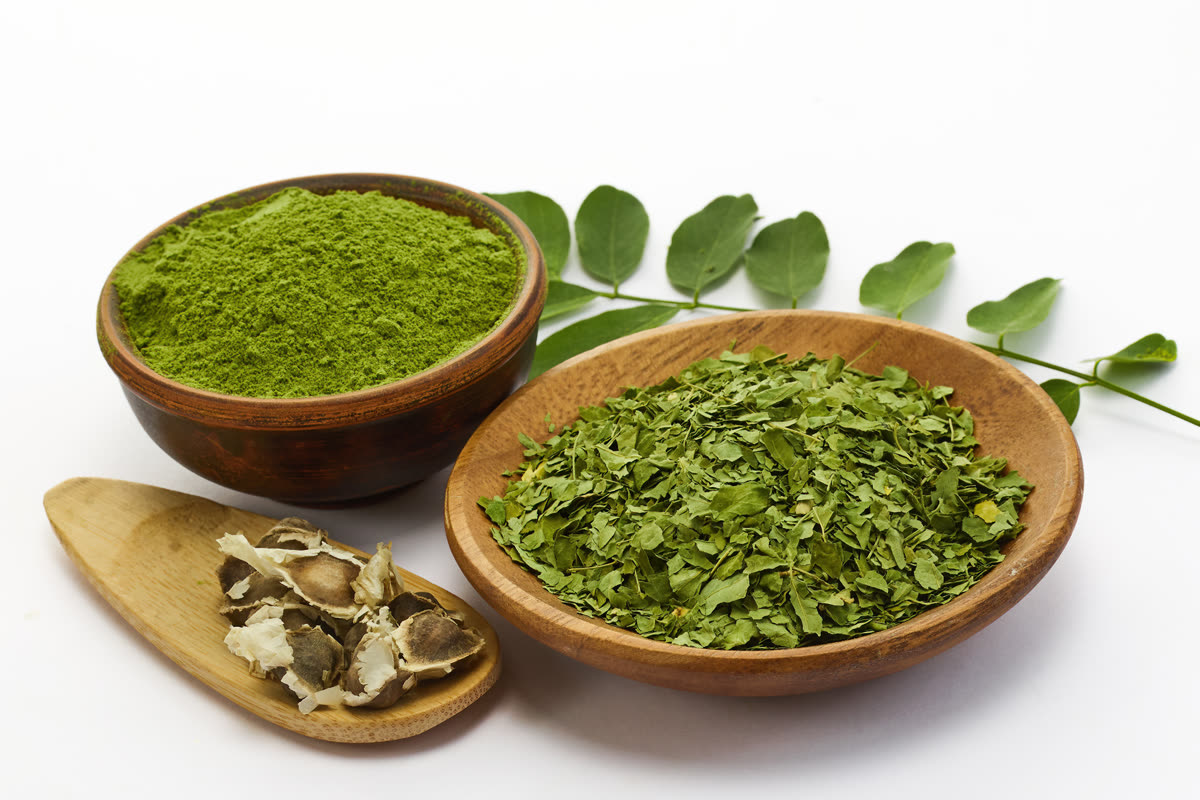
Also known as Moringa oleifera Lam. (syn. Moringa pterygosperma Gaertn.)
FR Moringa, huile de benES Moringa, aceite de benAR المورينغا؛ زيت البانDrumstick tree; sahjan (Hindi); murungai (Tamil); shigru (Sanskrit, Ayurveda)
What the evidence says
One small base-controlled study of a moringa leaf cream plus laboratory antioxidant data; ben oil’s emollient role rests on its composition rather than trials.
- What it does
- A remarkably stable emollient. Ben oil is mostly oleic acid with saturated long-chain fats and almost no polyunsaturates, so it resists rancidity — a long-lived base for balms, face oils and natural perfumes.
- How to use it
- Face oil, balm or lip care · 5–30% of an anhydrous formula; neat as a body or hair oil
- Watch out for
- Topical ben oil and leaf extracts are rarely irritating; patch test new products.
Checked against 1 cited study and our safety review · Updated 26 November 2026 · How we grade
Why you’ll love Moringa (Ben Oil)
Why you’ll love it
- A velvety, protective finish on dry skin, lips and ends
- Nearly odorless, so your favorite scents can shine
- Helps keep blends fresher when mixed with fragile oils like rosehip
Best forDry skin and lips, long-lasting face oils and homemade oil perfumes.
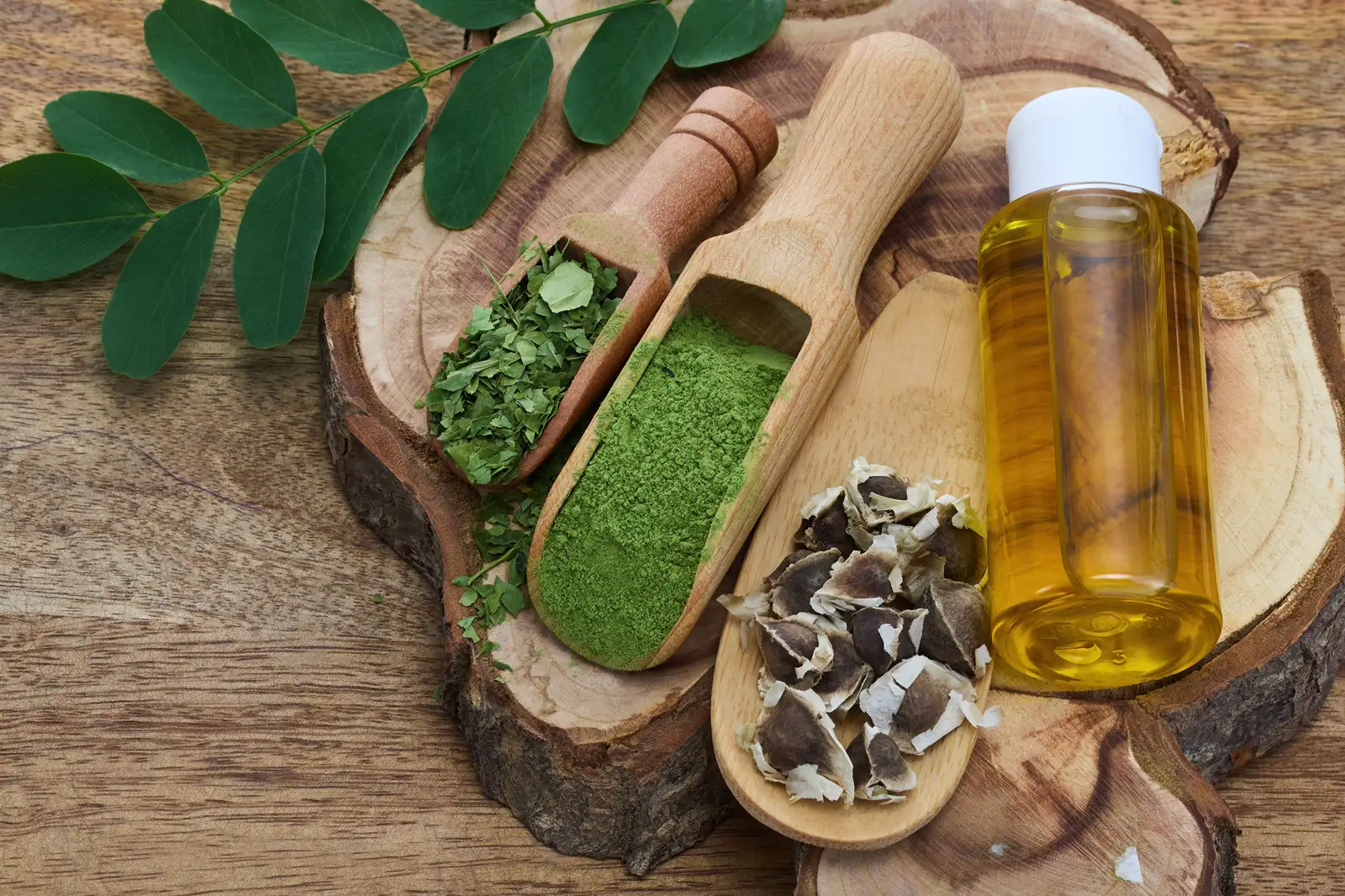
Try it today
A velvet hands-and-ends treat
- Patch test if your skin is reactive, then warm a few drops of ben oil between your palms.
- Press it into dry hands, elbows and cuticles before bed.
- Smooth any extra over dry hair ends, and store the bottle cool and dark.
Good to know: Ben oil and leaf extracts are gentle on skin, but moringa root and bark are not for home use. Thinking of supplements? Ask your doctor first.
At a glance
| Parts used | Seed oil (ben oil), cold-pressed; leaf extract and powder; seed protein extract |
|---|---|
| Key actives | Oleic acid, Behenic acid, Palmitic, stearic and arachidic acids, Tocopherols, Phytosterols, Leaf flavonols (quercetin and kaempferol glycosides), Chlorogenic acid, Glucosinolates and isothiocyanates (glucomoringin, moringin) |
| INCI names | Moringa Oleifera Seed Oil Moringa Pterygosperma Seed Oil Moringa Oleifera Leaf Extract Moringa Oleifera Seed Extract |
| Skin types | dry, normal, combination, mature |
| Hair & scalp | curly, thick, color treated |
| Pairs well with | Marula OilRosehip OilJojobaGreen Tea |
| Evidence grade | CPromising One small base-controlled study of a moringa leaf cream plus laboratory antioxidant data; ben oil’s emollient role rests on its composition rather than trials. |
What it does for skin and hair
A remarkably stable emollient
Ben oil is mostly oleic acid with saturated long-chain fats and almost no polyunsaturates, so it resists rancidity — a long-lived base for balms, face oils and natural perfumes.
Silky, cushioned feel
Behenic acid, a long saturated fatty acid named after ben oil itself, gives a slightly velvety, protective finish on dry skin, lips and hair ends.
Antioxidant leaf extract
Moringa leaves are rich in flavonols and chlorogenic acid; extracts show antioxidant and anti-inflammatory activity in lab studies, and one small cream study reported smoother skin.
Traditional perfume carrier
Because it is nearly odorless and slow to oxidize, ben oil has long been used to carry fragrance — still useful for natural oil perfumes (respect Essential Oil Safety: The Complete Guide limits).
How to use it
Start low, be consistent, and give it four to eight weeks. These are the amounts that work in real products and home recipes.
| Form | Typical use level | Notes |
|---|---|---|
| Face oil, balm or lip care | 5–30% of an anhydrous formula; neat as a body or hair oil | A stable base that extends the life of blends containing fragile oils such as rosehip oil. |
| Natural oil perfume | As the carrier, with fragrance materials at levels within IFRA limits | Nearly odorless and slow to oxidize. Keep total essential oils within safe limits and use the Essential Oil Dilution Calculator. |
| Leaf extract in creams or serums | 0.5–3% (the published trial used 3%), per supplier | Water-based formulas need a broad-spectrum preservative; see DIY Safety: Water, Microbes & Preservatives. |
| Seed peptide extract | Per supplier, typically 0.5–2% | Marketed for “anti-pollution” claims; treat these as unproven. |
Use it safely
Low topical risk
- Topical ben oil and leaf extracts are rarely irritating; patch test new products.
- Leaf powder and capsules (oral) may lower blood sugar and blood pressure in some studies; people on diabetes or blood-pressure medication should talk to their doctor before supplementing.
- Moringa root and bark contain potentially toxic alkaloids and are not for home use.
- Fresh leaf powder smells grassy and can tint pale formulas green.
- Pregnancy & breastfeeding
- Topical ben oil and leaf extracts raise no specific concerns. Avoid root and bark preparations, which have traditional abortifacient use, and discuss leaf supplements with your doctor or midwife. Pregnancy guide
- Phototoxicity
- Not phototoxic at normal use levels.
- Declared fragrance allergens
- None expected
New to an ingredient? Patch test first. Stop and seek advice if you get burning, swelling, blistering or a spreading rash.
Buying well
Sustainability
Moringa is fast-growing, drought-tolerant and widely cultivated across India, Africa and Southeast Asia, often by smallholders, and is not threatened. The main quality issue is not scarcity but inconsistency: leaf powders vary widely in quality and can carry microbial contamination if poorly dried. Look for traceable, smallholder-sourced material with microbial and heavy-metal testing. See Sustainable & Ethical Botanical Sourcing.
How to choose quality
Cold-pressed ben oil is pale yellow with a mild, slightly nutty smell; refined grades are nearly odorless. The INCI should be Moringa Oleifera Seed Oil (older labels may say Moringa Pterygosperma Seed Oil). Ben oil may cloud in the cold because of its long-chain saturated fats. For leaf extracts, ask whether the extract is standardized and what solvent was used. Store oil cool and dark; it keeps well for around two years.
The research For professionals
The chemistry, the studies and the evidence by concern, for practitioners, formulators and the curious.
Ben oil. Cold-pressed moringa seed oil typically contains around 65–75% oleic acid, roughly 5–7% behenic acid (C22:0), similar amounts of palmitic and stearic acid, a few percent of arachidic and gondoic acids, and very little linoleic acid. This high-oleic, low-polyunsaturated profile, supported by tocopherols, gives it oxidative stability comparable to high-oleic sunflower oil and marula oil. Behenic acid takes its name from ben oil; it contributes a slightly waxy, protective skin feel and is used in its own right as a thickener and conditioning agent.
Leaf extract. Moringa leaves are rich in flavonol glycosides (quercetin and kaempferol), chlorogenic acid, carotenoids and glucosinolates, especially glucomoringin, which yields the isothiocyanate moringin when the leaf is crushed. In the laboratory these compounds scavenge free radicals and dampen inflammatory signaling. Human evidence is limited: a small single-blind study (Ali and colleagues, 2014) in a small group of healthy male volunteers reported that a cream with 3% moringa leaf extract, used for three months, improved instrumental measures of skin-surface texture compared with the base cream. Small numbers, one group and no independent replication keep the grade at C.
Seed protein. Moringa seed proteins bind and settle particles, which is why crushed seeds are used to clarify drinking water in parts of Africa and Asia. Peptide extracts derived from them are marketed in cosmetics as “anti-pollution” ingredients, with evidence mostly from manufacturer testing.
Key studies
Small single-blind, base-controlled study in healthy male volunteers: a cream with 3% moringa leaf extract applied for 3 months improved instrumental skin-surface measures (such as roughness and smoothness) versus base. Very small and from one research group.
Ali A, Akhtar N, Chowdhary F. Postepy Dermatol Alergol. 2014 Read it in the bibliography Find on PubMed
MythMoringa is a “miracle tree” with more vitamins than any food.
EvidenceMoringa leaves are genuinely nutritious, but headline comparisons usually set dried leaf powder against fresh fruit and vegetables gram for gram, which inflates the numbers. For skin, what matters is formulation and evidence, and both are still modest.
In tradition
In India the pods (drumsticks) are cooked in South Indian sambar, and Ayurveda describes moringa as shigru. Ben oil, pressed from moringa seeds including those of the Arabian Moringa peregrina (al-bān), was valued in the ancient Mediterranean and Arab world as a perfume base that did not turn rancid.
Frequently asked questions
What is ben oil?
Is moringa oil good for hair?
Does moringa help with wrinkles?
Can I put moringa powder on my face?
Cite this page
Herbs.Beauty. Moringa (Ben Oil) (Moringa oleifera Lam.): evidence-based monograph. Updated 26 November 2026. https://herbs.beauty/ingredients/moringa.html