Does it work?
Neem for Dandruff & Itchy Scalp
What the research says about neem for dandruff & itchy scalp, how to use it at home and how to stay safe.
The short answer: Antifungal activity in the lab and traditional Ayurvedic use; no good human trials for dandruff.
What it does
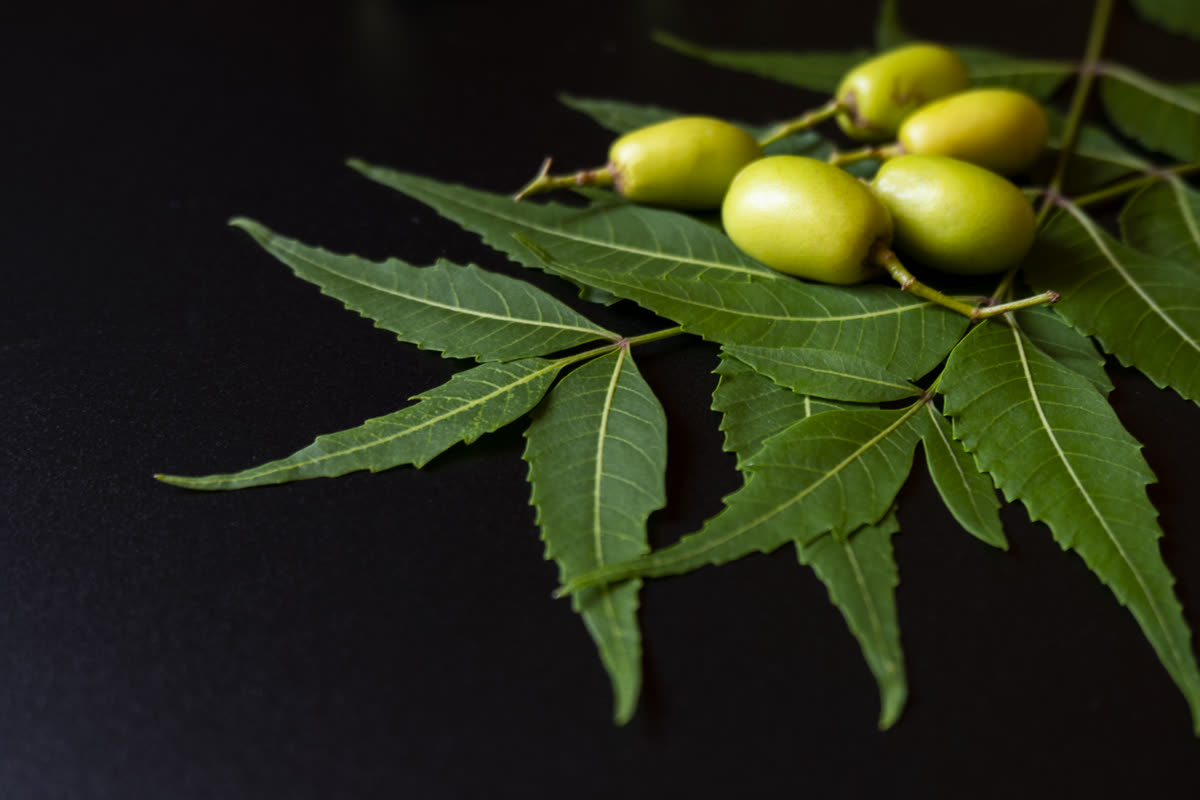
Neem is the “village pharmacy” tree of India. Its pungent seed oil and leaf extracts contain bitter limonoids with antibacterial, antifungal and insecticidal activity in the lab, which is why neem appears in products for blemish-prone skin, dandruff and head lice. Human cosmetic evidence is very limited. Neem oil is toxic if swallowed, with serious poisonings reported in young children.
Why people reach for it
- Antimicrobial activity. Neem leaf and seed extracts inhibit acne bacteria, Staphylococcus and some fungi in lab studies, supporting its traditional use for blemishes and scalp flaking.
- Rich, conditioning oil. Neem seed oil is high in oleic, stearic and palmitic acids, giving a rich, protective feel in balms and pre-wash scalp oils — at low percentages, given the smell.
- Traditional scalp and lice care. Neem seed extracts are insecticidal, and neem shampoos have shown activity against head lice in small studies. Use licensed lice products as directed.
How to use it
| Form | Typical use | Notes |
|---|---|---|
| Neem seed oil in balms and body oils | 1–10% of the oil phase | Start low because of the strong smell; blend with lighter oils such as jojoba. Warm gently if it has solidified. |
| Pre-wash scalp oil | 5–10% in a carrier oil | Massage into the scalp, leave 30–60 minutes, then shampoo twice. Patch test first. |
| Neem leaf extract or powder | Extract 0.5–3%; powder in fresh masks (1–2 teaspoons per use) | Leaf preparations are less pungent than the oil. Combine with clay or turmeric in a single-use mask; aqueous products need a preservative. |
Use it safely
- Never swallow neem oil, and never give it to children by mouth. Oral neem oil has caused vomiting, drowsiness, seizures, metabolic acidosis and Reye’s-like encephalopathy in infants and young children, sometimes fatally. Store it out of children’s reach.
- Allergic contact dermatitis to neem oil has been reported, sometimes severe. Patch test before scalp or face use (How to Patch Test).
- Neem is not a reliable treatment for scabies or lice on its own; use licensed treatments and see a doctor if symptoms persist or spread.
- Its strong odor can linger on hair and fabric; low percentages and thorough washing help.
Pregnancy and breastfeeding: Avoid oral neem in pregnancy and breastfeeding — it has traditional and animal-study associations with reduced fertility and pregnancy loss. Topical use on small areas is likely low risk, but safety data are limited.
New to an ingredient? Patch test first.
When to see a doctor
- Thick, silvery plaques, especially extending beyond the hairline or with plaques elsewhere (possible psoriasis).
- Patches of hair loss, broken hairs or swollen glands in the neck, particularly in a child (possible fungal infection).
- Oozing, crusting, pain or a boggy swelling (kerion) on the scalp.
- A sudden, severe or widespread seborrheic dermatitis, which can occasionally signal an underlying condition.
- An itchy, red, swollen scalp after hair dyeing (possible allergy — seek care urgently if the face swells).
- No improvement after 4–6 weeks of correctly used medicated shampoo.
Other plants for Dandruff & Itchy Scalp
| Ingredient | Grade | What the evidence shows |
|---|---|---|
| Tea Tree | B | A randomized, placebo-controlled trial of 5% tea tree oil shampoo improved dandruff severity, itch and greasiness over four weeks. |
| Aloe Vera | C | A small double-blind trial found an aloe emulsion reduced scaling and itch in seborrheic dermatitis. |
| Honey | C | A small uncontrolled study of diluted crude honey applied to seborrheic dermatitis reported reduced itch and scaling; needs confirmation. |
| Rosemary | D | Antimicrobial in vitro and used traditionally in scalp rinses; no clinical dandruff data. |
| Black Seed Oil | D | Thymoquinone shows antifungal activity in the lab; as an oil it may also feed Malassezia, so evidence is uncertain. |