Does it work?
Black Seed Oil for Dandruff & Itchy Scalp
What the research says about black seed oil for dandruff & itchy scalp, how to use it at home and how to stay safe.
The short answer: Thymoquinone shows antifungal activity in the lab; as an oil it may also feed Malassezia, so evidence is uncertain.
What it does
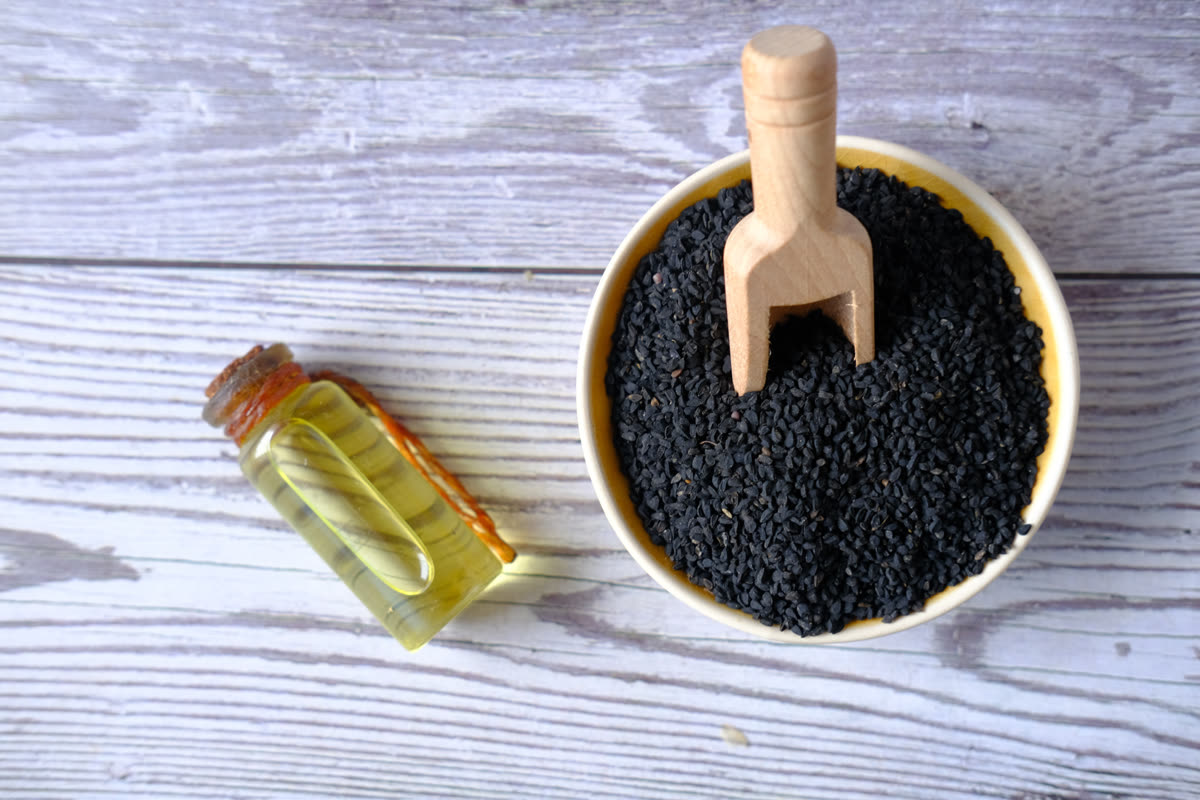
Black seed oil, pressed from the seeds of Nigella sativa, is a revered remedy across the Islamic world, South Asia and North Africa. Its fatty-acid base is linoleic-rich, while its small aromatic fraction — chiefly thymoquinone — is anti-inflammatory and antimicrobial in the lab. Small trials suggest benefits for hand eczema and acne, but thymoquinone is also a skin sensitizer, and allergic reactions have been reported.
Why people reach for it
- Anti-inflammatory potential. Thymoquinone dampens inflammatory signaling in lab models; a small trial in hand eczema reported improvement comparable to a topical steroid.
- Antimicrobial activity. Active in vitro against acne bacteria, staphylococci and Malassezia yeasts — a rationale, not proof, for acne-prone skin and scalp care.
- Linoleic-rich base. Around half linoleic acid, giving a light, non-greasy feel suitable for oilier skin in diluted blends.
How to use it
| Form | Typical use | Notes |
|---|---|---|
| Face or spot oil | 5–10% in a light carrier oil | Never neat on the face or on broken skin. Patch test as in our guide: twice daily for 7 days, read at 48 and 96 hours. |
| Scalp oil | 5–15% of a scalp-oil blend | Pre-wash only; shampoo out. Stop if itching or redness develops. |
| Creams and ointments | 1–10% of a formula | Thymoquinone is light-sensitive; use opaque packaging. |
| Food and supplements | Culinary amounts of seed are safe | Oral oil or capsules can affect blood sugar and blood pressure and may interact with medicines — speak to a pharmacist. |
Use it safely
- Thymoquinone is a recognized skin sensitizer; allergic contact dermatitis, including severe or blistering reactions, is reported. Patch test and dilute.
- Avoid on eczema that is broken, weeping or infected — see a doctor instead.
- Keep away from the eyes and mucous membranes; it stings.
- Oral black seed products may lower blood glucose and blood pressure and may interact with diabetes, blood-pressure and anticoagulant medicines.
Pregnancy and breastfeeding: Culinary use of the seed is fine. Avoid medicinal oral doses in pregnancy; for topical use, prefer short-term, diluted use on small areas, or avoid it, given its sensitizing potential.
New to an ingredient? Patch test first.
When to see a doctor
- Thick, silvery plaques, especially extending beyond the hairline or with plaques elsewhere (possible psoriasis).
- Patches of hair loss, broken hairs or swollen glands in the neck, particularly in a child (possible fungal infection).
- Oozing, crusting, pain or a boggy swelling (kerion) on the scalp.
- A sudden, severe or widespread seborrheic dermatitis, which can occasionally signal an underlying condition.
- An itchy, red, swollen scalp after hair dyeing (possible allergy — seek care urgently if the face swells).
- No improvement after 4–6 weeks of correctly used medicated shampoo.
Other plants for Dandruff & Itchy Scalp
| Ingredient | Grade | What the evidence shows |
|---|---|---|
| Tea Tree | B | A randomized, placebo-controlled trial of 5% tea tree oil shampoo improved dandruff severity, itch and greasiness over four weeks. |
| Aloe Vera | C | A small double-blind trial found an aloe emulsion reduced scaling and itch in seborrheic dermatitis. |
| Honey | C | A small uncontrolled study of diluted crude honey applied to seborrheic dermatitis reported reduced itch and scaling; needs confirmation. |
| Neem | D | Antifungal activity in the lab and traditional Ayurvedic use; no good human trials for dandruff. |
| Rosemary | D | Antimicrobial in vitro and used traditionally in scalp rinses; no clinical dandruff data. |