Does it work?
Sea Buckthorn for Scars, Wounds & Stretch Marks
What the research says about sea buckthorn for scars, wounds & stretch marks, how to use it at home and how to stay safe.
The short answer: Small oral trials (e.g. in atopic dermatitis) and lab and animal wound data; topical human trials are scarce.
Our Scars, Wounds & Stretch Marks guide does not rank Sea Buckthorn for this use yet, so this is the overall grade for Sea Buckthorn.
What it does
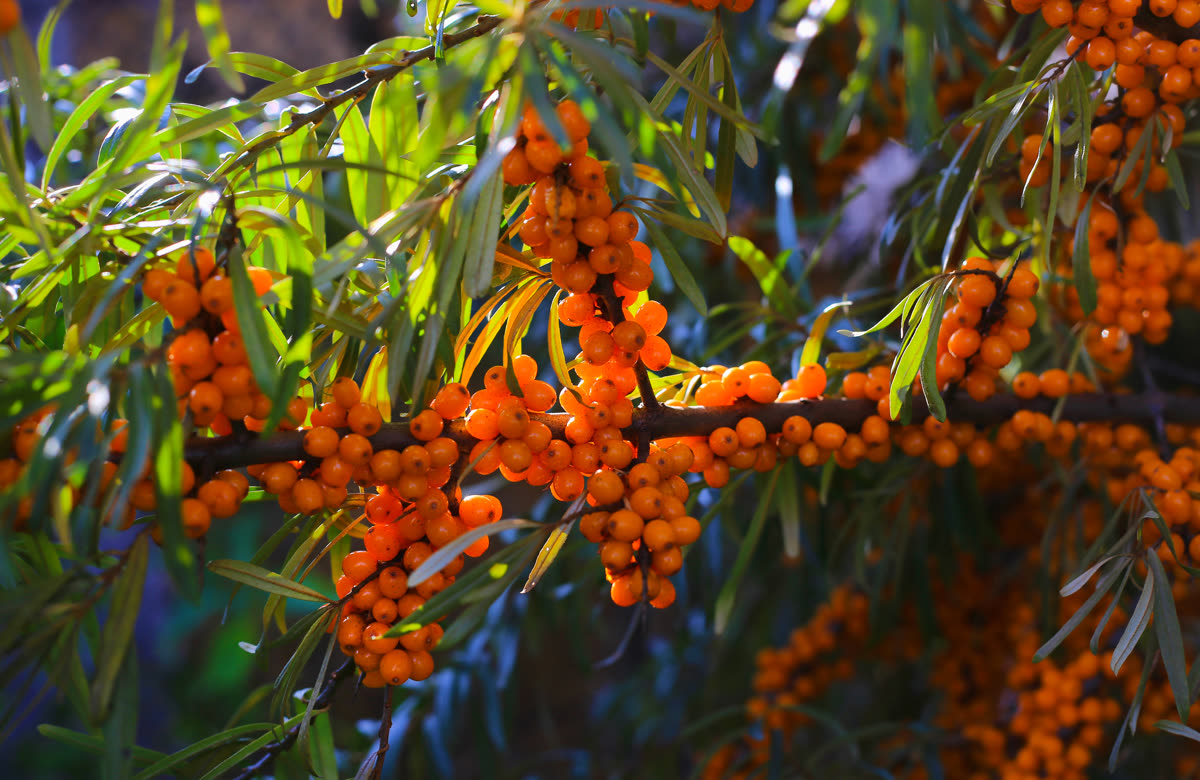
Sea buckthorn is a thorny shrub whose bright orange berries yield two very different oils: a deep orange pulp oil rich in palmitoleic acid (omega-7) and carotenoids, and a pale seed oil rich in omega-3 and omega-6. Both are used in skin care, mostly in small amounts because the pulp oil stains. Human evidence is limited, coming mainly from oral studies.
Why people reach for it
- Rich in carotenoids and antioxidants. The pulp oil’s carotenoids and tocopherols give its color and help protect skin lipids from oxidation in lab models.
- Comfort for dry, stressed skin. Used at low levels in face oils and balms for dry and weathered skin.
- Traditional wound and burn care. Long used in Russian and Central Asian practice on burns and healed scars; animal studies support wound-healing effects, human data are limited.
- Two oils, two profiles. Seed oil provides essential fatty acids for the barrier; pulp oil provides omega-7 and pigments — together they make a well-rounded blend.
How to use it
| Form | Typical use | Notes |
|---|---|---|
| Pulp/fruit oil in face oils | 0.5–5% of a blend | Higher levels stain skin, towels and pillowcases orange. See Rosehip & Sea Buckthorn Glow Oil. |
| Seed oil | 5–20% of a face oil or cream | Pale and non-staining; very polyunsaturated, so add tocopherol and refrigerate. |
| Balms | 1–3% pulp oil | Gives a natural golden tint and carotenoid content to healing or lip balms. |
| Oral supplements | As directed on standardized capsules | Discuss with a doctor if you take anticoagulants or have upcoming surgery. |
Recipes for Scars, Wounds & Stretch Marks with Sea Buckthorn
Daily rituals with Sea Buckthorn
Use it safely
- Pulp oil stains: undiluted, it can temporarily tint skin orange and permanently mark fabrics.
- Allergic reactions are uncommon; patch test, especially on sensitive skin.
- Seed oil oxidizes quickly; rancid oil irritates. Buy small and refrigerate.
- It is not a sunscreen — see Sun Care & After-Sun.
Pregnancy and breastfeeding: Topical use is considered safe in pregnancy and breastfeeding. Oral supplements have not been studied in pregnancy; food amounts are fine.
New to an ingredient? Patch test first.
When to see a doctor
- Signs of infection: spreading redness or warmth, red streaks, increasing pain or swelling, pus, a bad smell, or fever.
- Deep, gaping or long cuts, wounds on the face, hands or joints, or bleeding that does not stop with 10 minutes of firm pressure — stitches work best within hours.
- Animal or human bites, puncture wounds, dirty wounds, or if your tetanus vaccination is not up to date.
- Burns larger than your palm, or any burn on the face, hands, feet, genitals or over joints, or with white, leathery or charred skin.
- Wounds not healing within two weeks, especially if you have diabetes, poor circulation or a weakened immune system.
- A scar that keeps growing beyond its edges, is painful or itchy (possible keloid), or an old scar that ulcerates, bleeds or changes.
- New, wide purple stretch marks together with weight gain, a rounded face, easy bruising or muscle weakness.
Other plants for Scars, Wounds & Stretch Marks
| Ingredient | Grade | What the evidence shows |
|---|---|---|
| Honey | B | Systematic reviews suggest sterile, medical-grade honey dressings heal partial-thickness burns faster than some conventional dressings, though trial quality varies; kitchen honey is not for open wounds. |
| Aloe Vera | B | Several trials and a systematic review suggest aloe preparations may shorten healing time of superficial burns; evidence for surgical wounds is inconclusive. |
| Centella Asiatica (Cica) | B | Asiaticoside and madecassoside promote collagen organization; small trials (mostly of combination creams) support use for stretch-mark prevention and scar appearance. |
| Calendula | C | Small trials suggest benefit for skin reactions to radiotherapy and minor wounds; daisy-family allergy is possible. |
| Rosehip Oil | C | A small controlled study suggested rosehip oil improved the color and appearance of post-surgical scars after the wound had closed. |
| Helichrysum (Immortelle) | D | Popular in aromatherapy for scars, but evidence is anecdotal or from lab studies; as an essential oil it must be diluted and never used on open wounds. |
| Olive Oil | D | Trials of massaging plain oils, including olive oil, in pregnancy have not shown clear prevention of stretch marks; massage itself is harmless and pleasant. |