Does it work?
Henna for Dry, Damaged & Frizzy Hair
Pure henna paints hair in glowing copper and red, a slow, ancient ritual of color and shine.
The short answer: Its dyeing action is chemically well characterized and reliable; claims beyond color (strengthening, growth, anti-dandruff) are traditional or lab-based only.
Our Dry, Damaged & Frizzy Hair guide does not rank Henna for this use yet, so this is the overall grade for Henna.
What Henna can do for Dry, Damaged & Frizzy Hair
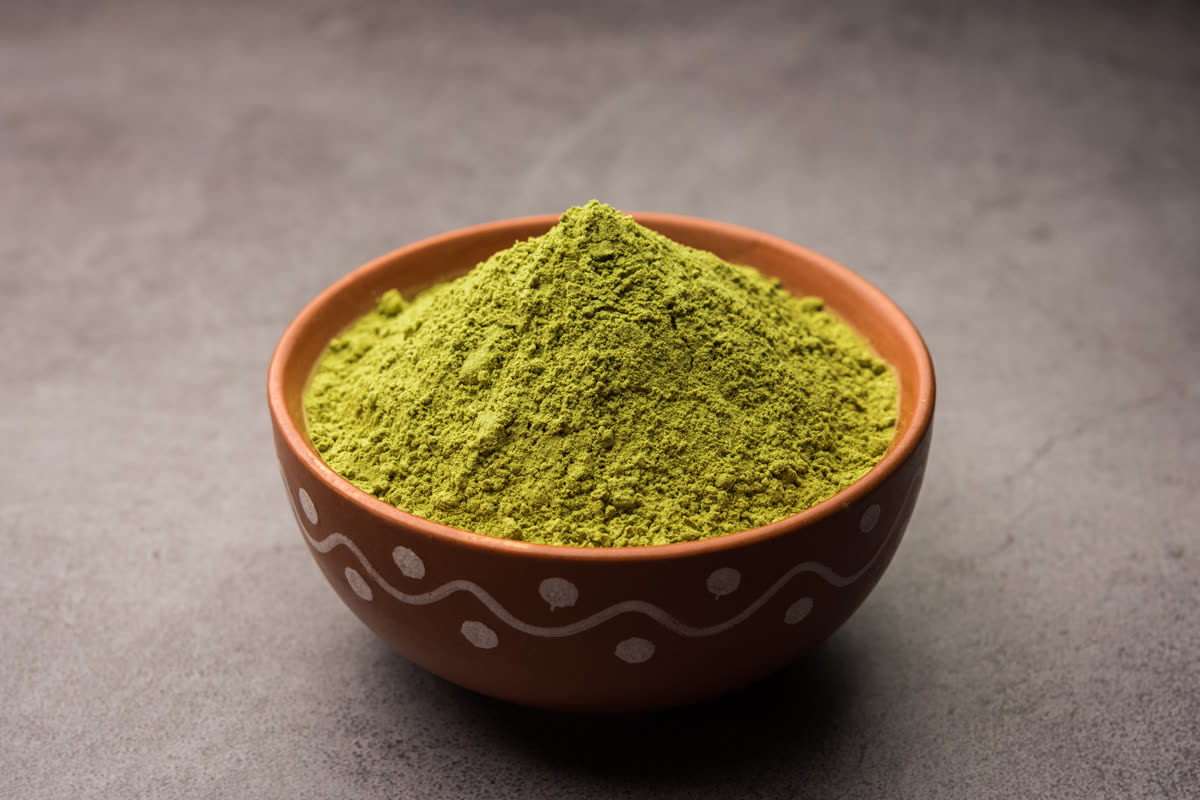
Henna is the powdered leaf of Lawsonia inermis, used for thousands of years to stain hair, hands and feet red-orange. Its dye, lawsone, binds permanently to the keratin in hair and skin. Pure henna is generally safe for adults, but two hazards matter: “black henna,” which is often spiked with the hair-dye chemical PPD and can cause severe reactions and lifelong allergy, and henna use on babies with G6PD deficiency, which can trigger dangerous anemia.
Why people reach for it
- Permanent red-to-copper color. Lawsone binds to hair keratin, giving lasting color that deepens over 48 hours and does not wash out; it fades only slightly over time.
- Adds body and shine. The coating effect can make fine hair feel thicker and glossier; some people with dry or curly hair find it drying and follow with a rich conditioner.
- Gray coverage (with patience). On gray hair pure henna gives bright orange-copper; mixing or following with indigo produces browns to black.
- Ceremonial body art. On skin, fresh pure henna paste gives a temporary orange-brown stain lasting one to three weeks.
How to use it
Try it today
A henna strand test
- Patch test pure, body-art-quality henna on your skin before first use: twice daily for 7 days, read at 48 and 96 hours.
- Mix a spoonful with a mildly acidic liquid, let the dye release, then paint a hidden strand.
- Rinse, let the color deepen over a day or two, then decide on a full application.
| Form | Typical use | Notes |
|---|---|---|
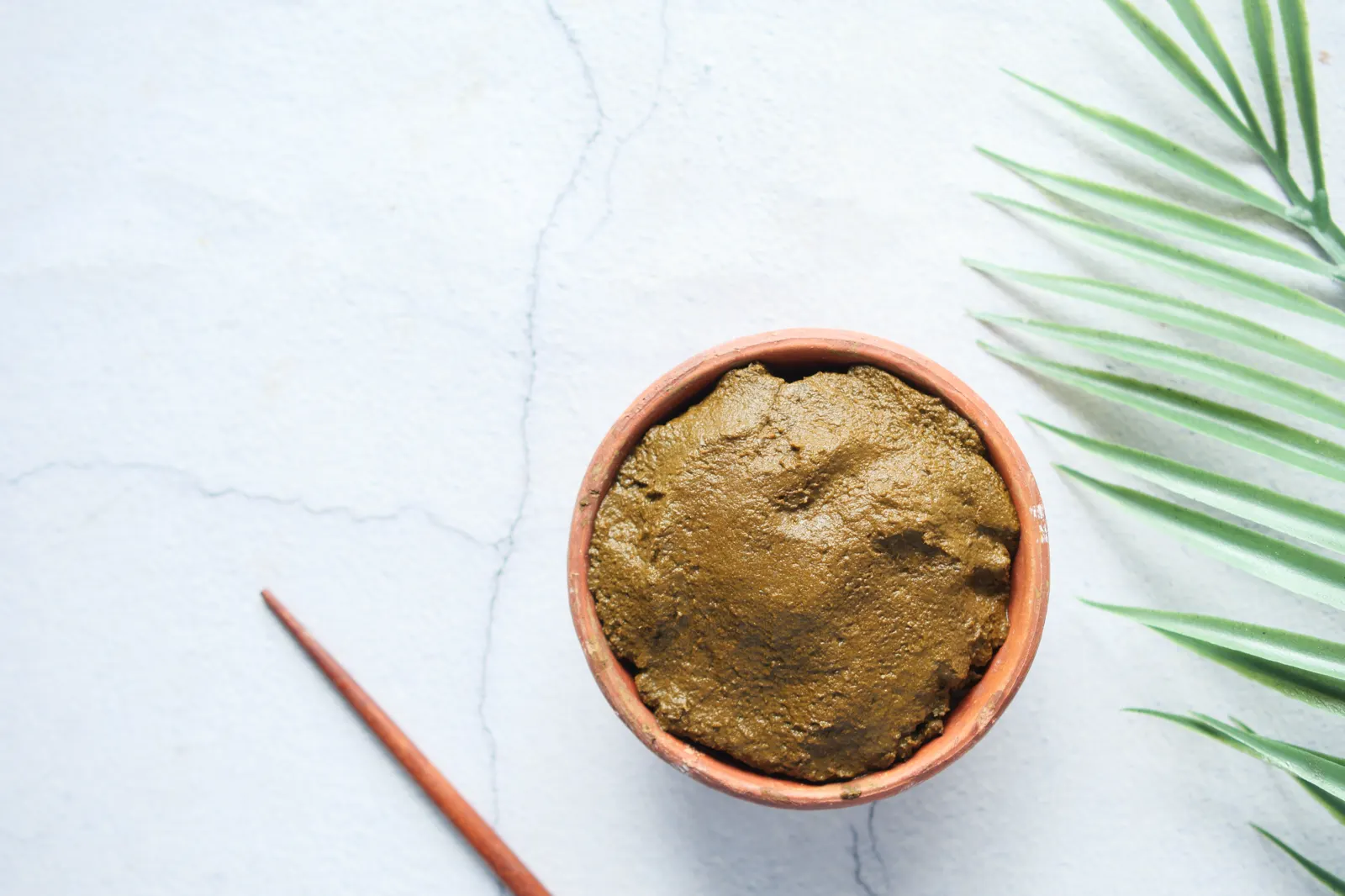
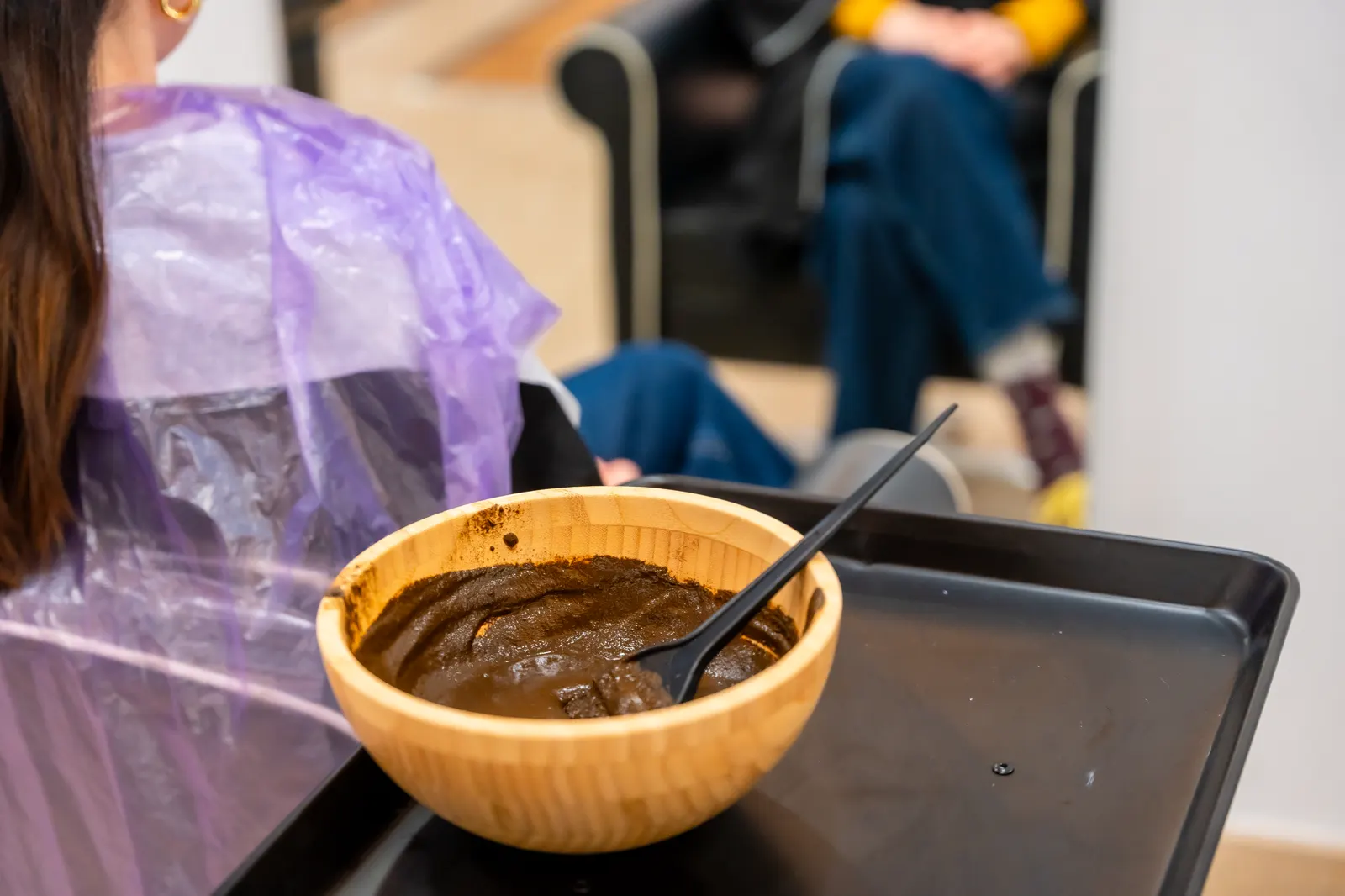
| Hair color paste | 100 g body-art-quality powder for shoulder-length hair (mixed to a yogurt-like paste) | Mix with a mildly acidic liquid, let dye release 4–12 h at room temperature, apply to clean hair for 2–4 h, then rinse. Color oxidizes and deepens over 1–2 days. See Pure Henna Hair Color. |
| Henna + indigo (browns to black) | From 2:1 to 1:2 henna:indigo, or a two-step process | Indigo (Indigofera tinctoria) is what makes natural henna dark, not chemicals. Do a strand test first. |
| Gloss or conditioning treatment | 10–30% henna in a mask with amla (Indian gooseberry) | Amla tones down red; shorter applications give subtler color, but some color is always deposited on light hair. |
| Body art (mehndi) | Fine-sifted pure powder; essential oil “terps” at ≤ about 2–3% of the paste | Use oils rich in monoterpene alcohols sparingly; more is not better and increases irritation. Never use paste of unknown composition or any “black” paste. |
Recipes for Dry, Damaged & Frizzy Hair with Henna
Daily rituals with Henna
Use it safely
- Never use “black henna.” It is frequently adulterated with PPD and can cause blistering, scarring and lifelong allergy to hair dyes. If a temporary tattoo itches, burns or blisters, wash it off and see a doctor.
- Do not apply henna to infants or young children, particularly if G6PD deficiency is possible; it can cause severe hemolysis (signs: pallor, dark urine, jaundice, lethargy — seek urgent care).
- Avoid “compound” henna with metallic salts. Strand-test before bleaching, perming or using oxidative dye over henna, and tell your colorist you have used it.
- Patch test pure henna before first use, as in our guide (twice daily for 7 days, read at 48 and 96 hours); reactions to pure henna are rare but possible. Wear gloves and avoid inhaling the dust.
Pregnancy and breastfeeding: Pure henna has a long tradition of use in pregnancy and absorption through skin is low; avoid black henna and any product with added PPD or unknown ingredients.
New to an ingredient? Patch test first.
When to see a doctor
- Hair that breaks easily together with brittle nails, fatigue, heavy periods or feeling cold (possible iron deficiency or thyroid disease).
- Breakage in patches, or hair loss with scalp symptoms — it may not be breakage at all; see Thinning Hair & Hair Loss.
- Scalp burns, blisters or severe itching after relaxers, dyes or bleach.
- Hair that has always been fragile or breaks at a short length since childhood (possible hair shaft disorder).
Other plants for Dry, Damaged & Frizzy Hair
| Ingredient | Grade | What the evidence shows |
|---|---|---|
| Coconut Oil | C | Hair-fiber lab studies show coconut oil penetrates the shaft and reduces protein loss when used before and after washing — unlike mineral or sunflower oil; human trials are lacking. |
| Argan Oil | C | A lab study on dyed hair fibers found argan oil improved fiber quality after repeated coloring; supports its use as a finishing and pre-wash oil. |
| Shea Butter | D | A rich sealant that reduces frizz and adds softness, especially for coily hair; evidence is practical and traditional. |
| Olive Oil | D | Traditionally used across the Mediterranean as a pre-wash treatment; limited lab data suggest some penetration, less than coconut oil. |
| Marshmallow Root | D | Mucilage gives slip for detangling, popular in curly-hair routines; evidence is traditional and anecdotal. |
| Jojoba | D | A light liquid wax that adds shine without much weight, suiting fine hair; little formal evidence. |