The ingredient encyclopedia · flower
Helichrysum (Immortelle)
Helichrysum italicum (Everlasting, curry plant) · Asteraceae
Golden immortelle from Mediterranean hillsides has a warm, honeyed scent and a long history in bruise care.
FR Immortelle d’ItalieES Siempreviva (perpetua)AR زهرة الخلود
- How well proven
- DTraditional wisdom
- Safety
- Low topical risk
- Sun-sensitive
- No
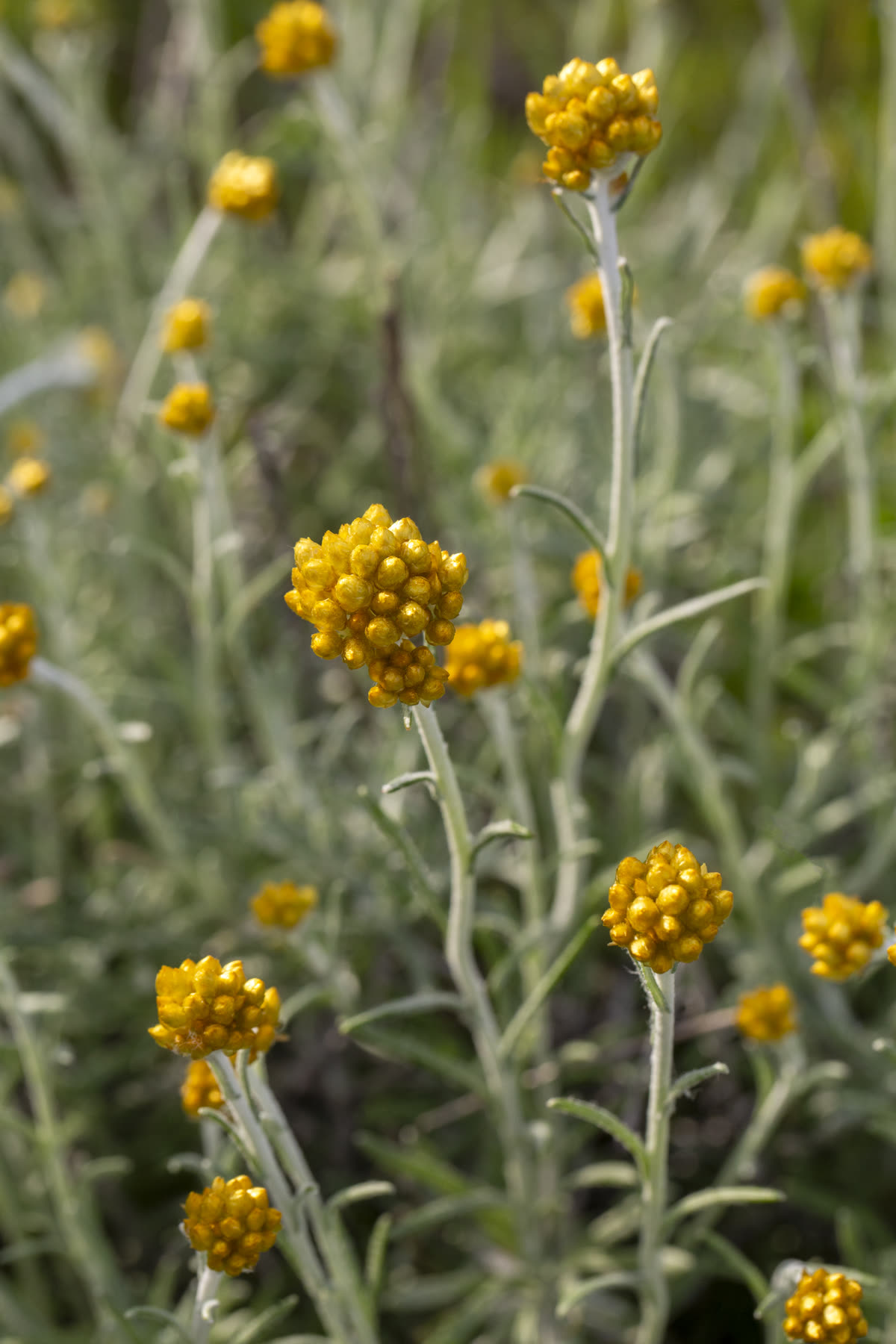
Also known as Helichrysum italicum (Everlasting, curry plant)
FR Immortelle d’ItalieES Siempreviva (perpetua)AR زهرة الخلود
What the evidence says
Anti-inflammatory, antioxidant and antimicrobial activity is shown in vitro and in animals; there are no meaningful controlled human trials for skin.
- Best supported for
- Scars, Wounds & Stretch Marks D
- How to use it
- Essential oil in facial oil or serum · 0.25–1%
- Watch out for
- People allergic to daisy-family plants (Asteraceae: ragweed, chamomile, arnica, calendula) may react; patch test first.
Checked against the available literature and our safety review · Updated 26 November 2026 · How we grade
Why you’ll love Helichrysum (Immortelle)
Why you’ll love it
- A distinctive, sun-warmed scent unlike any other oil
- A traditional Mediterranean favorite for bruises and scars
- A little goes a long way in a facial oil
Best forMediterranean-botanical lovers wanting a traditional bruise balm or scented face oil.
Try it today
A simple immortelle bruise balm
- Patch test first, especially if daisy-family plants bother you.
- Blend helichrysum essential oil at 1–2% into a soft butter such as shea.
- Smooth a little over bruised, unbroken skin, never on open wounds.
Good to know: Loved for centuries, still being studied. See a doctor for bruises that appear without injury, are very large or keep coming back.
At a glance
| Parts used | Flowering tops; essential oil (steam-distilled); extracts; hydrosol |
|---|---|
| Key actives | Neryl acetate, γ-Curcumene, α-Pinene, Italidiones (β-diketones), Arzanol (in extracts), Flavonoids |
| INCI names | Helichrysum Italicum Flower Oil Helichrysum Italicum Flower Extract |
| Skin types | mature, dry, normal |
| Pairs well with | Rosehip OilFrankincenseCalendulaLavender |
| Evidence grade | DTraditional wisdom Anti-inflammatory, antioxidant and antimicrobial activity is shown in vitro and in animals; there are no meaningful controlled human trials for skin. |
What it does for skin and hair
Anti-inflammatory compounds (lab data)
Arzanol and other phloroglucinols from the plant inhibit inflammatory signaling (NF-κB, prostaglandin pathways) in cell studies.
Traditional bruise and scar oil
Aromatherapists use it in balms for bruises and healing scars; this is tradition and anecdote, not trial evidence. See Scars, Wounds & Stretch Marks.
Antioxidant protection
Extracts and flavonoids show antioxidant activity that may help protect formula oils and skin lipids from oxidation.
Distinctive natural fragrance
Honeyed, herbaceous and slightly spicy, it blends well with citrus and resin notes in facial oils.
How to use it
Start low, be consistent, and give it four to eight weeks. These are the amounts that work in real products and home recipes.
| Form | Typical use level | Notes |
|---|---|---|
| Essential oil in facial oil or serum | 0.25–1% | A little goes a long way; pair with rosehip oil or jojoba. |
| Body or bruise balm | 1–2% essential oil | For intact skin only; combine with soothing butters such as shea butter. |
| Hydrosol (flower water) | As a toner or 10–50% of the water phase | Hydrosols spoil: buy preserved, refrigerate after opening, or preserve your formula. See DIY Safety: Water, Microbes & Preservatives. |
Use it safely
Low topical risk
- People allergic to daisy-family plants (Asteraceae: ragweed, chamomile, arnica, calendula) may react; patch test first.
- Dilute the essential oil; neat application can irritate. See Essential Oil Safety: The Complete Guide.
- Do not use on open wounds; see a doctor for bruises that appear without injury, are very large or keep recurring.
- Pregnancy & breastfeeding
- No specific hazards are documented at low dilution, but safety data are limited; many practitioners avoid it in the first trimester. Keep to ≤1% if used. Pregnancy guide
- Phototoxicity
- Not phototoxic at normal use levels.
- Declared fragrance allergens
- Limonene, Linalool
New to an ingredient? Patch test first. Stop and seek advice if you get burning, swelling, blistering or a spreading rash.
Buying well
Sustainability
Much helichrysum is wild-harvested in Corsica and the Balkans (Croatia, Bosnia and Herzegovina). Demand spikes have led to over-harvesting, uprooting and price volatility. Prefer certified organic cultivated sources or suppliers that document sustainable wild-collection.
How to choose quality
Look for H. italicum (not just “helichrysum,” since other species are sold under the name), origin, distillation date and a GC-MS report. Very cheap “immortelle” is frequently diluted or cut. Store cold and dark.
The research For professionals
The chemistry, the studies and the evidence by concern, for practitioners, formulators and the curious.
Helichrysum italicum essential oil varies a great deal with origin and subspecies, but typical Corsican and Balkan oils contain neryl acetate, γ-curcumene, α-pinene, limonene and characteristic β-diketones called italidiones. The solvent extracts contain non-volatile compounds absent from the oil, notably arzanol (a prenylated phloroglucinol α-pyrone) and flavonoids.
Arzanol is the best-studied molecule: in cell and animal experiments it inhibits NF-κB activation, microsomal prostaglandin E2 synthase-1 and 5-lipoxygenase, and shows antioxidant activity. The essential oil shows antimicrobial activity in vitro. These are plausible mechanisms for the plant’s reputation, but no controlled human study has shown that helichrysum reduces bruising, scars or redness.
Because the oil is costly, adulteration is common, and composition differs widely between batches, results from one oil cannot be assumed for another.
Evidence by concern
| Concern | Grade | What the evidence shows |
|---|---|---|
| Scars, Wounds & Stretch Marks | D | Popular in aromatherapy for scars, but evidence is anecdotal or from lab studies; as an essential oil it must be diluted and never used on open wounds. |
MythHelichrysum oil erases scars and bruises overnight.
EvidenceNo controlled human study supports this. It contains interesting anti-inflammatory compounds, but bruises and scars fade on their own timetable; sunscreen and silicone gels are the evidence-based scar care.
In tradition
In Mediterranean folk medicine, from Corsica to Spain and Portugal, the flowering tops were used in infusions and poultices for burns, wounds and coughs.
Frequently asked questions
Does helichrysum oil really help scars?
How do I use helichrysum oil on my face?
Why is helichrysum oil so expensive?
Cite this page
Herbs.Beauty. Helichrysum (Immortelle) (Helichrysum italicum): evidence-based monograph. Updated 26 November 2026. https://herbs.beauty/ingredients/helichrysum.html