Does it work?
Fenugreek for Dry, Damaged & Frizzy Hair
Soaked fenugreek seeds become a slippery, conditioning hair mask, a beloved classic in Morocco and India.
The short answer: Topical use rests on tradition and lab/animal data; one small oral supplement trial is not enough to support topical hair-growth claims.
Our Dry, Damaged & Frizzy Hair guide does not rank Fenugreek for this use yet, so this is the overall grade for Fenugreek.
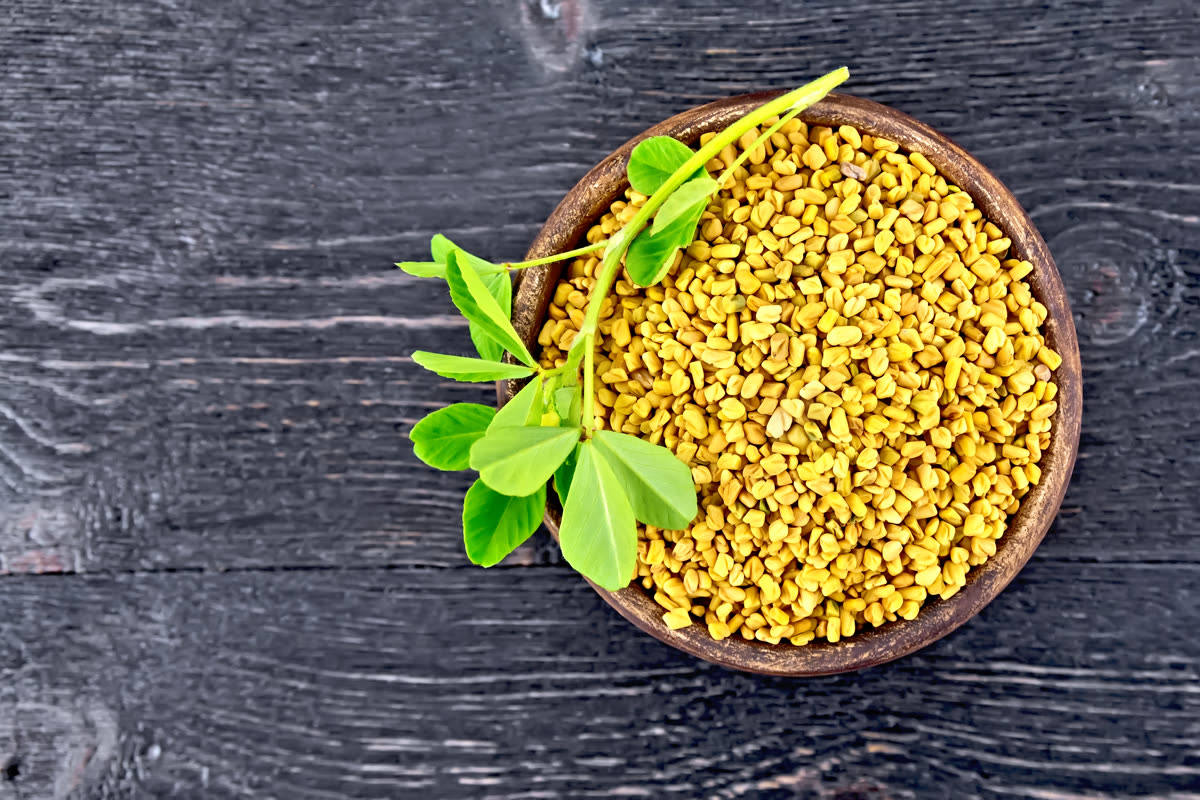
What Fenugreek can do for Dry, Damaged & Frizzy Hair
Fenugreek seeds, helba in Arabic and methi in India, swell into a slippery gel when soaked, making a conditioning mask that softens hair and adds slip. Fenugreek is widely promoted for hair growth and shedding, but the support is largely tradition and lab work; topical human trials are lacking. Enjoy it as a conditioning treatment and keep expectations modest.
Why people reach for it
- Conditioning and slip. Galactomannan mucilage coats the hair shaft, smoothing the cuticle and easing detangling. See Dry, Damaged & Frizzy Hair.
- Soothing for a dry scalp. The gel is gentle and moisturizing; traditional users apply it for itchy, flaky scalps, though evidence is anecdotal.
- Hair-shedding claims (unproven topically). Saponins and other compounds are proposed to support follicles; this rests on lab and animal work, not topical human trials.
How to use it
Try it today
A soaked-seed hair mask
- Soak 2–3 tablespoons of fenugreek seeds overnight, then grind them into a paste.
- Patch test, then apply to your scalp and lengths for 20–40 minutes.
- Rinse very thoroughly and discard any leftovers; make it fresh each time.
| Form | Typical use | Notes |
|---|---|---|
| Soaked-seed paste mask | 2–3 tbsp (about 20–30 g) seeds soaked overnight, then ground | Apply to scalp and lengths for 20–40 minutes, then rinse thoroughly; the gel can be hard to rinse from very dense hair. Use fresh. |
| Powder in hair masks | 10–30% of a powder blend | Combine with amla (Indian gooseberry) and water or yogurt for a traditional mask; see Fenugreek & Amla Hair Mask. |
| Extract in shampoos and conditioners | 0.5–3% (per supplier) | Odor-reduced extracts avoid the lingering maple-syrup smell. |
Recipes for Dry, Damaged & Frizzy Hair with Fenugreek
Daily rituals with Fenugreek
Use it safely
- Fenugreek is a legume: people allergic to peanuts or chickpeas may cross-react. Patch test, and avoid if you have a known legume allergy.
- The smell (sotolone) can linger on hair, skin and even sweat for a day or two.
- Oral fenugreek can lower blood sugar and interact with diabetes and anticoagulant medicines; this concerns supplements, not hair masks.
- Sudden or patchy hair loss warrants a doctor’s visit rather than home remedies.
Pregnancy and breastfeeding: Hair masks are considered low-risk. Avoid medicinal oral doses in pregnancy, as fenugreek has traditionally been considered uterotonic.
New to an ingredient? Patch test first.
When to see a doctor
- Hair that breaks easily together with brittle nails, fatigue, heavy periods or feeling cold (possible iron deficiency or thyroid disease).
- Breakage in patches, or hair loss with scalp symptoms — it may not be breakage at all; see Thinning Hair & Hair Loss.
- Scalp burns, blisters or severe itching after relaxers, dyes or bleach.
- Hair that has always been fragile or breaks at a short length since childhood (possible hair shaft disorder).
Other plants for Dry, Damaged & Frizzy Hair
| Ingredient | Grade | What the evidence shows |
|---|---|---|
| Coconut Oil | C | Hair-fiber lab studies show coconut oil penetrates the shaft and reduces protein loss when used before and after washing — unlike mineral or sunflower oil; human trials are lacking. |
| Argan Oil | C | A lab study on dyed hair fibers found argan oil improved fiber quality after repeated coloring; supports its use as a finishing and pre-wash oil. |
| Shea Butter | D | A rich sealant that reduces frizz and adds softness, especially for coily hair; evidence is practical and traditional. |
| Olive Oil | D | Traditionally used across the Mediterranean as a pre-wash treatment; limited lab data suggest some penetration, less than coconut oil. |
| Marshmallow Root | D | Mucilage gives slip for detangling, popular in curly-hair routines; evidence is traditional and anecdotal. |
| Jojoba | D | A light liquid wax that adds shine without much weight, suiting fine hair; little formal evidence. |