The ingredient encyclopedia · herb
Fenugreek
Trigonella foenum-graecum · Fabaceae
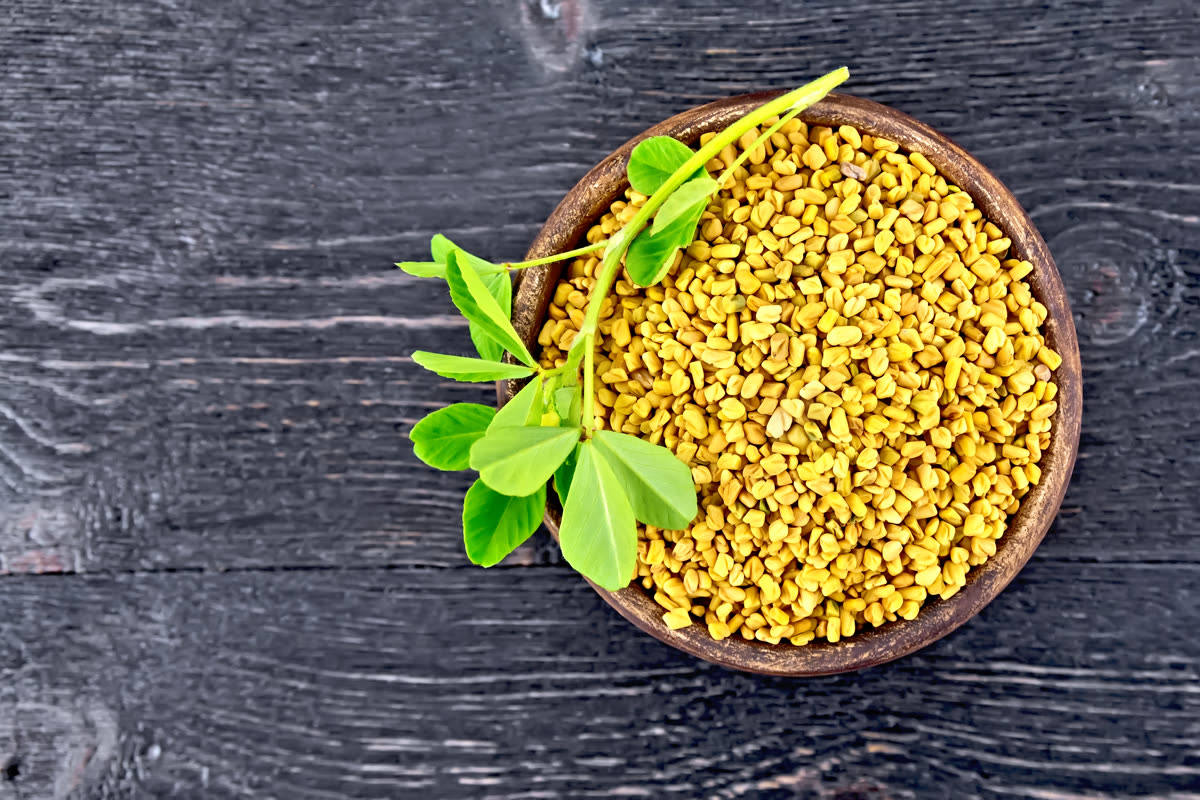
Soaked fenugreek seeds become a slippery, conditioning hair mask, a beloved classic in Morocco and India.
FR FenugrecES Fenogreco (alholva)AR الحلبةLḥelba (Darija); Methi (Hindi)
- How well proven
- DTraditional wisdom
- Safety
- Low topical risk
- Sun-sensitive
- No
FR FenugrecES Fenogreco (alholva)AR الحلبةLḥelba (Darija); Methi (Hindi)
What the evidence says
Topical use rests on tradition and lab/animal data; one small oral supplement trial is not enough to support topical hair-growth claims.
- Best supported for
- Thinning Hair & Hair Loss C
- How to use it
- Soaked-seed paste mask · 2–3 tbsp (about 20–30 g) seeds soaked overnight, then ground
- Watch out for
- Fenugreek is a legume: people allergic to peanuts or chickpeas may cross-react.
Checked against the available literature and our safety review · Updated 26 November 2026 · How we grade
Why you’ll love Fenugreek
Why you’ll love it
- Gives hair silky slip and a soft, conditioned feel
- Comforting on a dry, tight-feeling scalp
- A traditional favorite, though hair-growth claims remain unproven
Best forDry, curly or thick hair, and dry scalps that crave conditioning.
Try it today
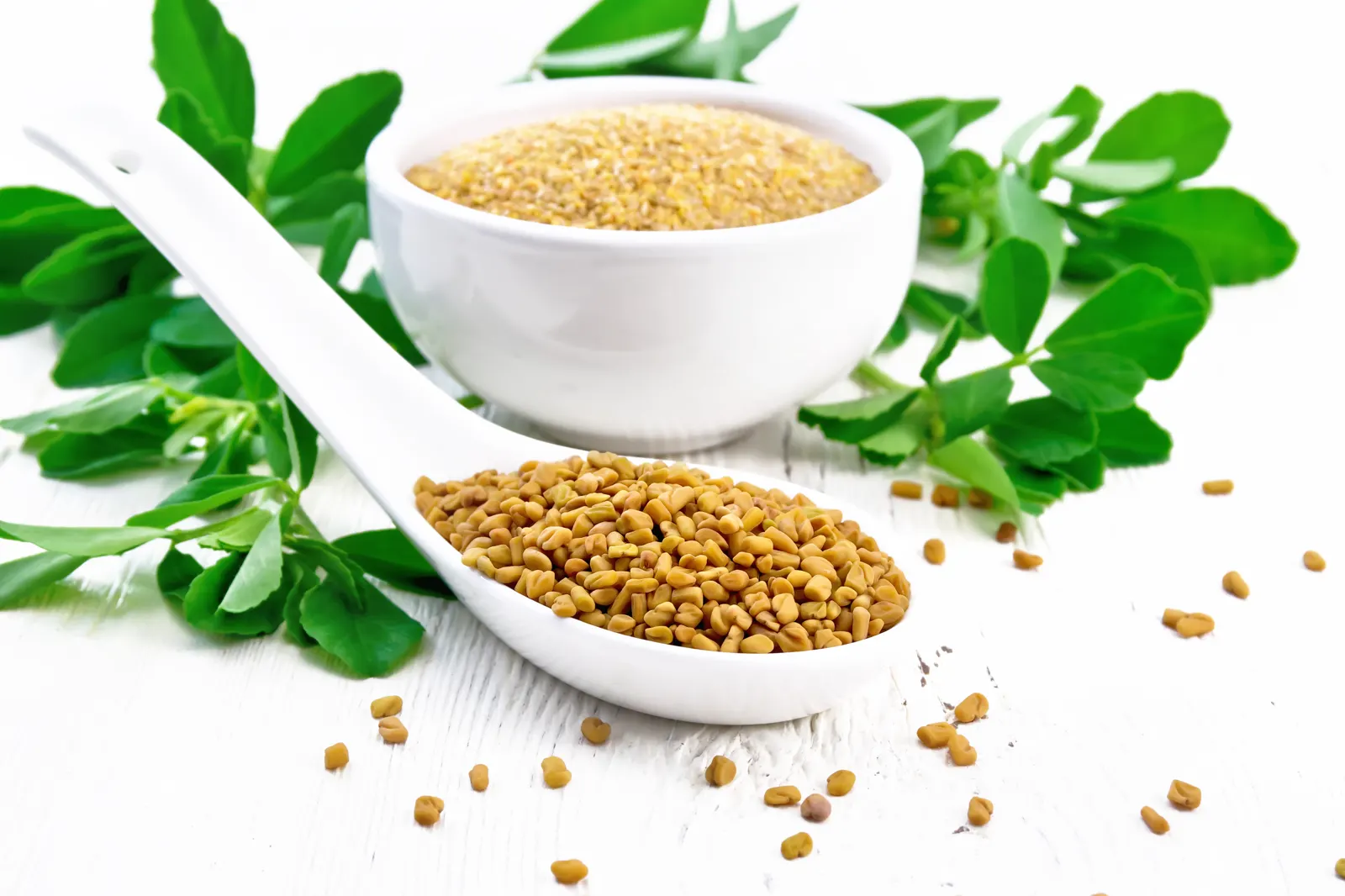
A soaked-seed hair mask
- Soak 2–3 tablespoons of fenugreek seeds overnight, then grind them into a paste.
- Patch test, then apply to your scalp and lengths for 20–40 minutes.
- Rinse very thoroughly and discard any leftovers; make it fresh each time.
Good to know: Fenugreek is a legume, so skip it if peanuts or chickpeas cause you allergies. Its maple-syrup scent can linger for a day or two.
At a glance
| Parts used | Seed (whole, powdered, soaked paste, extracts) |
|---|---|
| Key actives | Galactomannan mucilage, Steroidal saponins (furostanol glycosides), Trigonelline, Flavonoids, Proteins, Sotolone (aroma) |
| INCI names | Trigonella Foenum-Graecum Seed Extract Trigonella Foenum-Graecum Seed Powder |
| Hair & scalp | curly, dry scalp, thick |
| Pairs well with | Amla (Indian Gooseberry)HibiscusCoconut OilStinging Nettle |
| Evidence grade | DTraditional wisdom Topical use rests on tradition and lab/animal data; one small oral supplement trial is not enough to support topical hair-growth claims. |
What it does for skin and hair
Conditioning and slip
Galactomannan mucilage coats the hair shaft, smoothing the cuticle and easing detangling. See Dry, Damaged & Frizzy Hair.
Soothing for a dry scalp
The gel is gentle and moisturizing; traditional users apply it for itchy, flaky scalps, though evidence is anecdotal.
Hair-shedding claims (unproven topically)
Saponins and other compounds are proposed to support follicles; this rests on lab and animal work, not topical human trials.
How to use it
Start low, be consistent, and give it four to eight weeks. These are the amounts that work in real products and home recipes.
| Form | Typical use level | Notes |
|---|---|---|
| Soaked-seed paste mask | 2–3 tbsp (about 20–30 g) seeds soaked overnight, then ground | Apply to scalp and lengths for 20–40 minutes, then rinse thoroughly; the gel can be hard to rinse from very dense hair. Use fresh. |
| Powder in hair masks | 10–30% of a powder blend | Combine with amla (Indian gooseberry) and water or yogurt for a traditional mask; see Fenugreek & Amla Hair Mask. |
| Extract in shampoos and conditioners | 0.5–3% (per supplier) | Odor-reduced extracts avoid the lingering maple-syrup smell. |
Use it safely
Low topical risk
- Fenugreek is a legume: people allergic to peanuts or chickpeas may cross-react. Patch test, and avoid if you have a known legume allergy.
- The smell (sotolone) can linger on hair, skin and even sweat for a day or two.
- Oral fenugreek can lower blood sugar and interact with diabetes and anticoagulant medicines; this concerns supplements, not hair masks.
- Sudden or patchy hair loss warrants a doctor’s visit rather than home remedies.
- Pregnancy & breastfeeding
- Hair masks are considered low-risk. Avoid medicinal oral doses in pregnancy, as fenugreek has traditionally been considered uterotonic. Pregnancy guide
- Phototoxicity
- Not phototoxic at normal use levels.
- Declared fragrance allergens
- None expected
New to an ingredient? Patch test first. Stop and seek advice if you get burning, swelling, blistering or a spreading rash.
Make it at home: recipes with fenugreek
Buying well
Sustainability
A widely grown food crop (India is the major producer; also Morocco, Egypt and the Mediterranean). Not threatened; food-grade organic seed is easy to find.
How to choose quality
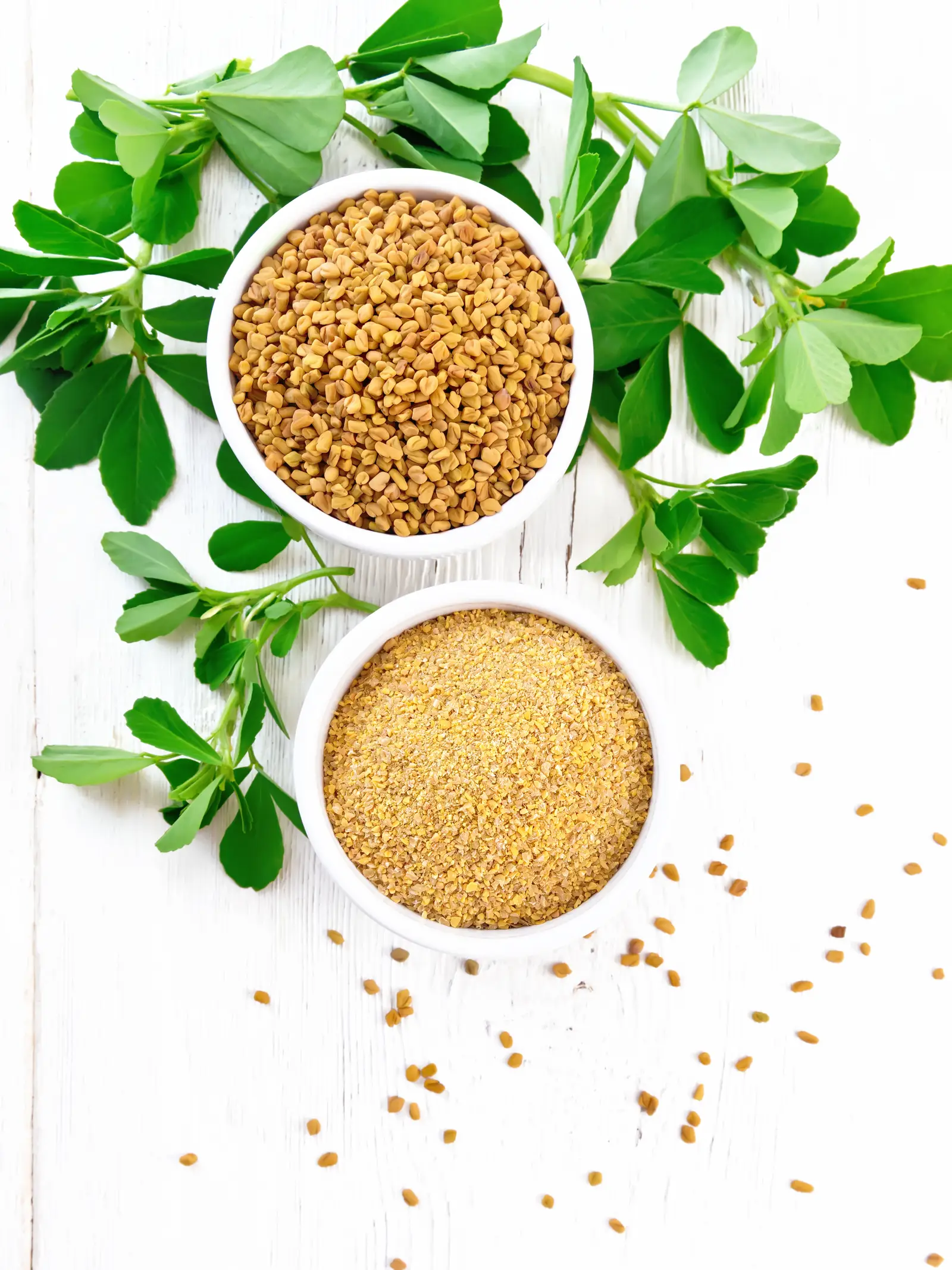
Food-grade whole seeds work well for DIY; grind freshly for the most mucilage. Look for clean, uniformly golden seeds without dust or insects. For formulating, choose a cosmetic extract with stated INCI and preservative system.
The research For professionals
The chemistry, the studies and the evidence by concern, for practitioners, formulators and the curious.
Fenugreek seed is rich in galactomannan, a water-soluble polysaccharide (also used industrially as a thickener) that forms a viscous gel when the seed is soaked or ground with water. That gel is responsible for most of what users notice: softer, smoother, more manageable hair. The seeds also contain steroidal saponins (furostanol glycosides that are precursors of diosgenin), the alkaloid trigonelline, flavonoids and proteins, plus sotolone, the compound behind the maple-syrup smell that can linger on hair and skin.
Claims for hair growth draw on animal experiments and on hypotheses about saponins and anti-androgenic or anti-inflammatory activity, none of which has been confirmed for topical use in people. A small placebo-controlled study of an oral fenugreek-seed supplement combined with micronutrients reported less hair shedding, but it tested a mixture taken by mouth and has not been independently replicated, so it says little about a hair mask.
In short, fenugreek is a well-tolerated, traditional conditioning treatment. For shedding or thinning hair, a medical assessment (iron, thyroid, hormonal causes) and proven treatments matter more; see Thinning Hair & Hair Loss and Hair Science for Natural Hair Care.
Evidence by concern
| Concern | Grade | What the evidence shows |
|---|---|---|
| Thinning Hair & Hair Loss | C | A small placebo-controlled trial of an oral fenugreek seed extract reported improved hair growth and thickness; topical use is traditional. |
MythFenugreek masks stop hair loss.
EvidenceThere is no good topical human evidence. Fenugreek conditions hair well, but hair loss usually needs a medical cause ruled out and evidence-based treatment.
In tradition
In Morocco and across the Arab world, helba is eaten and used in hair and skin masks; in India methi seed paste is a classic hair pack. The Spanish name alholva comes from the Arabic al-hulba.
Frequently asked questions
Does fenugreek help hair growth?
How long should I leave a fenugreek hair mask on?
How do I get rid of the fenugreek smell in my hair?
Cite this page
Herbs.Beauty. Fenugreek (Trigonella foenum-graecum): evidence-based monograph. Updated 26 November 2026. https://herbs.beauty/ingredients/fenugreek.html