Does it work?
Cocoa Butter for Eczema-Prone Skin
What the research says about cocoa butter for eczema-prone skin, how to use it at home and how to stay safe.
The short answer: Emollient and occlusive effects are well understood but tested mostly within formulas; randomized trials consistently show no benefit for preventing stretch marks.
Our Eczema-Prone Skin guide does not rank Cocoa Butter for this use yet, so this is the overall grade for Cocoa Butter.
What it does
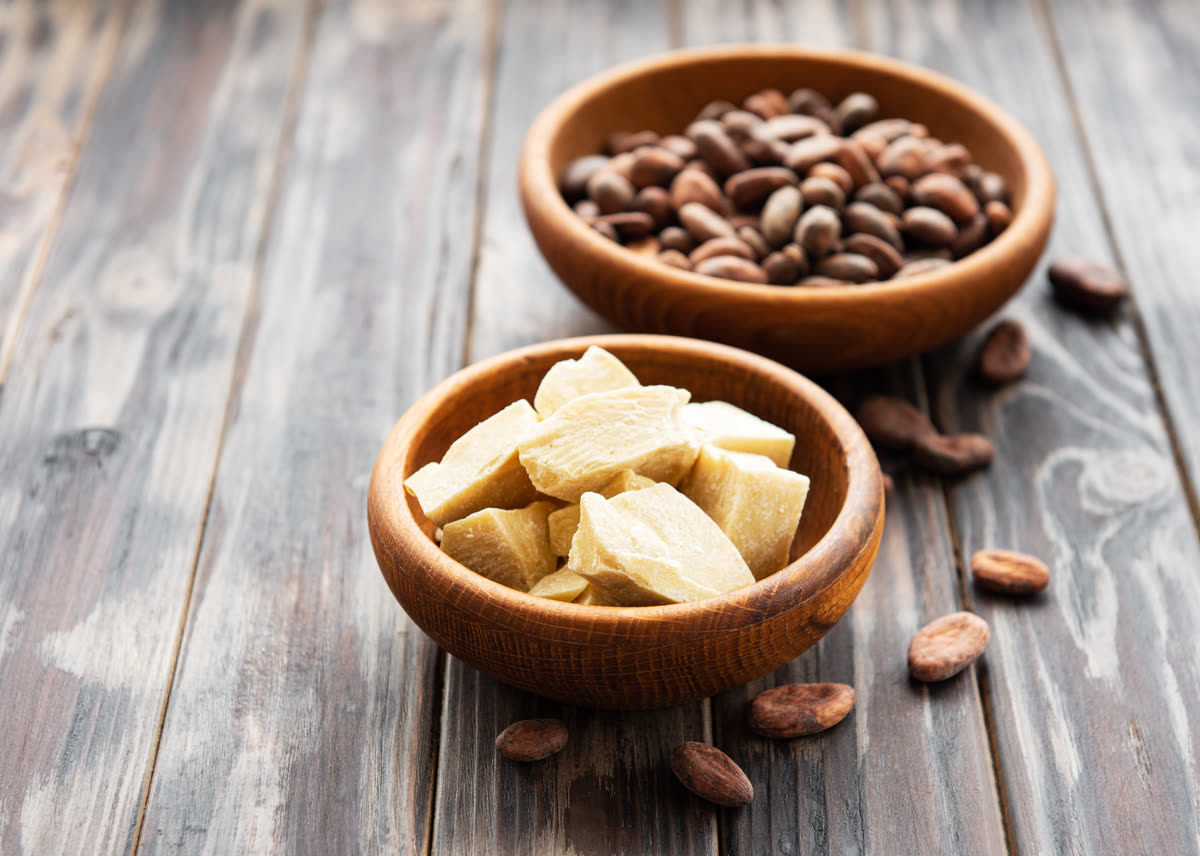
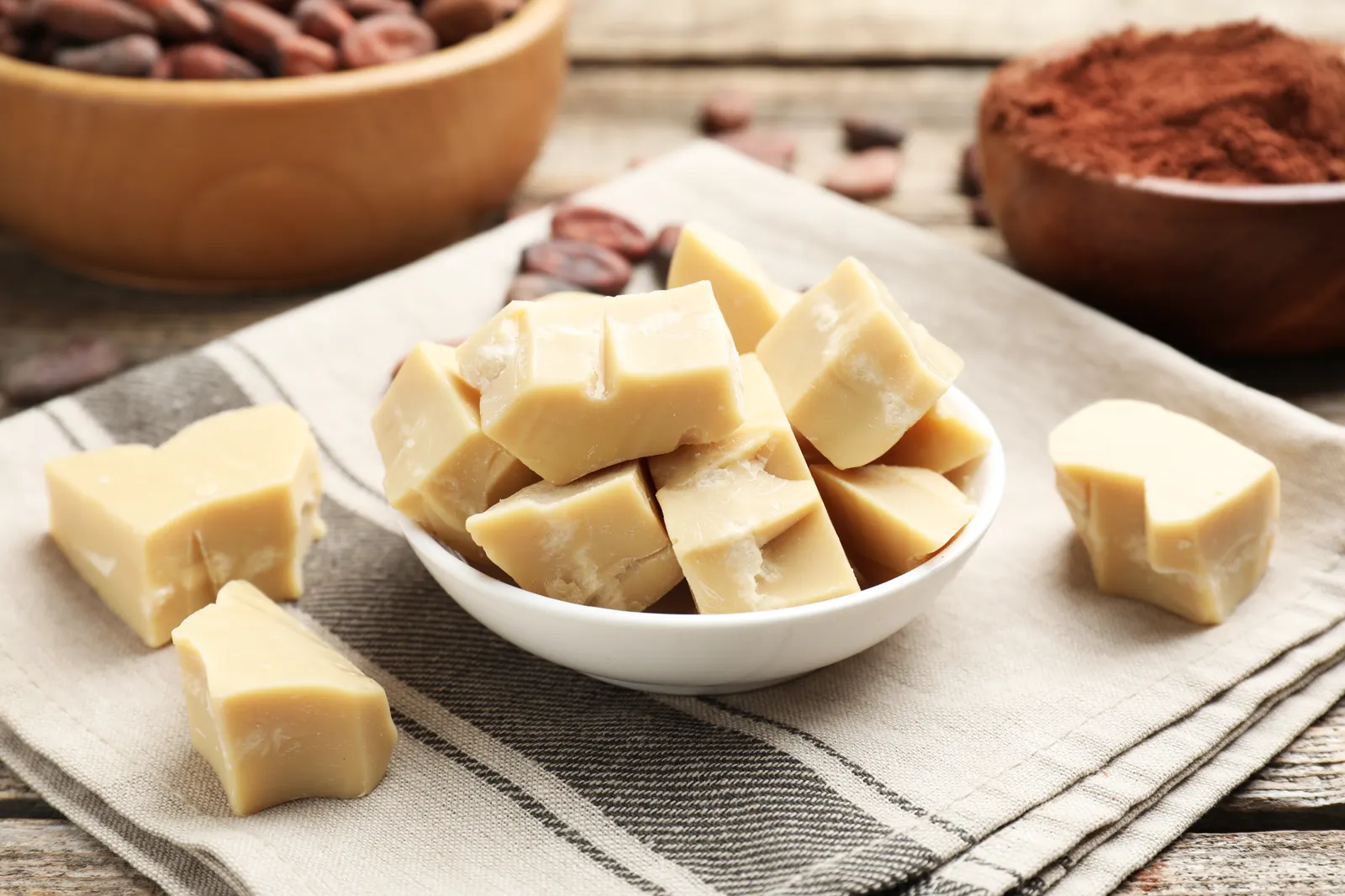
Cocoa butter is the fat pressed from cacao beans — the same fat that gives chocolate its snap and melt. It is hard at room temperature, melts just below body temperature and almost never goes rancid, making it a classic base for lip balms, lotion bars and body butters. It is a good occlusive emollient for dry skin, but well-designed trials show it does not prevent stretch marks. Cocoa farming is also linked to child labor and deforestation, so sourcing matters.
Why people reach for it
- Seals in moisture. A firm, occlusive fat that slows water loss from very dry skin, hands, heels and lips — especially useful in cold, dry weather.
- Structure for balms and bars. Its sharp melting point (about 34–38 °C) gives lip balms and lotion bars firmness at room temperature and a clean melt on skin.
- Practically rancid-proof. Very low polyunsaturated content plus natural antioxidants give cocoa butter a shelf life measured in years — a stabilizing base for anhydrous products.
- Comforting, simple emollient. A plain, fragrance-free cocoa butter balm can be part of an emollient routine for dry or eczema-prone body skin.
How to use it
| Form | Typical use | Notes |
|---|---|---|
| Lip balm | 20–40% of the balm | Combine with a liquid oil and beeswax or candelilla wax; adapt Shea & Calendula Lip Balm by swapping part of the shea for cocoa butter. |
| Lotion bar or solid body butter | 30–60% of an anhydrous bar | Pair with liquid oils and wax for a bar that glides on skin warmth. Temper (melt fully, cool quickly) to avoid graininess. |
| Whipped body butter | 10–25% of the butter phase | Too much cocoa butter makes whipped butters hard; blend with softer shea butter — see Whipped Shea Body Butter. |
| Creams and lotions | 2–10% of the formula (oil phase) | Adds richness and body to emulsions; balance the formula with the Formula & Cost Calculator. |
Recipes with Cocoa Butter
Daily rituals with Cocoa Butter
Use it safely
- True allergy to cocoa butter is rare; reactions to “cocoa butter” lotions are more often caused by added fragrance. Patch test if your skin is reactive.
- Cocoa butter is considered moderately to highly comedogenic in older animal tests; avoid heavy use on acne-prone faces.
- Natural cocoa butter smells of chocolate; deodorized grades suit fragrance-free products.
- Grainy or white-bloomed balms are a crystal issue, not spoilage.
Pregnancy and breastfeeding: Safe for topical use in pregnancy and breastfeeding, and a pleasant emollient for itchy, stretching skin — but trials show it does not prevent stretch marks.
New to an ingredient? Patch test first.
When to see a doctor
- Weeping, crusting (honey-colored crusts), pus or rapidly worsening eczema — possible bacterial infection.
- Painful, clustered, punched-out sores or blisters with fever or feeling unwell — possible eczema herpeticum, which needs same-day medical care.
- Fever, chills or spreading redness alongside eczema.
- Eczema affecting sleep, school, work or mood, or not controlled by emollients and the treatment you have been given.
- Babies with eczema who also have feeding problems, poor growth or reactions after eating certain foods.
- Eczema around or affecting the eyes, or worsening vision.
Other plants for Eczema-Prone Skin
| Ingredient | Grade | What the evidence shows |
|---|---|---|
| Colloidal Oatmeal | B | Randomized trials show colloidal oatmeal creams and baths improve dryness, itch and eczema severity, supporting use as part of emollient therapy. |
| Sunflower Oil | B | Linoleic-rich sunflower oil supported barrier function in comparative studies and neonatal trials; it is a sensible base oil for eczema-prone skin. |
| Coconut Oil | B | A randomized trial in children with mild to moderate eczema found virgin coconut oil improved severity more than mineral oil, and it reduced S. aureus colonization in another trial. |
| Shea Butter | C | A rich, low-allergen emollient; small studies of shea-based creams show improvement, though it is usually tested alongside other ingredients. |
| Licorice Root | C | A small trial of a 2% licorice extract gel reduced itch and redness; glycyrrhetinic acid is anti-inflammatory. |
| Chamomile | C | An older half-side study found a chamomile cream modestly effective versus low-strength hydrocortisone, but daisy-family allergy is a real risk on eczematous skin. |
| Honey | C | Small studies of medical-grade honey on eczema patches suggest benefit; kitchen honey is not sterile and is not for broken skin. |