Does it work?
Coconut Oil for Eczema-Prone Skin
What the research says about coconut oil for eczema-prone skin, how to use it at home and how to stay safe.
The short answer: A randomized trial in children with mild to moderate eczema found virgin coconut oil improved severity more than mineral oil, and it reduced S. aureus colonization in another trial.
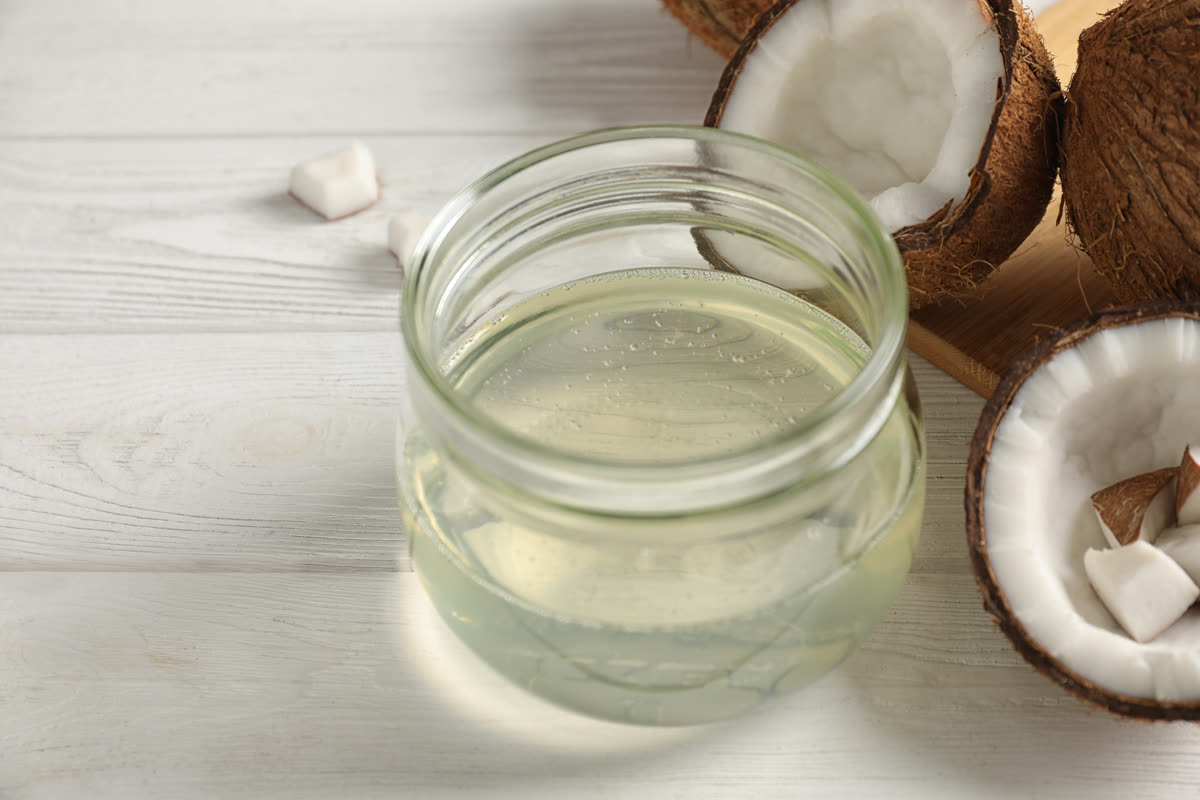
What it does
Coconut oil is a saturated fat dominated by lauric acid, solid below about 24 °C and very resistant to rancidity. Unusually for a natural oil, it has reasonable clinical evidence: small randomized trials show virgin coconut oil works at least as well as mineral oil for dry skin and mild-to-moderate atopic dermatitis, and lab work shows it reduces protein loss from hair. It can be a problem on acne-prone facial skin.
Why people reach for it
- Moisturizes dry skin. In a randomized trial, virgin coconut oil improved xerosis as well as mineral oil, with no safety concerns.
- Helps mild-to-moderate eczema. In children with mild-to-moderate atopic dermatitis, virgin coconut oil reduced severity more than mineral oil over eight weeks.
- Reduces hair protein loss. Lauric acid is small and linear enough to penetrate the hair shaft; used before or after washing, coconut oil reduced protein loss from both damaged and undamaged hair.
- Stable and simple. Mostly saturated, so it resists oxidation and keeps well without additives.
How to use it
| Form | Typical use | Notes |
|---|---|---|
| Body moisturizer | Neat, a thin layer on damp skin | Melt a small amount in the palms; apply after bathing. Best for body, not acne-prone faces. |
| Pre-wash hair treatment | 1–2 teaspoons on lengths, 30 minutes to overnight before shampoo | The approach tested for reducing protein loss. Low-porosity or fine hair may feel coated; use less. |
| Balms and butters | 10–40% of an anhydrous formula | Adds slip and a firm-but-meltable texture; may make whipped butters soften in warm weather. |
| Cleansing balm | 20–50% of the oil phase | Dissolves makeup well; rinse or wipe thoroughly if you are breakout-prone. |
Recipes for Eczema-Prone Skin with Coconut Oil
Daily rituals with Coconut Oil
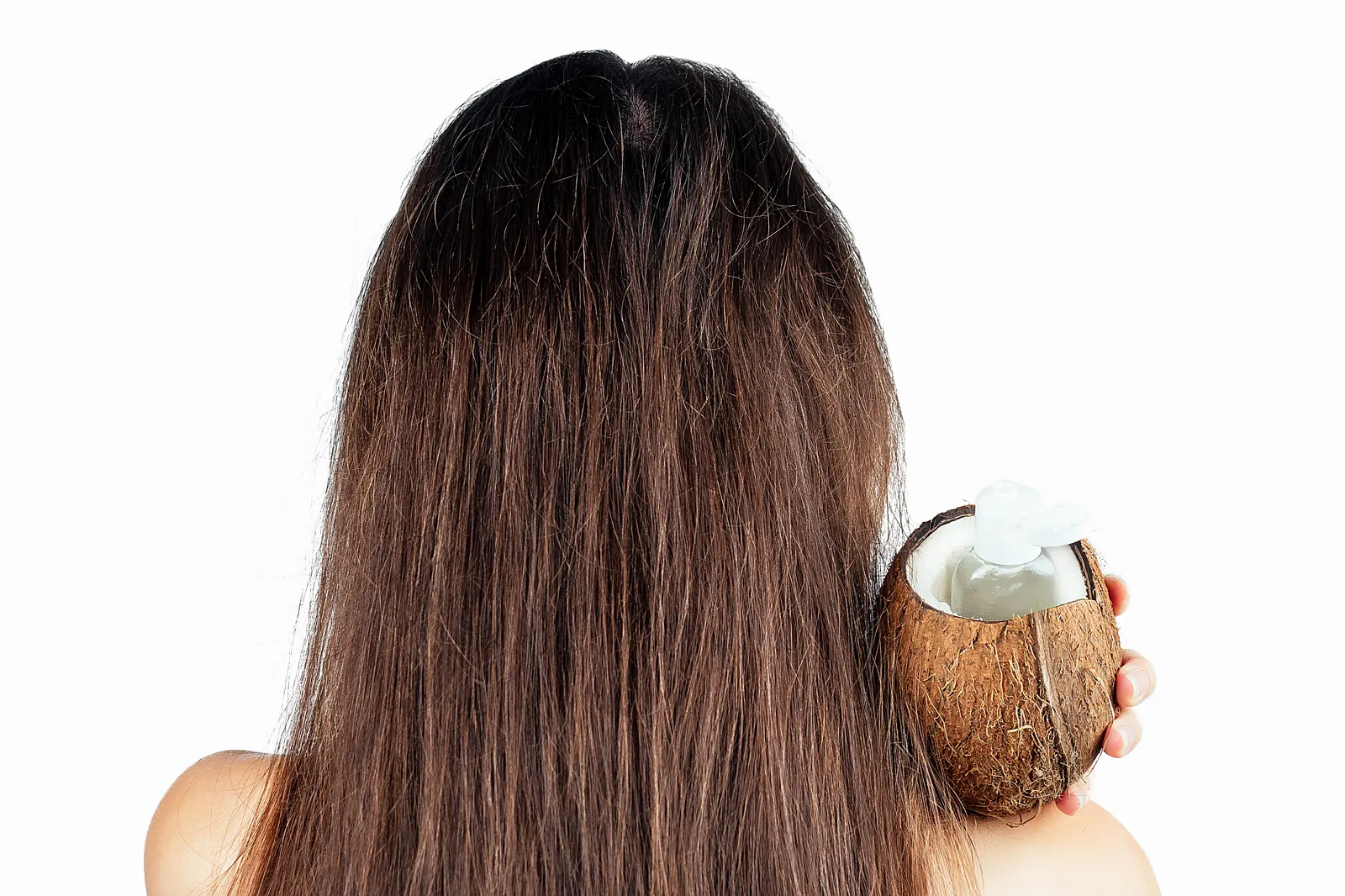 Coconut Oil Before ShampooA pre-shampoo coconut step using a labeled hair product and its own amount and contact time. Fiber evidence, yes; hair-growth evidence, no.
 Swimmer’s Hair: Wet, Coat, Cap, RinsePool water dries hair and can tint blondes green. A five-minute routine before and after you swim keeps lengths soft and color true.
Use it safely
- May trigger comedones on acne-prone facial skin — patch test on the jawline for two to three weeks before using on the whole face.
- Allergy to coconut oil itself is rare. Coconut-derived surfactants (e.g. cocamidopropyl betaine) are much more frequent contact allergens — they are different substances.
- It is not a sunscreen. See Sun Care & After-Sun.
- For infants or infected eczema (weeping, crusting, fever), see a doctor rather than self-treating.
Pregnancy and breastfeeding: Safe for topical use in pregnancy and breastfeeding.
New to an ingredient? Patch test first.
When to see a doctor
- Weeping, crusting (honey-colored crusts), pus or rapidly worsening eczema — possible bacterial infection.
- Painful, clustered, punched-out sores or blisters with fever or feeling unwell — possible eczema herpeticum, which needs same-day medical care.
- Fever, chills or spreading redness alongside eczema.
- Eczema affecting sleep, school, work or mood, or not controlled by emollients and the treatment you have been given.
- Babies with eczema who also have feeding problems, poor growth or reactions after eating certain foods.
- Eczema around or affecting the eyes, or worsening vision.
Other plants for Eczema-Prone Skin
| Ingredient | Grade | What the evidence shows |
|---|---|---|
| Colloidal Oatmeal | B | Randomized trials show colloidal oatmeal creams and baths improve dryness, itch and eczema severity, supporting use as part of emollient therapy. |
| Sunflower Oil | B | Linoleic-rich sunflower oil supported barrier function in comparative studies and neonatal trials; it is a sensible base oil for eczema-prone skin. |
| Shea Butter | C | A rich, low-allergen emollient; small studies of shea-based creams show improvement, though it is usually tested alongside other ingredients. |
| Licorice Root | C | A small trial of a 2% licorice extract gel reduced itch and redness; glycyrrhetinic acid is anti-inflammatory. |
| Chamomile | C | An older half-side study found a chamomile cream modestly effective versus low-strength hydrocortisone, but daisy-family allergy is a real risk on eczematous skin. |
| Honey | C | Small studies of medical-grade honey on eczema patches suggest benefit; kitchen honey is not sterile and is not for broken skin. |