Does it work?
Chamomile for Eczema-Prone Skin
What the research says about chamomile for eczema-prone skin, how to use it at home and how to stay safe.
The short answer: An older half-side study found a chamomile cream modestly effective versus low-strength hydrocortisone, but daisy-family allergy is a real risk on eczematous skin.
What it does
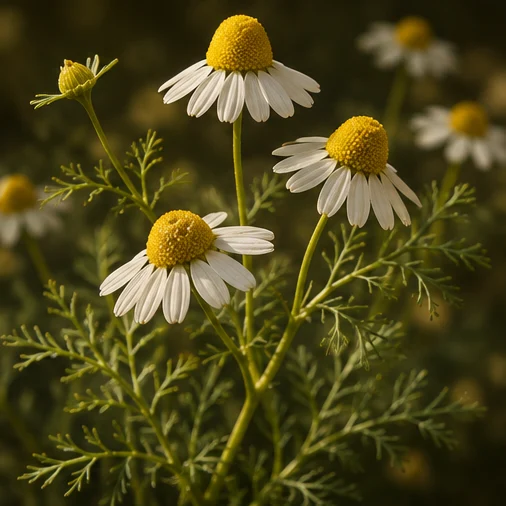
German chamomile is one of the gentlest, most familiar soothing botanicals, and its key actives — bisabolol, chamazulene and apigenin — are well characterized anti-inflammatories. Human evidence for skin is older and small, so it is best used as a calming support rather than a treatment. Its main risk is allergy in people sensitive to the daisy family.
Why people reach for it
- Calms redness and irritation. Bisabolol and apigenin reduce inflammatory signaling in lab models, and chamomile extracts are a staple of products for reactive, easily flushed skin.
- Comfort for eczema-prone skin. In an older half-side trial, a chamomile cream performed slightly better than 0.5% hydrocortisone in moderate atopic eczema, though only marginally better than its own base cream. It can complement, not replace, prescribed care.
- Supports a comfortable skin barrier. Chamomile extracts and bisabolol are frequently used to reduce the sting of active ingredients such as acids and retinoids.
- Golden tone for fair hair. Strong chamomile rinses can lend light blonde hair a subtle golden warmth through flavonoid pigments. It does not bleach or lighten darker hair.
How to use it
| Form | Typical use | Notes |
|---|---|---|
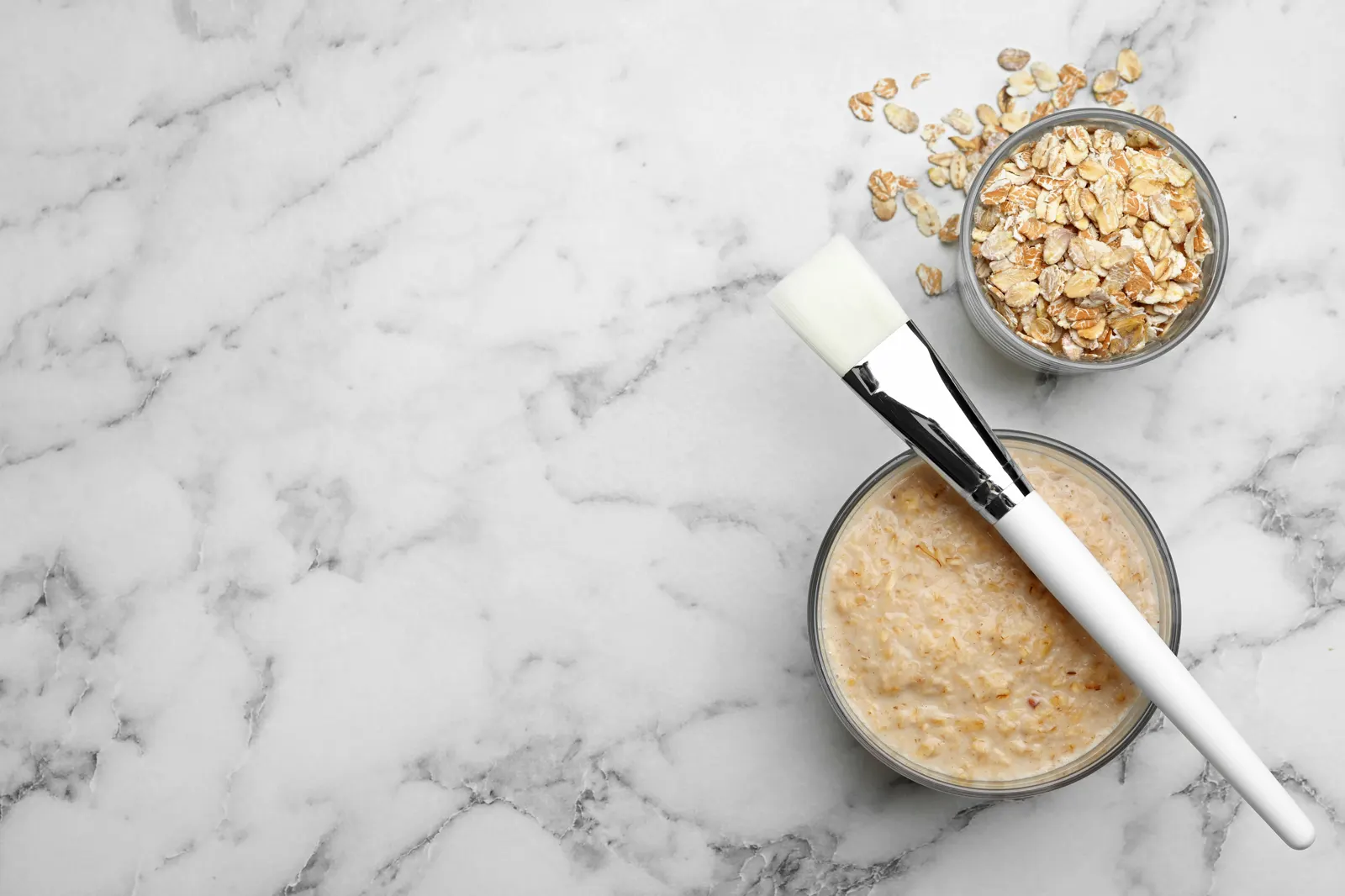
| Chamomile extract (glycerin or water-based) | 1–5% in creams, toners and masks | Pairs well with oat in calming masks — see Calming Oat & Chamomile Mask. Aqueous products need a broad-spectrum preservative. |
| Bisabolol (isolated) | 0.1–1% | Oil-soluble; add to the oil phase or cool-down. Natural (−)-α-bisabolol is generally preferred over synthetic racemic bisabolol. |
| German chamomile essential oil | 0.1–0.5% on the face; up to 1% on the body | Very potent and stains fabrics blue. Respect overall essential-oil limits (Essential Oil Safety: The Complete Guide). |
| Cooled infusion or hydrosol | Fresh compress, used the same day | Steep 2 tea bags or 2 tablespoons of flowers in 250 ml just-boiled water for 10 minutes, cool, and apply on a clean cloth. Discard leftovers. |
Recipes for Eczema-Prone Skin with Chamomile
Daily rituals with Chamomile

Use it safely
- Daisy-family cross-reactivity: chamomile is part of the Compositae patch-test mix. People allergic to ragweed, chrysanthemum, arnica, feverfew, marigold or mugwort pollen may react to chamomile on skin or in tea; anaphylaxis to chamomile tea is rare but reported.
- Chamomile tea used as an eyewash or eye compress has caused allergic conjunctivitis. Do not put it in the eye, and avoid eye compresses if you have hay fever to Asteraceae pollen.
- Roman chamomile is more allergenic than German chamomile because of its sesquiterpene lactones.
- Homemade infusions spoil within hours at room temperature — make fresh each time.
Pregnancy and breastfeeding: Topical chamomile and moderate chamomile tea are generally considered compatible with pregnancy and breastfeeding. Use essential oil only at low dilution and avoid concentrated oral supplements.
New to an ingredient? Patch test first.
When to see a doctor
- Weeping, crusting (honey-colored crusts), pus or rapidly worsening eczema — possible bacterial infection.
- Painful, clustered, punched-out sores or blisters with fever or feeling unwell — possible eczema herpeticum, which needs same-day medical care.
- Fever, chills or spreading redness alongside eczema.
- Eczema affecting sleep, school, work or mood, or not controlled by emollients and the treatment you have been given.
- Babies with eczema who also have feeding problems, poor growth or reactions after eating certain foods.
- Eczema around or affecting the eyes, or worsening vision.
Other plants for Eczema-Prone Skin
| Ingredient | Grade | What the evidence shows |
|---|---|---|
| Colloidal Oatmeal | B | Randomized trials show colloidal oatmeal creams and baths improve dryness, itch and eczema severity, supporting use as part of emollient therapy. |
| Sunflower Oil | B | Linoleic-rich sunflower oil supported barrier function in comparative studies and neonatal trials; it is a sensible base oil for eczema-prone skin. |
| Coconut Oil | B | A randomized trial in children with mild to moderate eczema found virgin coconut oil improved severity more than mineral oil, and it reduced S. aureus colonization in another trial. |
| Shea Butter | C | A rich, low-allergen emollient; small studies of shea-based creams show improvement, though it is usually tested alongside other ingredients. |
| Licorice Root | C | A small trial of a 2% licorice extract gel reduced itch and redness; glycyrrhetinic acid is anti-inflammatory. |
| Honey | C | Small studies of medical-grade honey on eczema patches suggest benefit; kitchen honey is not sterile and is not for broken skin. |