Does it work?
Cocoa Butter for Dry & Dehydrated Skin
The fat that gives chocolate its melt: firm in the jar, silky on skin, and smelling softly of cocoa.
The short answer: Emollient and occlusive effects are well understood but tested mostly within formulas; randomized trials consistently show no benefit for preventing stretch marks.
Our Dry & Dehydrated Skin guide does not rank Cocoa Butter for this use yet, so this is the overall grade for Cocoa Butter.
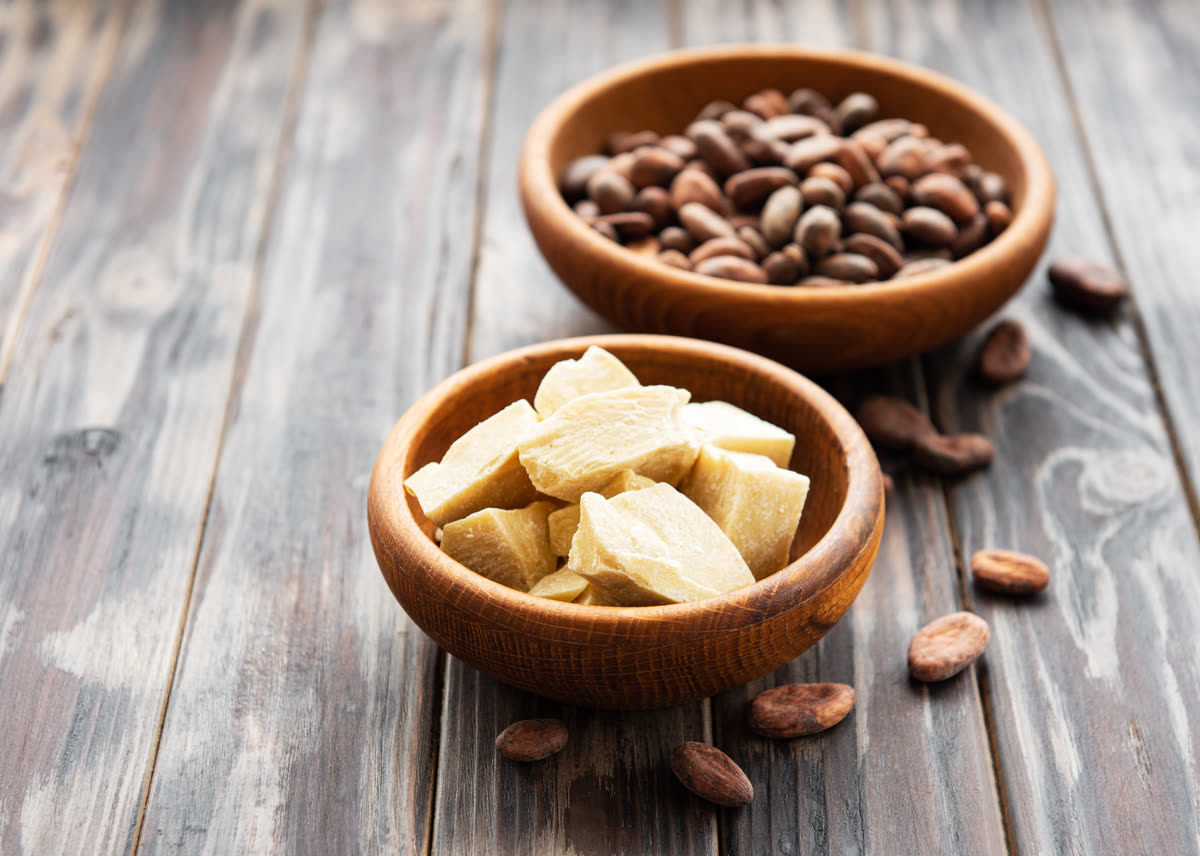
What Cocoa Butter can do for Dry & Dehydrated Skin
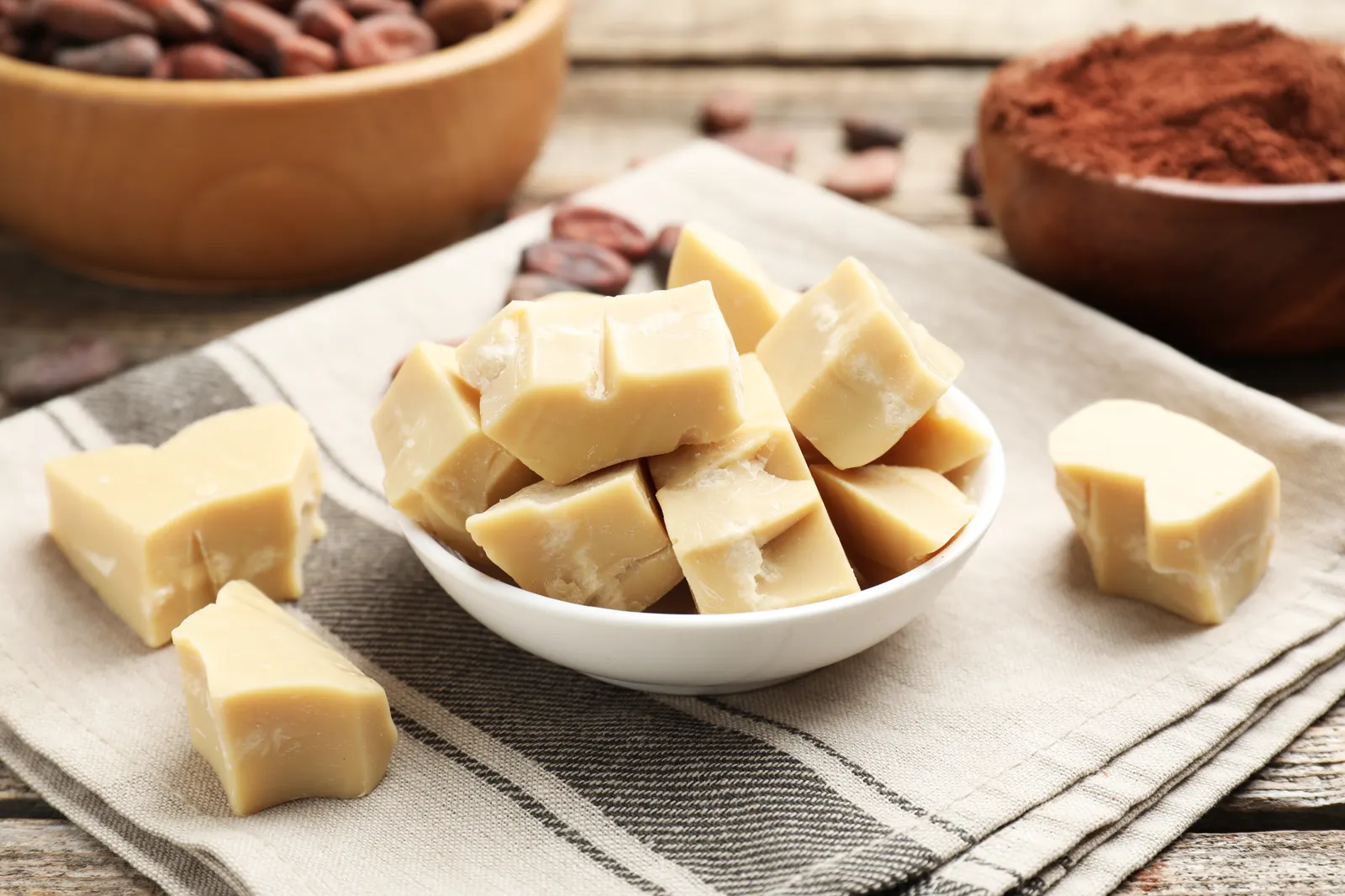
Cocoa butter is the fat pressed from cacao beans — the same fat that gives chocolate its snap and melt. It is hard at room temperature, melts just below body temperature and almost never goes rancid, making it a classic base for lip balms, lotion bars and body butters. It is a good occlusive emollient for dry skin, but well-designed trials show it does not prevent stretch marks. Cocoa farming is also linked to child labor and deforestation, so sourcing matters.
Why people reach for it
- Seals in moisture. A firm, occlusive fat that slows water loss from very dry skin, hands, heels and lips — especially useful in cold, dry weather.
- Structure for balms and bars. Its sharp melting point (about 34–38 °C) gives lip balms and lotion bars firmness at room temperature and a clean melt on skin.
- Practically rancid-proof. Very low polyunsaturated content plus natural antioxidants give cocoa butter a shelf life measured in years — a stabilizing base for anhydrous products.
- Comforting, simple emollient. A plain, fragrance-free cocoa butter balm can be part of an emollient routine for dry or eczema-prone body skin.
How to use it
Try it today
A winter hand rescue
- Warm a small piece of pure cocoa butter between your palms until it melts.
- Massage it into the backs of your hands, knuckles and cuticles, focusing on the driest spots.
- Repeat after washing up and before bed, and touch a little onto dry lips.
| Form | Typical use | Notes |
|---|---|---|
| Lip balm | 20–40% of the balm | Combine with a liquid oil and beeswax or candelilla wax; adapt Shea & Calendula Lip Balm by swapping part of the shea for cocoa butter. |
| Lotion bar or solid body butter | 30–60% of an anhydrous bar | Pair with liquid oils and wax for a bar that glides on skin warmth. Temper (melt fully, cool quickly) to avoid graininess. |
| Whipped body butter | 10–25% of the butter phase | Too much cocoa butter makes whipped butters hard; blend with softer shea butter — see Whipped Shea Body Butter. |
| Creams and lotions | 2–10% of the formula (oil phase) | Adds richness and body to emulsions; balance the formula with the Formula & Cost Calculator. |
Recipes for Dry & Dehydrated Skin with Cocoa Butter
Daily rituals with Cocoa Butter
Use it safely
- True allergy to cocoa butter is rare; reactions to “cocoa butter” lotions are more often caused by added fragrance. Patch test if your skin is reactive.
- Cocoa butter is considered moderately to highly comedogenic in older animal tests; avoid heavy use on acne-prone faces.
- Natural cocoa butter smells of chocolate; deodorized grades suit fragrance-free products.
- Grainy or white-bloomed balms are a crystal issue, not spoilage.
Pregnancy and breastfeeding: Safe for topical use in pregnancy and breastfeeding, and a pleasant emollient for itchy, stretching skin — but trials show it does not prevent stretch marks.
New to an ingredient? Patch test first.
When to see a doctor
- Dryness with intense itch that disturbs sleep, or red, inflamed patches (possible eczema or another dermatitis).
- Cracked, bleeding or weeping skin, or signs of infection (pain, warmth, yellow crusts, pus).
- Fish-scale-like dryness present since childhood (possible ichthyosis).
- New, persistent dryness with fatigue, weight change, feeling cold or hair thinning (thyroid), or with excessive thirst and urination (diabetes).
- Severe dryness in older adults with widespread itch that does not respond to moisturizers.
Other plants for Dry & Dehydrated Skin
| Ingredient | Grade | What the evidence shows |
|---|---|---|
| Colloidal Oatmeal | B | Multiple clinical studies show colloidal oatmeal creams and baths reduce dryness, scaling and itch; it is an approved skin protectant in the US. |
| Sunflower Oil | B | Linoleic-rich sunflower seed oil preserved stratum corneum integrity and improved hydration in a comparative study with olive oil, and supports barrier function in neonatal studies. |
| Coconut Oil | B | A randomized trial found virgin coconut oil as effective and safe as mineral oil for mild to moderate xerosis of the legs. |
| Shea Butter | C | Rich emollient and mild occlusive with anti-inflammatory triterpene esters; small studies of shea-containing creams support hydration. |
| Squalane | C | A skin-identical, stable, lightweight emollient that reduces roughness; excellent tolerability but limited trial data on its own. |
| Jojoba | C | A liquid wax ester that resembles skin’s own wax esters; small studies support barrier repair and softness. |
| Aloe Vera | C | A humectant gel that improved skin hydration in small studies; on its own it is not enough for very dry skin and needs an emollient on top. |
| Marshmallow Root | D | Mucilage polysaccharides form a soothing, humectant film; evidence is traditional and lab-based. |