Does it work?
Black Seed Oil for Acne & Breakouts
What the research says about black seed oil for acne & breakouts, how to use it at home and how to stay safe.
The short answer: A few small randomized trials (e.g. in hand eczema) and abundant lab data, offset by reports of allergic contact dermatitis.
Our Acne & Breakouts guide does not rank Black Seed Oil for this use yet, so this is the overall grade for Black Seed Oil.
What it does
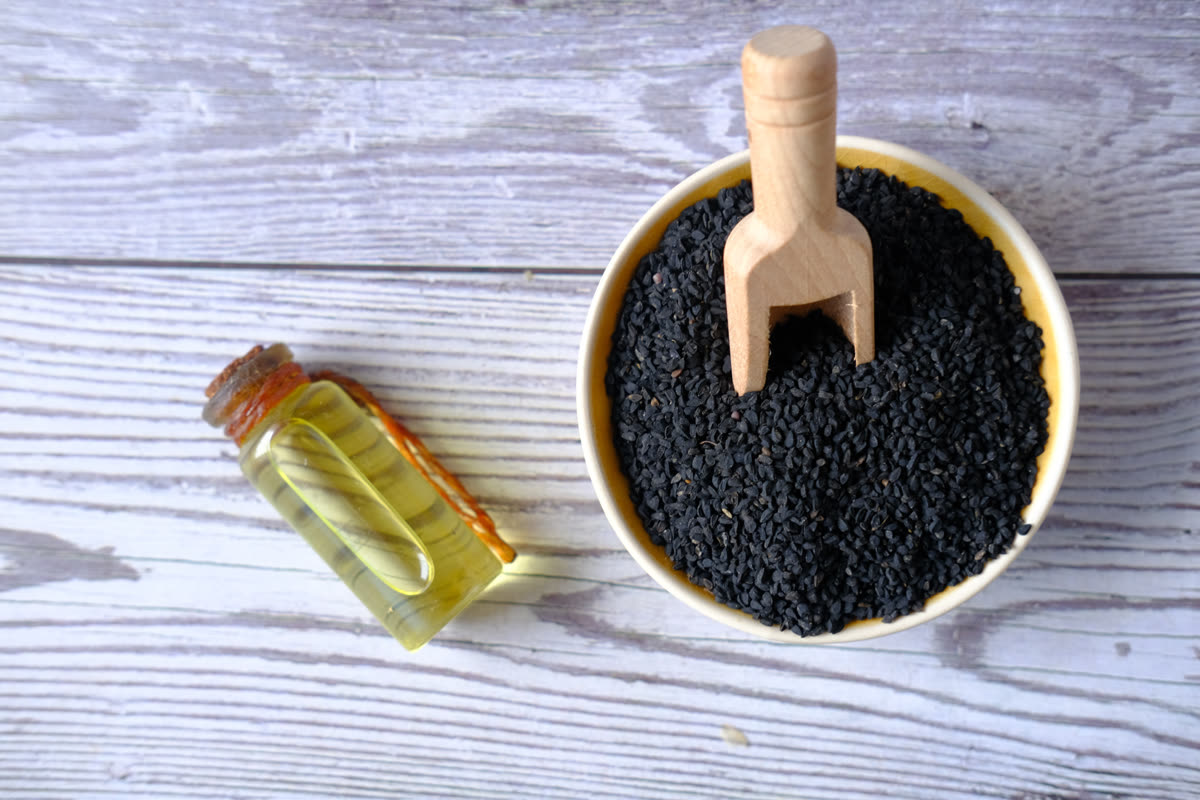
Black seed oil, pressed from the seeds of Nigella sativa, is a revered remedy across the Islamic world, South Asia and North Africa. Its fatty-acid base is linoleic-rich, while its small aromatic fraction — chiefly thymoquinone — is anti-inflammatory and antimicrobial in the lab. Small trials suggest benefits for hand eczema and acne, but thymoquinone is also a skin sensitizer, and allergic reactions have been reported.
Why people reach for it
- Anti-inflammatory potential. Thymoquinone dampens inflammatory signaling in lab models; a small trial in hand eczema reported improvement comparable to a topical steroid.
- Antimicrobial activity. Active in vitro against acne bacteria, staphylococci and Malassezia yeasts — a rationale, not proof, for acne-prone skin and scalp care.
- Linoleic-rich base. Around half linoleic acid, giving a light, non-greasy feel suitable for oilier skin in diluted blends.
How to use it
| Form | Typical use | Notes |
|---|---|---|
| Face or spot oil | 5–10% in a light carrier oil | Never neat on the face or on broken skin. Patch test as in our guide: twice daily for 7 days, read at 48 and 96 hours. |
| Scalp oil | 5–15% of a scalp-oil blend | Pre-wash only; shampoo out. Stop if itching or redness develops. |
| Creams and ointments | 1–10% of a formula | Thymoquinone is light-sensitive; use opaque packaging. |
| Food and supplements | Culinary amounts of seed are safe | Oral oil or capsules can affect blood sugar and blood pressure and may interact with medicines — speak to a pharmacist. |
Use it safely
- Thymoquinone is a recognized skin sensitizer; allergic contact dermatitis, including severe or blistering reactions, is reported. Patch test and dilute.
- Avoid on eczema that is broken, weeping or infected — see a doctor instead.
- Keep away from the eyes and mucous membranes; it stings.
- Oral black seed products may lower blood glucose and blood pressure and may interact with diabetes, blood-pressure and anticoagulant medicines.
Pregnancy and breastfeeding: Culinary use of the seed is fine. Avoid medicinal oral doses in pregnancy; for topical use, prefer short-term, diluted use on small areas, or avoid it, given its sensitizing potential.
New to an ingredient? Patch test first.
When to see a doctor
- Deep, painful nodules or cysts, or any acne that is leaving scars (pitted, rolling or raised) — early treatment prevents permanent scarring.
- No meaningful improvement after 2–3 months of consistent over-the-counter treatment.
- Acne with irregular periods, excess facial or body hair, scalp hair thinning or rapid weight gain, which can point to polycystic ovary syndrome or another hormonal cause.
- Sudden, severe, ulcerating acne with fever, joint pain or feeling unwell (acne fulminans) — seek prompt care.
- Acne that started after a new medicine or supplement (e.g. corticosteroids, anabolic steroids, some anticonvulsants).
- Acne affecting your mood, sleep or confidence — this is a valid reason to seek treatment.
Other plants for Acne & Breakouts
| Ingredient | Grade | What the evidence shows |
|---|---|---|
| Tea Tree | B | Several small randomized trials of 5% tea tree oil gel show fewer inflammatory and total lesions than placebo, with slower onset but better tolerability than 5% benzoyl peroxide. |
| Green Tea | B | Small randomized trials of 2–3% green tea extract lotions reduced lesion counts and sebum in mild to moderate acne; effects are modest. |
| Aloe Vera | C | In one randomized trial, aloe gel combined with tretinoin improved results and tolerability versus tretinoin alone — useful as a soothing partner to retinoids. |
| Bakuchiol | C | Small, mostly open-label studies suggest benefit in mild acne, often in combination products; plausible anti-inflammatory and anti-sebum effects. |
| Willow Bark | C | Contains salicin and other salicylates that may gently exfoliate and calm, but it is far weaker than salicylic acid and human data are limited. |
| Honey | C | Antimicrobial in the lab, but a randomized trial of medical-grade kanuka honey added to routine cleansing found no significant extra benefit. |
| Witch Hazel | D | Tannins are astringent and anti-inflammatory in vitro; there are no meaningful acne trials, and alcohol-based distillates can irritate. |
| Rhassoul Clay | D | Absorbs surface oil temporarily for a matte finish; no evidence it treats acne lesions. |