Does it work?
Black Seed Oil for Eczema-Prone Skin
Prized from Egypt to India, black seed oil is a potent, peppery oil with promising early research: a little, well diluted, goes far.
The short answer: A few small randomized trials (e.g. in hand eczema) and abundant lab data, offset by reports of allergic contact dermatitis.
Our Eczema-Prone Skin guide does not rank Black Seed Oil for this use yet, so this is the overall grade for Black Seed Oil.
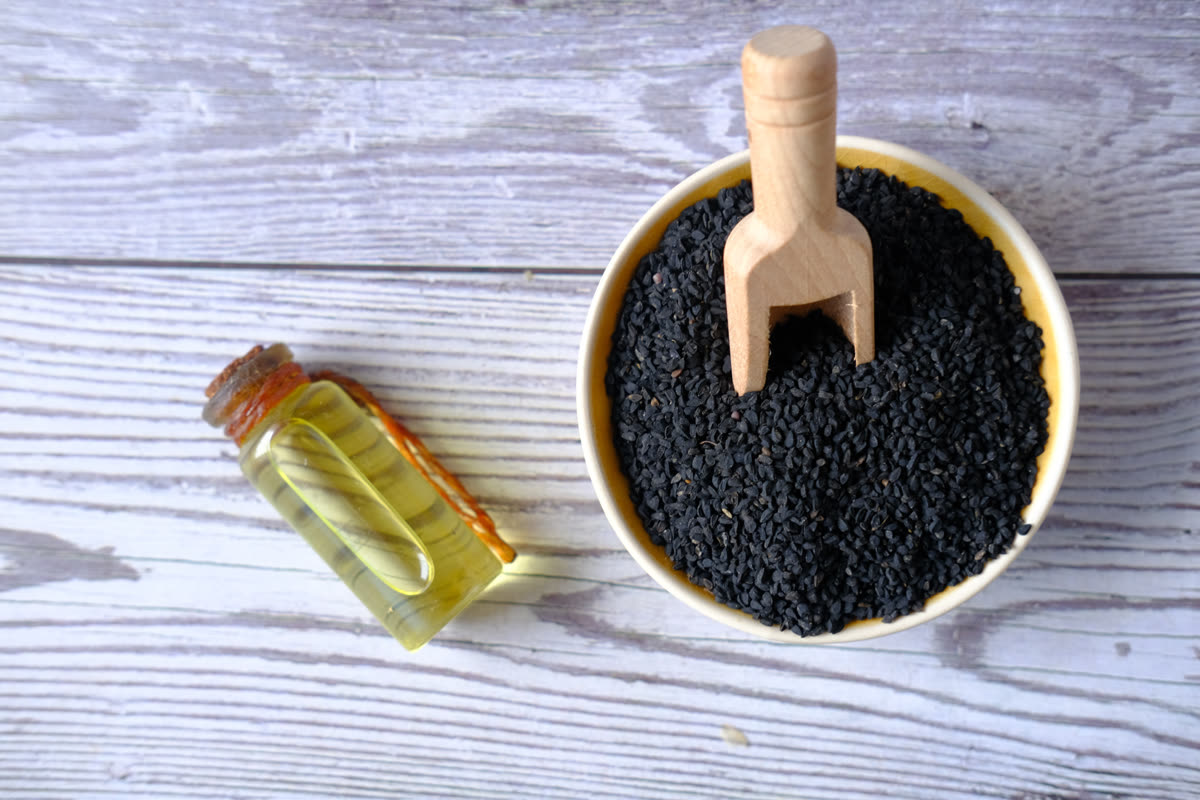
What Black Seed Oil can do for Eczema-Prone Skin
Black seed oil, pressed from the seeds of Nigella sativa, is a revered remedy across the Islamic world, South Asia and North Africa. Its fatty-acid base is linoleic-rich, while its small aromatic fraction — chiefly thymoquinone — is anti-inflammatory and antimicrobial in the lab. Small trials suggest benefits for hand eczema and acne, but thymoquinone is also a skin sensitizer, and allergic reactions have been reported.
Why people reach for it
- Anti-inflammatory potential. Thymoquinone dampens inflammatory signaling in lab models; a small trial in hand eczema reported improvement comparable to a topical steroid.
- Antimicrobial activity. Active in vitro against acne bacteria, staphylococci and Malassezia yeasts — a rationale, not proof, for acne-prone skin and scalp care.
- Linoleic-rich base. Around half linoleic acid, giving a light, non-greasy feel suitable for oilier skin in diluted blends.
How to use it
Try it today
A careful first patch test
- Mix 1 drop of black seed oil into 10–20 drops of a light carrier such as jojoba.
- Dab a little on your inner forearm twice a day for 7 days, and read it at 48 and 96 hours.
- If there is no itch or redness, use the blend as a spot oil; never apply it neat to your face.
| Form | Typical use | Notes |
|---|---|---|
| Face or spot oil | 5–10% in a light carrier oil | Never neat on the face or on broken skin. Patch test as in our guide: twice daily for 7 days, read at 48 and 96 hours. |
| Scalp oil | 5–15% of a scalp-oil blend | Pre-wash only; shampoo out. Stop if itching or redness develops. |
| Creams and ointments | 1–10% of a formula | Thymoquinone is light-sensitive; use opaque packaging. |
| Food and supplements | Culinary amounts of seed are safe | Oral oil or capsules can affect blood sugar and blood pressure and may interact with medicines — speak to a pharmacist. |
Use it safely
- Thymoquinone is a recognized skin sensitizer; allergic contact dermatitis, including severe or blistering reactions, is reported. Patch test and dilute.
- Avoid on eczema that is broken, weeping or infected — see a doctor instead.
- Keep away from the eyes and mucous membranes; it stings.
- Oral black seed products may lower blood glucose and blood pressure and may interact with diabetes, blood-pressure and anticoagulant medicines.
Pregnancy and breastfeeding: Culinary use of the seed is fine. Avoid medicinal oral doses in pregnancy; for topical use, prefer short-term, diluted use on small areas, or avoid it, given its sensitizing potential.
New to an ingredient? Patch test first.
When to see a doctor
- Weeping, crusting (honey-colored crusts), pus or rapidly worsening eczema — possible bacterial infection.
- Painful, clustered, punched-out sores or blisters with fever or feeling unwell — possible eczema herpeticum, which needs same-day medical care.
- Fever, chills or spreading redness alongside eczema.
- Eczema affecting sleep, school, work or mood, or not controlled by emollients and the treatment you have been given.
- Babies with eczema who also have feeding problems, poor growth or reactions after eating certain foods.
- Eczema around or affecting the eyes, or worsening vision.
Other plants for Eczema-Prone Skin
| Ingredient | Grade | What the evidence shows |
|---|---|---|
| Colloidal Oatmeal | B | Randomized trials show colloidal oatmeal creams and baths improve dryness, itch and eczema severity, supporting use as part of emollient therapy. |
| Sunflower Oil | B | Linoleic-rich sunflower oil supported barrier function in comparative studies and neonatal trials; it is a sensible base oil for eczema-prone skin. |
| Coconut Oil | B | A randomized trial in children with mild to moderate eczema found virgin coconut oil improved severity more than mineral oil, and it reduced S. aureus colonization in another trial. |
| Shea Butter | C | A rich, low-allergen emollient; small studies of shea-based creams show improvement, though it is usually tested alongside other ingredients. |
| Licorice Root | C | A small trial of a 2% licorice extract gel reduced itch and redness; glycyrrhetinic acid is anti-inflammatory. |
| Chamomile | C | An older half-side study found a chamomile cream modestly effective versus low-strength hydrocortisone, but daisy-family allergy is a real risk on eczematous skin. |
| Honey | C | Small studies of medical-grade honey on eczema patches suggest benefit; kitchen honey is not sterile and is not for broken skin. |