Does it work?
Tremella (Snow Mushroom) for Sensitive Skin & Redness
What the research says about tremella (snow mushroom) for sensitive skin & redness, how to use it at home and how to stay safe.
The short answer: Its water-binding, film-forming behavior is well established in the lab and plausible on skin, but published independent human trials of topical tremella are essentially absent; skin-hydration data come mainly from suppliers.
Our Sensitive Skin & Redness guide does not rank Tremella (Snow Mushroom) for this use yet, so this is the overall grade for Tremella (Snow Mushroom).
What it does
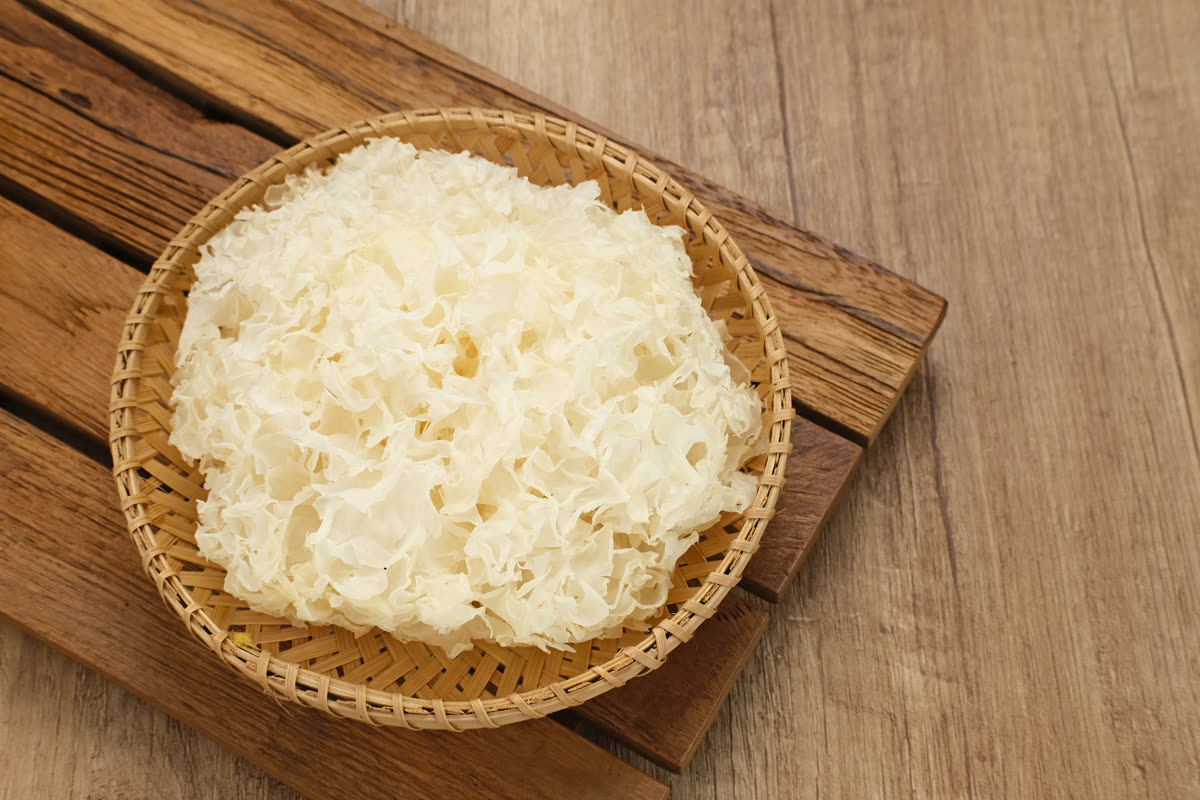
Tremella is a translucent, frilly jelly fungus long eaten in Chinese sweet soups as a beauty food. Its extract is dominated by a large, water-loving polysaccharide that forms a soft, slightly cushiony film on skin and holds water, much like hyaluronic acid. It is a genuinely useful hydrating humectant, but headline claims that it “holds 500 times its weight in water” or “outperforms hyaluronic acid” come from laboratory tests and marketing, not head-to-head trials on human skin.
Why people reach for it
- Lightweight, water-binding hydration. Tremella polysaccharide is a humectant: it attracts and holds water and leaves a thin, flexible film that reduces surface dryness. In a serum or toner it gives a plump, dewy finish without stickiness at low use levels, which suits dry and dehydrated oily skin alike.
- A gentle option for reactive skin. It is a large sugar-based molecule with no fragrance chemistry and a low irritation profile, so it fits minimalist routines for sensitive skin. As with any new product, patch test first.
- Texture and film-forming. Formulators value tremella for its silky, slightly elastic skin-feel and for thickening water phases. It layers well under creams and can soften the tacky feel some hyaluronic acid serums have.
- Antioxidant activity in the lab. Tremella polysaccharide extracts scavenge free radicals and protect skin cells from oxidative stress in vitro. That is a reasonable bonus, not a proven anti-aging effect in people.
How to use it
| Form | Typical use | Notes |
|---|---|---|
| Tremella polysaccharide powder | 0.05–0.5% of a serum, toner or gel (start around 0.1%; higher levels thicken noticeably) | Sprinkle into the water phase with stirring (or pre-disperse in glycerin to avoid clumps) and allow it to hydrate fully. Like any water-based product it needs a broad-spectrum preservative and pH check (DIY Safety: Water, Microbes & Preservatives). |
| Ready-made tremella solution or extract | 2–10% of a formula, per the supplier’s concentration | Pre-dissolved solutions are easier for small-batch makers. Combine with glycerin and a little aloe juice for a classic hydrating toner. |
| Finished serum or essence | A few drops on damp skin, morning and/or evening | Apply to damp skin, then seal with a moisturizer or a light oil such as squalane, especially in dry or air-conditioned environments where humectants work best under an occlusive layer. |
Use it safely
- Very low irritation potential. Allergy to tremella is rare, but people with known mushroom allergies should patch test first (How to Patch Test).
- Polysaccharide gels are an excellent food for microbes. Homemade tremella gels or “mushroom water” made from soaked dried fungus spoil within days and must not be used as leave-on products without proper preservation.
- A mushroom extract is not a live fungus. Purified tremella polysaccharide contains no oils for Malassezia yeast to feed on and is not known to worsen fungal folliculitis (“fungal acne”).
Pregnancy and breastfeeding: Topical tremella is considered safe during pregnancy and breastfeeding; it is also a traditional food.
New to an ingredient? Patch test first.
When to see a doctor
- Swelling of the lips, eyelids, tongue or throat, or difficulty breathing after using a product — this is an emergency.
- Persistent facial redness, visible vessels, flushing or bumps (possible rosacea), or burning, gritty, red eyes with facial redness (ocular rosacea).
- An itchy rash that spreads beyond where a product was applied or appears 1–3 days later (possible allergic contact dermatitis — ask about patch testing).
- A butterfly-shaped rash across the cheeks with joint pain, fatigue or sun sensitivity.
- Redness or stinging that continues despite a stripped-back routine for 4–6 weeks.
Other plants for Sensitive Skin & Redness
| Ingredient | Grade | What the evidence shows |
|---|---|---|
| Colloidal Oatmeal | B | Avenanthramides are anti-inflammatory and anti-itch; clinical studies support oatmeal products for irritated, itchy and reactive skin. |
| Licorice Root | B | Several small, mostly manufacturer-funded trials of licochalcone A products reduced facial redness, including in mild rosacea. |
| Centella Asiatica (Cica) | C | Madecassoside and asiaticoside reduce inflammation and support barrier repair in the lab; small human studies of centella creams show improved redness and comfort. |
| Green Tea | C | EGCG is anti-inflammatory and reduces UV-induced redness; a small trial suggested benefit in papulopustular rosacea. |
| Aloe Vera | C | Soothing and cooling with small supportive studies; choose stabilized gels without alcohol or fragrance, as some products irritate. |
| Chamomile | C | Bisabolol and chamazulene are anti-inflammatory, but chamomile is in the daisy family and can cause allergy in sensitized people. |