Does it work?
Aloe Vera for Sensitive Skin & Redness
What the research says about aloe vera for sensitive skin & redness, how to use it at home and how to stay safe.
The short answer: Soothing and cooling with small supportive studies; choose stabilized gels without alcohol or fragrance, as some products irritate.
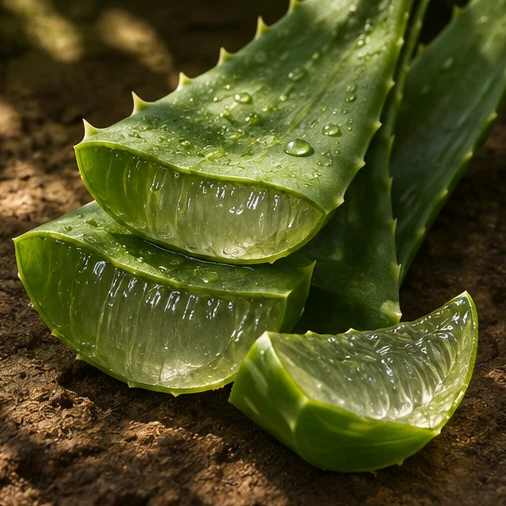
What it does
The clear gel inside aloe leaves is about 99% water, with a small but active fraction of polysaccharides and glycoproteins. It is one of the best-studied botanicals for minor burns and sunburn, where small trials suggest faster healing, and it makes a light, soothing hydrator for most skin types. It is not a sunscreen, and the yellow latex found just under the rind is an irritant and laxative that good products remove.
Why people reach for it
- Soothes minor burns and sunburn. A systematic review of small trials found first- and second-degree burns treated with aloe healed faster than with comparison dressings. The cool, water-rich gel also gives immediate comfort on sun-reddened skin.
- Light, non-greasy hydration. Aloe’s polysaccharides bind water and leave a thin film, so it hydrates without heaviness. On its own it does not seal moisture in, so dry skin still needs an oil or cream on top.
- A gentle water phase for formulas. Decolorized aloe juice can replace part or all of the water in toners, gels and lotions, adding a soothing skin-feel. Like water, it must be preserved.
- Supports acne treatment tolerance. In one randomized trial, aloe gel used alongside prescription tretinoin improved results and reduced irritation compared with tretinoin plus a plain gel. It is an add-on, not a stand-alone acne treatment.
How to use it
| Form | Typical use | Notes |
|---|---|---|
| Fresh gel from a home plant | Single use; apply a thin layer, discard leftovers | Cut a mature lower leaf, stand it cut-end down for 10–15 minutes to drain the yellow latex, then fillet out the clear gel and rinse it. Use immediately on sunburn or a kitchen burn (after cooling under running water). Unpreserved gel spoils within a day or two — see DIY Safety: Water, Microbes & Preservatives. |
| Decolorized aloe juice (1:1) or 200:1 powder | Juice: 10–100% of the water phase. Powder: 0.1–0.5% (≈ 20–100% juice equivalent) | Use in toners, gels and lotions with a broad-spectrum preservative at the supplier’s level, and check final pH (aloe juice is usually mildly acidic). See Cooling Aloe After-Sun Gel. |
| Ready-made aloe gel | 2–4 times daily on sun-exposed or irritated skin | Choose fragrance-free gels with aloe juice as the first ingredient and little or no alcohol; keep in the fridge for extra cooling. |
Recipes for Sensitive Skin & Redness with Aloe Vera
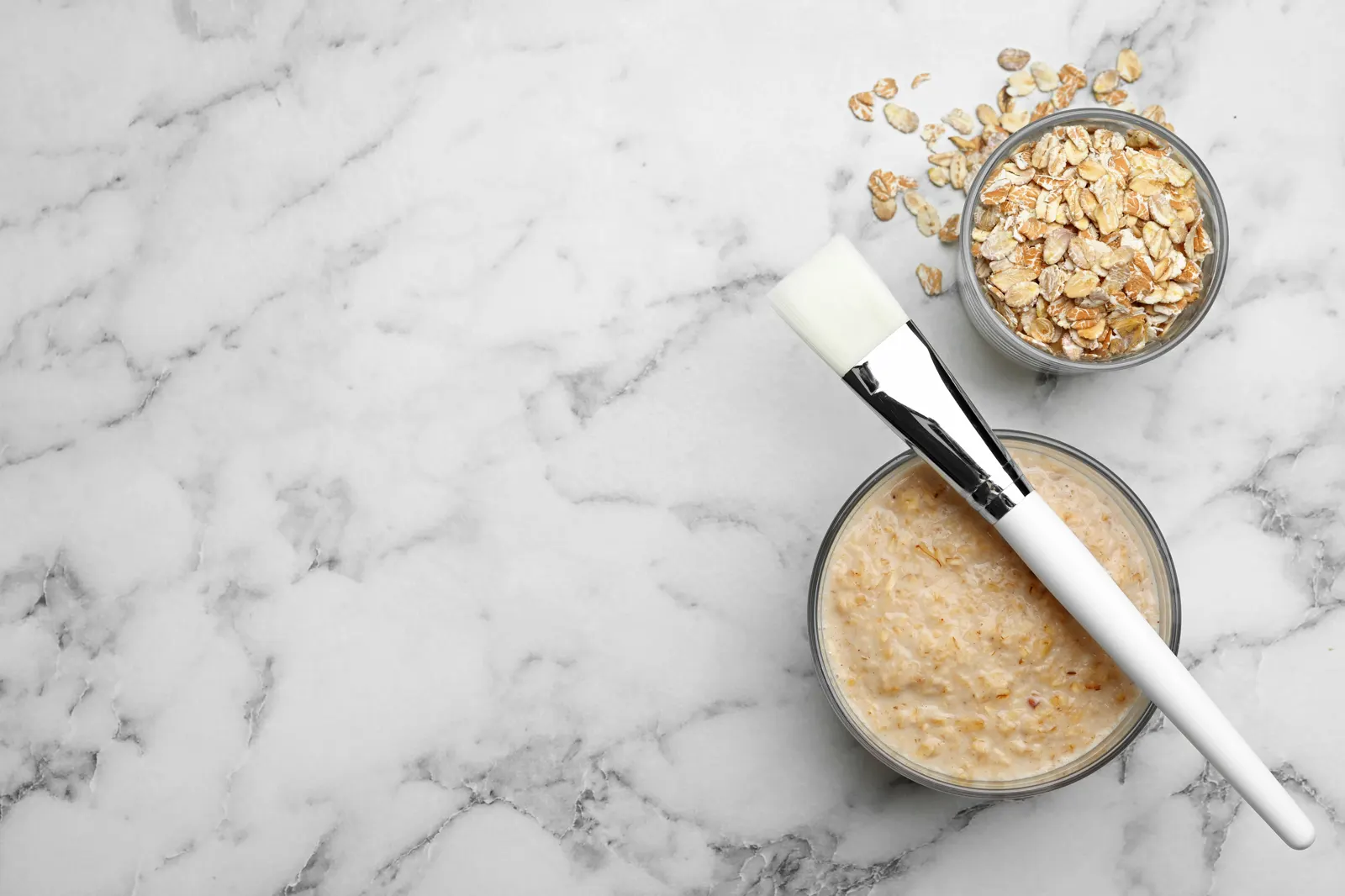 Mask · BeginnerCalming Oat & Chamomile MaskA soothing single-use paste of colloidal oatmeal, cooled chamomile tea, honey and aloe for skin that feels hot, tight or reactive.
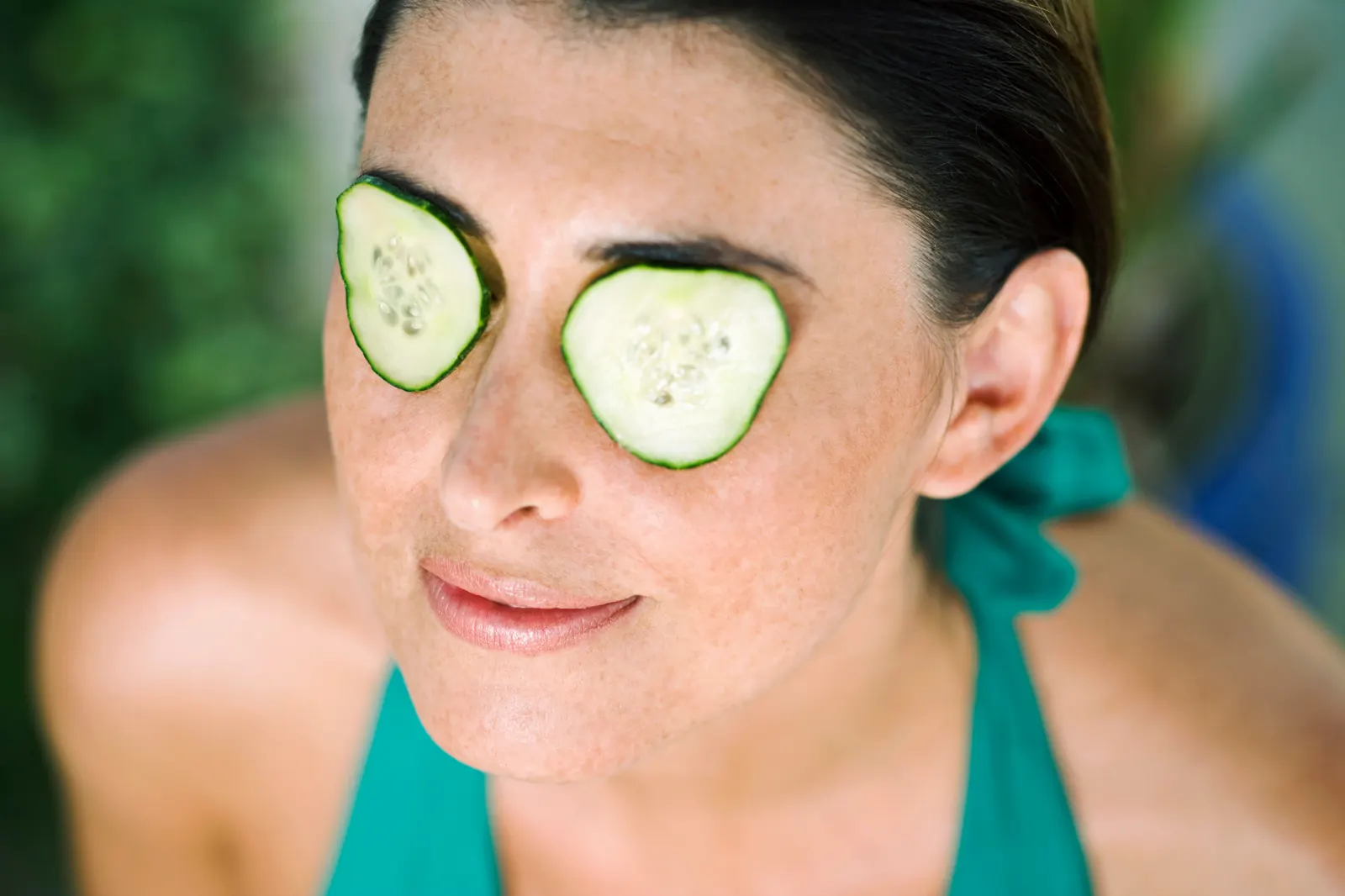 Mask · BeginnerCucumber & Aloe Cooling Eye PadsChilled cucumber juice and pure aloe gel soaked into cotton pads: a ten-minute cool-down for puffy, tired-looking eyes. Fresh, single use.
 Toner · BeginnerOat & Aloe Post-Shave SplashA cool, milky splash of oat water and pure aloe gel to calm razor-tingled face, legs or underarms. Made fresh and used within the hour.
Daily rituals with Aloe Vera
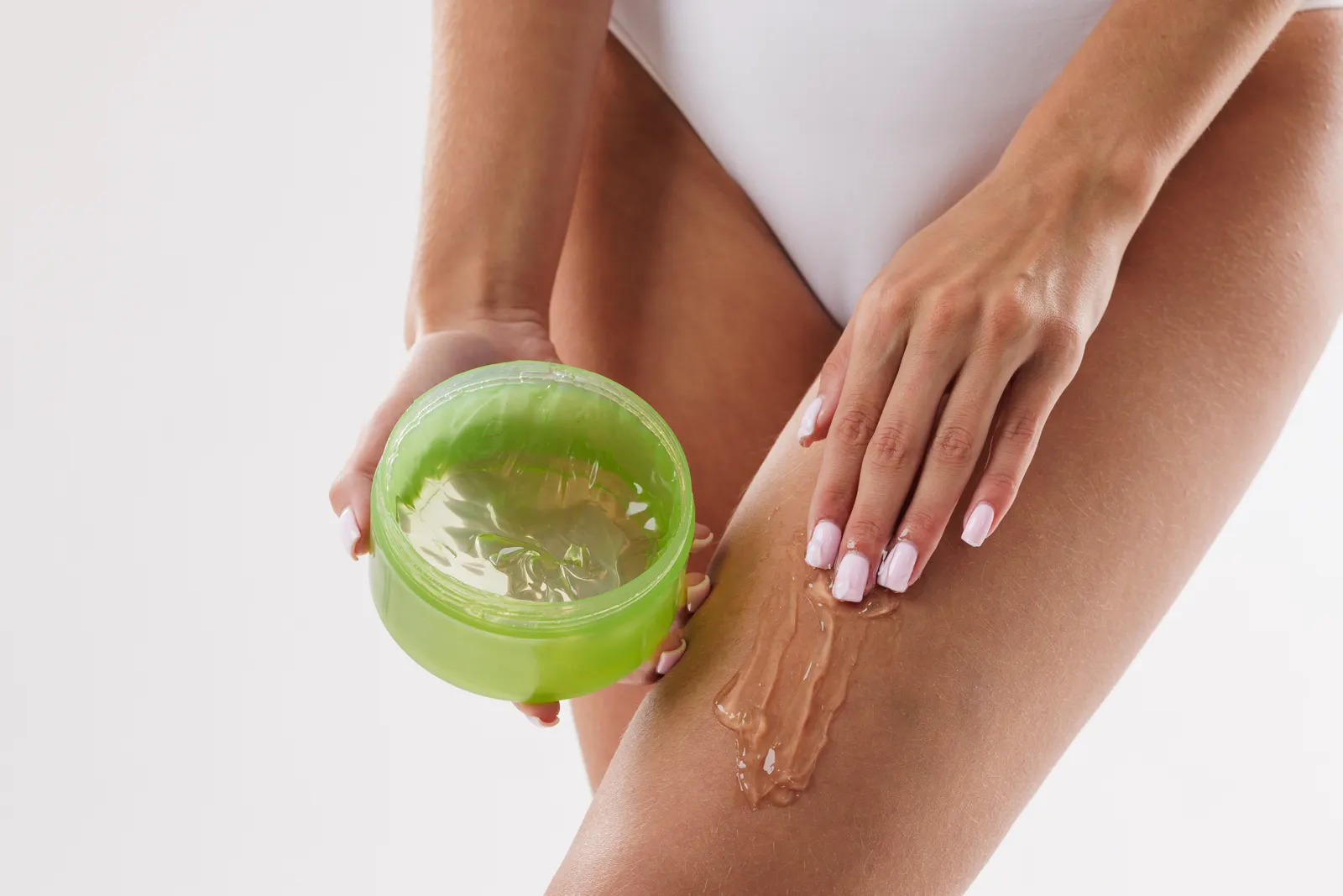 Calming Aloe After Shaving or WaxingRazor burn or post-wax redness on the face? Cool water, a thin layer of preserved aloe gel, and a 24-hour pause on actives help skin settle.
 A First Skincare Routine for TeensCleanse, moisturize, sunscreen: a calm, three-step first routine for teenagers, with one simple add-on for spots and what to skip online.
Use it safely
- Use inner-leaf, decolorized gel on skin. The yellow latex (aloin, aloe-emodin) irritates skin and is a strong laxative. Non-decolorized whole-leaf extract caused intestinal tumors in rats in a two-year US National Toxicology Program study and is classed by IARC as possibly carcinogenic to humans (Group 2B) when taken orally. Do not drink homemade aloe.
- Contact allergy is uncommon but documented; patch test before wide use, especially on already damaged skin (How to Patch Test).
- Aloe is for minor burns only. Seek medical care for burns that blister over an area larger than the person’s palm, involve the face, hands, feet, genitals or joints, are chemical or electrical, or look white, leathery or charred.
- Aloe has negligible SPF. It is an after-sun, not a sunscreen.
Pregnancy and breastfeeding: Topical inner-leaf gel is considered safe in pregnancy and while breastfeeding. Avoid oral aloe latex or whole-leaf products, which are stimulant laxatives.
New to an ingredient? Patch test first.
When to see a doctor
- Swelling of the lips, eyelids, tongue or throat, or difficulty breathing after using a product — this is an emergency.
- Persistent facial redness, visible vessels, flushing or bumps (possible rosacea), or burning, gritty, red eyes with facial redness (ocular rosacea).
- An itchy rash that spreads beyond where a product was applied or appears 1–3 days later (possible allergic contact dermatitis — ask about patch testing).
- A butterfly-shaped rash across the cheeks with joint pain, fatigue or sun sensitivity.
- Redness or stinging that continues despite a stripped-back routine for 4–6 weeks.
Other plants for Sensitive Skin & Redness
| Ingredient | Grade | What the evidence shows |
|---|---|---|
| Colloidal Oatmeal | B | Avenanthramides are anti-inflammatory and anti-itch; clinical studies support oatmeal products for irritated, itchy and reactive skin. |
| Licorice Root | B | Several small, mostly manufacturer-funded trials of licochalcone A products reduced facial redness, including in mild rosacea. |
| Centella Asiatica (Cica) | C | Madecassoside and asiaticoside reduce inflammation and support barrier repair in the lab; small human studies of centella creams show improved redness and comfort. |
| Green Tea | C | EGCG is anti-inflammatory and reduces UV-induced redness; a small trial suggested benefit in papulopustular rosacea. |
| Chamomile | C | Bisabolol and chamazulene are anti-inflammatory, but chamomile is in the daisy family and can cause allergy in sensitized people. |