Does it work?
Chamomile for Sensitive Skin & Redness
The flower in your bedtime tea can calm warm, flushed skin too, with a soft, apple-sweet scent.
The short answer: Bisabolol and chamazulene are anti-inflammatory, but chamomile is in the daisy family and can cause allergy in sensitized people.
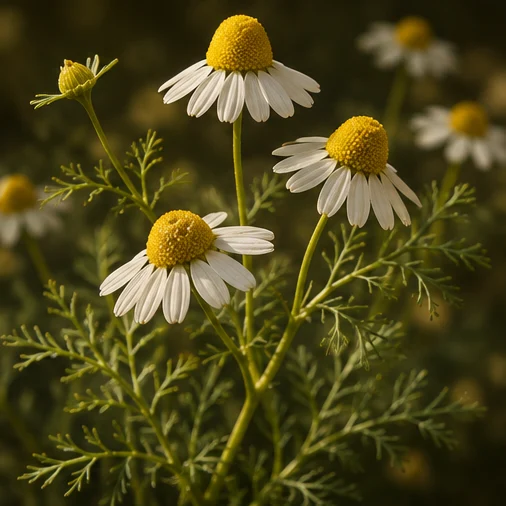
What Chamomile can do for Sensitive Skin & Redness
German chamomile is one of the gentlest, most familiar soothing botanicals, and its key actives — bisabolol, chamazulene and apigenin — are well characterized anti-inflammatories. Human evidence for skin is older and small, so it is best used as a calming support rather than a treatment. Its main risk is allergy in people sensitive to the daisy family.
Why people reach for it
- Calms redness and irritation. Bisabolol and apigenin reduce inflammatory signaling in lab models, and chamomile extracts are a staple of products for reactive, easily flushed skin.
- Comfort for eczema-prone skin. In an older half-side trial, a chamomile cream performed slightly better than 0.5% hydrocortisone in moderate atopic eczema, though only marginally better than its own base cream. It can complement, not replace, prescribed care.
- Supports a comfortable skin barrier. Chamomile extracts and bisabolol are frequently used to reduce the sting of active ingredients such as acids and retinoids.
- Golden tone for fair hair. Strong chamomile rinses can lend light blonde hair a subtle golden warmth through flavonoid pigments. It does not bleach or lighten darker hair.
How to use it
Try it today
A chamomile tea compress
- Steep two tea bags in 250 ml just-boiled water for 10 minutes, then let it cool completely.
- Soak a clean cloth and rest it on your cheeks and neck for a few minutes, away from the eyes.
- Pour away whatever is left: a fresh infusion spoils within hours.
| Form | Typical use | Notes |
|---|---|---|
| Chamomile extract (glycerin or water-based) | 1–5% in creams, toners and masks | Pairs well with oat in calming masks — see Calming Oat & Chamomile Mask. Aqueous products need a broad-spectrum preservative. |
| Bisabolol (isolated) | 0.1–1% | Oil-soluble; add to the oil phase or cool-down. Natural (−)-α-bisabolol is generally preferred over synthetic racemic bisabolol. |
| German chamomile essential oil | 0.1–0.5% on the face; up to 1% on the body | Very potent and stains fabrics blue. Respect overall essential-oil limits (Essential Oil Safety: The Complete Guide). |
| Cooled infusion or hydrosol | Fresh compress, used the same day | Steep 2 tea bags or 2 tablespoons of flowers in 250 ml just-boiled water for 10 minutes, cool, and apply on a clean cloth. Discard leftovers. |
Recipes for Sensitive Skin & Redness with Chamomile
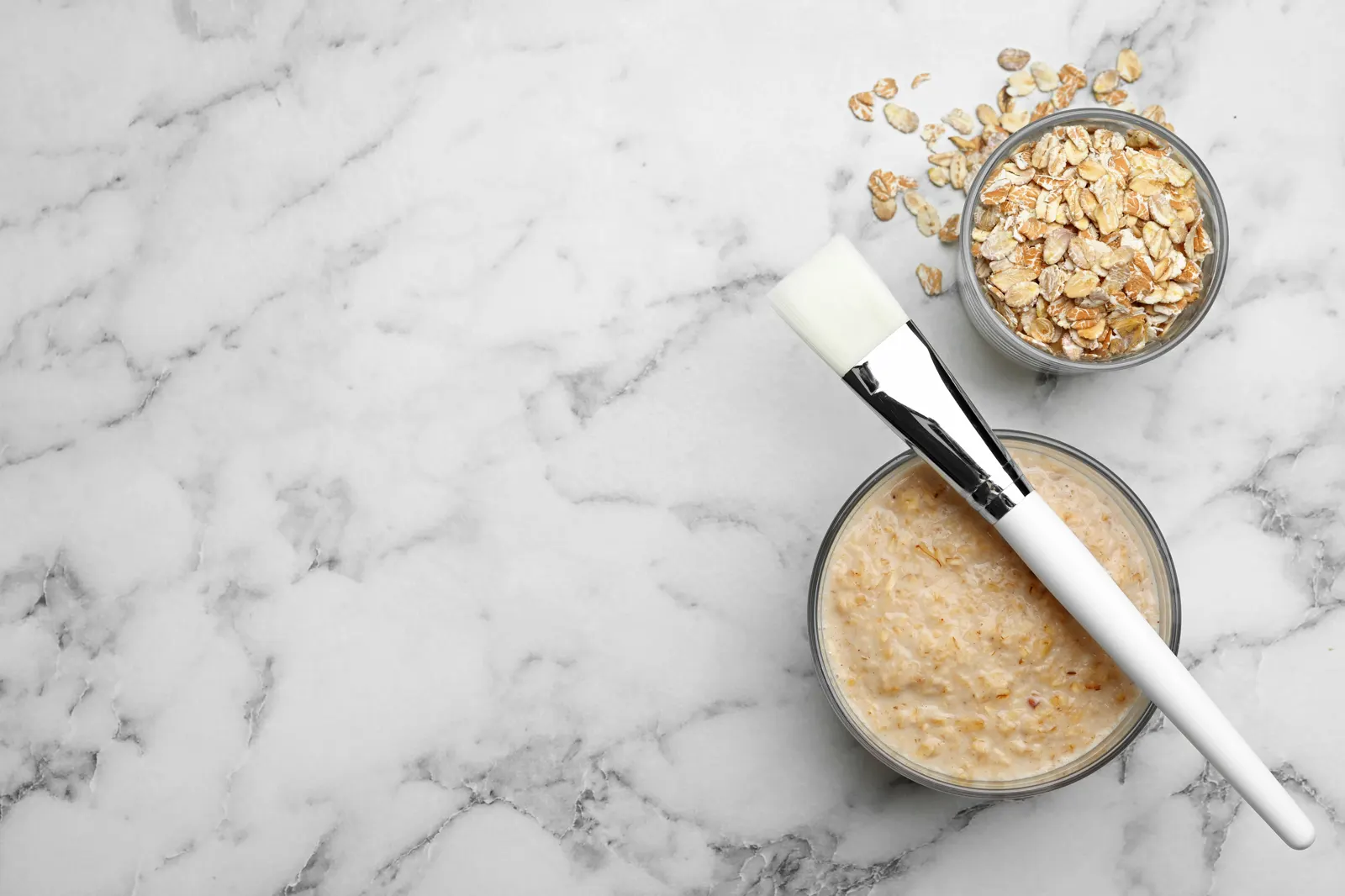
Daily rituals with Chamomile

Use it safely
- Daisy-family cross-reactivity: chamomile is part of the Compositae patch-test mix. People allergic to ragweed, chrysanthemum, arnica, feverfew, marigold or mugwort pollen may react to chamomile on skin or in tea; anaphylaxis to chamomile tea is rare but reported.
- Chamomile tea used as an eyewash or eye compress has caused allergic conjunctivitis. Do not put it in the eye, and avoid eye compresses if you have hay fever to Asteraceae pollen.
- Roman chamomile is more allergenic than German chamomile because of its sesquiterpene lactones.
- Homemade infusions spoil within hours at room temperature — make fresh each time.
Pregnancy and breastfeeding: Topical chamomile and moderate chamomile tea are generally considered compatible with pregnancy and breastfeeding. Use essential oil only at low dilution and avoid concentrated oral supplements.
New to an ingredient? Patch test first.
When to see a doctor
- Swelling of the lips, eyelids, tongue or throat, or difficulty breathing after using a product — this is an emergency.
- Persistent facial redness, visible vessels, flushing or bumps (possible rosacea), or burning, gritty, red eyes with facial redness (ocular rosacea).
- An itchy rash that spreads beyond where a product was applied or appears 1–3 days later (possible allergic contact dermatitis — ask about patch testing).
- A butterfly-shaped rash across the cheeks with joint pain, fatigue or sun sensitivity.
- Redness or stinging that continues despite a stripped-back routine for 4–6 weeks.
Other plants for Sensitive Skin & Redness
| Ingredient | Grade | What the evidence shows |
|---|---|---|
| Colloidal Oatmeal | B | Avenanthramides are anti-inflammatory and anti-itch; clinical studies support oatmeal products for irritated, itchy and reactive skin. |
| Licorice Root | B | Several small, mostly manufacturer-funded trials of licochalcone A products reduced facial redness, including in mild rosacea. |
| Centella Asiatica (Cica) | C | Madecassoside and asiaticoside reduce inflammation and support barrier repair in the lab; small human studies of centella creams show improved redness and comfort. |
| Green Tea | C | EGCG is anti-inflammatory and reduces UV-induced redness; a small trial suggested benefit in papulopustular rosacea. |
| Aloe Vera | C | Soothing and cooling with small supportive studies; choose stabilized gels without alcohol or fragrance, as some products irritate. |